 Bellingham Roofing
 Board & Batten Siding for Edgemoor Homes
Edgemoor sits on wooded, often hilly ground close to Bellingham Bay, and that combination shapes what a siding job here actually needs to do. Mature tree canopy keeps a lot of these lots shaded for long stretches of the year, which slows drying time on north- and east-facing walls. At the same time, homes higher on the slope or oriented toward the water catch more direct wind and rain than a similar house set back in a more sheltered part of the neighborhood. Board and batten's vertical profile is a popular choice on both custom builds and older homes being re-sided in Edgemoor, since it reads as clean and contemporary on newer construction and fits comfortably with the more traditional, wooded character of older streets. But board and batten is a joint-heavy profile — every seam where a batten covers a board is a place water can try to work its way behind the siding — and in a setting with this much shade and this much exposure to Bellingham Bay's weather, how those joints are built matters as much as how the wall looks from the street.
We install James Hardie fiber cement board and batten exclusively, and on Edgemoor properties specifically, we build the fastening pattern, drainage detail, and flashing around the two conditions that actually drive failures here: prolonged shade and direct exposure to wind-driven rain off the bay.
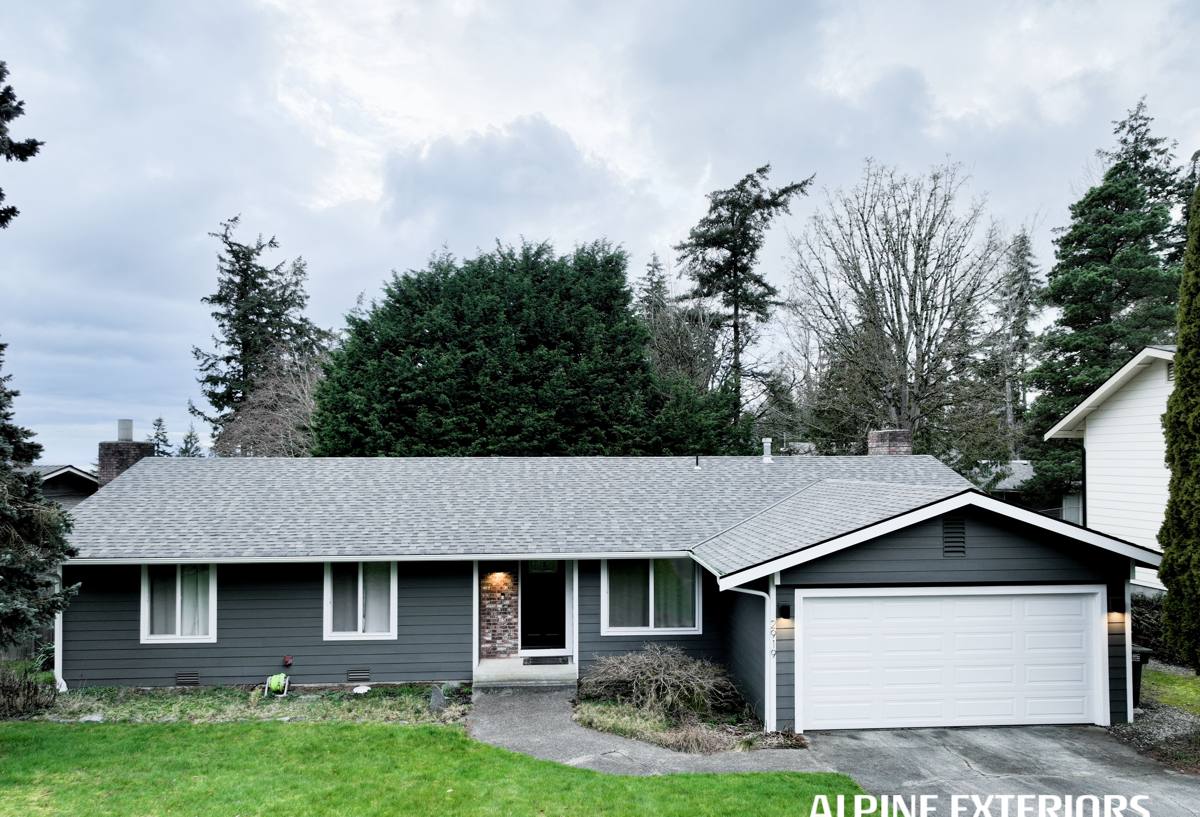
What Edgemoor's Setting Demands from a Board & Batten Wall
Tree Canopy and a Long Moss Season
Heavily treed lots hold moisture longer than open ones. Walls that sit under mature evergreens or dense deciduous cover in Edgemoor can stay damp for days after a storm has passed elsewhere in Bellingham, and that extended dampness is exactly what moss and mildew need to establish themselves. On a board and batten wall, the risk isn't just surface staining — it's moisture sitting against the seam between board and batten, where it can work into the joint rather than drying off a flat, open surface.
Bluff and Water-Facing Exposure
Homes positioned higher on the slope or facing toward Bellingham Bay see a different problem: less shade, but more direct wind-driven rain and steady salt-tinged marine air. A batten that isn't properly lapped and fastened gives that wind something to push against, and salt exposure is hard on any fastener that isn't correctly specified for the job. The same neighborhood can have one wall dealing with constant shade and another dealing with constant wind, sometimes on the same house.
Wooded Lots and Site Access
Tree-covered, sloped lots also change the practical side of a siding project — staging material, running scaffolding or lifts, and protecting landscaping during tear-off all take more planning than they would on a flat, open lot. It's a smaller point than the moisture and wind issues, but it's part of why experience working this specific type of terrain in this specific neighborhood saves time and avoids avoidable damage to mature landscaping homeowners have often spent years growing in.
Why Product Choice Matters More Under These Conditions
Board and batten already has more seams and more exposed material edge than a standard lap profile, which means it amplifies whatever weaknesses a siding material carries into a job. Add prolonged shade on one wall and direct wind-driven rain on another, and the margin for a material that swells, cups, or holds moisture at the joint gets even thinner. That's part of why we don't offer LP SmartSide, vinyl, Cemplank, Allura, primed spruce, or cedar board and batten. Those are legitimate products, and other contractors install them competently — we simply decided that on a profile this joint-heavy, in a setting this varied between shade and wind exposure, we'd rather stand behind one material system we trust completely than offer something cheaper that shifts long-term maintenance risk onto the homeowner.
| Material | Behavior in Shade / High Moisture | Behavior Under Wind & Salt Exposure | Realistic Lifespan |
|---|---|---|---|
| James Hardie fiber cement | Dimensionally stable; won't swell or cup at seams | Doesn't absorb moisture; factory finish resists salt staining | 30+ years with proper install |
| LP SmartSide (engineered wood) | Cut edges and fastener holes more sensitive to standing moisture | Needs consistent edge sealing to hold up over time | 15-25 years, climate-dependent |
| Vinyl | Can trap hidden moisture behind panels without obvious warning signs | Can warp or gap at battens under wind and temperature swings | 20-30 years, variable |
| Cedar | Absorbs moisture readily in shaded, slow-drying conditions | Salt air accelerates weathering without regular resealing | 15-25 years with consistent upkeep |
The property that matters most here is dimensional stability. Fiber cement doesn't expand and contract with moisture the way wood-based products do, so a board and batten wall built from it doesn't develop the small movement at the seams that eventually opens a path for water. Hardie's factory-applied ColorPlus finish also means the only field-painted surfaces on the job are cut edges we prime on site, rather than an entire wall depending on how well paint holds up under a tree canopy or steady salt exposure.
What a Correct Board & Batten Install Actually Involves
The finished look is simple — vertical boards with battens over the seams — but getting a durable result out of that simple look takes real detail work, especially on a lot with mixed shade and exposure:
- House wrap or weather-resistive barrier installed and properly lapped before any siding goes up
- A drainage gap or rainscreen behind the siding so moisture that gets past the surface can dry rather than sit against the wall — more important on shaded elevations that dry slowly
- Corrosion-resistant fasteners at manufacturer-specified spacing, sized correctly for board and batten's double layer of material
- Battens set with proper clearance rather than caulked tight, so the assembly can shed water instead of holding it against the seam
- Correctly flashed transitions at windows, doors, corners, and the base of the wall, where a vertical run meets a horizontal surface
- Cut boards primed on any field-cut edge to protect the factory ColorPlus finish where it's been interrupted
Skip any of these and the wall can still look right on install day. The problems show up a season or two later — moss taking hold at a seam that never fully dries, staining at the base of a shaded wall, paint failure along a batten exposed to wind and salt — which is exactly why a corner-cutting install can pass a quick look and still fail early.
Our Process for an Edgemoor Board & Batten Project
Walkthrough and Assessment
We start by walking the property and noting which walls sit under canopy and stay damp longest, which face the bay or catch the most wind, and whether the existing wall assembly shows signs of moisture issues that need addressing before new siding goes up. New board and batten over a wall with hidden rot just buries the same problem.
Detailing the Plan Before Install Day
We work out batten spacing, corner details, and how the siding meets windows, trim, and rooflines before crews start cutting material, and we plan site logistics around the lot's terrain and tree cover so material staging and equipment access don't put existing landscaping at risk.
Installation to Manufacturer Spec
Every fastener, gap, and flashing lap follows James Hardie's published installation requirements for this climate zone. That's what keeps the manufacturer's warranty intact, and it's what lets the wall perform the same way on a shaded north face as it does on a wind-exposed elevation facing the water.
Final Walkthrough
We walk the finished job with you, cover what little maintenance board and batten actually needs, and flag anything specific to your property — like a section of canopy worth trimming back — that will help the siding perform the way it's designed to over the long run.
Why Hire a Crew That Already Works Edgemoor
Edgemoor isn't a uniform siding job. The same street can have a heavily shaded lot next to one with an open view of the bay, and each needs a slightly different read on drainage, batten clearance, and fastener spec to hold up long term. A crew that's worked this neighborhood through multiple wet seasons has already seen which orientations need extra drainage attention because of tree cover, how much batten clearance actually earns its keep on a wind-exposed wall versus a sheltered one, and how to stage a job on a sloped, wooded lot without tearing up the landscaping. That's judgment built from doing the work here specifically, not from a generic install manual, and it's the difference between a board and batten wall that still looks and performs the same in fifteen years and one that's showing seam staining or paint failure by year five.
Cost Factors for Board & Batten in Edgemoor
Board and batten typically runs more per square foot than standard lap siding, largely because of the added batten material and the extra labor of fastening and detailing two layers instead of one. On top of that base cost, a few things tend to move the price on Edgemoor properties specifically:
| Factor | Why It Matters |
|---|---|
| Wall height and terrain | Sloped lots and taller walls add scaffolding, staging, and labor time |
| Existing wall condition | Moisture damage found during tear-off, more likely on long-shaded walls, needs repair before new siding goes up |
| Site access and tree cover | Wooded lots take more care and time to stage material and protect landscaping |
| Batten spacing and reveal | Tighter spacing uses more material and more fastening labor |
| Trim and window detailing | More openings mean more flashing and finish work around each one |
We'll walk your specific property and give you real numbers based on its terrain, exposure, and existing wall condition, rather than a rough estimate off square footage alone. Two homes of similar size in Edgemoor can land at very different price points depending on how many of these factors are actually in play.
Getting It Right the First Time
Board and batten is not an easy profile to fix after the fact. Because battens cover the seams between boards, correcting a bad install usually means pulling battens, boards, or both, rather than a simple patch — and that's a bigger deal on a wooded, sloped lot where re-staging equipment and protecting landscaping a second time adds real cost. That's part of why we treat the planning and detailing phase as seriously as the install itself: the cost of getting it right the first time is a lot lower than the cost of tearing out a wall that was installed wrong, especially on a property where the site work alone takes real care.
If you're weighing board and batten for a home in Edgemoor, we're happy to walk the property, talk through what your specific walls need given their shade, exposure, and terrain, and give you a straightforward, no-pressure estimate. There's a form below — reach out and we'll set up a time to take a look.