 Bellingham Roofing
 Why Decks in Columbia Take a Different Kind of Beating
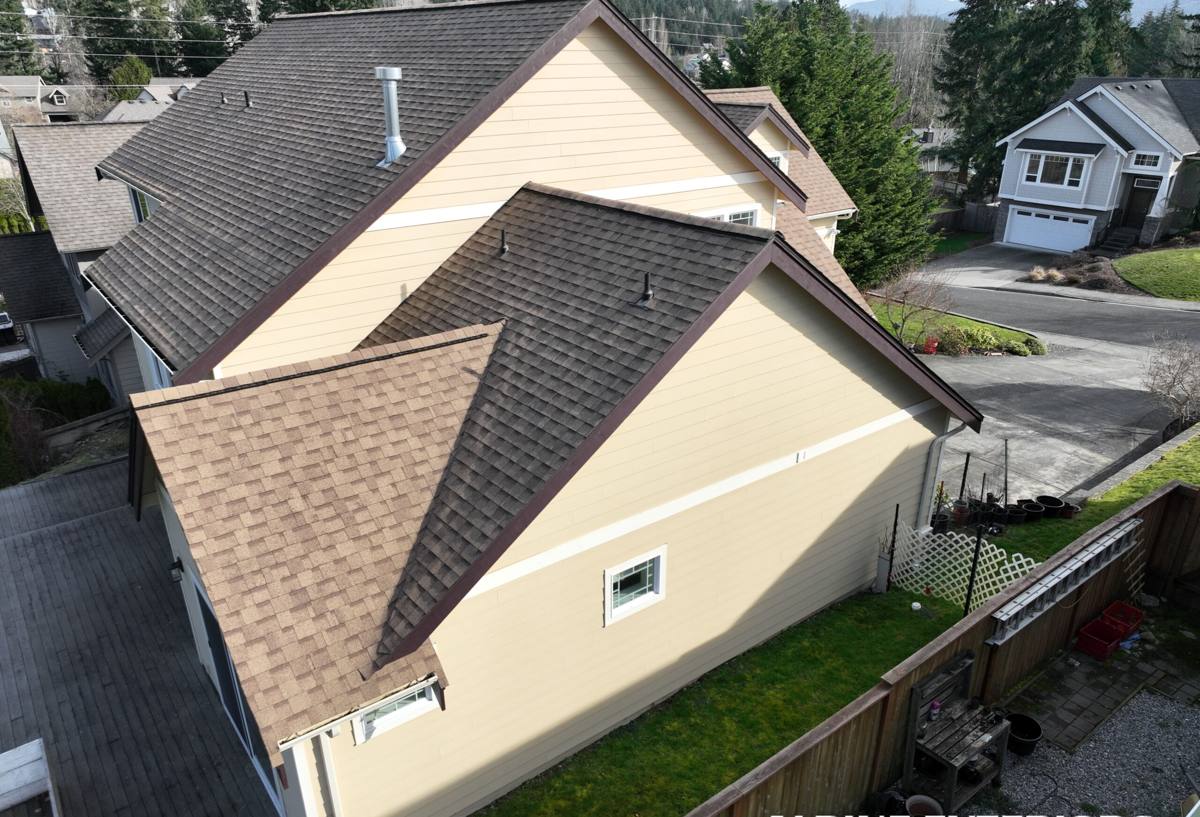
Columbia is one of Bellingham's older, closer-to-the-water neighborhoods, and that location comes with a trade-off. Homes here catch salt-laden air off Bellingham Bay, sit through some of the wettest months in Whatcom County, and spend a good chunk of the year shaded and damp enough for moss to take hold on any horizontal wood surface. A deck is exactly that — a flat, exposed wood or composite structure sitting directly under all of it.
None of that means a deck in Columbia is doomed. It means the repair has to account for conditions a deck in a drier inland climate never has to deal with. A patch job that would hold up fine in eastern Washington can fail here in a season or two if it ignores moisture, drainage, and the corrosive edge that salt air puts on hardware.
What Salt Air, Rain, and Moss Actually Do to a Deck
Salt Air and Metal Fatigue
Salt in the air accelerates corrosion on anything metal — nails, screws, joist hangers, bolts. Once a fastener starts rusting, it loses grip strength and can stain the wood around it. On an older deck, hardware that looks intact from a few feet away is often the first thing to fail structurally.
Driving Rain and Water Intrusion
Wind-driven rain doesn't just fall on a deck, it gets pushed sideways into ledger boards, under flashing, and into any gap where two pieces of lumber meet. Repeated wetting and drying is what breaks down wood fiber over time, and it's almost always worse at the point where the deck attaches to the house.
Moss and Long-Term Moisture Retention
Whatcom County's moss season runs long. Moss holds moisture against the deck surface far longer than open air ever would, which is exactly the environment rot needs. Left alone, a moss mat on a deck board can keep that board wet for weeks after the rain has stopped.
What a Correct Deck Repair Actually Involves
A repair that's done right addresses the cause, not just the symptom. Replacing a soft board without checking what made it soft just buys a little time before the same failure shows up again nearby.
- Inspecting the ledger board connection to the house — the single most common source of hidden rot on any deck
- Checking joists and beams for soft spots, not just the visible decking boards on top
- Evaluating flashing at the house-to-deck junction, since failed flashing is what lets water behind the siding in the first place
- Assessing all fasteners and hardware for corrosion, not just the ones that are visibly failing
- Confirming the structure still meets proper spacing and support spans before any cosmetic work goes on top
- Checking drainage and slope so water actually sheds off the deck instead of pooling
Skipping any of these steps is how a deck ends up with a new-looking surface over a structure that's still failing underneath.
Signs Your Columbia Deck Needs Repair
Most deck problems don't show up as one dramatic failure. They show up as small signals that get ignored until they aren't small anymore.
- Boards that feel spongy or flex more than they used to
- Persistent green or black staining that comes back shortly after cleaning
- Gaps opening up around the ledger board where the deck meets the house
- Rust streaks running down from screws or joist hangers
- Railings that wiggle or feel less solid than they should
- Standing water that doesn't drain within an hour or two of rain stopping
- A musty smell coming from underneath the deck
Any one of these on its own might be minor. Two or three together usually means the underlying structure needs a real look, not just a surface fix.
Repair or Replace? How We Make That Call
Not every deck problem needs a full rebuild, and not every deck problem should be patched. The honest answer depends on what's actually driving the damage.
| Factor | Points Toward Repair | Points Toward Replacement |
|---|---|---|
| Structural framing (joists, beams, posts) | Solid, only isolated soft spots | Widespread rot or undersized for current code |
| Ledger board connection | Sound, flashing intact | Rotted or improperly flashed against the house |
| Age of decking surface | Under 10-15 years, isolated board failure | Original decking near or past its practical service life |
| Fasteners and hardware | Mostly sound, a few corroded spots | Widespread rust, undersized or outdated hardware throughout |
| Footings and posts | Stable, plumb, properly set | Settling, heaving, or undersized footings |
Cost is often a secondary factor, since a well-targeted repair on sound framing usually costs a fraction of a rebuild. But if the framing itself is compromised, repeated patchwork ends up costing more over a few years than doing the structural work once.
Our Deck Repair Process
1. On-Site Inspection
We walk the whole structure — top, underneath, and where it ties into the house — before quoting anything. That includes probing suspect boards and checking the ledger and framing, not just eyeballing the surface.
2. A Clear, Honest Scope
You get a straightforward explanation of what's actually wrong, what needs to be fixed now, and what can reasonably wait. We'd rather tell you a repair will hold for a few more years than sell you a replacement you don't need yet — and we'll tell you just as plainly if patching would be throwing money at a structure that's already compromised.
3. Repair the Cause First
Framing, flashing, and fastener issues get addressed before any cosmetic decking or railing work goes back on. Covering up a moisture problem with new boards is how the same repair ends up needed again in a couple of years.
4. Matched, Weather-Appropriate Materials
Replacement lumber, hardware, and fasteners are chosen for what actually holds up in this climate, not just what's cheapest at the yard. That includes corrosion-resistant fasteners given the salt air exposure common in Columbia.
5. Clean Finish and Walkthrough
We finish with a clean site and walk you through what was done and what to watch for going forward, including basic upkeep that extends the repair's life.
Decking Material Trade-Offs Worth Understanding
When it's time to replace boards, homeowners usually choose between pressure-treated wood, cedar, and composite decking. Each has real trade-offs worth knowing before you decide.
Pressure-Treated Lumber
Affordable and widely available, but it needs regular sealing or staining to perform well in a wet climate. Skip that maintenance for a few years and it's the first material to show rot, especially at fastener points.
Cedar
Naturally more rot-resistant than treated pine and it looks good, but it's a softer wood that still needs periodic finishing to hold its color and resist moisture absorption over the long term.
Composite Decking
Composite boards resist rot and don't need staining, which appeals to a lot of homeowners dealing with our wet season. The trade-off is a higher upfront cost, and composite still needs proper spacing and ventilation underneath — it doesn't rot from standing water, but algae and moss can still grow on its surface if it never fully dries out.
We install what fits your budget and your maintenance appetite. Our job is to explain the honest trade-offs of each, not to push whatever has the best margin.
Moss, Drainage, and Keeping a Repaired Deck Repaired
A repair is only as good as what happens to the deck afterward. Given how long moss season runs in Whatcom County, a few habits make a real difference in how long the work lasts.
- Sweep debris and standing moss off the deck surface regularly through fall and winter
- Keep gutters and downspouts near the deck clear so runoff isn't dumping directly onto it
- Check that gaps between boards stay clear enough for water to drain through, not pool on top
- Look underneath once or twice a year for early signs of moisture or soft framing
- Reseal or restain wood decking on the schedule the product actually calls for, not just when it looks faded
Why Hiring a Crew That Already Works Columbia Matters
A contractor who works this side of Bellingham regularly already knows what tends to fail first on a deck exposed to bay air and long wet winters — which means less time spent diagnosing and more time spent fixing the actual problem. We also know how to sequence deck repair work around Bellingham's weather windows so materials aren't sitting exposed mid-repair during a stretch of driving rain.
Just as important, we stand behind the repair after we leave. If something we fixed doesn't hold up the way it should, you're calling a crew that's still local and still around — not chasing down a company that did one job in the area and moved on.
If your deck has soft spots, rust stains, or just doesn't feel as solid as it used to, we're happy to take a look. Use the form below for a free, no-pressure estimate — we'll give you a straight answer on what it actually needs.