 Bellingham Roofing
 Why Siding Takes a Beating in Columbia
Homes in Bellingham's Columbia neighborhood sit close enough to Bellingham Bay that salt-laden air is a constant, low-grade stress on exterior building materials. Add Whatcom County's long stretch of driving rain each fall and winter, plus a moss season that can run from October well into spring, and you have a climate that is genuinely hard on siding. It's not one dramatic event that damages most siding here — it's the slow accumulation of moisture, salt, and organic growth working on the same wall for years.
Salt air accelerates corrosion on any exposed metal fasteners, flashing, and trim. Driving rain, especially wind-driven rain off the water, gets pushed sideways into laps, seams, and butt joints that were never designed to shed water horizontally. And moss and algae don't just look bad — they hold moisture against the siding surface far longer than open air would, which is exactly the condition that rots wood, delaminates engineered products, and stains finishes. A siding repair in Columbia has to account for all three of these forces, not just patch the visible damage and move on.
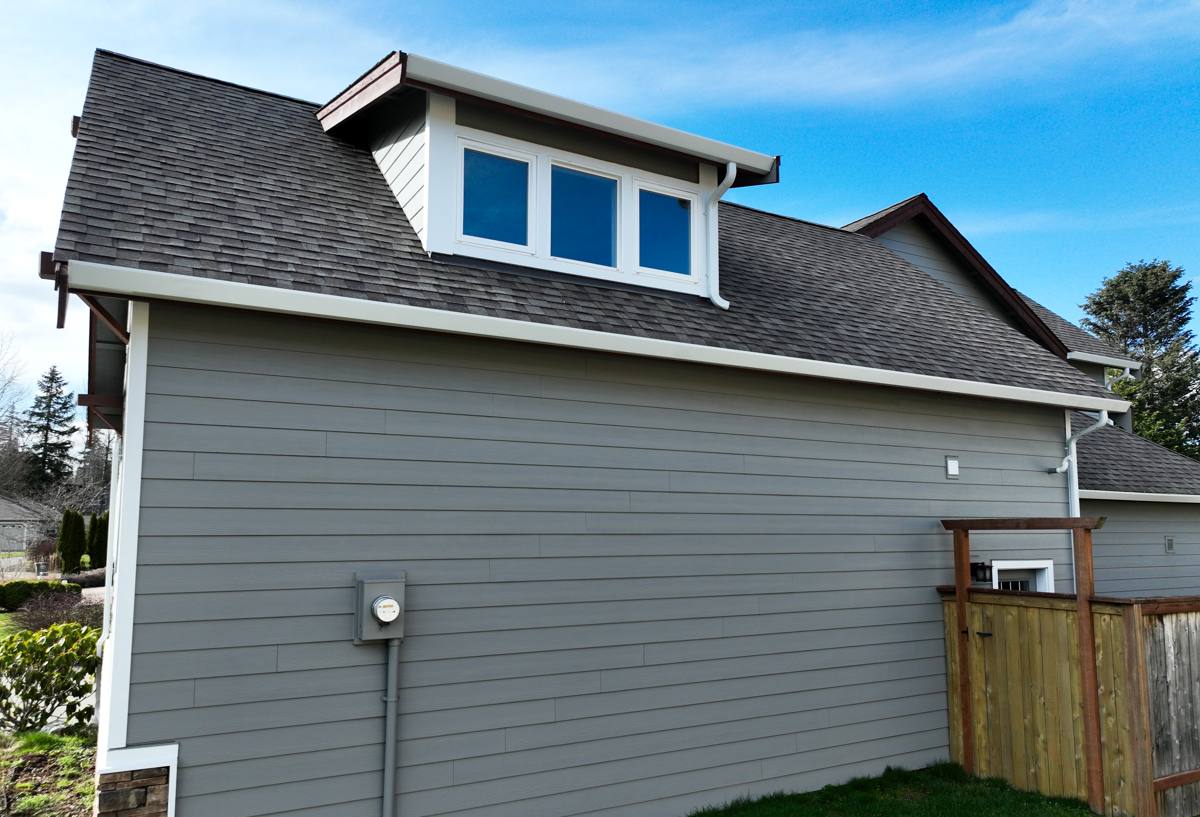
Signs Your Siding Needs Repair, Not Just a Cleaning
A lot of homeowners in this neighborhood start with a pressure wash or a scrub-down, which is a reasonable first step. But some symptoms mean the siding itself has been compromised and no amount of cleaning will fix it.
- Soft, spongy, or crumbling spots when you press on the siding, especially near the bottom courses and around windows and doors
- Paint or finish that's bubbling, peeling, or chalking unevenly in specific areas rather than across the whole wall
- Visible cracking, splitting, or buckled panels, particularly on south and west-facing walls that take the most wind-driven rain
- Persistent dark staining or moss regrowth within weeks of cleaning, which usually points to a spot that stays wet longer than the rest of the wall
- Gaps opening up at seams, corners, or where siding meets trim, window frames, or the foundation
- A musty smell near an exterior wall, or interior signs like discoloration on drywall near an outside corner
Any one of these can be an isolated repair. Several of them together, especially on an older section of siding, is usually a sign that moisture has been getting behind the material for a while.
What a Correct Siding Repair Actually Involves
Isolating the real extent of the damage
The visible damage is rarely the whole story. A soft spot at the bottom of a wall is often the endpoint of water that entered somewhere higher up — a cracked caulk joint, a gap at a window flashing, or a seam that's been open for a season or two. A repair that only replaces the section that looks bad, without tracing the water back to its entry point, tends to fail again within a year or two.
Checking what's behind the siding
Once a damaged section is pulled, we look at the house wrap or building paper, the sheathing, and the framing underneath before anything new goes back on. If the water intrusion has been going on for a while, the sheathing itself may need attention before new siding makes sense. Skipping this step is one of the most common reasons a siding repair looks fine for a year and then fails again.
Matching material, reveal, and finish
Siding installed even ten or fifteen years ago can be a different profile, reveal, or color than what's currently available, and older cedar or engineered wood products may not have an exact modern equivalent. A repair that doesn't account for this ends up visually obvious — a patch rather than a fix. Where an exact match isn't realistic, we'll tell you that up front rather than installing something that will stand out.
Siding Materials We're Called to Repair
Columbia has a mix of older and newer construction, which means we see a range of siding materials on repair calls. Each one behaves differently once it's been exposed to years of coastal moisture.
| Material | Common failure mode | Repairability |
|---|---|---|
| Vinyl | Cracking in cold snaps, warping near heat sources, faded and brittle panels | Easy to replace individual panels, but discontinued colors are hard to match |
| Cedar / solid wood | Rot at butt joints and lower courses, checking, moss holding moisture against the grain | Repairable if caught early; extensive rot usually means larger section replacement |
| Engineered wood (e.g. LP SmartSide) | Edge swelling and delamination where moisture gets into the substrate | Swollen edges rarely reverse; damaged boards typically need full replacement, not patching |
| Fiber cement (James Hardie) | Caulk and paint failure at joints, damage from impact rather than moisture | Very repairable — the substrate itself resists the moisture damage that drives most other repairs |
This is a big part of why, when a repair section is beyond patching and needs to be rebuilt, we rebuild it in James Hardie fiber cement rather than matching whatever moisture-sensitive product was there before. More on that below.
Our Repair Process
- On-site assessment. We walk the affected area, probe suspect spots, and look for the actual water entry point rather than just the visible damage.
- Honest scope. We tell you plainly whether this is a targeted repair, a larger section replacement, or a sign that a fuller re-side should be on your radar in the next few years.
- Remove and inspect. Damaged siding comes off, and we check the house wrap, flashing, and sheathing underneath before anything goes back on.
- Address the water path. Flashing, caulking, and any compromised sheathing get corrected — not just covered up.
- Rebuild and finish. New material goes on with proper fastening, gapping, and sealant detail, finished to match the surrounding wall as closely as the existing material allows.
- Walkthrough. We show you what we found and what we did, including anything worth keeping an eye on going forward.
Repair or Replace? Weighing the Real Factors
Not every damaged section needs a full re-side, and not every repair is a good long-term investment. These are the factors that actually drive that decision.
| Factor | Leans toward repair | Leans toward replacement |
|---|---|---|
| Extent of damage | Isolated to one or two sections | Spread across multiple walls or elevations |
| Age of existing siding | Under 10-15 years, still structurally sound elsewhere | Original siding is decades old or already near end of service life |
| Moisture intrusion history | Single identifiable source, now correctable | Evidence of long-term, widespread water entry behind the wall |
| Material match | Current material is still available or a close match exists | Discontinued profile or color makes any patch visually obvious |
| Underlying sheathing condition | Sound once exposed | Soft, delaminated, or compromised over a larger area |
We'll always give you our honest read on which side of this table your home falls on. A repair that's likely to need redoing again in two years isn't a good use of your money, and we'll say so.
Why We Rebuild With James Hardie Fiber Cement
When a repair section is too far gone to patch and needs to be rebuilt from the sheathing out, we don't reach for vinyl, LP SmartSide, cedar, or primed spruce to fill the gap — we use James Hardie fiber cement. It's the one material in the table above that isn't driven to failure by the same moisture and salt exposure that caused the original damage. It doesn't swell at cut edges the way engineered wood can, it won't crack in a cold snap the way vinyl sometimes does, and it holds paint and caulk far longer in coastal air than bare wood.
That matters most in a rebuild, because a rebuilt section is where a house is most vulnerable to the next round of wind-driven rain and moss growth. Hardie's ColorPlus factory finish and HZ product lines are engineered for exactly this kind of climate exposure, and the product carries a strong transferable warranty when it's installed to spec — which is worth something on an older home in a neighborhood like Columbia, where the next owner will want to know the exterior was done right.
Why a Crew That Already Works in Columbia Matters
Siding repair in a coastal Whatcom County neighborhood isn't identical to siding repair inland. Crews who work Columbia regularly know which walls in the neighborhood take the worst of the wind-driven rain, how aggressive the moss season gets on north-facing and shaded elevations, and how salt air accelerates fastener and flashing corrosion compared to drier parts of the county. That local pattern recognition is what keeps a repair from becoming a callback — it means we're not guessing at what caused the damage, because we've seen the same failure pattern on other homes nearby.
It also means faster, more accurate estimates. When you already understand how a neighborhood's housing stock and exposure behave, you can look at a damaged section and know within a few minutes whether it's a contained fix or a sign of something larger, instead of needing multiple visits to figure that out.
Caring for Your Siding After the Repair
- Rinse siding, especially north and shaded elevations, once or twice a year to slow moss and algae buildup before it takes hold
- Re-caulk joints and trim intersections on the schedule your installer recommends — this is cheap insurance against the next water intrusion
- Trim back vegetation and tree cover that keeps siding shaded and damp longer than the rest of the house
- Check gutters and downspouts each fall; overflow during heavy rain is a common, avoidable source of localized siding damage
- Walk your exterior once a year and press on any area that looks discolored or different from the surrounding wall — catching soft spots early is what keeps a repair small
If you're seeing any of the warning signs above on a home in Columbia, or you just want an honest opinion on whether a section can be repaired or should be replaced, we're happy to take a look. The estimate is free, there's no pressure to move forward, and you'll get a straight answer about what your siding actually needs.