 Bellingham Roofing
 Storm Damage in Columbia Isn't Like Storm Damage Everywhere Else
Homes in Columbia sit close enough to the water and the weather patterns that move through Bellingham to take a specific kind of beating over the course of a year. It's rarely one dramatic event that wrecks a roof here. More often it's a season of driving rain finding a weak spot, salt-laden air working on metal flashing and fasteners, and months of shade and moisture feeding moss that slowly lifts shingles from underneath. When a windstorm or heavy rain event finally does damage, it's usually landing on a roof that was already a little compromised — which is why a proper storm damage repair in this neighborhood has to look past the obvious and check what led up to it.
We treat storm damage repair in Columbia as two jobs in one: fix what the storm broke, and identify what let it break in the first place. Skipping the second part is how homeowners end up calling again after the next windstorm.
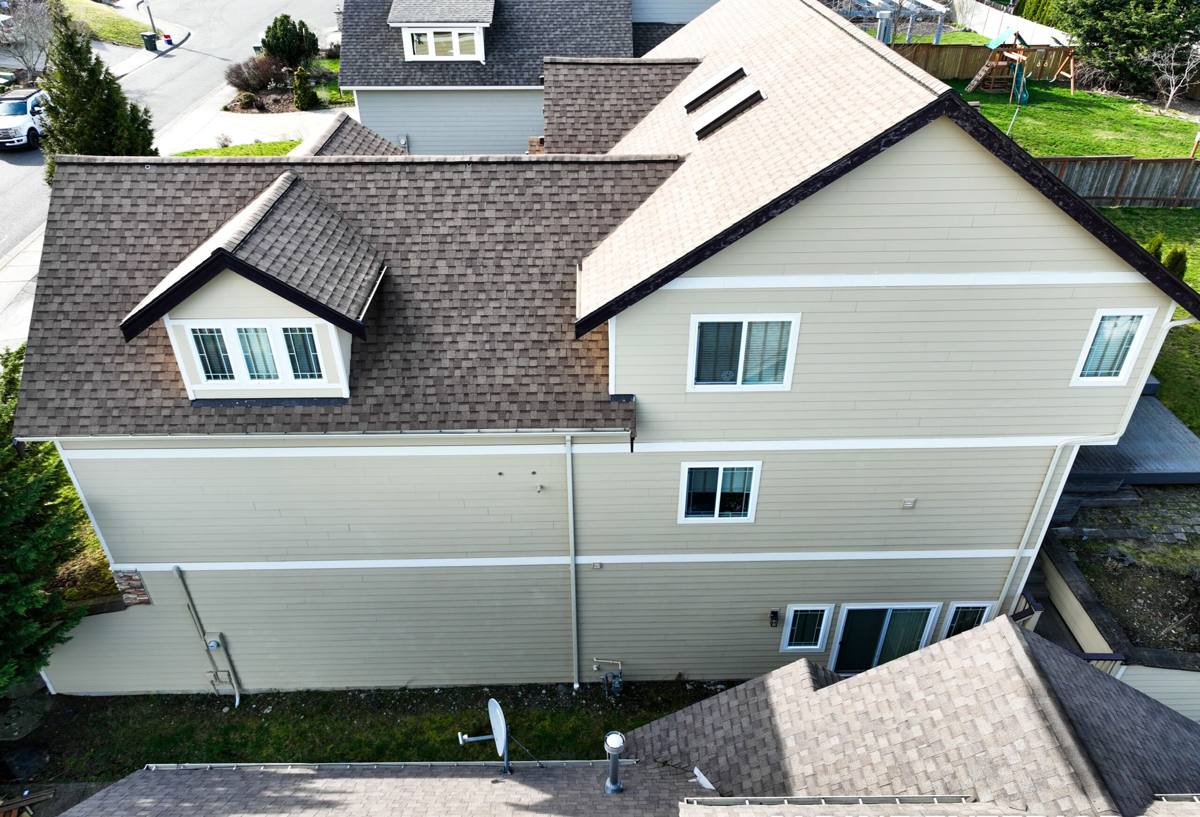
What Actually Counts as Storm Damage Here
In Whatcom County, storm damage doesn't usually mean the hail and tornado damage you'd see in other parts of the country. It shows up in quieter, more localized ways:
- Wind uplift along ridge caps, rake edges, and any shingle course that was already loosened by age or prior moss growth
- Wind-driven rain forced up and under shingles, flashing, and vent boots during sustained storms off the water
- Falling limbs and debris from mature trees common to this part of Bellingham, which can crack shingles, dent metal, or puncture the deck without an obvious hole
- Flashing failure around chimneys, skylights, and roof-to-wall transitions, where salt air and repeated wet-dry cycles corrode fasteners and sealant faster than in drier climates
- Saturation damage where a roof already carrying moss or debris couldn't shed a heavy rain event fast enough, and water backed up under the roofing material
That last one catches people off guard. A roof doesn't need a visible break to be storm-damaged — sustained rain finding an existing weak point can do as much harm as a falling branch, just less visibly.
Signs Your Roof Took a Hit
Most storm damage isn't obvious from the ground, and by the time it shows up as a ceiling stain, water has usually been getting in for a while. After any significant wind or rain event, it's worth checking for:
- Shingles that look lifted, curled, or out of alignment compared to the rest of the roof
- Granules collecting in gutters or at downspout outlets — a sign of impact or accelerated wear
- Bent, missing, or loose flashing around chimneys, vents, or skylights
- Soft or discolored spots on interior ceilings, especially near exterior walls or plumbing stacks
- New or worsened moss growth concentrated where debris or a broken shingle is holding moisture
- Debris, branches, or granule buildup pooled in valleys where water and wind both concentrate
Any one of these on its own might not be urgent. Two or three together, especially after a storm, is worth a proper look before the next rain event pushes it further.
What a Correct Storm Damage Repair Involves
Inspection Before Assumptions
We start on the roof, not with a guess from the driveway. That means checking the deck underneath damaged shingles, not just the shingles themselves — a cracked or broken shingle can hide a soft, water-damaged section of decking that needs to be addressed or the repair won't hold. We also check adjacent areas that weren't obviously hit, since wind damage tends to spread along a course rather than stay isolated to one spot.
Temporary Protection First, If Needed
If a repair can't happen the same day — waiting on materials, a larger scope than expected, or weather that makes it unsafe to work — the priority is stopping active water intrusion. That usually means tarping or sealing the exposed area properly, not just draping plastic over it, so the house stays protected through the next rain.
Matching Materials, Not Just Patching
A visible patch of mismatched shingles is a cosmetic problem today and a resale problem later. Where an exact match isn't available, we talk through the honest options — pulling stock from a less visible slope, or resetting expectations on what a blended repair will look like — rather than surprising a homeowner with a mismatched roof.
Addressing the Underlying Cause
If moss contributed to the damage, the repair isn't finished until the moss and the moisture source behind it are dealt with — trimming back overhanging branches where possible, clearing debris, and treating growth so the new work isn't compromised within a season. If flashing corrosion was a factor, we replace the flashing rather than resealing it, since resealing corroded metal is a short-term fix that tends to fail again.
Repair or Replace: How We Help You Decide
Not every storm-damaged roof needs a full replacement, and not every roof is worth repairing again. The right call depends on the roof's age, how much of it was affected, and what condition the rest of it is in.
| Factor | Leans Toward Repair | Leans Toward Replacement |
|---|---|---|
| Roof age | Under 12-15 years | Near or past expected lifespan |
| Extent of damage | Isolated to one section or slope | Spread across multiple areas |
| Prior repair history | First significant repair | Third or fourth patch in a few years |
| Decking condition | Solid, no rot found | Soft spots or rot discovered during inspection |
| Moss/moisture history | Manageable with cleaning and maintenance | Chronic, has caused repeated underlying damage |
We'll walk you through where your roof actually falls on that list before recommending either option — the goal is the right call for the roof in front of us, not the bigger invoice.
Our Process for Storm Damage Calls in Columbia
- Initial contact and triage — we ask what happened and how urgent it is, so active leaks get prioritized over cosmetic damage
- On-roof inspection — a full look at the damaged area and the surrounding roof, including the decking where shingles are compromised
- Clear scope and options — a straightforward explanation of what's damaged, what caused it, and what repair or replacement looks like, in writing
- Temporary protection if there's a delay — proper tarping so the home stays dry while materials or scheduling catch up
- Repair work — matched materials where possible, corroded flashing replaced rather than resealed, and any contributing moss or debris cleared
- Final check — confirming the repair area and the fasteners, flashing, and seams around it are sound before we call it done
Working With Insurance
Wind and storm damage is often a covered claim, but coverage depends on your specific policy and the cause of the damage — that's between you and your insurer. What we can do is document the damage clearly with photos and a written description of cause and scope, which is what most adjusters need to process a claim. We won't tell you what your policy covers, but we'll make sure the paperwork side of the repair doesn't slow you down.
Why a Crew That Already Works Columbia Matters
Storm damage repair goes faster and holds up better when the crew already understands the conditions a specific area deals with. In Columbia, that means knowing which roof styles and ages are most common in the neighborhood, what kind of moss and moisture issues tend to show up given the tree cover and exposure, and how salt air and Bellingham's rain patterns typically affect flashing and fasteners over time. It also means being realistic about scheduling — Whatcom County's wet season means storm repair requests cluster at predictable times of year, and a crew that knows the area plans for that instead of leaving homeowners waiting through the next rain event.
Local experience also shows up in the small decisions during a repair: which flashing details tend to fail first on homes in this area, where ice or standing water typically collects, and how to sequence a repair around Bellingham's weather windows instead of rushing a job into the next front moving in off the water.
After the Repair: Keeping Storm Damage From Coming Back
A repaired roof is only as good as what happens to it afterward. A few habits make a real difference in this climate:
- Keep gutters and valleys clear so heavy rain has somewhere to go instead of backing up under roofing material
- Have moss growth treated before it spreads across a slope, not after it's already lifting shingles
- Trim back branches that overhang the roof, which reduces both debris impact and the shaded, damp conditions moss needs
- Schedule a roof check after any major windstorm, even if nothing looks obviously wrong from the ground
- Address small flashing or sealant issues early, before salt air and repeated wet-dry cycles turn them into leaks
None of this requires a big budget or constant attention — it's mostly about catching small issues on a schedule instead of waiting for a storm to turn them into a bigger repair.
Get a Straight Answer on Your Roof
If a recent storm has you wondering whether your roof needs attention, or you've noticed signs of damage and aren't sure how serious it is, we're happy to take a look. There's no pressure and no obligation — just a clear, honest read on what's going on and what it would take to fix it. Use the form below to request a free estimate.