 Bellingham Roofing
 Happy Valley's Weather Is Hard on Decks
Homes in Happy Valley sit close enough to the water and the weather patterns coming off Bellingham Bay that decks here take a beating most inland Washington neighborhoods never see. Salt-laden air corrodes fasteners and hardware faster than people expect. Driving rain doesn't just fall straight down — it gets pushed sideways under railings and into board seams. And the long, gray moss season that runs through most of the fall, winter, and spring keeps deck surfaces damp for weeks at a stretch, which is exactly the environment moss, algae, and rot need to take hold.
A deck built for a drier climate, or built without this specific combination of exposure in mind, will show its age here in half the time. That's true whether the original material was wood or a lower-grade composite. The right composite decking system, installed correctly for this environment, is one of the few upgrades that actually changes the long-term maintenance picture rather than just delaying the same problems.
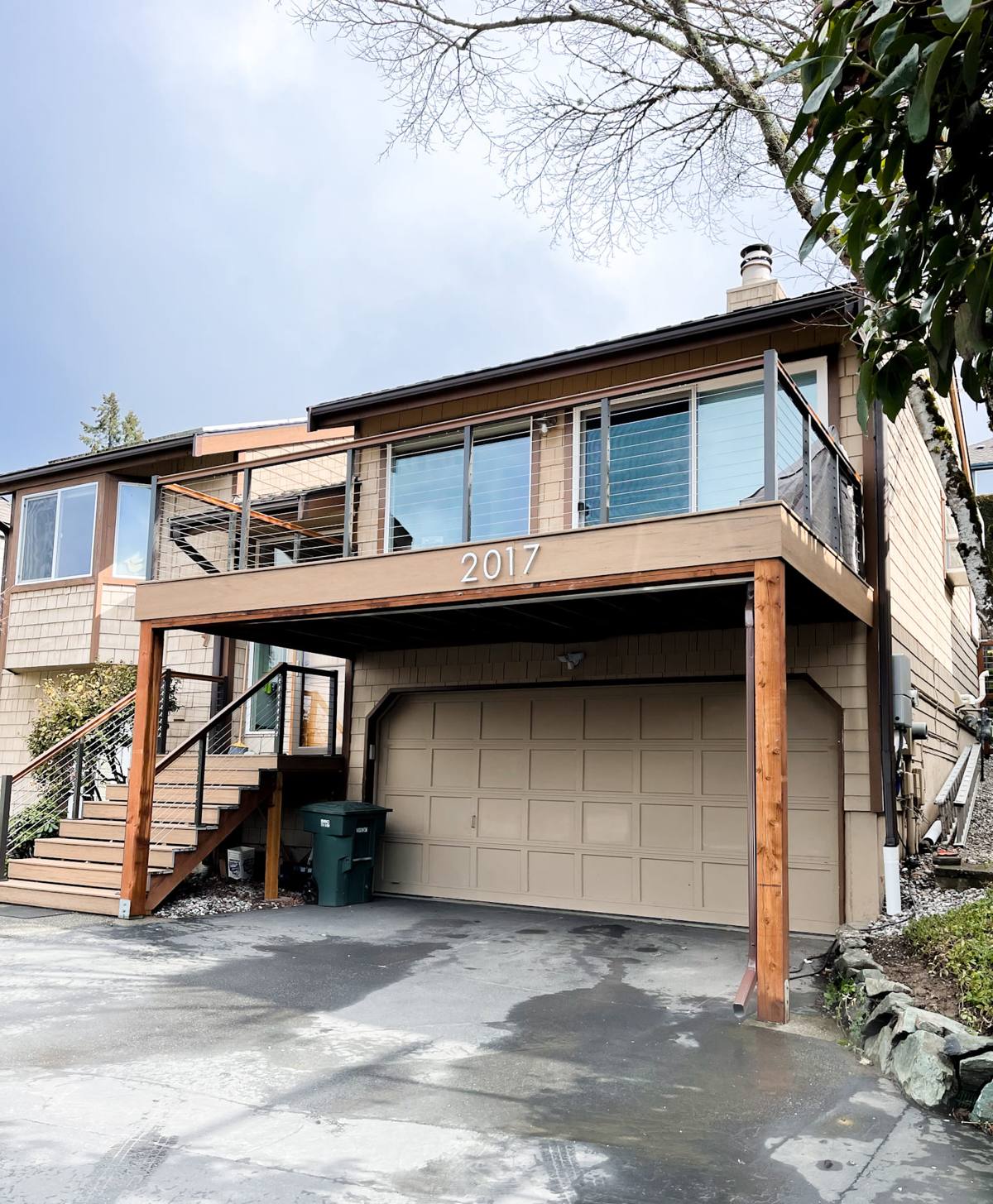
Why Composite Makes Sense for This Neighborhood
Wood decking can absolutely last in Whatcom County, but it asks a lot of the homeowner — annual cleaning, periodic sealing, and vigilant moss removal, especially on the north-facing or shaded sections of a deck that never fully dry out. Skip a season of maintenance in a climate like this and you're often looking at soft boards, cupping, or splinter-prone surfaces within a few years.
Composite decking removes most of that maintenance burden because the boards don't absorb moisture the way wood does, and they don't provide the same food source for mold and algae. That doesn't mean composite is maintenance-free — nothing exposed to Bellingham's wet season is — but it means the maintenance is basic cleaning rather than structural upkeep.
What Composite Doesn't Fix By Itself
Composite decking is only as good as what's underneath it. A capped composite board installed over a poorly ventilated or improperly flashed substructure will still trap moisture where it counts most — in the framing, the ledger connection, and the fasteners. This is where a lot of composite deck problems actually originate, and it's a detail that's easy to skip if a crew is used to faster, drier climates and hasn't adjusted their approach for coastal Whatcom County conditions.
Choosing the Right Composite for Salt Air and Standing Moisture
Not all composite decking performs the same way in this environment, and part of doing this job right is steering homeowners toward products that actually hold up here rather than whatever is cheapest at the moment.
Capped vs. Uncapped Composite
Fully capped composite boards (a polymer shell wrapped around the composite core) resist moisture absorption, staining, and moss growth far better than older uncapped composite products, which can wick water at the edges over time. In a climate with this much sustained dampness, capped composite is the standard we recommend rather than an upsell.
Board Profile and Grip Texture
Grooved-edge boards with hidden fastener systems reduce standing water pooling in fastener heads, which matters when a surface stays wet for days at a time. A textured, slip-resistant surface finish also matters more here than in drier regions — moss and algae film can make even composite decking slick if the surface is too smooth or the deck doesn't get much direct sun.
Color Considerations
Lighter composite colors show less obvious contrast when a light layer of pollen, dust, or early moss film builds up between cleanings, while darker boards run slightly warmer and can dry faster after rain. Neither is wrong — it's a tradeoff worth talking through based on how much sun a given deck actually gets.
What a Correct Installation Involves Here
The composite boards get most of the attention, but the parts of the job that determine whether a deck lasts 10 years or 25 in this climate are mostly hidden once the project is finished.
- Joist tape or a moisture barrier over all exposed framing, not just the deck surface, to protect wood substructure from the constant damp cycle
- Proper slope and spacing built into the substructure so water actually sheds instead of sitting under the decking
- Stainless steel or coated, corrosion-rated fasteners and hardware throughout — standard hardware corrodes noticeably faster this close to salt air
- Ledger board flashing that's actually sealed against wind-driven rain, not just standard flat flashing
- Adequate airflow underneath the deck so the substructure can dry between rain events instead of staying saturated all winter
- Manufacturer-specified fastener spacing and gapping for composite, since composite expands and contracts differently than wood and needs to be installed to its own tolerances
Skip any one of these and the visible composite boards can look fine for years while the structure underneath quietly deteriorates — which is a worse outcome than a wood deck that at least shows its wear where you can see it.
Our Process for Happy Valley Decking Projects
1. On-Site Assessment
We walk the site, check sun and shade exposure, note drainage patterns and any existing moss or moisture issues on the current deck or the ground beneath it, and measure for an accurate plan.
2. Material Selection
We go through composite options with the actual exposure of that specific deck in mind — a shaded, north-facing deck and a sunny, open one don't need the same product or finish.
3. Tear-Out and Substructure Inspection
If we're replacing an existing deck, we check the framing for rot or corrosion before building anything new on top of it. Framing that's compromised gets repaired or replaced, not covered up.
4. Framing and Moisture Protection
This is where joist tape, proper flashing, and correct fastener selection get built in — the part of the job that doesn't show up in photos but determines the deck's actual lifespan here.
5. Decking, Railing, and Trim Installation
Boards go down to manufacturer spec for gapping and fastening, railings and trim get installed and sealed at every penetration point.
6. Final Walkthrough and Cleanup
We walk the finished deck with the homeowner, cover basic care expectations for this climate specifically, and clean up the site.
Composite vs. Wood: What It Actually Costs Over Time
| Factor | Pressure-Treated Wood | Cedar | Capped Composite |
|---|---|---|---|
| Upfront material cost | Lowest | Mid-range | Highest |
| Annual maintenance in this climate | Cleaning + resealing yearly | Cleaning + sealing, more moisture-sensitive | Occasional washing, no sealing |
| Moss/algae resistance | Low without upkeep | Low to moderate | High, especially capped boards |
| Typical lifespan here with proper install | 10-15 years | 12-18 years | 25-30+ years |
| Warranty structure | Rare beyond lumber defects | Rare beyond lumber defects | Manufacturer-backed, often 25-50 years on materials |
Wood wins on upfront cost every time. Composite wins on total cost and time spent maintaining it once you factor in Bellingham's wet season stretching over most of the year. Which one makes sense depends on how long the homeowner plans to stay in the home and how much yearly upkeep they want to take on.
Keeping a Composite Deck Looking Good Here
Composite decking in Happy Valley still needs some seasonal attention, just far less than wood.
- Sweep debris and standing leaves off the deck regularly, especially in fall when they trap moisture against the surface
- Wash the deck with a soft-bristle brush and mild soap and water once or twice a year, more often on shaded sections prone to moss film
- Keep gutters and downspouts near the deck clear so runoff isn't dumping extra water onto or under the deck surface
- Check railing posts and fastener points annually for any sign of corrosion, especially on decks with direct exposure to prevailing wind off the water
- Trim back overhanging vegetation that keeps sections of the deck shaded and slow to dry
Why Local Experience in Happy Valley Matters
A composite deck installed by a crew that hasn't worked this specific stretch of Bellingham and Whatcom County can still fail early — not because the material was wrong, but because the install didn't account for the salt air, the wind-driven rain angle, or how long moisture sits before it evaporates here. Local experience means knowing which fastener grades hold up, which framing details actually need extra flashing given prevailing wind direction, and which parts of a lot tend to stay damp longer based on tree cover and sun exposure. That's knowledge you only build by working decks in this specific area over time, not by installing decks in a dozen different climates and applying the same generic approach everywhere.
It also matters for permitting and code compliance specific to the City of Bellingham and Whatcom County, and for knowing realistic timelines around the weather windows that actually allow for dry, workable installation conditions through the year.
If you're weighing a new composite deck or a replacement for Happy Valley, we're happy to walk the site, talk through material options for your specific sun and moisture exposure, and give you a straightforward, no-pressure estimate. Use the form below to get started.