 Bellingham Roofing
 Cordata's Siding Problem Isn't Your Imagination
If you own a home in Cordata and you've noticed streaking, soft trim, or a green film creeping up the north wall every winter, you're not dealing with a one-off maintenance issue — you're dealing with what this stretch of north Bellingham does to exterior building materials year after year. Cordata sits close enough to Bellingham Bay to pick up salt-laden air off the water, and far enough inland to trap the moisture that rolls off the Puget Sound lowlands and stalls against the Cascades foothills. That combination — salt exposure plus long, slow-drying wet seasons — is genuinely harder on siding than most homeowners realize until they've lived with it for a decade or two.
We work on homes in this neighborhood regularly, which means we're not guessing at how Cordata's climate behaves — we're watching it play out on the same lot sizes, the same roof pitches, and the same tree cover year after year.
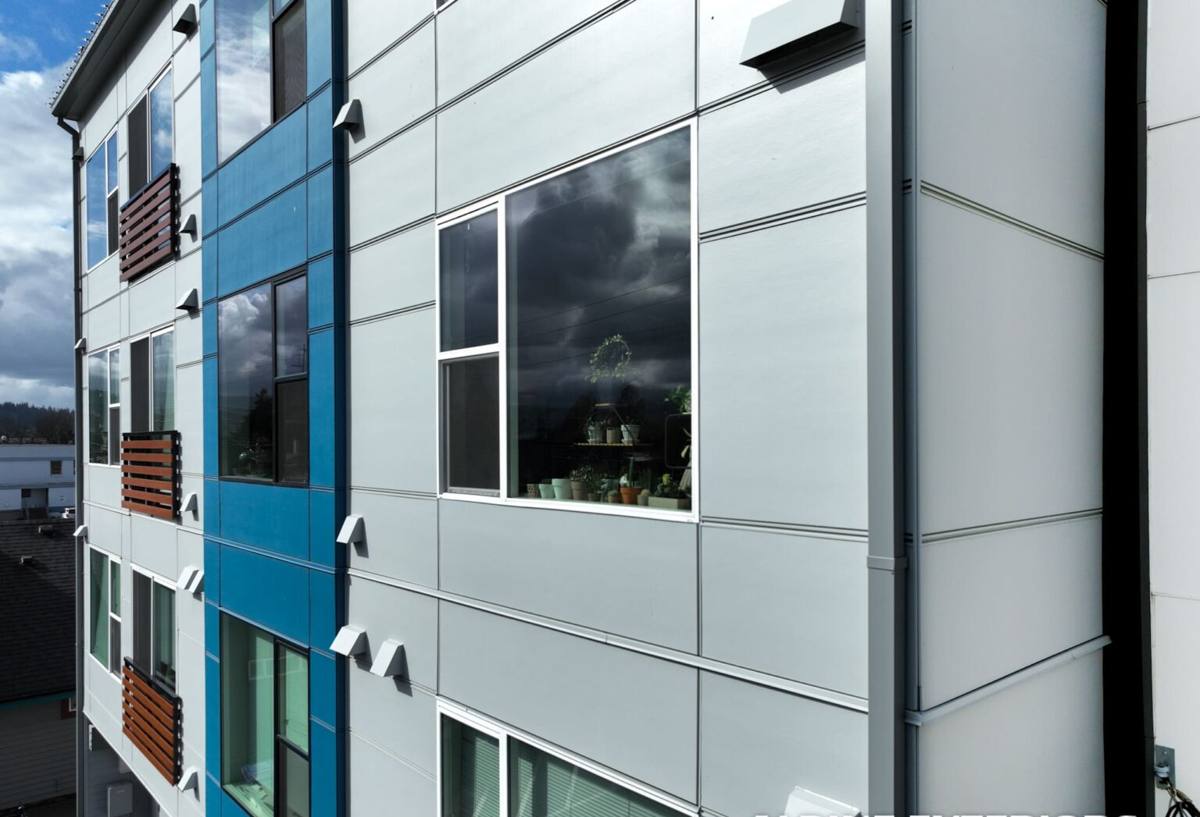
What Whatcom County's Climate Actually Does to Exterior Walls
Salt Air
Salt air doesn't just corrode metal fasteners and flashing — it accelerates the breakdown of paint film and caulk faster than inland Whatcom County properties experience. Homes closer to the water see this first, but Cordata isn't far enough removed to be exempt, especially on west- and north-facing walls that catch prevailing weather off the Sound.
Driving Rain
Bellingham doesn't get the heaviest rainfall totals in Western Washington, but it gets a lot of wind-driven rain — the kind that hits siding at an angle instead of running straight down. That matters because driving rain finds every gap in flush trim, every under-caulked seam, and every spot where house wrap wasn't lapped correctly. It's a water intrusion problem, not just a cosmetic one.
Moss Season
Whatcom County's moss season runs long — cool, damp, and shaded conditions from fall through spring give moss and algae months to establish themselves, especially on siding that sits under mature conifers or on the shaded side of a two-story home. Once moss gets a foothold in a seam or behind a piece of trim, it holds moisture against the wall assembly instead of letting it dry.
Why Fiber Cement Handles This Better Than the Alternatives
Fiber cement doesn't rot, it doesn't feed moss the way wood fiber does, and it doesn't warp or buckle the way some engineered wood products can when they take on repeated moisture cycles. That's exactly why we standardized on James Hardie fiber cement and stopped installing vinyl, LP SmartSide, primed wood, and other fiber cement brands. It isn't brand loyalty — it's that Hardie's product is manufactured and engineered specifically for climates like ours, backed by a strong transferable warranty, and finished with a factory-applied ColorPlus finish that holds up to UV and moisture far longer than field-applied paint.
That said, fiber cement is not magic. A poorly installed Hardie job in Cordata's climate will still fail early — trapped moisture, cracked caulk joints, and rust-streaked fasteners don't care what brand is on the box. The material matters, but the installation matters just as much.
What a Correct Fiber Cement Siding Job Actually Involves
This is where a lot of siding jobs — on any brand — go wrong. Fiber cement is a rigid, dimensionally stable product, which means it has to be installed with the right clearances, fastening pattern, and moisture management or it won't perform the way it's designed to.
- Weather-resistive barrier first. A correctly lapped house wrap or weather barrier goes on before any siding, with seams taped and penetrations properly flashed.
- Proper clearance. Hardie siding needs a minimum gap above roof lines, decks, and grade — skipping this is one of the most common causes of rot at the bottom course.
- Correct fastening. Hand-nailing or pneumatic nailing to Hardie's blind- or face-nail specifications, with fasteners set at the right depth — overdriven nails crack the board over time.
- Flashing at every horizontal transition. Window heads, trim boards, and butt joints all need flashing or Z-flashing, not just caulk, to shed driving rain correctly.
- Factory-cut edges kept factory-sealed. Any field cut needs to be sealed per Hardie's spec, or that edge becomes the first place moisture gets in.
- Caulk used correctly, not as a substitute for flashing. Caulk is a backup layer, not the primary water management strategy — a job that relies on caulk to do flashing's job will fail early in a climate like ours.
None of this is exotic — it's just detail work that takes longer to do right, and it's exactly the kind of detail that separates a siding job that lasts twenty-plus years from one that needs re-caulking and spot repairs within five.
Our Process for a Cordata Siding Project
1. On-Site Assessment
We walk the home in person — not just the siding itself, but the trim, the flashing at windows and rooflines, and any areas already showing moss, staining, or soft spots. In Cordata specifically, we pay close attention to shaded north- and west-facing walls, since those are the sides that hold moisture longest.
2. Scope and Product Selection
We talk through which Hardie product line and profile fits the home — lap siding, panel siding, or a mix with trim — and which ColorPlus finish holds up best given the home's sun exposure and surrounding tree cover.
3. Tear-Off and Substrate Check
Old siding comes off and we inspect the sheathing underneath. Any rot or water damage gets addressed before new siding goes up — covering over a compromised wall assembly is how good siding jobs turn into expensive problems a few years later.
4. Weather Barrier and Flashing
This is the step that determines how the home performs in wind-driven rain for the next few decades. We don't rush it.
5. Installation to Spec
Hardie siding goes up following manufacturer clearance, fastening, and joint-treatment requirements — not shortcuts to save a day of labor.
6. Final Walkthrough
We go over the finished job with the homeowner, point out anything worth knowing for long-term care, and answer questions before we consider the job done.
Why a Crew That Already Works Cordata Matters
A siding crew that only occasionally works north Bellingham doesn't have the same feel for how a specific lot's tree cover, wind exposure, or shade pattern is going to treat a wall assembly over time. A crew that regularly works Cordata has already seen which walls in this neighborhood tend to hold moss, which older subdivisions have trim details that need extra attention during tear-off, and how Whatcom County's inspection and permitting expectations apply to exterior work. That local repetition is what lets us flag a problem before it becomes a callback.
What Affects Cost on a Cordata Siding Project
| Factor | Why It Matters |
|---|---|
| Home size and number of stories | More square footage and second-story work both increase material and labor time |
| Condition of existing sheathing | Rot or water damage found during tear-off adds repair scope before new siding can go up |
| Trim and detail complexity | Homes with more windows, dormers, or architectural trim take longer to flash and finish correctly |
| Siding profile chosen | Lap siding, panel siding, and shingle-style Hardie products differ in material and labor cost |
| ColorPlus vs. field-applied finish | Factory-finished ColorPlus costs more upfront but avoids a repaint down the road |
| Access and site conditions | Tight lot lines, slopes, or landscaping close to the house can add labor time |
We give exact numbers only after seeing the home in person — anyone quoting a firm price over the phone for a job like this hasn't actually assessed the walls yet.
Keeping Moss and Moisture From Getting a Foothold
- Keep gutters clear so runoff isn't sheeting down the siding face during heavy rain
- Trim back branches and shrubs that keep a wall shaded and damp longer than it needs to be
- Rinse visible moss or algae buildup before it spreads, rather than waiting until it's established
- Check caulk joints at trim and window edges annually — this is usually the first place wear shows
- Have flashing and clearances checked if you notice staining at the base of a wall or below a window
Fiber cement siding installed correctly needs far less of this than wood or vinyl, but "far less" isn't "none" — a little seasonal attention goes a long way in a climate that gives moss this many months to work with.
Get a Straight Answer on Your Cordata Home
If your siding is showing its age — moss, staining, soft trim, or paint that won't hold anymore — we're happy to take a look and give you an honest read on what's going on and what it would take to fix it right. Reach out for a free, no-pressure estimate and we'll walk your home with you in person.