 Bellingham Roofing
 Roof Repair Built for Cordata's Weather, Not Just Any Roof
Cordata sits in north Bellingham, close enough to Bellingham Bay and the Salish Sea that the air itself is part of the maintenance equation. A roof repair here isn't the same job as a roof repair in a dry inland climate. Whatcom County's marine air, its long stretch of wet months, and the moss that thrives in that dampness all act on a roof differently than they would somewhere with a shorter, drier winter. When we repair a roof in Cordata, we're accounting for all of that, not just patching the spot where water is currently getting in.
This page covers roof repair specifically for the Cordata area of Bellingham — what the local climate does to roofing materials, what a correct repair looks like, how we approach the work, and why it matters to hire a crew that already understands this neighborhood's conditions rather than one working from a generic checklist.
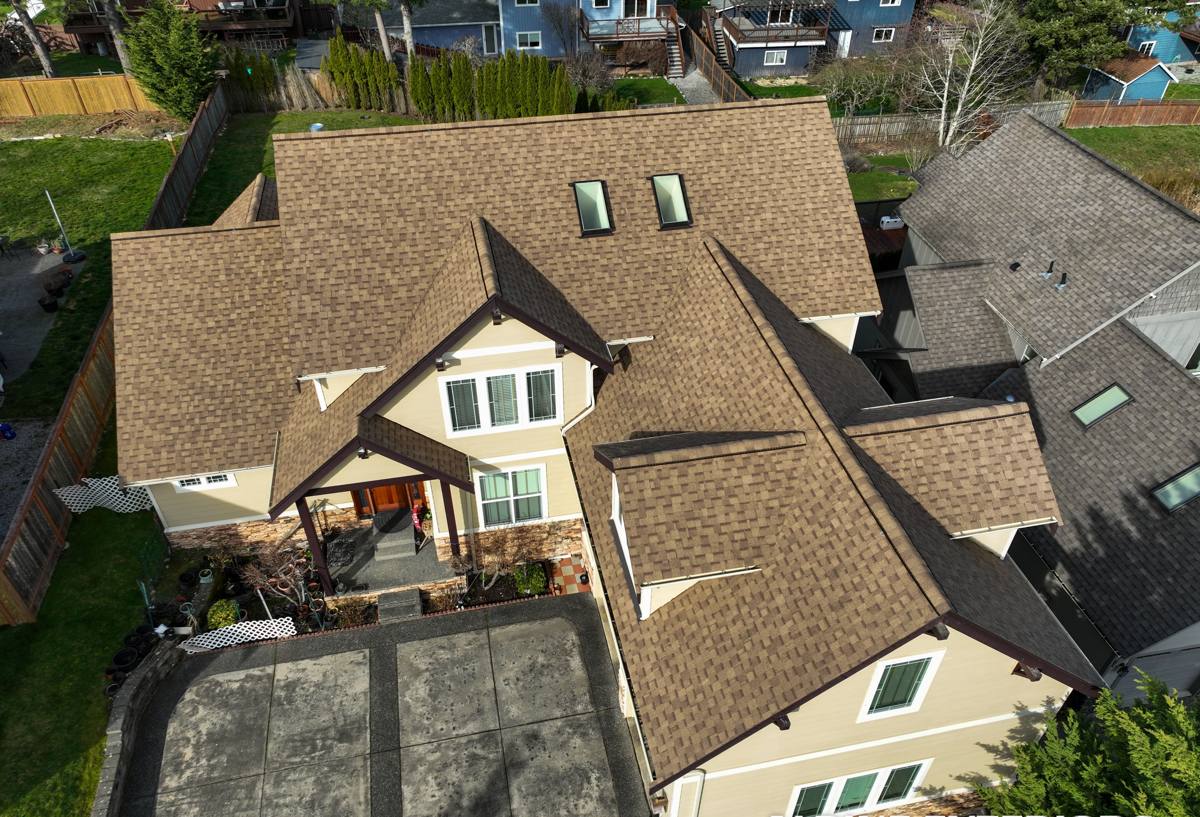
What Bellingham's Climate Does to a Cordata Roof
Salt Air and Slow Metal Fatigue
Being near the water means the air carries salt, even miles inland. Salt-laden moisture speeds up corrosion on exposed metal roofing components — flashing, nail heads, gutter hardware, and any exposed fasteners. On their own, these are small parts, but they're the parts that keep water out of the places a roof is most vulnerable: valleys, chimneys, vent pipes, and skylight edges. When metal flashing corrodes or fasteners back out over time, it rarely announces itself with a dramatic failure. It shows up as a slow leak that homeowners often notice months after it actually started.
Driving Rain, Not Just Rain
Bellingham doesn't just get a lot of rain — it gets wind-driven rain that comes in at an angle, which behaves very differently than water falling straight down. Driving rain can work its way under shingles, around improperly sealed penetrations, and into laps that would be fine in calm weather. A repair that only addresses vertical water flow can still fail the first time a storm pushes rain sideways under a roofing course.
A Moss Season That Doesn't Really End
Because Cordata stays damp for a large part of the year, moss and algae growth isn't a seasonal nuisance here — it's close to a year-round condition, especially on north-facing slopes and shaded sections under tree cover. Moss holds moisture against the roofing surface long after the rest of the roof has dried, which accelerates granule loss on composition shingles and can lift shingle edges enough to let wind-driven rain underneath. A roof repair that doesn't address the moss causing the damage is a temporary fix at best.
Common Roof Repair Problems We See in Cordata
Cordata has a mix of housing ages and roof types, from established homes to more recently built ones, and the repair issues we run into track pretty closely with what the climate above would predict.
Aging Composition Shingle Roofs
Composition (asphalt) shingle is the most common roofing material in the neighborhood, and its most frequent failure points are moss-related granule loss, cracked or curling shingles from repeated wet-dry cycling, and nail pops where fasteners have worked loose. These usually start small and localized, which is good news — they're often repairable without a full roof replacement if caught early.
Low-Slope Sections on Newer Builds
Some newer construction in the area includes low-slope or nearly flat sections over porches, additions, or garages. These sections don't shed driving rain the way a steep-pitch roof does, and they're less forgiving of small installation or membrane errors. Leaks here often trace back to seams, transitions, or improperly flashed edges rather than the field of the roofing material itself.
Flashing and Penetration Leaks
Chimneys, plumbing vents, skylights, and roof-to-wall transitions are where most leaks actually originate, even when the shingles nearby look fine. Salt-air corrosion and repeated wet-dry cycling both attack these connection points faster than they attack the open field of the roof, which is why an experienced repair crew inspects flashing and penetrations first, not last.
What a Correct Roof Repair Actually Involves
A roof repair that lasts starts with correctly identifying where water is entering — which is often not where it's showing up inside the house. Water can travel along a rafter or sheathing seam for several feet before it drips somewhere visible, so a stain on a ceiling doesn't always point straight up to the leak source.
A correct repair generally includes:
- Locating the actual entry point, not just the visible symptom
- Checking the condition of the underlayment and decking beneath the damaged area, since a wet deck needs to dry and sometimes be replaced before new material goes on top
- Replacing or resealing flashing at any nearby penetration, valley, or transition — not just the shingles
- Matching replacement shingles as closely as possible in type, weight, and color
- Clearing moss and debris from the surrounding area so it doesn't undermine the repair from the edges inward
- Checking attic ventilation near the repair site, since poor ventilation traps moisture and accelerates the exact problems the repair is meant to fix
Skipping any of these steps tends to produce a repair that holds for a season or two and then fails again — often in a slightly different spot, which can make it look like a new problem when it's really the same underlying cause.
Our Roof Repair Process
- Inspection. We get on the roof (not just a ground-level look) and check the repair area along with flashing, valleys, vents, and any moss-affected sections nearby.
- Diagnosis and explanation. We explain what's actually causing the leak or damage in plain terms, including whether it's isolated or a sign of broader wear.
- Written estimate. You get a clear scope of work and price before anything is touched — no surprise add-ons mid-job.
- Repair. We address the root cause: decking, flashing, underlayment, and shingles as needed, not just a surface patch.
- Moss and debris cleanup. Any moss contributing to the problem gets treated so it doesn't undo the repair.
- Final check. We verify the repair holds under close inspection before calling the job done.
Repair or Replace? Weighing the Factors
Not every roof problem in Cordata calls for a repair, and not every one calls for full replacement. The right call usually comes down to the roof's age, how widespread the damage is, and whether the underlying decking is sound.
| Factor | Favors Repair | Favors Replacement |
|---|---|---|
| Roof age | Under roughly 15 years | Nearing or past typical shingle lifespan |
| Damage extent | Localized to one area or slope | Spread across multiple slopes or sides |
| Decking condition | Dry, solid, no rot | Soft spots or rot in multiple areas |
| Moss coverage | Light to moderate, treatable | Heavy, long-term, granule loss widespread |
| Shingle condition elsewhere | Still flat, granules intact | Curling, cracking, or balding across the roof |
Costs vary based on the size and accessibility of the repair area, the pitch of the roof, and how much of the underlying structure needs attention — a small flashing repair is a very different job than one that involves replacing sections of wet decking. We'll always give you an honest read on which side of this table your roof falls on before recommending either option.
Signs Your Cordata Roof Needs Repair Now
Some roof problems are easy to spot; others hide until they've caused more damage than necessary. Watch for:
- Water stains on ceilings or upper walls, especially after a windy rainstorm
- Visible moss buildup, particularly on north-facing or shaded slopes
- Shingles that look curled, cracked, or are missing granules (a gritty buildup in gutters is a clue)
- Daylight visible through the roof deck from inside the attic
- Soft or spongy spots when walking areas near the roofline, like porches or additions
- Granules collecting in downspouts or at the base of gutters after storms
- Flashing that looks lifted, rusted, or separated from the roof surface
- A musty smell in the attic, which often points to trapped moisture before you see a stain
If more than one or two of these are showing up, it's worth having someone look before the next round of driving rain finds the weak spot for you.
Why a Crew That Already Works in Cordata Matters
A roofer who works this part of Whatcom County regularly already knows how salt air and moss behave on the roofing materials common to this area, which speeds up an accurate diagnosis. It also means fewer surprises: local familiarity with typical construction in the neighborhood helps a crew anticipate what's likely under the shingles before they ever pull one up.
Just as importantly, a local crew is accountable in a way an out-of-area contractor isn't. If a repair needs a follow-up visit, we're not driving in from somewhere hours away — we're already working in Bellingham. That matters for a roof repair specifically, since the real test of a repair is how it holds up through the next few storms, not how it looks the day the crew leaves.
Keeping a Repaired Roof Lasting
A good repair buys you time, but Bellingham's climate doesn't stop working on your roof once the crew packs up. A few habits go a long way toward protecting the work:
- Keep gutters and downspouts clear so water isn't backing up under roof edges during heavy rain
- Have moss treated before it spreads back across a full slope, not after
- Trim back overhanging branches that keep sections of the roof shaded and damp
- Schedule a roof check after any major windstorm, even if nothing looks obviously wrong from the ground
- Address small issues — a lifted shingle corner, a small stain — before the next wet season, not after it
A roof repair done right, followed by basic upkeep, can hold up well against everything this climate throws at it. If you're seeing signs of trouble on a Cordata roof, or just want an honest opinion on what's going on up there, we're happy to take a look. Fill out the form below for a free, no-pressure estimate.