 Bellingham Roofing
 Building Decks for Sunnyland's Weather, Not Just Its Yards
Sunnyland sits close enough to the water and to Whatcom County's marine weather patterns that a deck here takes a different kind of beating than one built inland. Salt-tinged air corrodes fasteners and hardware faster than most homeowners expect, driving rain gets pushed sideways under railings and ledger boards by wind off the bay, and the long stretch of gray, wet months from fall through spring keeps every horizontal surface damp long enough for moss and algae to take hold. A deck built without those specific conditions in mind will look fine the first summer and start showing problems by the second or third winter.
We build decks for this neighborhood knowing what the weather actually does to them over years, not just what looks good on installation day. That means different fastener choices, different attention to drainage and airflow, and a different maintenance conversation with the homeowner before we ever cut a board.
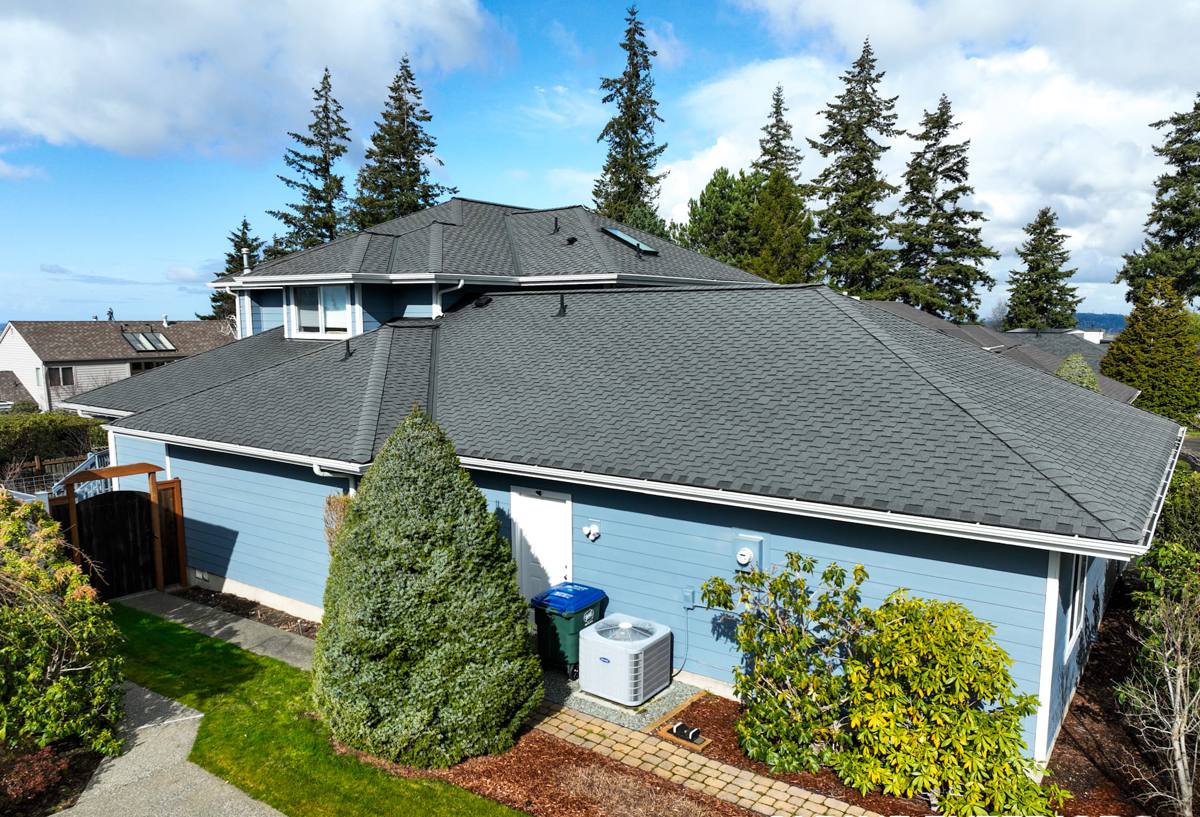
What Bellingham's Climate Actually Does to a Deck Over Time
It helps to understand the specific failure points before talking about materials and methods, because every decision below traces back to one of these:
- Corrosion — salt air and constant moisture accelerate rust on lower-grade screws, nails, and joist hangers, sometimes years before the wood itself shows wear.
- Trapped moisture — driving rain finds its way into ledger connections, under railing posts, and between deck boards that sit too tight together, leading to rot in framing that's otherwise hidden from view.
- Moss and algae growth — Bellingham's long wet season gives moss months to establish itself on any surface that doesn't dry out between rains, making boards slick and, over time, holding moisture against the wood surface.
- UV and freeze-thaw cycling — even with our relatively mild winters, repeated wet-to-cold-to-wet cycles stress finishes, fasteners, and joints faster than a drier climate would.
None of these are dramatic on their own. They're slow, and that's exactly the problem — a deck can look structurally sound while moisture damage is already working on the framing underneath.
Choosing the Right Decking Material for This Neighborhood
There's no single "best" decking material — every option is a trade-off between upfront cost, maintenance, and how it handles constant moisture. Here's how the common choices actually compare for a Sunnyland application:
| Material | Moisture Behavior | Maintenance | Typical Lifespan Here |
|---|---|---|---|
| Pressure-treated fir/hem-fir | Absorbs and releases moisture readily; needs to breathe and dry | Annual cleaning and periodic re-sealing | 10-15 years with upkeep |
| Cedar | Naturally rot-resistant but still needs finish protection in this climate | Re-oiling every 1-2 years to hold color and resist moss | 15-20 years with upkeep |
| Composite decking | Doesn't absorb water like wood, but can still grow surface algae if it never dries | Periodic washing; no sealing or staining | 25+ years, varies by product line |
| PVC/capped polymer | Fully moisture-resistant surface; least affected by standing dampness | Lowest — mostly just washing off moss buildup | 25+ years, warranty-backed |
For homeowners who want the lowest long-term maintenance in a wet, moss-prone spot, composite or capped polymer decking generally makes sense. For homeowners who want a natural wood look and are willing to stay on top of cleaning and re-sealing, cedar holds up well here as long as it's detailed correctly underneath — which matters more than the surface material itself.
Why We're Selective About Hardware and Fasteners
Standard galvanized fasteners can start showing surface corrosion within a few years this close to the water. We use stainless steel or heavy-duty coated fasteners rated for coastal/marine exposure on connections that matter most — ledger bolts, joist hangers, and structural screws — even when it costs more upfront, because replacing a rusted-through hanger means tearing into the deck later.
The Structural Basics That Actually Matter
A deck's visible surface gets all the attention, but the framing underneath is what determines whether it lasts. In a climate like ours, a few details matter more than they would in a drier region:
- Ledger board flashing — the connection where a deck attaches to the house is the single most common source of hidden rot if it isn't flashed correctly to shed water away from the wall.
- Joist tape or capping — protecting the tops of joists from standing water extends framing life significantly, especially under composite boards that don't let moisture escape as easily as wood.
- Proper board spacing — gaps that are too tight trap debris and moisture between boards, which is exactly what moss needs to get started.
- Footing depth and drainage — footings need to be set below frost depth and away from standing water, with gravel drainage that keeps posts from sitting in saturated soil.
None of this is visible once the deck is finished, which is exactly why it's worth asking a contractor how they handle it before work begins.
Drainage, Airflow, and Keeping Moss From Taking Over
Moss doesn't need much to get established — just a surface that stays damp longer than it dries. A few design choices make a real difference over the life of a Sunnyland deck:
- Grading and gutter placement that keeps roof runoff from draining directly onto or under the deck
- Adequate clearance and ventilation underneath low decks so airflow can dry out the substructure between rains
- Board orientation and spacing that lets water run off rather than pool
- Keeping nearby trees and shrubs trimmed back so the deck surface gets some sun and airflow during breaks in the weather
- Choosing a surface finish or material that doesn't hold a slick film once moss spores land on it
We factor these into the design stage rather than treating them as an afterthought, because retrofitting drainage under a finished deck is far more disruptive than planning for it upfront.
How Our Process Works
1. On-Site Assessment
We start by looking at the actual site conditions — sun and shade exposure, drainage patterns, proximity to the house's roofline, and how exposed the spot is to wind-driven rain. This tells us more about what the deck needs than a floor plan ever could.
2. Material and Layout Conversation
We walk through the honest trade-offs between wood and composite/PVC decking for that specific spot, based on sun exposure, how much upkeep the homeowner wants to do, and budget. There's no one right answer — just the right one for that yard.
3. Permitting
Most new decks and significant rebuilds in the City of Bellingham and unincorporated Whatcom County require a building permit, particularly once you're above a certain height or attached to the house. We handle that process rather than leaving it to the homeowner to figure out.
4. Framing and Structural Work
This is where the moisture-management details above get built in — ledger flashing, joist protection, fastener selection, and footing placement — before a single deck board goes down.
5. Decking, Railings, and Finish Work
Final surface installation, railing systems, and any staining or sealing needed, done with attention to proper spacing and drainage rather than just a clean finished look.
6. Final Walkthrough
We go over care and maintenance specific to the material installed, so the homeowner knows what upkeep actually looks like in this climate — not generic advice, but what applies to their deck.
Maintenance That Actually Fits This Climate
What a deck needs to stay in good shape here isn't the same as what a deck needs in a drier climate. A short, realistic maintenance checklist for most Sunnyland decks:
- Sweep off standing debris and leaves regularly, especially in fall, so they don't hold moisture against the surface
- Wash down the surface at least once or twice a year to remove early moss and algae growth before it establishes
- Check and re-seal or re-oil wood decking on the schedule the material calls for — skipping a cycle in a wet climate catches up fast
- Periodically check railing posts and stair connections for movement, which can signal moisture getting into a joint
- Keep gutters and downspouts clear so roof runoff isn't draining onto or under the deck
Why Hiring a Crew That Already Works This Neighborhood Matters
Sunnyland's mix of exposure to weather off the bay, tree cover, and older housing stock means the right deck detailing here isn't identical to a deck built on the other side of Bellingham, let alone a deck built somewhere without our salt air and rain patterns. A crew that already works this neighborhood has seen which corners get hit hardest by wind-driven rain, which yards hold moisture longest, and which fastener and material choices actually hold up here rather than just on paper. That local knowledge shows up in decisions you won't see on the finished deck — the flashing detail, the fastener grade, the drainage grading — but that determine whether it's still solid in ten years.
If you're planning a new deck or replacing one that's showing its age, we're happy to come out, take a look at your specific site conditions, and give you a straightforward, no-pressure estimate. Use the form below to get started.