 Bellingham Roofing
 Deck Repair Built for Birchwood's Weather
Birchwood decks work harder than people realize. Bellingham's marine climate means your deck spends a good chunk of the year wet, shaded, and slow to dry out. Add in salt-tinged air off Bellingham Bay, driving rain that comes in sideways during winter storms, and a moss season that can stretch from October well into spring, and you have a recipe for slow, hidden damage. Most deck problems we find in this neighborhood didn't happen overnight — they built up over several wet seasons while the deck still looked fine from a distance.
We work on decks throughout Bellingham and Whatcom County, and Birchwood call-outs follow a pretty consistent pattern: softened ledger boards, moss-packed gaps between boards, rusted fasteners, and rot that starts at ground contact points and works its way up. None of that is unusual for our region — it's just what happens to wood and hardware left outside in the Pacific Northwest. The fix isn't complicated, but it does need to be done correctly, and that starts with actually understanding what's underneath the surface.
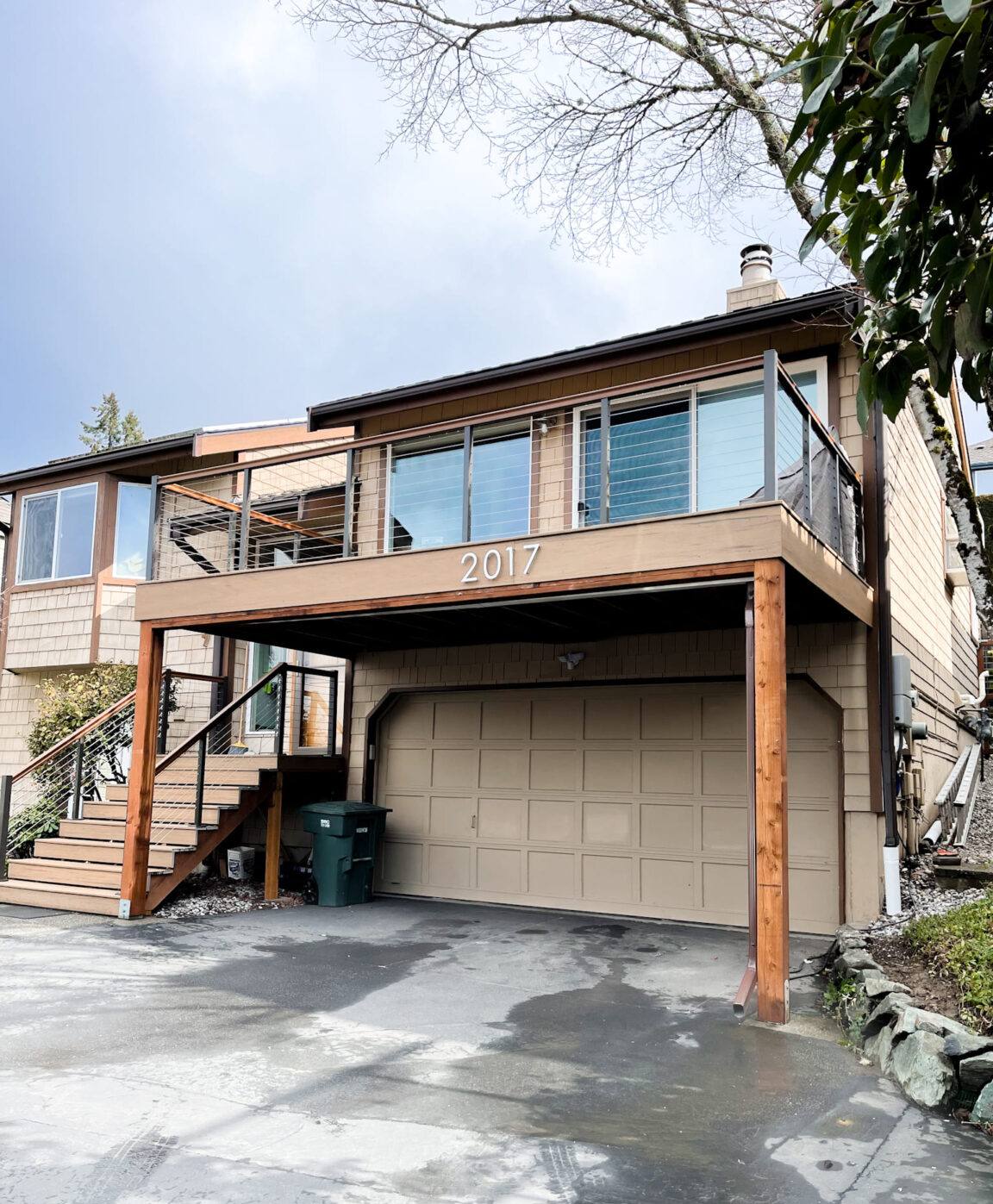
Signs Your Deck Needs Repair — Not Just a Cleaning
A lot of homeowners pressure-wash a mossy deck, see it look better, and assume the problem is solved. Sometimes it is. Other times the moss and algae were hiding something more serious. Here's how to tell the difference before you call anyone out.
Surface-Level Issues (Usually Cleaning or Minor Repair)
- Green or black staining across the boards without soft spots underneath
- Slippery texture that improves once cleaned and dries
- Faded or graying wood with no give when you press on it
Structural Issues (Needs a Real Repair)
- Boards that flex, spring, or feel spongy underfoot
- A screwdriver or awl sinks easily into the wood at joints or ledger areas
- Visible gaps opening up between the deck and the house
- Rust streaks running down from fasteners or metal connectors
- Railings that wiggle more than they should when you lean on them
If you're seeing anything in that second list, cleaning alone won't fix it, and waiting usually means the repair gets bigger and more expensive.
What a Correct Deck Repair Actually Involves
A proper repair isn't just swapping out the board that looks worst. It starts with figuring out why that board failed in the first place, because in this climate the cause is almost always moisture that had somewhere to sit and nowhere to drain.
The Inspection
We check the ledger board connection to the house first, since that's the single most important structural point on most decks and the one place a failure actually matters for safety. From there we look at joists, the posts and footings, railings and their connection points, and the condition of fasteners throughout. We're also checking for proper flashing where the deck meets the house — a detail that's easy to skip during original construction and is one of the most common sources of hidden rot we find.
The Repair Itself
Depending on what we find, a repair can mean replacing individual boards, sistering or replacing damaged joists, resetting posts that have shifted, correcting flashing that was never installed right, or swapping corroded fasteners for hardware rated to handle our climate. We match repairs to what the deck actually needs — we don't upsell a full rebuild when a targeted repair will hold up, and we don't patch over a structural problem just to save a trip back out.
Repair vs. Replace: How We Make the Call
| Factor | Points Toward Repair | Points Toward Replacement |
|---|---|---|
| Framing condition | Joists and ledger are solid, damage is isolated | Rot has spread through multiple structural members |
| Deck age | Under 15-20 years, built to a reasonable standard | Original construction is outdated or undersized for current use |
| Extent of damage | Limited to a few boards or one section | Soft spots or rust are showing up across the whole deck |
| Footings and posts | Stable, no shifting or settling | Posts are heaving, rotted at the base, or undersized |
| Your plans | Deck size and layout work fine for how you use it | You want a different footprint, railing style, or added coverage |
Most of the calls we take in Birchwood end up being straightforward repairs. Full replacements come up when the framing itself has been compromised, not just the surface boards.
Common Problem Areas We See in Birchwood
Every neighborhood has its own patterns based on tree cover, sun exposure, and typical construction age, and Birchwood is no exception. The issues we run into most often here are:
Moss and Algae Buildup Between Boards
Shaded decks, or decks near mature landscaping, hold moisture longer, and moss takes hold in the gaps between boards. Left alone, that trapped moisture works into the wood grain and accelerates rot from the top down instead of the bottom up.
Ledger Board Moisture
Where the deck attaches to the house is the spot most exposed to water running off the roofline or siding, and it's often the least visible. This is the area we check first on every inspection because a compromised ledger connection is a safety issue, not just a cosmetic one.
Fastener Corrosion
Salt air off the bay accelerates corrosion on lower-grade screws and nails. Once fasteners rust and lose their grip, boards start to lift, squeak, or shift underfoot even if the wood itself is still in decent shape.
Ground-Contact Rot at Posts
Posts set too close to soil, or without proper standoff and drainage, wick up moisture continuously. This is a slow failure that's easy to miss until a post is visibly leaning or soft at the base.
Materials and Fasteners We Use
What goes into a repair matters as much as the labor. Our standard approach favors materials that hold up specifically to Pacific Northwest conditions, not just materials that are cheapest or fastest to install.
- Pressure-treated lumber rated for ground contact where posts or framing sit close to soil
- Stainless or coated deck screws instead of standard fasteners, since our salt air and rainfall accelerate corrosion on lower-grade hardware
- Proper flashing tape and metal flashing at ledger connections, correcting gaps left by original construction where needed
- Composite or capped composite boards as an option where a homeowner wants lower long-term maintenance, understood as a different maintenance profile and price point rather than a universal upgrade
We'll walk you through the trade-offs for your specific deck rather than defaulting to one material for every job. Wood costs less upfront and can be repaired board by board; composite costs more upfront but needs less refinishing over time. Neither is automatically the right answer — it depends on your budget, how much shade the deck sits in, and how long you plan to stay in the home.
Our Repair Process
- Inspection. We check framing, ledger connection, posts, railings, and fasteners, and explain what we find in plain terms.
- Written scope. You get a clear description of what needs repair, what's optional, and why — no vague line items.
- The repair. We do the work with materials suited to our climate, not just what's cheapest at the yard.
- Final check. We walk the deck with you afterward so you can see and feel the difference, especially at any spot that was flexing or soft before.
Maintenance Checklist for Whatcom County Decks
A little upkeep between repairs goes a long way in this climate. These are the habits that actually extend a deck's life here:
- Sweep debris and fallen leaves out of board gaps regularly, especially in shaded areas
- Clean moss and algae off the surface before it has a chance to work into the wood
- Check the ledger board area after heavy rain for standing water or staining
- Look at fasteners once a year for rust streaks or heads that have started to lift
- Keep gutters and downspouts clear so runoff isn't draining directly onto the deck
- Reseal or restain wood decking on the schedule the product calls for — don't stretch it out just because it still looks okay
Why a Local Bellingham Crew Matters
A deck repair done by someone unfamiliar with our region tends to treat every job the same way, regardless of climate. A crew that works Whatcom County regularly knows which failure points show up first here, understands how moss season and salt air interact with different materials, and isn't guessing about what "normal wear" looks like on a Bellingham deck versus one in a drier climate. That local familiarity is what keeps repairs from becoming repeat visits.
If your deck in Birchwood has soft spots, moss you can't get ahead of, or just doesn't feel as solid as it used to, we're happy to take a look. We offer free, no-pressure estimates — you'll get an honest read on what's actually going on and what it would take to fix it, with no obligation to move forward. Use the form below to get in touch.