 Bellingham Roofing
 Replacing a Deck on Bellingham's South Hill
South Hill sits above downtown Bellingham on a steep, wooded slope, and that combination of grade and tree cover shapes almost every deck up here in ways a flatter neighborhood doesn't deal with. Add in Bellingham Bay's salt-laden air, driving rain that comes in off the water, and a moss season that runs most of the year in Whatcom County, and it's not surprising that a lot of decks on South Hill are showing their age well before homeowners expect them to.
Deck replacement is a different job than deck repair, and it's a different job than building new on a flat, open lot. It means tearing out a structure that's already failed or is close to it, getting an honest look at what's been hidden underneath for years, and rebuilding to current code and material standards rather than patching around problems that will keep resurfacing. This page walks through what that looks like specifically for a South Hill property.
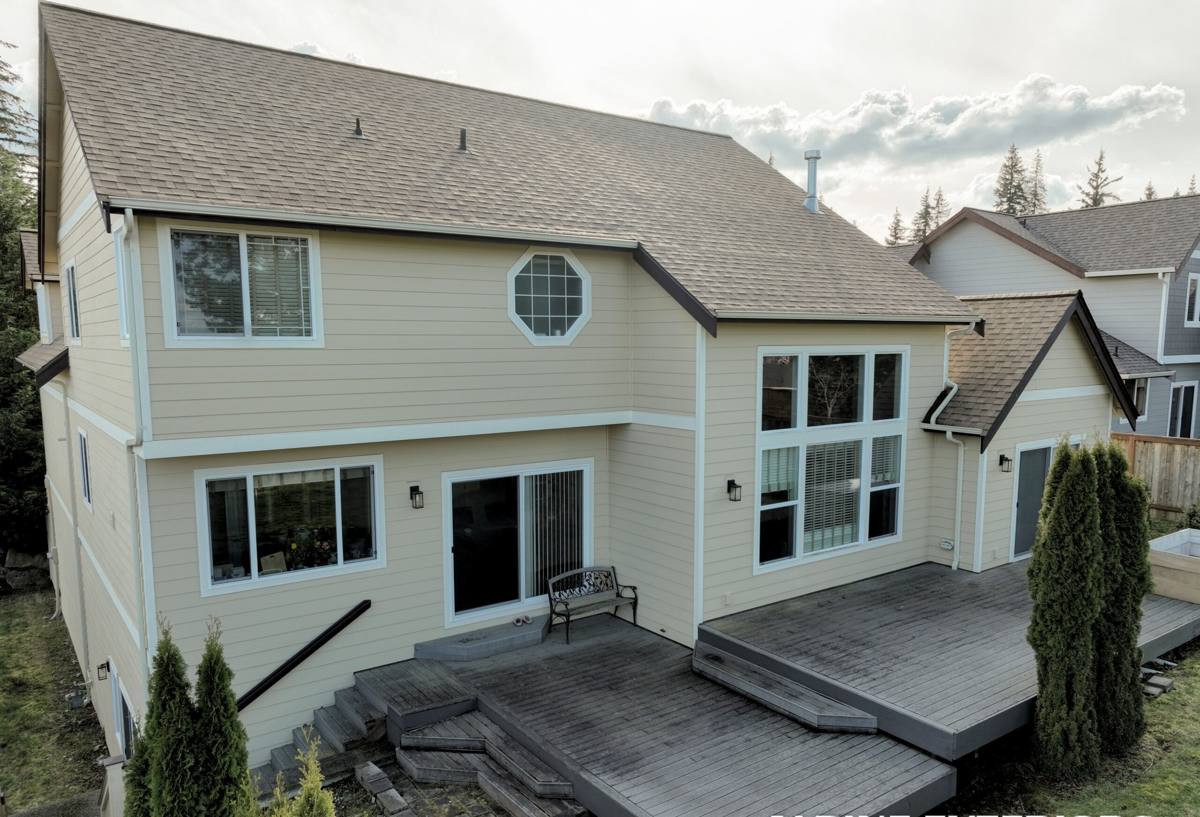
What South Hill's Terrain and Climate Do to an Aging Deck
Grade and Elevation
Because South Hill is built on a slope, a lot of decks up here aren't sitting a couple of feet off grade the way they might on a flat lot — they're elevated, sometimes stepped across two or three levels to work with the terrain, with taller support posts and deeper footings carrying real load. That elevation changes the engineering math. A support post or footing that would be more than adequate on a flat backyard deck can be undersized for a South Hill lot, and it's a detail that's easy to get wrong on the original build and easy to miss on a repair.
Tree Canopy and a Long Moss Season
South Hill's mature tree cover is part of what makes the neighborhood what it is, but it also means more shade, more falling needles and leaf litter, and more standing moisture on deck surfaces than a lot of other parts of town see. Moss and mildew get a long growing season anywhere in Whatcom County given how mild and damp the climate runs most of the year, and a shaded deck under tree cover is usually one of the first things to show it. Debris that collects between boards and against framing holds moisture in place even after a dry spell, which is exactly the condition that lets rot get started underneath a deck that still looks fine on top.
Salt Air and Driving Rain off the Bay
South Hill's elevation puts a lot of homes up here in view of Bellingham Bay, and that proximity means salt-laden air reaches decks up on the slope, not just the ones down at water level. Salt accelerates corrosion in exposed fasteners, post hardware, and railing connectors, and a corroding fastener loses holding strength well before it looks obviously bad. Storms coming off the water also drive rain sideways rather than straight down, pushing moisture up under railings and into ledger connections in a way a deck built for calmer conditions was never designed to shed.
Signs Your South Hill Deck Needs Replacing, Not Just Repair
Not every tired-looking deck needs a full tear-out. But on a hillside, tree-covered lot like South Hill, certain signs usually mean the structure itself has been compromised rather than just the surface:
- Soft, spongy, or spring-y spots underfoot, especially near the house or in shaded corners that stay damp longest
- Visible rot, dark staining, or crumbling wood at the ledger board where the deck attaches to the house
- Railing posts that wobble or have visibly loosened, which often points to a compromised connection rather than a simple hardware fix
- Support posts or footings that look undersized or show cracking, especially on elevated or multi-level sections
- Rust staining bleeding out from fastener heads or hardware, a sign corrosion has been active for a while
- Persistent moss or algae growth that comes back within weeks of cleaning, meaning the surface is staying damp longer than it should
- A deck original to a home built more than 20-25 years ago, since older decks predate a lot of the code and material improvements now standard
Any one of these on its own might be repairable. Several at once, or anything involving the ledger connection or main support structure, is usually a sign the deck has reached the point where replacement is the more honest recommendation than another round of patching.
What We Look At Before Recommending Replacement
We don't recommend a full replacement without actually confirming it's needed. That starts with checking the ledger board and its flashing, since that's the connection point most likely to hide rot behind an intact-looking deck surface. We probe framing members for soft spots, check footing depth and condition where accessible, and look at how the existing structure handles the site's specific grade and drainage. On a South Hill lot, we're also looking at how much of the deck's problems trace back to shade and debris buildup versus a structural issue that would show up on a sunnier, more open lot too. That distinction matters because it changes what the replacement needs to solve, not just how it looks when it's done.
Choosing Decking Material for a Shaded Hillside Lot
Material choice matters more on a South Hill lot than it would on an open, sunny site, because shade and moisture exposure widen the performance gap between a well-suited product and a poorly-suited one. The main categories homeowners weigh are wood, capped composite, and cellular PVC.
| Material | Handling Shade & Moisture | Moss Resistance | Upkeep |
|---|---|---|---|
| Cellular PVC | Excellent — no wood fiber to absorb moisture | Strong, smooth non-porous surface | Occasional washing |
| Capped composite (e.g. TimberTech-style) | Strong — cap layer resists moisture and staining | Good on most lines | Occasional washing |
| Uncapped composite | Moderate — some moisture absorption at exposed fiber | Fair; more prone to buildup in shade | Periodic cleaning |
| Cedar | Moderate — needs sealing to hold up under sustained shade | Fair when sealed and maintained | Regular oiling or sealing |
| Pressure-treated wood | Weak in sustained shade and salt exposure over time | Poor without regular treatment | Regular sealing or staining |
Under heavy tree cover, we lean toward capped composite or PVC for most South Hill replacements, simply because those materials don't need the seasonal sealing that wood requires to keep moss and moisture from working into the surface. That's not a knock on wood — a well-maintained cedar deck can look great — it's an honest read on how much upkeep a shaded lot demands compared to a sunnier one.
Fasteners and Hardware
Whatever decking material goes on top, the fasteners and hardware underneath need to be rated for sustained salt air and moisture, not standard-grade hardware that starts corroding within a few seasons up here. We use stainless steel or coastal-grade corrosion-resistant fasteners throughout, and hidden fastener systems on the deck surface where the product allows, which also means less exposed metal on the walking surface.
What a Correct Deck Replacement Involves
A replacement done right addresses everything the old deck got wrong or has worn out, not just the visible surface. For a South Hill property, that typically means:
- Full removal of the old decking, railing, and any framing that's compromised, rather than building a new surface over questionable joists
- Footings sized and set to current code, accounting for the site's actual grade and load — not matched to whatever depth the original deck happened to use
- Framing material and spans matched to the new decking product's rating, sized for the site's actual elevation and exposure
- New ledger flashing at the house connection, since this is the single most common point where moisture gets into an older deck's structure
- Stainless or coastal-grade fasteners and hardware throughout
- Correct board gapping for drainage, so wind-driven rain and moisture from tree debris can actually clear rather than sitting on the surface
- Railing and guardrail systems built to current code height and spacing requirements
- Grading and ventilation underneath the deck so moisture doesn't collect against the new framing between storms
Code Updates You'll Usually See on a Replacement
Because a lot of South Hill's housing stock is older, decks built decades ago often predate current guardrail height requirements, baluster spacing rules, and footing standards. A replacement is the point where those get brought current, since it's far more practical to build correctly the first time than to retrofit a finished deck later. We handle permitting through the City of Bellingham as part of the job, including any engineering review that a taller, sloped-lot deck may require given the added load and wind exposure elevation brings.
How Our Process Works
We start with a site visit to assess the existing deck, the grade and drainage around it, sun and shade patterns through the day, and how close the site sits to salt air exposure off the bay. From there we walk through material options that fit the budget and how the space actually gets used, and we're straightforward about what we find during the initial inspection versus what we won't know for certain until tear-out.
Once permitted, tear-out comes first, which is also when we get a full look at the substructure and confirm whether our original assessment holds. Framing and footings go in next, sized for the site's actual grade and exposure, followed by the decking surface, railing, and any stairs required to handle the elevation change. We finish with a walkthrough covering what your specific material choice needs going forward — for most modern decking that's minimal, but on a shaded South Hill lot it's not nothing.
Living With Your New Deck on South Hill
Even a well-built replacement in the right material needs some routine attention to get its full lifespan under South Hill's tree cover and coastal climate:
- Clear leaves, needles, and debris from between boards regularly, since that buildup is what holds moisture against the surface longest
- Rinse the deck surface periodically to clear salt residue and organic buildup before it works into the material
- Check railing posts and hardware once a year for early corrosion or loosening, especially heading into the wet season
- Trim back overhanging branches where practical to cut down on shade and debris load on the deck surface
- Address any soft framing or standing water underneath right away — that's a structural issue, not a cosmetic one
Why It Matters That We Already Work South Hill
A crew that mostly builds on flat, open lots can still put together a competent deck, but South Hill jobs come with variables that don't show up as often elsewhere in Bellingham — footing and post sizing for sloped, elevated sites, moss and moisture pressure from heavy tree canopy, and corrosion-grade hardware requirements from sustained salt exposure this high on the hill. Working this neighborhood regularly means we're not guessing at those requirements when we quote your project. We've seen which decking materials actually hold up against South Hill's specific mix of shade, salt air, and driving rain, and which structural details on a sloped lot are worth the extra time rather than an unnecessary upsell.
That familiarity also shows up in the smaller judgment calls on a replacement — how to sequence tear-out and rebuild around a steep lot's access constraints, or being straightforward with a homeowner about what their specific deck actually needs versus what's just an extra line item.
Get a Straight Answer About Your Deck
Whether your South Hill deck is showing soft spots, corroded hardware, or just isn't holding up the way it used to, we're happy to take a look and give you an honest read on repair versus replacement. Reach out below for a free, no-pressure estimate.