 Bellingham Roofing
 Building Decks for Edgemoor's Waterfront Climate
Edgemoor sits close to Bellingham Bay, and that proximity shapes everything about how a deck should be built here. Homes in this part of Bellingham deal with a combination most inland Whatcom County properties don't: salt-laden air off the water, driving rain that comes in sideways during winter storms, and a moss season that can stretch from October well into spring. A deck that isn't specifically detailed for these conditions will show it within a few years — soft spots, rust streaks at the fasteners, green film on every horizontal surface, and boards that cup or crack. Building a custom deck in Edgemoor isn't just about picking a nice railing style. It's about choosing materials and framing details that actually hold up a few hundred yards from saltwater.
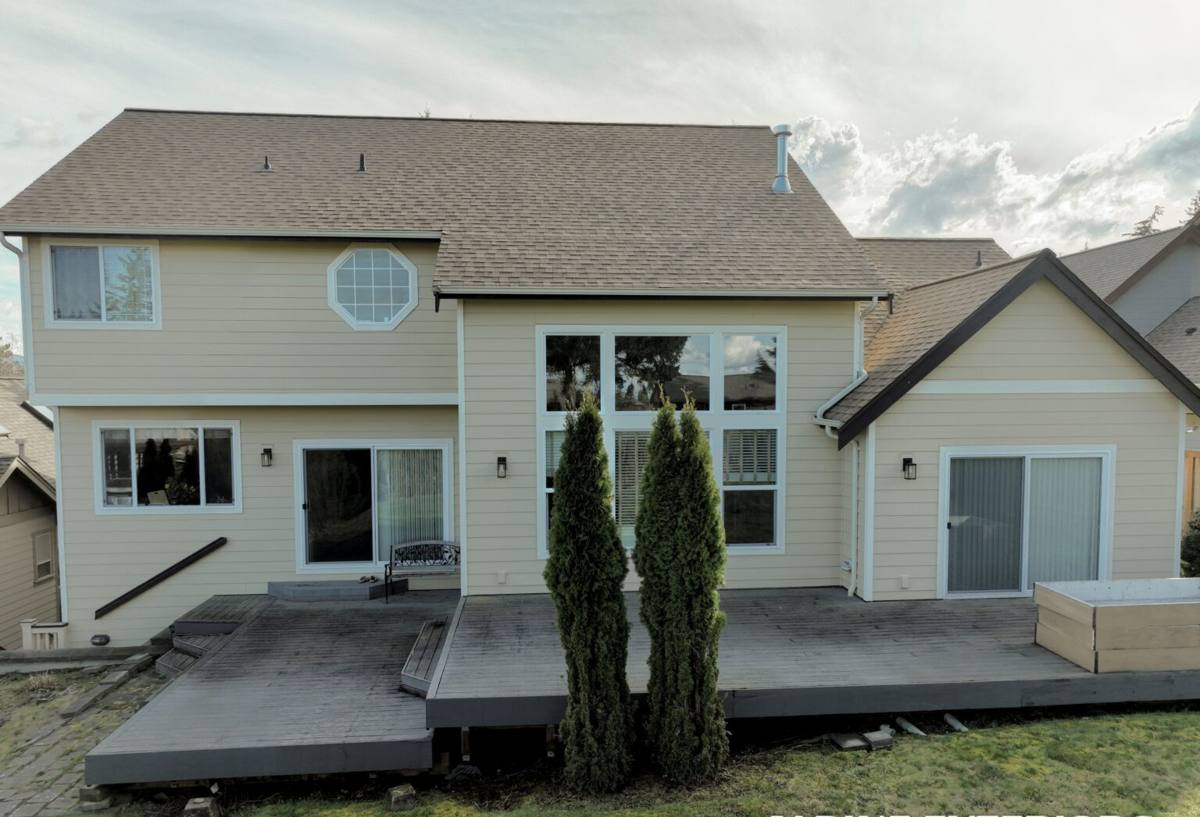
What Edgemoor's Climate Does to an Ordinary Deck
We've worked on enough decks around Bellingham Bay to know exactly where a standard build starts to fail first. Understanding the failure points helps explain why we build the way we do.
Salt Air and Metal Fasteners
Salt-laden air accelerates corrosion on anything less than fully rated hardware. Standard electro-galvanized screws and joist hangers that would last decades inland can start rusting and staining decking within a few seasons this close to the water. Rust doesn't just look bad — it weakens the connection over time, which matters most at structural points like ledger boards and post bases.
Driving Rain and Water Intrusion
Bellingham's rain rarely falls straight down. Wind off the bay pushes it sideways and up under rail caps, around post wraps, and behind ledger flashing if those details aren't done correctly. Water that gets trapped instead of shedding is the single biggest cause of hidden rot in decks built in this area.
Moss, Algae, and Surface Buildup
Edgemoor's tree cover combined with a long damp season means moss and algae aren't a minor cosmetic issue — they hold moisture against the decking surface for months at a time. On wood decking this accelerates rot; on any decking surface it creates a genuine slip hazard on stairs and low-traffic areas that don't get foot traffic to knock buildup loose.
Decking Material Options for This Neighborhood
There's no single "best" decking material — the right choice depends on how much upkeep you want to do, your budget, and how much of the deck sits in shade. Here's how the common options actually perform in Edgemoor's conditions.
| Material | Moss/Algae Resistance | Maintenance | Typical Lifespan Here |
|---|---|---|---|
| Cedar | Moderate — natural oils help, but shaded areas still need cleaning | Annual cleaning and re-staining or sealing | 15-20 years with upkeep |
| Pressure-treated fir/pine | Low — prone to holding moisture without regular sealing | Sealing every 1-2 years, regular cleaning | 10-15 years |
| Composite decking | Good — resists moisture absorption; still needs periodic cleaning to prevent surface film | Occasional washing, no staining/sealing | 25-30 years, manufacturer-backed |
| PVC/capped composite | Best — fully moisture-resistant cap layer | Lowest — soap and water cleaning | 25-30+ years |
We install all of these depending on the homeowner's priorities, but for shaded, water-facing lots in Edgemoor, we steer most people toward composite or capped composite. It's not that wood is a bad product — it's that wood in this specific microclimate demands a maintenance schedule most homeowners underestimate, and missed years show up fast as rot rather than just faded color.
Framing and Substructure Details That Actually Matter
The decking surface is what you see, but the framing underneath is what determines whether the deck is still safe in fifteen years. This is where we spend the most attention on Edgemoor projects specifically.
- Stainless steel or heavy hot-dip galvanized (not standard electro-galvanized) fasteners and joist hangers at every connection point
- Proper ledger board flashing with a drainage gap, not just caulk, where the deck attaches to the house
- Post bases set above grade with a moisture barrier, keeping end grain off concrete and soil
- Joist tape on top of every joist to keep water from wicking into the framing lumber through screw penetrations
- Adequate slope away from the house (roughly 1/8" per foot) so water actually sheds instead of pooling
- Footings sized and set to current Whatcom County frost depth and load requirements, not just "what was there before"
None of this is visible once the deck is finished, which is exactly why it's worth asking a contractor directly what hardware and flashing details they use before signing anything. It's the cheapest insurance against a rebuild in a decade.
Permits and Whatcom County / City of Bellingham Requirements
Most new decks and significant deck rebuilds in Bellingham require a building permit, especially anything attached to the structure or built above a certain height off grade. Edgemoor's proximity to the shoreline can also bring shoreline setback considerations into play depending on exact lot placement relative to Bellingham Bay. We handle the permit process as part of the job — pulling the right permit, building to the inspected framing standard, and scheduling the required inspections — so you're not left guessing whether the work is actually compliant.
Our Process for an Edgemoor Deck Build
1. On-Site Assessment
We walk the property, note sun and shade exposure, existing drainage patterns, and how close the build sits to the water. This is what shapes our material and hardware recommendations, not a generic template.
2. Design and Material Selection
We talk through decking material, railing style, and layout with you, including honest trade-offs on maintenance versus upfront cost — no upselling toward whatever has the highest margin.
3. Permitting
We prepare and submit the permit package and handle the inspection scheduling so the project stays on the city's timeline.
4. Demo and Framing
Old decking and any compromised framing come out first. New framing goes in with the corrosion-resistant hardware and flashing details described above.
5. Decking, Railing, and Finish Work
Surface material and railing go on last, with attention to fastener spacing and drainage gaps between boards so the finished deck sheds water instead of holding it.
6. Final Walkthrough
We go over care and maintenance specific to whatever material you chose, so you know what a normal maintenance year looks like versus a warning sign.
What a New Deck Typically Costs
Every project is different once you factor in size, height off grade, stairs, and railing style, but these are the general cost drivers we walk homeowners through.
| Cost Factor | Why It Matters |
|---|---|
| Decking material | Composite and PVC cost more upfront than wood but avoid recurring sealing/staining costs |
| Height off grade | Taller decks need more substantial framing, footings, and often guardrails per code |
| Substructure condition | Rebuilds on an existing footprint may reuse footings if they pass inspection; full replacement costs more |
| Railing style | Cable, glass, and composite rail systems cost more than standard wood or metal baluster rail |
| Site access | Waterfront and sloped lots in Edgemoor can add labor time for material staging and equipment access |
Maintaining Your Deck After It's Built
Whatever material you choose, a little seasonal attention goes a long way in this climate. A quick checklist we give every Edgemoor client:
- Sweep debris and standing leaves off the surface regularly through fall, when moss growth accelerates
- Wash the deck surface at least once a year with a deck-safe cleaner to break up algae and moss film before it takes hold
- Check and re-seal exposed wood (if applicable) on the schedule your product calls for — don't wait until it looks dry
- Inspect fasteners and hardware annually for early rust staining, especially near the ledger board
- Confirm gaps between boards stay clear so water keeps draining through rather than pooling on the surface
Why a Crew That Already Works in Edgemoor Matters
A deck built by a crew unfamiliar with Bellingham Bay's microclimate often looks fine on install day and starts showing problems within a few winters — rust bleeding through decking screws, soft spots near the ledger, moss taking over shaded sections faster than expected. Working regularly in Edgemoor and the surrounding Bellingham waterfront means we've already seen which hardware grades hold up, which flashing details actually keep ledger boards dry, and where the county's permitting and shoreline considerations come into play. That local track record is what keeps a deck performing for decades instead of needing early repairs.
If you're planning a new deck or need to replace one that's showing its age, we're happy to take a look and walk you through your options. Fill out the form below for a free, no-pressure estimate — no obligation, just a straight answer on what your project needs.