 Bellingham Roofing
 Why Blaine's Coastal Climate Is Hard on Windows
Blaine sits right where Whatcom County meets the water, and that location comes with a specific set of challenges most inland communities never deal with. Salt-laden air off the bay works its way into hardware, fasteners, and finishes faster than it does further inland. Driving rain, pushed sideways by wind off the water, tests seals and flashing in ways a calm afternoon shower never will. And the long, damp stretch of fall and winter that Whatcom County is known for keeps moss, algae, and mildew active on north-facing walls and window sills for months at a time.
Windows are one of the first places all of this shows up. Older aluminum-framed windows corrode. Wood sashes that aren't properly sealed swell, stick, or start to rot at the corners. Single-pane or early-generation double-pane units let cold, damp air bleed through, which shows up as higher heating bills and condensation fogging up the glass on cold mornings. None of this is unique to any one house in Blaine — it's just what the climate does to windows over time, and it's why "energy-efficient" here means more than a sticker on the glass.
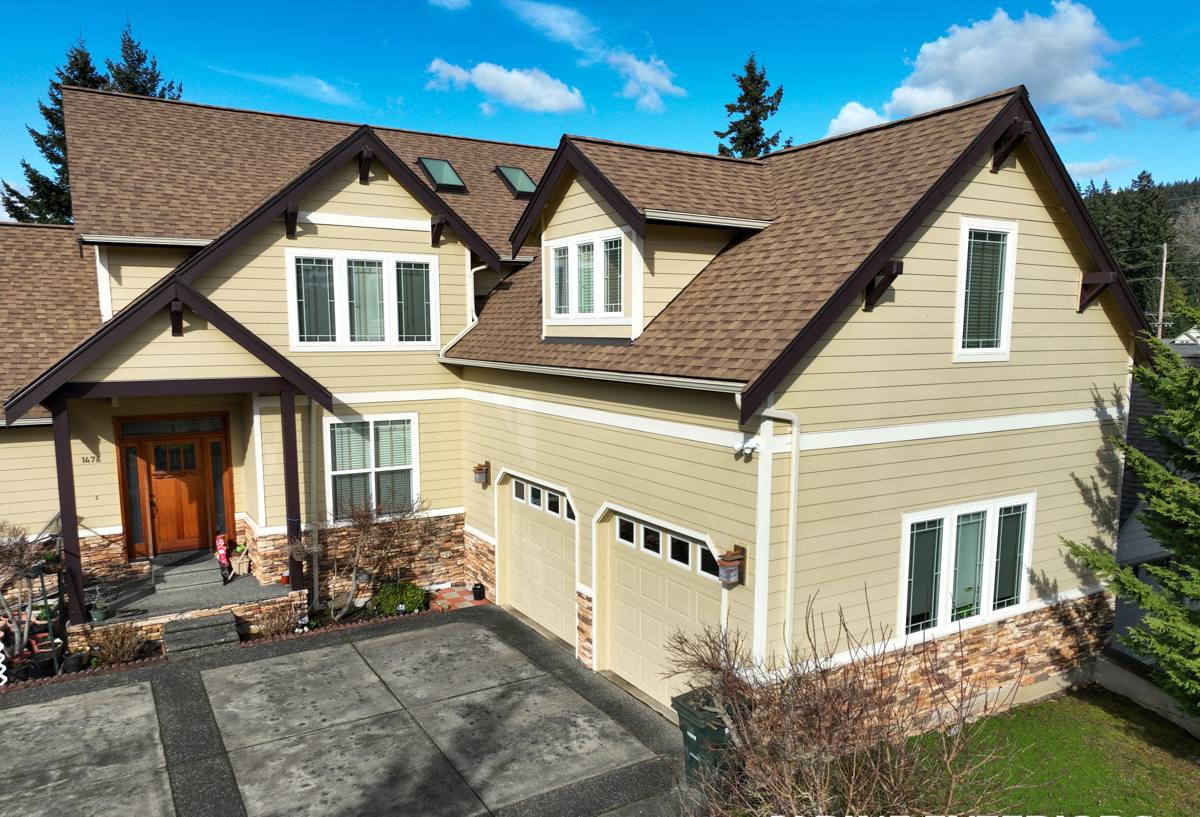
What Energy-Efficient Really Means for a Blaine Home
A window's energy performance rating is only as good as the installation around it. We've seen high-end, well-rated windows perform poorly because of gaps in the flashing or skipped insulation around the frame, and we've seen mid-range windows outperform expectations because they were installed correctly the first time. In a marine climate like this one, the installation details matter as much as the product spec sheet.
For a Blaine home, energy efficiency really comes down to three things working together:
- Glass and glazing that resist heat loss during our cold, wet winters and keep interiors comfortable without over-relying on the furnace
- Frame and sash materials that won't warp, corrode, or lose their seal under constant humidity and salt exposure
- Installation that manages water — flashing, weep holes, sealant lines, and drainage planes — so wind-driven rain never gets a path behind the window
Skip any one of those and the other two won't matter much. A well-rated window installed with poor flashing will eventually let moisture in behind the trim, and that undermines both the insulation value and the structure around the opening.
Air Sealing and Drafts
Homeowners in Blaine often notice drafts before they notice anything else — a cold spot near the sill, curtains that move slightly on a windy day, or a room that never quite holds heat the way the rest of the house does. That's usually a sign the original installation didn't account for the wind loads this area regularly sees, or that old sealant has broken down after years of expansion and contraction.
Frame Materials: What Holds Up Near Salt Water
Frame material choice matters more here than it would in a drier, inland part of the county. Some materials simply age better in salt air and constant moisture than others.
| Frame Material | Coastal Durability | Maintenance | Notes for Blaine Homes |
|---|---|---|---|
| Vinyl | Good — won't corrode or rot | Low | Solid value option; quality varies a lot by manufacturer |
| Fiberglass | Very good — dimensionally stable | Low | Handles temperature swings and moisture well over the long run |
| Wood-clad | Fair to good, depends on cladding integrity | Moderate to high | Attractive interior look, but any gap in the cladding invites rot |
| Aluminum | Poor to fair in salt air | Moderate | Prone to corrosion and thermal bridging near the water; not our first recommendation for this area |
We don't tell homeowners aluminum is a bad product everywhere — it has its place. But given the salt exposure and driving rain typical of Blaine, we generally steer clients toward vinyl or fiberglass frames because they hold up with far less long-term maintenance and don't carry the corrosion risk aluminum does this close to the water.
Glass and Glazing Options Worth Considering
Glass technology has come a long way, and the right combination depends on which side of the house you're replacing windows on and how exposed that wall is to wind and weather.
Double-Pane vs. Triple-Pane
Double-pane windows with a Low-E coating and an argon gas fill are the standard for most Whatcom County homes, and they perform well against our winters. Triple-pane windows add another layer of insulation and are worth considering on north- or west-facing walls that take the brunt of the wind and rain, or in rooms where comfort has always been an issue. They cost more up front, and for many homes the difference in comfort doesn't justify the added expense — we'll walk through that trade-off honestly rather than upselling every opening in the house.
Low-E Coatings
Low-emissivity coatings reflect heat back into the room in winter and block excess solar heat in summer. In a climate where winter heating costs matter more than summer cooling, we typically recommend a Low-E coating tuned for heat retention rather than one optimized primarily for solar rejection.
Signs Your Current Windows Are Underperforming
Most homeowners don't think about window replacement until something forces the issue. A few warning signs are worth acting on before they turn into bigger repairs:
- Visible condensation or fogging between the panes (a sign the seal has failed)
- Difficulty opening, closing, or locking the window
- Cold drafts near the frame even when the window is fully closed
- Soft, discolored, or swelling wood around the frame or sill
- Visible corrosion or pitting on aluminum frames or hardware
- Moss or algae growth building up in the frame track or sill
- Noticeably higher heating bills without a change in usage
- Outside noise (traffic, wind) that seems louder than it used to be
Any one of these on its own isn't necessarily an emergency, but a few of them together usually means the windows are past the point where caulk and weatherstripping will fix the problem.
How We Approach a Window Replacement in Blaine
Every home is different, but the process generally follows the same sequence:
- An on-site assessment of each window opening, checking for water damage, rot, and how the current flashing was installed
- A review of frame material and glazing options based on which side of the house the window is on and how exposed it is to wind and rain
- Removal of the old window and inspection of the rough opening for hidden moisture damage before anything new goes in
- Installation of new flashing and a proper drainage plane so wind-driven rain has nowhere to go but back outside
- Setting and shimming the new window, then sealing and insulating around the frame
- Exterior trim and finish work matched to the rest of the home
- A final check of operation, seals, and weatherproofing before we consider the job done
The rough opening inspection in step three is where we most often catch problems that homeowners didn't know existed — soft sheathing or old water staining behind the trim that a simple window swap would have sealed back up without addressing.
Cost Factors to Expect
Every home and window count is different, so we won't quote a number without seeing the job, but a few factors consistently drive the price:
| Factor | Why It Matters |
|---|---|
| Frame material chosen | Vinyl, fiberglass, and wood-clad options carry different material costs |
| Glazing package | Double-pane vs. triple-pane, and coating options, change per-window cost |
| Number and size of openings | Larger or custom-sized windows cost more than standard sizes |
| Condition of the rough opening | Hidden rot or water damage found during removal adds repair work |
| Exposure and wall location | Wind- and rain-exposed walls may call for upgraded flashing details |
We'd rather walk a homeowner through these trade-offs in person than throw out a broad estimate that doesn't reflect the actual condition of the house.
Caring for New Windows in a Salt-Air, Moss-Prone Climate
New windows still need some upkeep in this environment. Rinsing salt residue off exterior frames a couple times a year, especially on walls facing the water, helps protect finishes and hardware. Keeping sills and tracks clear of moss and organic debris prevents moisture from sitting against the frame during our wetter months. And a quick visual check each fall — looking for cracked caulk lines or soft spots in exterior trim — catches small issues before they become bigger ones. None of this is heavy maintenance, but skipping it in a coastal climate shortens the life of even a well-installed window.
Why Local Experience in Blaine Matters
A crew that works throughout Whatcom County knows how differently a house near the water performs compared to one further inland. We've seen how wind off Semiahmoo Bay and Boundary Bay drives rain sideways into wall assemblies that would stay dry a few miles east, and we build our flashing and sealing details around that reality rather than a one-size-fits-all approach. We're also familiar with the local permitting process and the practical realities of scheduling around this area's weather patterns, so a job doesn't get delayed or rushed because of conditions we should have planned for from the start.
If your windows are drafty, fogged, hard to operate, or just past their useful life, we're happy to take a look and talk through honest options for your home. Reach out for a free, no-pressure estimate using the form below.