 Bellingham Roofing
 Why Fairhaven's Marine Climate Is Hard on Windows
Fairhaven sits close to the shoreline of Bellingham Bay, and that proximity to saltwater shapes almost everything about how windows age here. Salt-laden air works into hardware, weatherstripping, and seals faster than it does a few miles inland, quietly shortening the service life of glass units and frame components alike. Add in the driving rain that comes through with Pacific storm systems, and you've got wind-driven water testing every seam, flange, and sealant joint a window has. Then there's moss and algae, which thrive in the shaded, damp conditions common on older Fairhaven lots with mature trees and narrow side yards — holding moisture against wood sills and trim for far longer than the rain event itself lasts.
None of this is unique to any one house. It's the standard operating environment for Whatcom County's coastal neighborhoods, and it's why a window that performs fine in a drier, more inland climate can fail early here — fogging, rotting at the sill, or just letting cold air leak through year after year. Understanding that environment is the starting point for choosing the right product and installing it correctly the first time.
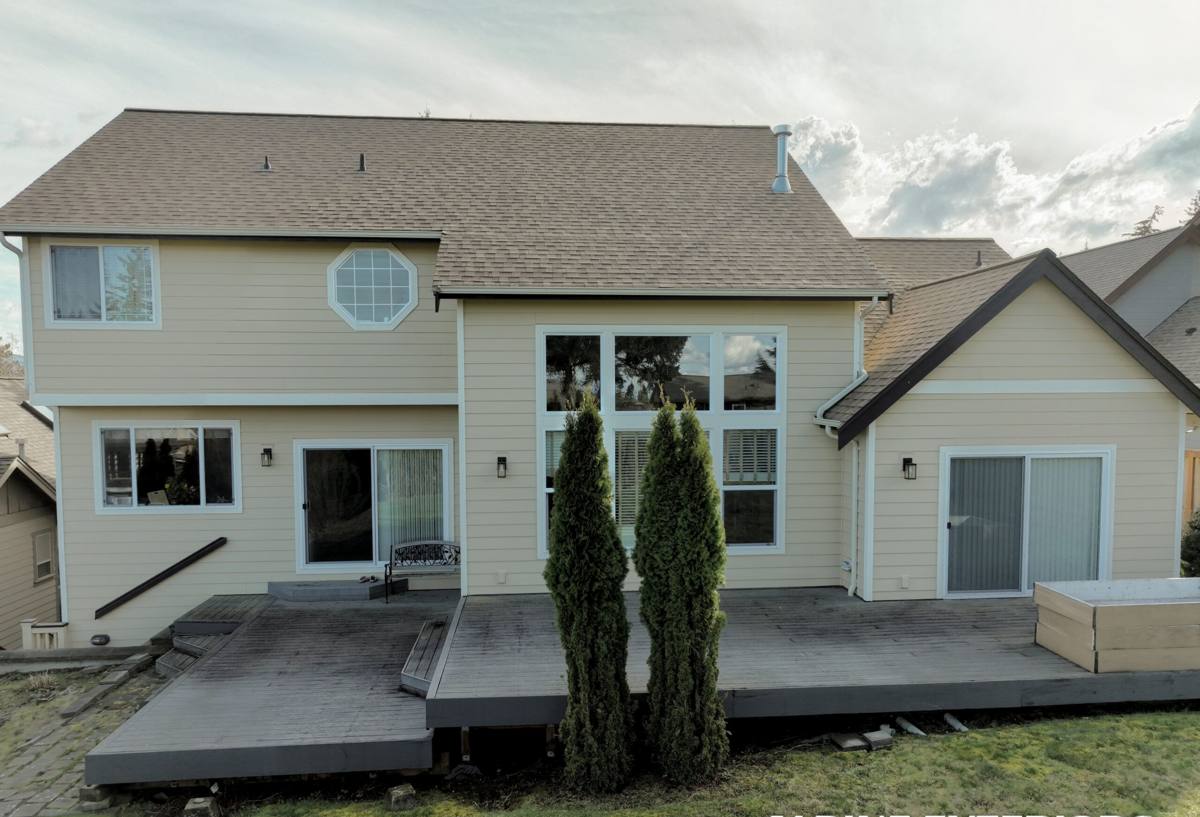
Signs Your Fairhaven Home May Need a Window Upgrade
Most homeowners don't wake up one day and decide they need new windows — they notice a handful of small problems that add up. Here's what we look for, and what you can check yourself:
- Fogging or a hazy film between the panes of a double-pane window (a sign the seal has failed and the insulating gas has escaped)
- Moss, algae, or dark staining building up on wood sills or exterior trim around the window
- Noticeable drafts along the frame edges, especially during a windy, wet system off the water
- Sashes that are hard to open, stick, or don't latch tightly anymore
- Original single-pane glass, common in Fairhaven's older housing stock
- Heating bills that keep climbing without any other clear explanation
- Condensation forming on the inside of the glass during cold snaps, which usually points to a weak seal or an inefficient frame rather than just indoor humidity
One or two of these on their own might just mean a repair. Several together, especially on a home that's due for exterior work anyway, usually mean it's time to talk about replacement.
What "Energy-Efficient" Actually Means Here
Energy-efficient windows aren't one product — they're a combination of choices, and which ones matter most depends on the climate. In Bellingham's cool, wet, marine environment, the priority is heat retention and moisture control, not blocking intense solar heat the way you'd prioritize in a hot, sunny region.
U-Factor Over SHGC
U-factor measures how well a window keeps heat inside the house — the lower the number, the better it insulates. That's the number we pay closest attention to for Fairhaven homes, since our winters are long, damp, and mild rather than brutally cold, and the bigger energy loss is heat escaping through poorly insulated glass and frames. Solar Heat Gain Coefficient (SHGC) matters more for south- or west-facing rooms that get direct sun, but it's a secondary consideration compared to U-factor for most homes here.
Low-E Coatings
A low-emissivity coating is a microscopically thin layer that reflects heat back into the room while still letting visible light through. It also keeps the interior glass surface warmer, which reduces the condensation that's especially common in humid coastal climates like ours.
Gas Fills and Warm-Edge Spacers
Argon or krypton gas between the panes insulates better than plain air, and a warm-edge spacer (instead of an older metal spacer) reduces heat loss and condensation right at the edge of the glass — often the first place fogging or frost shows up on an older or lower-quality unit.
Weatherstripping and Air Sealing
The glass package gets the attention, but the seal around the frame does as much work in a driving rain event. Good compression weatherstripping and proper air sealing at the rough opening are what actually keep wind-driven water and drafts out, regardless of how good the glass itself is.
Frame Material Options for a Salt-Air Environment
Frame material affects both how the window performs and how much upkeep it needs in a coastal setting. There's no single "correct" answer — it depends on the house, the budget, and how much maintenance you want to take on.
| Frame Material | Salt Air / Moisture Behavior | Maintenance | Thermal Performance |
|---|---|---|---|
| Vinyl | Resists corrosion well; won't rot or rust | Low — occasional cleaning | Good, with multi-chambered profiles |
| Fiberglass | Very stable in moisture and temperature swings; minimal expansion/contraction | Low | Very good |
| Wood-Clad | Exterior cladding protects the wood, but any breach exposes wood to rot risk | Moderate to high — watch cladding joints | Good, with classic interior look |
| Aluminum | Prone to pitting and corrosion in salt air over time; conducts cold | Moderate | Weaker unless thermally broken |
For homes closest to the water and exposed to the most direct salt spray, we generally steer clients toward vinyl or fiberglass for the frame itself, saving wood-clad options for homes where matching a historic look is the priority and the owner is comfortable with the added upkeep.
Windows and Fairhaven's Historic Character
Fairhaven's historic core is full of Victorian-era and early-1900s architecture, and many of the residential streets around it carry that same period character — deep trim profiles, divided-lite patterns, and specific sash proportions that are part of what makes the neighborhood recognizable. Replacing windows on one of these homes is as much a design decision as a performance one.
If your home falls within a recognized historic district or design review area, exterior changes — including window replacement — may need to go through the City of Bellingham's review process before work begins. We're not going to guess at the specifics of your property here; that's worth a direct check with the city, and it's something we help homeowners navigate when it applies.
Even outside a formal historic district, matching sightlines, trim depth, and grille patterns protects a home's curb appeal and resale value. Simulated divided lite (a grid pattern applied to a single insulated unit) is far more energy-efficient than true divided lite (separate small panes of glass), and for most homes it's visually indistinguishable from the street — a practical way to keep the historic look without the thermal penalty of old-style construction.
Our Installation Process
The product matters, but installation is where energy efficiency is actually won or lost. A well-rated window installed poorly will underperform a mid-grade window installed correctly. Here's how we approach it:
- On-site assessment — we measure each opening and check the condition of the framing and sill for hidden rot, which is common on older homes that have had years of moss and moisture sitting against the wood.
- Product selection — matched to the home's exposure, style, and your budget, not a one-size-fits-all recommendation.
- Careful removal — old sashes and frames come out cleanly, giving us a chance to inspect the sill and jamb for water damage before anything new goes in.
- Flashing and sill pan installation — this is the step that matters most in a driving-rain climate. A properly flashed and pitched sill pan directs any water that gets past the glass back outside instead of into the wall.
- Insulation and air sealing — gaps around the new frame are insulated and sealed before trim goes back on, closing off the drafts that plague older installations.
- Exterior sealing and trim — weatherproof caulking and trim work finish the job and protect the seams that salt air and rain will test for years to come.
- Interior finish and walk-through — cleanup, a check of every window's operation, and a walk-through so you know how to maintain it.
What Affects the Cost
Every Fairhaven home is different, and window replacement pricing reflects that. Rather than quote a number that won't actually apply to your house, here are the factors that move the price up or down:
| Factor | Why It Matters |
|---|---|
| Number and size of windows | More or larger openings mean more material and labor |
| Frame material | Vinyl is typically the most budget-friendly; fiberglass and wood-clad cost more |
| Glass package | Triple-pane, upgraded low-E coatings, and gas fills add cost but improve performance |
| Structural repair needed | Rot found at the sill or jamb during removal adds carpentry work before the new window goes in |
| Site access | Second-story or hard-to-reach windows take more time and equipment |
| Historic or design considerations | Matching trim profiles or grille patterns can add cost over a standard replacement |
As a broad guide, per-window installed costs for a straightforward replacement typically range from a few hundred dollars up into the low thousands, depending on size, material, and site conditions — full-home projects and homes needing structural repair will land at the higher end. A real number only comes from seeing the actual windows and openings involved.
Why Local Experience in Fairhaven Matters
Working in one neighborhood over and over teaches you things a general contractor passing through won't know. We're familiar with the quirks of Fairhaven's older housing stock — balloon-framed walls, openings that have shifted slightly out of square over the decades, and the kind of hidden moisture damage that only shows up once old trim comes off. We know to check for it before a single new window goes in, not after.
We also know how to schedule around this area's weather, timing exterior work to avoid leaving a home exposed during a stretch of driving rain, and we understand when a project is likely to intersect with design review requirements versus a straightforward swap. That local familiarity translates into fewer surprises during the project and a better long-term result once the crew has moved on.
If you're weighing whether it's time to upgrade the windows on your Fairhaven home, we're happy to take a look, walk you through what we're seeing, and put together a straightforward, no-pressure estimate. There's a form below — reach out and we'll go from there.