 Bellingham Roofing
 Why Fairhaven's Climate Is Hard on Siding
Fairhaven sits close to Bellingham Bay, which means homes here deal with a combination of weather stress that inland Whatcom County neighborhoods don't face in the same way. Salt-laden air moves off the water and settles on exterior surfaces year-round, driving rain comes in sideways during fall and winter storms, and the region's long, damp shoulder seasons keep north- and west-facing walls shaded and wet for weeks at a time. Add in the moss and algae growth that thrives in that kind of persistent moisture, and you have a climate that is genuinely tough on siding materials.
None of this is unique to any one house — it's the baseline condition for anything built near the water in this part of the Pacific Northwest. But it does mean the siding choice and the installation quality matter more here than they would in a drier climate. Materials that tolerate occasional rain but struggle with sustained moisture exposure, or that need regular re-sealing and repainting to keep water out, tend to show problems faster in a neighborhood like Fairhaven than they would twenty miles inland.
What We Won't Install Here — and Why
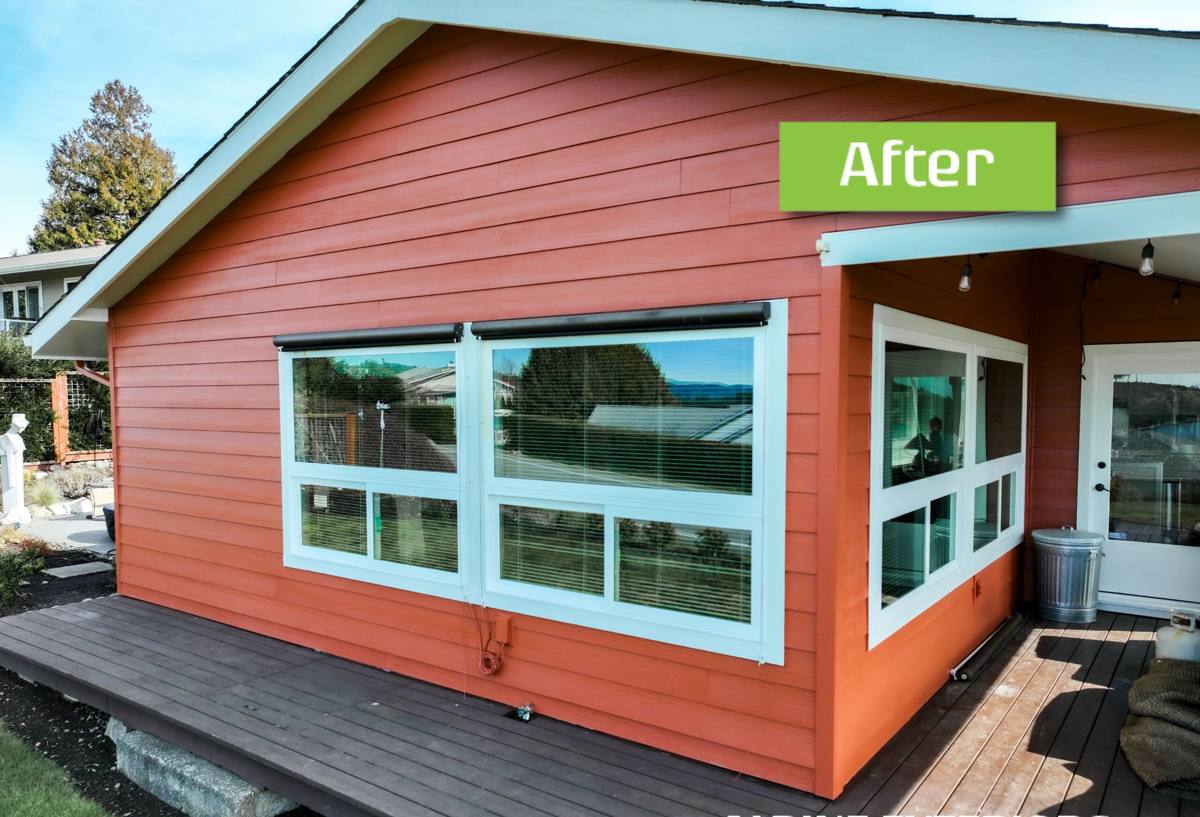
We only install James Hardie fiber cement siding. We don't install LP SmartSide, vinyl, Cemplank, Allura, primed spruce, or cedar, and in a marine-influenced neighborhood like Fairhaven that's a deliberate call, not a brand preference.
- Vinyl can warp and gap at the seams under repeated freeze-thaw and temperature swings, and those gaps become entry points for wind-driven rain.
- Wood products, engineered or solid (LP SmartSide, cedar, primed spruce) depend on an intact paint or coating layer to stay dry. Once that layer is compromised — from moss holding moisture against the surface, or a fastener that wasn't sealed correctly — the substrate itself can absorb water and swell, rot, or delaminate.
- Cemplank and Allura are also fiber cement, and fiber cement as a category is the right call for this climate. But we've standardized on one manufacturer's system, factory finish, and warranty rather than mixing suppliers, so our crews install the same product the same way on every job.
None of these products are unusable everywhere — they just carry maintenance burdens or moisture sensitivities that we don't think are a fair trade-off for a homeowner near the bay who wants to deal with their siding as little as possible.
James Hardie: Engineered for This Region
A Climate-Specific Product Line
James Hardie makes different formulations of its fiber cement for different climate zones through its HardieZone system, and the Pacific Northwest falls under the cooler, wetter zone designation. That means the board composition and moisture performance are engineered for a climate that looks like ours — frequent rain, humidity, and freeze-thaw cycling — rather than a one-size-fits-all product.
ColorPlus Factory Finish
Most Hardie siding we install uses the ColorPlus finish, which is baked on at the factory under controlled conditions rather than field-applied with a brush or sprayer. That matters in a neighborhood exposed to salt air and driving rain because a factory finish resists fading and chipping better than a field-applied coat, and it removes the on-site painting step where weather and application inconsistencies usually cause early failures.
Non-Combustible Composition
Fiber cement is also non-combustible, which is a genuine advantage regardless of location, and one more reason it holds up better over time than wood-based alternatives in a wet, organic-growth-prone environment — it doesn't feed rot or fungal growth the way wood fiber can.
What a Correct Installation Actually Involves
Fiber cement siding is only as good as the installation behind it. Hardie's own product performance depends on details that are easy to get wrong, and in a wet climate those mistakes show up faster than they would somewhere dry.
Drainage and Clearance
Siding needs a gap at the bottom — typically at least an inch off roofing, decks, and grade — so water has somewhere to go instead of wicking up into the board. A weather-resistive barrier and, ideally, a drainage plane behind the siding lets any moisture that does get behind the boards drain and dry out instead of sitting against the wall sheathing.
Fastening and Flashing
Fasteners need to be the right type, driven to the correct depth, and placed where Hardie's installation specs call for them — overdriven or underdriven nails compromise the board's ability to shed water. Every window, door, and penetration needs proper flashing and integration with the water-resistive barrier, since these transition points are where most siding failures actually start, not in the field of the wall.
Joints and Caulking
Butt joints, corners, and trim intersections need to be sealed with a caulk rated for the movement and moisture exposure this climate produces, and gaps need to be sized correctly rather than caulked shut entirely, which can trap moisture instead of letting it escape.
Fairhaven's Character and Practical Considerations
Fairhaven includes a historic core with older homes that have their own architectural character, and some properties in that area may fall under local design or historic guidelines depending on exactly where they sit. We work with homeowners to understand what applies to their specific property before we start, rather than assuming every job in the neighborhood follows the same rules. Beyond that, Fairhaven's mix of older and newer construction means we regularly find a wide range of existing wall conditions — from houses that need a straightforward re-side to ones where the sheathing or water barrier underneath needs attention before new siding goes on.
Our Process, Start to Finish
- Inspection: We walk the exterior, check for existing moisture damage, moss buildup, and areas where past flashing or trim work may have failed.
- Scope and estimate: We give you a clear, written estimate that spells out what's being removed, what's being repaired underneath if needed, and what Hardie product line and color you're getting.
- Tear-off and substrate check: Old siding comes off and we inspect the sheathing underneath, addressing any rot or water damage before anything new goes up.
- Weather barrier and drainage plane: A properly lapped water-resistive barrier goes on, with drainage accessories where the wall assembly calls for them.
- Hardie installation: Boards are installed to manufacturer spec — correct fastener spacing, clearances, and flashing at every penetration.
- Trim, caulking, and final detail: Joints are sealed, trim is finished, and touch-up paint is applied where factory-finished boards were field-cut.
- Walkthrough and cleanup: We review the finished job with you and clear the site of debris and old material.
Cost Factors to Expect
Every home is different, but the factors that move the price on a Fairhaven siding job are fairly consistent. This isn't a quote — it's a guide to what will actually affect the number you get.
| Factor | Why It Matters |
|---|---|
| Substrate condition | Rot or moisture damage found during tear-off adds repair work before new siding can go on |
| Home size and wall complexity | More corners, dormers, and trim detail mean more labor and material cutting |
| Product line and profile | Lap, shingle, and panel siding carry different material and labor costs |
| Story height and access | Multi-story walls and difficult site access require more scaffolding or lift time |
| Existing trim and flashing work | Full trim replacement adds cost versus reusing sound existing trim |
| Color and finish | Factory ColorPlus finishes cost more upfront than primed boards but skip the field-painting step |
Living With Hardie Siding After Installation
One of the practical advantages of fiber cement in a climate like this is how little upkeep it demands compared to wood or vinyl. It won't rot, and it doesn't need repainting on the schedule wood siding does. That said, no siding is entirely maintenance-free here — the moss and algae that grow readily in this climate can still settle on the surface over time.
- Rinse the exterior periodically to keep moss and algae from taking hold, especially on shaded, north-facing walls
- Check caulking at trim and joints every year or two and have any cracked or missing sections resealed
- Keep gutters clear so overflow doesn't run down the siding face repeatedly
- Trim back vegetation that keeps a wall shaded and damp
- Address any impact damage or chips in the finish promptly so moisture can't get behind the coating
Why Hiring a Crew That Already Works Fairhaven Matters
Siding installation quality varies more by crew than by product. A crew that already works in Fairhaven and the surrounding Bellingham area understands what this specific stretch of Whatcom County coastline does to a wall assembly over time — where moisture tends to collect, which orientations grow moss fastest, and how much clearance and drainage detail actually holds up here versus what looks fine on installation day and fails in year three. That local track record is worth more than a lower bid from a crew installing to a generic spec sheet.
If you're weighing a siding project for a home in Fairhaven, we're happy to take a look and walk you through what your specific house needs — no pressure, no obligation. Use the form below to request a free estimate.