 Bellingham Roofing
 Roof Repair Built for Fairhaven's Coastal Conditions
Fairhaven sits close enough to Bellingham Bay that its homes deal with a slightly different mix of weather stress than roofs further inland in Whatcom County. Salt-laden air off the water, driving rain that comes in sideways during winter storms, and heavy tree cover that keeps roof surfaces shaded and damp for long stretches of the year all add up to faster wear in specific, predictable places. A roof repair done right in this neighborhood accounts for all three, not just the leak that's currently dripping into the attic.
We work on roofs throughout Bellingham, but Fairhaven's older housing stock, mature tree canopy, and proximity to the water mean the repair priorities here are a little different than a newer subdivision on the east side of town. This page walks through what that means in practical terms.
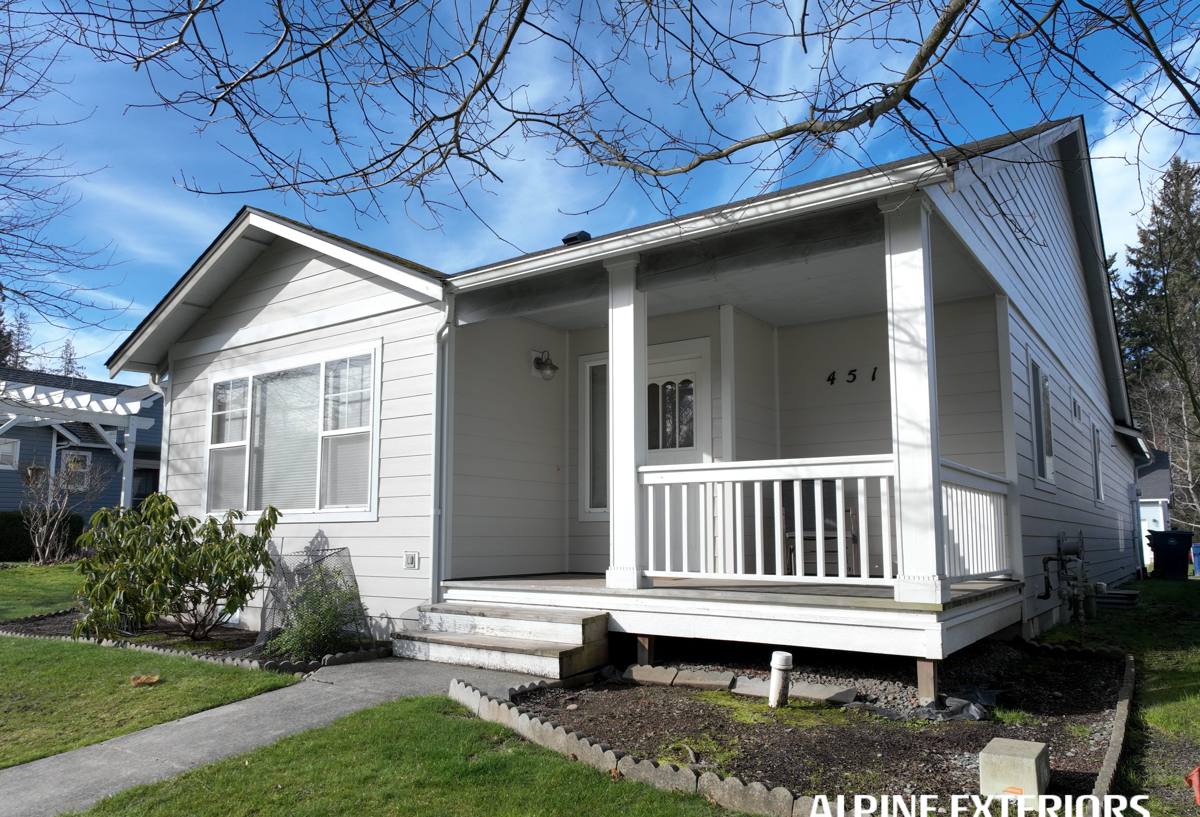
Why Fairhaven Roofs Age Differently
Salt Air and Metal Fatigue
Homes closer to the bay are exposed to airborne salt, which accelerates corrosion on exposed metal components — flashing, fasteners, gutter hardware, and any exposed screws on metal roofing panels. Corrosion at flashing seams is one of the more common sources of slow, hard-to-trace leaks we find on repair calls in this part of Bellingham. It rarely announces itself with a dramatic failure; instead it shows up as a stain on a ceiling months after the metal underneath has already started pitting.
Driving Rain and Wind-Driven Water
Storms coming off the water tend to push rain at an angle rather than straight down. That matters for roofing because a lot of roofing details are designed to shed water moving vertically, not water being forced sideways under shingle tabs, around vent boots, or up under improperly lapped flashing. A repair that only addresses the visible gap without checking how water actually moves across that section of roof during a wind-driven rain event tends not to hold.
Moss, Shade, and Moisture Retention
Fairhaven's tree cover is part of what makes the neighborhood pleasant to live in, but it also means many roofs stay shaded and damp longer than roofs in open, sun-exposed parts of the county. That's ideal growing conditions for moss and moss-adjacent organic buildup, which holds moisture directly against roofing material and, over time, lifts shingle edges and traps water against the deck. Bellingham's long moss season — realistically much of the fall through spring stretch — means this isn't a one-time cleanup issue, it's an ongoing maintenance factor that has to be built into any repair plan.
What a Correct Fairhaven Roof Repair Actually Involves
A roof repair is more than patching the spot where water is currently getting in. Because leaks often travel before they show up on a ceiling, and because the underlying cause (corrosion, moss damage, failed flashing) is usually separate from the visible symptom, a proper repair follows a sequence:
- Locate the actual entry point — not just the stain. Water frequently travels along rafters or sheathing before dripping somewhere visible, so tracing back to the real source matters more than patching where the drip appears.
- Assess the surrounding material — check decking, underlayment, and flashing near the leak for softness, delamination, or corrosion, since a leak that's been active for a while usually affects more than the immediate spot.
- Address the root cause — re-flash if flashing has failed, replace corroded fasteners, remove moss and treat the affected area, or replace damaged shingles or panels as needed.
- Confirm proper water shedding — check that laps, flashing direction, and drainage paths are correct for wind-driven rain, not just vertical rainfall.
- Document what was found and fixed — so the homeowner knows what was replaced, what was inspected and left alone, and what to watch going forward.
Common Repair Scenarios We See in This Neighborhood
| Issue | Typical Cause | What Repair Involves |
|---|---|---|
| Ceiling stain near a chimney or vent | Corroded or improperly lapped flashing | Remove and re-flash, check surrounding decking for moisture damage |
| Granule loss and thinning shingles | Age combined with prolonged moss/moisture contact | Moss removal, spot shingle replacement, treatment to slow regrowth |
| Leak that appears only during wind storms | Wind-driven rain forced under shingle tabs or flashing laps | Re-seat or replace affected shingles, correct flashing lap direction |
| Rusty streaks below metal fasteners | Salt-air corrosion on exposed screws or flashing | Replace fasteners with corrosion-resistant hardware, reseal |
| Soft or sagging roof section | Long-term moisture intrusion into decking | Deck repair or replacement, not just a surface patch |
Materials and Fasteners: Why the Details Matter Here
In a coastal-influenced neighborhood like Fairhaven, the small hardware decisions matter more than they would further inland. Our standard is to use corrosion-resistant fasteners and flashing material appropriate for salt-air exposure rather than the cheapest available option, because the labor cost of a repair is the same either way — the difference shows up two or three years later when standard fasteners start rusting and the repair fails again. We also don't recommend patch jobs that leave old, already-corroding flashing in place "because it's not leaking yet." Flashing that's visibly pitted or rusted is on a timeline, and covering it rather than replacing it just moves the failure point down the road.
Where moss has been a recurring problem, we're upfront that zinc or copper strips and periodic cleaning are maintenance tools, not permanent fixes — a shaded, damp roof in this part of Bellingham will need ongoing attention regardless of what preventive measures are in place. We'd rather set that expectation clearly than oversell a one-time treatment.
Our Process for a Fairhaven Repair Call
- Inspection first. We look at the roof, not just the leak — attic access, decking condition, flashing, and moss/debris buildup are all checked before we recommend anything.
- Clear explanation. You get a plain-language rundown of what's actually wrong, what caused it, and what the repair involves — no pressure toward a full replacement if a repair genuinely solves the problem.
- Written estimate. Scope and cost factors are laid out before work starts, so there are no surprises mid-job.
- Repair done to hold. We fix the cause, not just the symptom, using fasteners and flashing suited to this area's exposure.
- Follow-up guidance. If moss or shading is a factor, we tell you what maintenance interval makes sense for your specific roof rather than a generic schedule.
What Influences Repair Cost
Exact pricing depends on the specific roof, but a few factors consistently drive cost up or down on repair calls in this area:
| Factor | Effect on Scope |
|---|---|
| Extent of decking damage found under the leak | Larger driver of cost than the surface patch itself |
| Roof pitch and accessibility (tree cover, tight lots) | Common in Fairhaven; affects labor time and safety setup |
| Age and condition of surrounding roofing material | Older roofs may need broader spot repair, not just one section |
| Amount of moss/debris buildup requiring removal first | Adds prep time before the actual repair can be assessed |
| Type of flashing and fastener replacement needed | Corrosion-resistant materials cost more upfront, less to redo |
Generally, straightforward flashing or spot shingle repairs on an accessible roof run toward the lower end of typical repair pricing, while jobs involving deck replacement or extensive moss-related damage run higher. We give a real number after inspection, not a phone-quote guess.
Signs a Fairhaven Homeowner Shouldn't Ignore
- Ceiling or wall stains that appear or worsen specifically during windy rainstorms
- Visible moss buildup along shaded roof sections, especially near valleys or the north-facing slope
- Rust streaking below flashing, vents, or exposed fasteners
- Granules collecting in gutters beyond what's normal for the roof's age
- Any soft spot or slight sag noticeable when walking near a roof edge or in the attic
- Daylight visible through the roof deck from inside the attic
None of these guarantee a major problem, but they're worth a look before they turn into one — especially heading into the wetter months when Bellingham's rain and wind pick up.
Why a Crew That Already Works Fairhaven Matters
Neighborhood familiarity isn't just a sales line — it affects the quality of a repair. A crew that regularly works in Fairhaven already knows to expect salt-air corrosion on flashing, to check moss-prone shaded sections more carefully, and to size up how wind off the bay tends to drive rain into specific roof details. That's the difference between a repair that treats the visible symptom and one that accounts for the conditions that caused it in the first place. It also means faster, more accurate estimates, since we're not guessing at how this area's climate behaves — we see it on roofs here regularly.
Get a Straightforward Estimate
If you're dealing with a leak, moss buildup, or flashing that's seen better days on a Fairhaven roof, we're happy to take a look and give you an honest read on what's actually going on — no pressure, no upsell toward a full replacement if a repair will genuinely do the job. Use the form below to request a free estimate and we'll get back to you to schedule a look.