 Bellingham Roofing
 Siding Replacement Built for Fairhaven's Waterfront Climate
Fairhaven sits close enough to Bellingham Bay that its homes take a different kind of weathering than houses further inland in Whatcom County. Salt-laden air moves in off the water, wind-driven rain comes in sideways during winter storms, and the shaded, damp stretches of the neighborhood stay wet long after a storm has passed. Add in a moss season that can run half the year, and siding here is under near-constant pressure in ways that drier, more sheltered parts of the region simply don't experience.
That combination is exactly why siding replacement in Fairhaven isn't a cosmetic project — it's a functional one. The siding on a home is the first line of defense between that coastal weather and the structure underneath it. When it starts to fail, the damage doesn't stay on the surface for long.
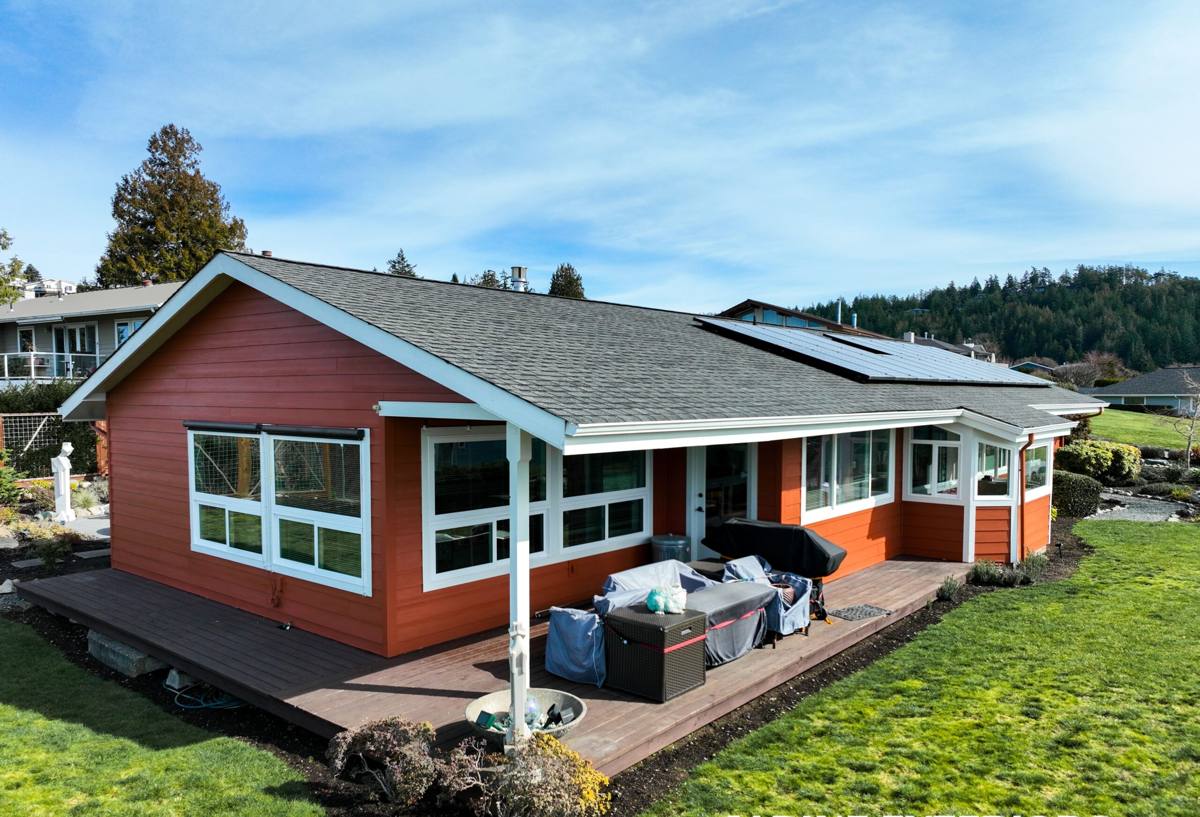
What Salt Air, Driving Rain, and Moss Actually Do to Siding
Salt Air
Airborne salt is corrosive and hygroscopic — it pulls moisture out of the air and holds it against whatever surface it lands on. On siding, that means fasteners, trim, and any exposed edges stay damp longer than they would a few miles inland. Over years, that slow, steady exposure accelerates finish breakdown and corrosion on metal components far faster than most homeowners expect.
Driving Rain
Bellingham's winter storms frequently push rain horizontally rather than straight down, which means siding faces have to shed water that's hitting them at an angle, not just running off a vertical surface. Poorly lapped panels, gaps at butt joints, and undersized flashing details that might hold up fine in a calmer climate get exposed quickly here.
Moss and Sustained Moisture
Shaded north and west-facing walls in Fairhaven's tree-lined lots can stay damp for weeks at a stretch during the fall and winter. That's ideal growing conditions for moss and algae, which hold moisture directly against the siding surface. Materials that absorb water or swell when wet are far more vulnerable to this kind of sustained dampness than materials engineered to resist it.
Signs a Fairhaven Home Needs Siding Replacement, Not Just Repair
Some siding problems are patchable. Others are a sign the material itself has reached the end of its useful life. Knowing the difference saves homeowners from spending repair money on a system that's already failing underneath.
- Soft, spongy, or crumbling spots when you press on the siding, especially near the bottom courses
- Paint that won't hold — blistering, peeling, or needing repainting every few years
- Visible warping, buckling, or panels pulling away from the wall
- Persistent moss or algae staining that comes back within a season of cleaning
- Soft trim boards, corner boards, or window casings
- Interior signs — musty smells, damp drywall, or peeling interior paint on exterior walls
- Siding that's original to a home more than 25-30 years old and has never been replaced
Any one of these on its own might be a minor fix. Several together, especially on walls exposed to prevailing weather off the bay, usually mean the siding system as a whole is compromised.
What a Correct Siding Replacement Involves
Siding replacement done right is not just swapping old panels for new ones. In a climate like Fairhaven's, the work happening underneath the visible siding matters as much as the siding itself.
- Full tear-off, not overlay. Installing new siding over old hides problems instead of solving them. A proper job removes the existing material down to the sheathing.
- Sheathing inspection and repair. Once the old siding is off, we check the wall sheathing for rot, soft spots, or water damage and replace anything compromised before new material goes up.
- Weather-resistive barrier. A correctly lapped and sealed moisture barrier goes on before siding, giving the wall a secondary drainage plane in case any water gets past the siding face — essential in a driving-rain climate.
- Flashing at every penetration. Windows, doors, vents, and roof-to-wall transitions all need properly integrated flashing so water is directed out and away from the wall assembly, not into it.
- Correct fastening schedule. Fastener type, spacing, and depth all affect how siding performs over decades, not just how it looks on installation day.
- Trim, caulking, and finish details. The small details — sealed joints, properly primed cut edges, consistent reveal lines — are what keep water out at the seams, which is where most siding failures actually start.
Skipping or rushing any of these steps is how a siding job looks fine for a year or two and then fails early. In a neighborhood with this much moisture exposure, there's very little margin for shortcuts.
Why We Install Only James Hardie Fiber Cement Siding
We install one siding product, on every home, in every neighborhood we work: James Hardie fiber cement. That's a deliberate standard, not a limitation, and it's especially relevant in a climate like Fairhaven's.
Fiber cement doesn't absorb water and swell the way wood-based or engineered-wood siding products can, which matters directly in a place where walls stay damp for extended stretches during moss season. It's also non-combustible, holds paint far longer than wood substrates because of its dimensional stability, and James Hardie's ColorPlus factory finish is baked on and warrantied against fading and cracking — a real advantage on homes that face constant UV and salt exposure with no break between rain events.
James Hardie also engineers specific product lines (HZ5, for example) for regions with higher moisture and freeze-thaw exposure, which the Pacific Northwest coast qualifies as. Combined with a strong transferable warranty, that's the reason we standardized on Hardie rather than offering a mix of products — we'd rather install one system correctly and stand behind it than install several and hope each one holds up.
Our Siding Replacement Process
Every Fairhaven project follows the same sequence, adjusted for the specific home:
- On-site assessment. We walk the exterior, check current siding condition wall by wall, and look for signs of underlying moisture damage before quoting anything.
- Written scope and product selection. You'll know exactly what's being removed, what's being repaired underneath, and which Hardie product and color you're getting.
- Tear-off and sheathing repair. Old material comes off, damaged sheathing gets replaced, and the wall is prepped properly before anything new goes on.
- Weather barrier and flashing installation. This is the step that determines how the wall performs in a storm ten years from now, not just how it looks this week.
- Hardie siding installation to manufacturer spec. Correct fastening, spacing, and finishing, following James Hardie's installation requirements exactly — which is also what keeps the manufacturer's warranty intact.
- Final walkthrough. We go over the finished work with you before considering the job done.
What Affects Siding Replacement Cost
Every home is different, but the same handful of factors drive cost on most Fairhaven siding projects:
| Factor | Why It Matters |
|---|---|
| Home size and wall complexity | More square footage and more corners, gables, and dormers mean more material and labor |
| Extent of underlying damage | Sheathing repair or rot remediation adds cost but is not optional if damage is found |
| Siding profile and accessories | Lap width, trim details, and accent choices affect both material cost and install time |
| Tear-off complexity | Multiple existing layers or difficult-to-remove old siding add labor time |
| Access and site conditions | Tight lots, mature landscaping, or limited staging area near the water can affect scheduling and setup |
We provide a written, itemized estimate before any work starts, so there's no guessing about what's included.
Why Local Experience in Fairhaven Matters
Fairhaven is one of Bellingham's older, established neighborhoods, with a housing stock that spans many decades of construction methods and materials. A crew that regularly works this part of Whatcom County has already seen how those older wall assemblies hold up, what's typically hiding under original siding, and how the neighborhood's proximity to the bay affects moisture behavior on different wall orientations.
That familiarity shows up in practical ways — knowing to look closer at north-facing walls that stay shaded most of the day, recognizing early moisture damage patterns specific to salt-air exposure, and planning installation timing around the region's wetter months. It's the difference between a crew applying a generic process and one that's calibrated to what actually happens to siding in this specific location.
Get a Free, No-Pressure Estimate
If your Fairhaven home is showing signs of siding wear — soft spots, failing paint, moss that won't stay away, or siding that's simply reached the end of its service life — it's worth getting a straightforward, professional look before winter's next round of storms. Use the form below to request a free estimate. We'll assess the home, explain exactly what we find, and walk you through your options with no pressure to decide on the spot.