 Bellingham Roofing
 Why Storm Damage Hits Fairhaven Roofs Differently
Fairhaven sits right up against Bellingham Bay, and that waterfront position changes how a storm treats a roof. Wind coming off the water doesn't arrive politely from one direction — it swirls around the bluff, funnels between buildings, and hits roof edges and ridges at angles that inland Whatcom County roofs rarely see. Add in driving rain that gets pushed sideways instead of falling straight down, and water finds its way into laps and seams that would stay dry in a calmer storm.
The neighborhood's mix of mature trees and older rooflines adds another layer. Established trees common in Fairhaven's older residential streets drop limbs in high wind, and steep or complex roof shapes on older homes have more valleys, dormers, and flashing points where a storm can find a weakness. Salt-laden air off the bay is also slowly working against exposed metal year-round, so a roof that took wind damage may already have fasteners or flashing that were more corroded than they looked from the ground.
None of this means Fairhaven roofs are poorly built. It means storm damage here tends to show up at connection points — flashing, fasteners, ridge caps, valleys — rather than as one obvious hole in the field of the roof. Knowing where to look is most of the job.
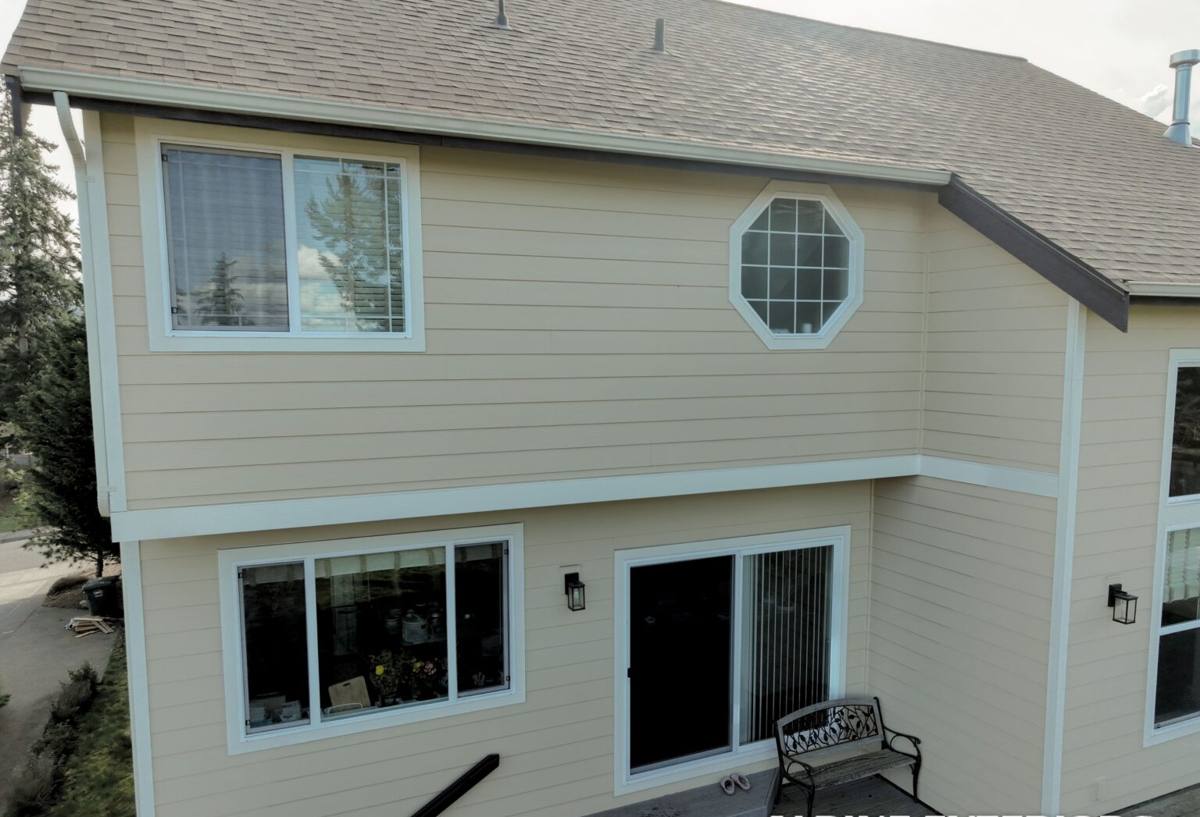
What Actually Counts as Storm Damage
Homeowners often assume storm damage means a dramatic hole or a tree through the roof. Most of what we find after a windstorm or heavy rain event in Fairhaven is quieter than that, but still serious if it's left alone.
Wind Damage
Lifted, cracked, or missing shingles are the most common finding. Wind can also loosen shingles without fully detaching them — they look fine from the street but no longer seal down, which sets up a leak the next time it rains. Ridge caps, being the highest and most exposed part of the roof, take a disproportionate amount of wind stress.
Wind-Driven Rain and Flashing Failures
Flashing around chimneys, skylights, valleys, and where a roof meets a wall is designed to shed water moving downward. Wind-driven rain moving sideways or upward can get behind flashing that's slightly loose, bent, or aged, and the resulting leak often shows up inside the house far from where the actual entry point is on the roof.
Impact Damage
Falling branches, wind-blown debris, and occasional hail can bruise or crack shingles, dent metal flashing and gutters, or puncture the roof deck outright. Impact damage is sometimes cosmetic and sometimes structural — it needs a close look, not a guess from the driveway.
Moisture and Moss Damage Following a Storm
A storm that strips granules or lifts shingle edges gives moss a head start. Bellingham's long, wet moss season means any spot where a storm compromised the shingle surface becomes an entry point for moss roots and trapped moisture within a season if it isn't addressed.
How We Handle a Storm Damage Call in Fairhaven
Storm response works best when it follows a consistent process rather than a rushed reaction. Here's what happens when you call us after a wind or rain event:
- We talk through what you're seeing — active leaks, visible debris, missing shingles — and get a sense of urgency before anyone drives out.
- We inspect from the ground and, where it's safe, on the roof itself. That means checking the field of the roof, all flashing points, valleys, ridge lines, and gutters, not just the spot you noticed.
- If there's an active leak or exposed decking, we get a tarp or temporary dry-in on before we leave, so the damage doesn't spread while repairs are scheduled.
- You get a written scope of the damage with photos — what's damaged, what caused it, and what it will take to fix it correctly.
- We complete the repair, matching materials as closely as possible to the existing roof, and check the surrounding area for related wear that the storm exposed but didn't cause outright.
We don't pad a storm inspection with unrelated upsells. If your roof took real damage, we'll show you exactly where. If it didn't, we'll tell you that too.
Repair or Replace? What Actually Decides It
Not every storm-damaged roof needs a full replacement, and not every roof can be patched and called done. The right call depends on a handful of factors working together, not any single one.
| Factor | Leans Toward Repair | Leans Toward Replacement |
|---|---|---|
| Roof age | Under 12–15 years, otherwise sound | Nearing or past expected lifespan |
| Extent of damage | Localized — one slope, one flashing point | Widespread across multiple slopes |
| Decking condition | Dry, solid decking under the damage | Soft, rotted, or water-stained decking |
| Repair history | First significant repair | Third or fourth patch on the same roof |
| Material availability | Matching shingles still obtainable | Discontinued color or profile |
We'll walk you through where your roof falls on each of these before recommending either path. A repair that's done right and matches the existing roofing is often the more honest answer — we're not going to push a full replacement on a roof that has years of good life left in it.
Roofing Materials That Actually Hold Up Near the Water
What goes back on the roof after a storm repair matters as much as the repair itself, especially this close to Bellingham Bay.
- Fasteners: we use corrosion-resistant nails and screws rather than standard-grade fasteners that pit and weaken faster in salt-influenced air.
- Flashing metal: heavier-gauge, corrosion-resistant flashing at valleys, chimneys, and wall intersections outlasts thinner stock that's more prone to pinholing over time near the coast.
- Underlayment: at eaves, valleys, and other water-prone areas we favor self-adhered or high-quality synthetic underlayment as a second line of defense against wind-driven rain, not just standard felt.
- Ridge and hip caps: properly fastened and sealed caps matter more here than in calmer inland areas, since ridges take the brunt of gusts off the water.
We don't install every product on the market, and that's a deliberate choice. Some lower-cost flashing and fastener options save money upfront but create more callbacks and shorter service life in a marine climate — we'd rather set the right expectation on materials before the work starts than have a homeowner deal with a repeat failure in a few years.
Insurance Claims: What We Document and What We Don't Promise
Many storm repairs in Fairhaven involve a homeowners insurance claim, and the paperwork matters almost as much as the repair. When we inspect storm damage, we document it thoroughly: photos of each damaged area, a written description of what happened and where, and a clear scope of the repair needed. That documentation is meant to give you and your adjuster an accurate, honest record to work from.
What we won't do is guarantee a claim outcome or tell you what your policy covers — that's between you and your insurance carrier, and coverage varies by policy, deductible, and how the damage is classified. What we can promise is an honest assessment that draws a clear line between storm damage and ordinary wear, since that distinction is usually what an adjuster is weighing most closely.
Why a Crew That Already Works Fairhaven Matters
After a significant windstorm, roofing crews across Whatcom County get busy fast, and response time matters when there's an active leak. Being based locally means we can usually get someone out to look at storm damage sooner than a crew driving in from outside the area, and we're already familiar with the roof styles common to Fairhaven's older homes — steeper pitches, more valleys, and flashing details that differ from a newer subdivision roof.
Local experience also means we know how Bellingham's permitting process works when a repair crosses into replacement territory, and we understand the practical realities of working on a bluff-adjacent, tree-covered property — access, staging, and cleanup all take more planning here than on a flat open lot.
Preventing the Next Storm From Doing the Same Damage
A storm repair is a good moment to also address the conditions that made the damage worse than it needed to be. Before the next wind event or the next wet season sets in, it's worth checking:
- Gutters and downspouts are clear, so wind-driven rain has somewhere to go instead of backing up under the roof edge
- Moss and debris are cleared from valleys and north-facing slopes before they trap moisture
- Overhanging limbs near the roofline are trimmed back, especially anything that could reach the roof in a strong gust
- Flashing around chimneys, skylights, and vent pipes is checked annually, not just after a storm
- Any lifted or loose shingles are re-sealed or replaced promptly, before wind gets underneath them
Roofs in this climate rarely fail all at once. They fail one small, unaddressed weak point at a time, and a storm just finds whichever one gives first.
If a recent storm has you wondering whether your Fairhaven roof needs attention, we're glad to take a look. Fill out the form below for a free, no-pressure estimate — we'll tell you honestly what we find, whether that's a small repair or something more.