 Bellingham Roofing
 Window Installation Built for Fairhaven's Marine Climate
Fairhaven sits close enough to Bellingham Bay that homes here deal with a specific combination of weather stress: salt-carrying air off the water, wind-driven rain that hits window walls at an angle instead of falling straight down, and a long stretch of the year when moss, moisture, and low sun exposure work on every exterior surface. Windows are one of the first places that combination shows up — in failed seals, fogged glass, soft trim, or frames that stop closing squarely. Installing windows correctly in this neighborhood means accounting for that climate from the first measurement, not just hanging a good window in a standard opening.
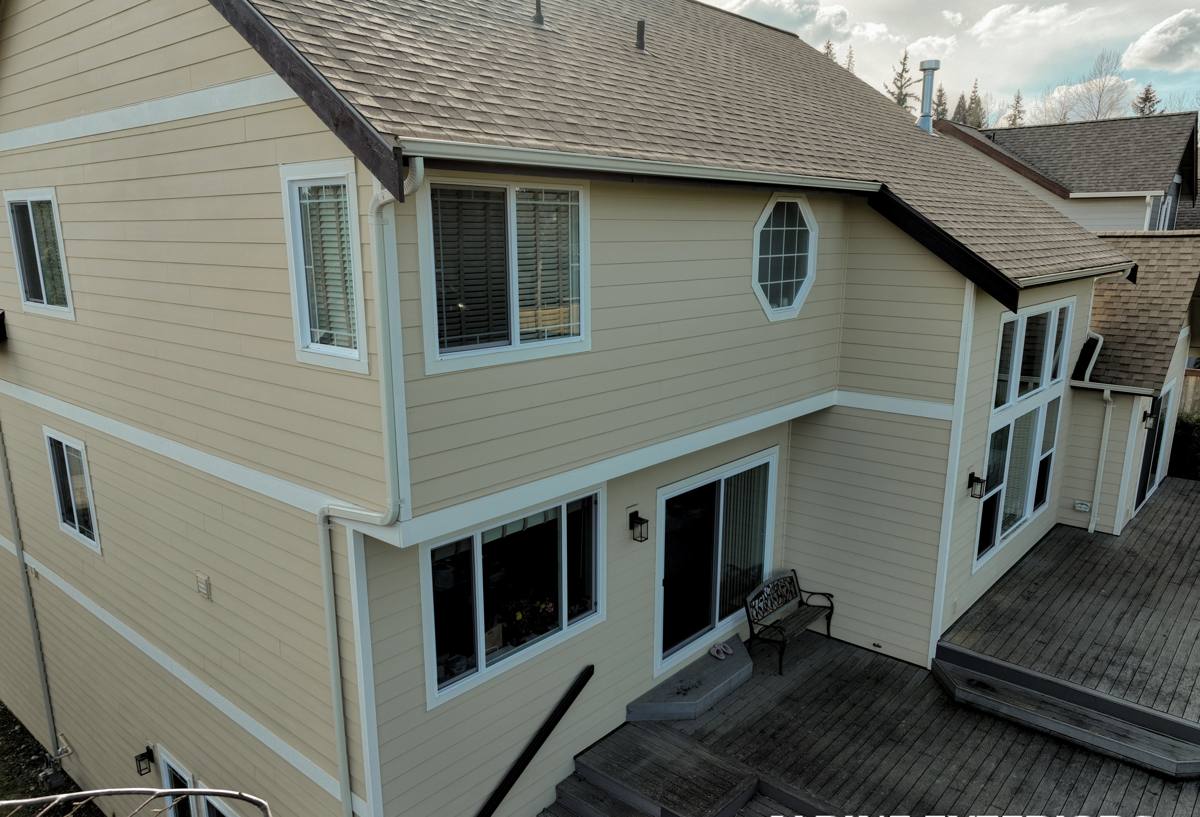
What Salt Air, Driving Rain, and Moss Season Actually Do to Windows
None of these factors destroy a window overnight. They work slowly, which is exactly why so many replacement jobs we see are more about accumulated damage than a single obvious failure.
Salt Air
Airborne salt is corrosive to unprotected metal hardware — hinges, cranks, and locking mechanisms — and it accelerates the breakdown of some sealants and finishes faster than a typical inland Whatcom County property would experience. Fasteners and flashing that aren't rated for coastal exposure tend to show it first.
Driving Rain
Wind off the bay pushes rain sideways into window walls rather than letting it run straight down siding. That means flashing details and sealant lines that would be adequate in a calmer climate can still let water in here if they're not built with a slight overlap and drainage path in mind. Water intrusion around a window frame is rarely dramatic at first — it's usually a slow stain, a soft spot in the sill, or a musty smell before it's an obvious leak.
Moss and Prolonged Dampness
Bellingham's long damp season keeps painted and wood surfaces wet for extended stretches, which is exactly the environment moss and mildew need. On windows, that shows up as dark streaking on sills and trim, and — on older wood-framed units — slow softening of any spot where paint has worn through and bare wood stays wet.
Fairhaven's Housing Mix Adds Its Own Wrinkle
Fairhaven has a good mix of older character homes with original wood-framed windows and newer construction closer to the waterfront. Each brings a different installation challenge. Older homes often have openings that are slightly out of square after decades of settling, original trim worth preserving, and sometimes lead paint that needs proper handling. Newer homes are usually squarer and faster to work with, but may have larger glass units or unusual shapes that need more careful ordering and handling. A crew that's worked a range of Fairhaven homes has usually seen both situations enough times to plan for them instead of discovering them mid-job.
What a Correct Window Installation Involves
A window installation is judged by what you can't see once it's done. The visible parts — the glass, the frame color, the trim — matter for looks, but the parts that determine whether the window performs for the next 15-20 years are underneath.
- Accurate measurement and opening prep: checking the opening for square, level, and plumb, and correcting rot or damage before the new window ever goes in — installing a good window into a bad opening just guarantees a repeat problem.
- Proper flashing sequence: flashing installed in the correct shingle-style order (bottom to top, each layer overlapping the one below) so water is directed out and down, never trapped behind the siding.
- A continuous moisture barrier: tying the window's flashing into the home's existing weather-resistive barrier so there's no gap where wind-driven rain can find its way behind the wall assembly.
- Correct shimming and fastening: the window shimmed square and plumb in the opening and fastened per the manufacturer's schedule — not just caulked in place — so it operates smoothly and doesn't rack over time.
- Insulation around the frame: a low-expansion foam or backer rod and sealant combination that fills the gap without bowing the frame, which is a common cause of windows that won't latch cleanly.
- Interior and exterior sealant lines: a sealant rated for the exposure it will actually face, applied at the right thickness — too thin fails early, too thick can trap moisture instead of shedding it.
Choosing the Right Window for a Coastal, Wet Climate
There's no single "best" window material — the right choice depends on the home, the budget, and how much maintenance the owner wants to take on. Our standard is to explain the honest trade-offs rather than push whatever is easiest to install.
| Frame Material | How It Handles Salt Air & Moisture | Maintenance | Typical Fit |
|---|---|---|---|
| Vinyl | Won't corrode or rot; performs well in coastal air when properly installed | Low — occasional cleaning | Most homes, strong value |
| Fiberglass | Very stable in temperature swings and moisture; holds paint well over time | Low to moderate | Homes wanting a higher-end finish or larger units |
| Wood-clad | Interior wood warmth with an exterior shell protecting against weather, but the cladding seams need correct detailing near salt air | Moderate — watch cladding seams and any exposed wood | Character homes matching original wood interiors |
| Aluminum | Strong and slim-profile, but conducts cold and is more prone to condensation without a thermal break | Low, but corrosion resistance depends on coating quality | Modern designs prioritizing large, narrow-frame glass |
For most Fairhaven homes, a quality vinyl or fiberglass window with a good low-E glass package covers the climate demands without a lot of ongoing upkeep. On older character homes where matching original wood trim matters, a wood-clad option can make sense as long as the cladding details are installed correctly — that's a place where installation quality matters more than the brand on the label.
Double-Pane vs. Triple-Pane in This Climate
Triple-pane windows get a lot of attention, but Bellingham's marine climate is mild and wet rather than deeply cold, so a well-built double-pane window with a good low-E coating and argon fill is usually enough to perform well here. Triple-pane makes more sense for homes with unusual noise or exposure concerns, or for owners who want the extra performance margin and are comfortable with the added cost and weight. We'll walk through whether the upgrade is worth it for your specific home rather than defaulting to the more expensive option.
Our Window Installation Process
- On-site assessment: we look at each opening, check for rot, settling, or square issues, and note anything the flashing and trim work will need to account for.
- Product selection: we go over material, glass package, and grille or trim options based on your home's age, exposure, and budget — no pressure toward a particular brand.
- Opening prep: any damaged framing, sheathing, or trim is repaired before the new window goes in, so it's not sealed over an existing problem.
- Installation: flashing, moisture barrier tie-in, shimming, fastening, insulation, and sealant are done in the correct order for this climate's wind-driven rain and salt exposure.
- Interior and exterior finish: trim, caulk lines, and paint or stain touch-ups are completed and cleaned up.
- Final check: every window is opened, closed, and locked to confirm smooth operation before we call the job done.
What Affects the Cost of a Window Installation Project
| Factor | Why It Matters |
|---|---|
| Number and size of windows | More openings and larger glass units mean more labor and material |
| Frame material | Vinyl, fiberglass, wood-clad, and aluminum sit at different price points |
| Condition of existing openings | Rot or square/level issues add repair time before the new window can go in |
| Access and home height | Second-story or hard-to-reach windows take more time and equipment |
| Trim and finish work | Matching existing interior trim or exterior details adds carpentry time |
| Disposal | Removing and hauling away old windows and materials is part of the job, not an afterthought |
Costs vary enough between homes that we don't quote by the window sight unseen — an accurate number comes from actually looking at your openings.
Signs Your Fairhaven Home May Need New Windows
- Fogging or condensation between the panes, which means the seal has failed
- Difficulty opening, closing, or locking a window that used to move freely
- Visible gaps, drafts, or a noticeable temperature difference near the window
- Soft, discolored, or moss-streaked sills and trim
- A musty smell near a window after heavy rain
- Noticeably higher heating bills with no other explanation
- Single-pane glass original to an older home that's never been upgraded
Why Hiring a Crew That Already Works in Fairhaven Matters
A contractor who regularly works this neighborhood already knows what to expect from its housing stock and its weather — how to handle an older frame that's out of square, what flashing details actually hold up against wind-driven rain off the bay, and how to keep moss and moisture from becoming a recurring problem after the job is done. If your home sits within Fairhaven's historic district, exterior changes — including window style and materials — may be subject to local design review, so it's worth checking with the city before finalizing your choice. A crew with local experience can help you find options that fit both the look of the home and those requirements, instead of learning the process for the first time on your project.
If your windows are showing their age or just aren't holding up to Bellingham's weather the way they should, we're glad to take a look. Request a free, no-pressure estimate using the form below and we'll walk your home's windows with you before recommending anything.