 Bellingham Roofing
 Board & Batten in Ferndale: A Style That Has to Earn Its Keep
Board and batten shows up a lot on Ferndale properties — modern farmhouse builds, older rural homes with barns and outbuildings, and newer construction going for that clean, vertical-line look. It's a great fit for the area's mix of agricultural and small-town character. But board and batten isn't just a style choice. It's a siding system with more seams, more fasteners, and more exposed edges than standard lap siding, which means the material behind the look matters even more than it does on a typical horizontal-siding job.
Ferndale sits close enough to the water that salt-laden air is a real factor, and it gets the same driving rain and extended damp season as the rest of Whatcom County. Any siding installed here needs to hold up to all three at once: salt exposure, wind-driven moisture, and months of shade and dampness that feed moss and mildew. Board and batten, done wrong, is one of the faster ways to end up with a callback.
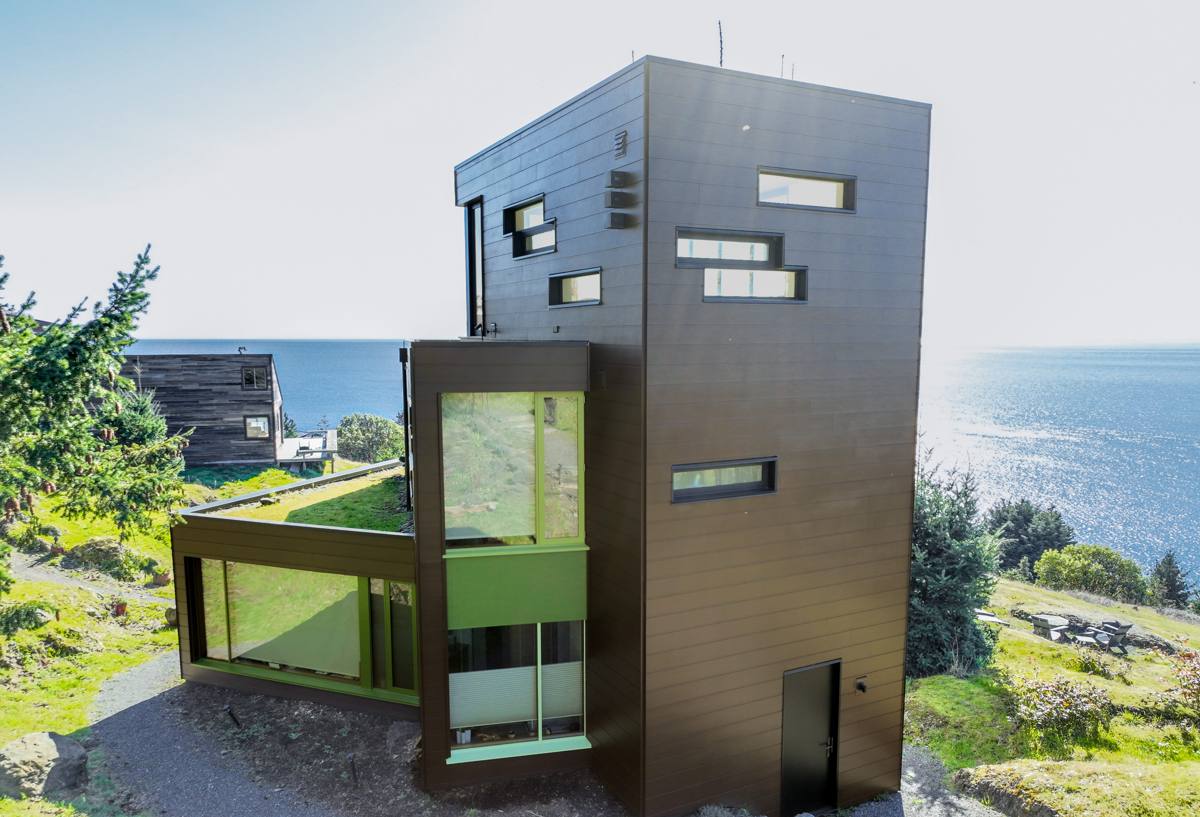
What Ferndale's Climate Actually Does to This Siding Profile
Every vertical joint on a board and batten wall is a potential water path. Wind off the Strait of Georgia and the broader Salish Sea routinely drives rain sideways instead of straight down, which pushes moisture into seams that would stay dry in a calmer climate. Add a long moss season — realistically most of the fall through spring here — and you get sustained dampness sitting against battens and fasteners for weeks at a time.
Three specific problems show up again and again on poorly built or poorly matched board and batten walls in this area:
- Fastener corrosion — salt air accelerates rust on standard fasteners, and once a fastener head fails, water tracks straight into the wall behind it.
- Batten seam saturation — battens that are caulked instead of properly detailed trap moisture against the substrate rather than shedding it.
- Moss and algae staining — vertical boards in shaded, damp yards collect moss faster than they would in a drier climate, and porous materials hold onto it.
Why the Vertical Profile Raises the Stakes
On lap siding, a failed seam usually means a slow, contained leak. On board and batten, water that gets behind a batten can run vertically for a long distance before it finds a gap in the weather-resistive barrier — so by the time a homeowner notices staining or soft trim at the bottom of a wall, the actual entry point might be several feet higher up. That's exactly why installation detail matters more here than the material label on the batten itself.
Why We Only Install James Hardie for Board & Batten Here
We don't offer cedar, engineered wood, vinyl, or primed spruce board and batten. That's a standard we hold across every job, not just Ferndale, but it matters more here because of what the local climate does to porous or moisture-sensitive materials over a vertical-seam profile. Fiber cement doesn't absorb water the way wood-based products do, doesn't swell and shrink with humidity the way engineered wood can, and doesn't soften or warp under sustained dampness the way some vinyl board and batten systems do at the edges.
James Hardie's HZ5 product line is engineered for the kind of wet, marine-influenced climate Whatcom County sits in, and the ColorPlus factory finish holds color and resists the kind of streaking and fading that shows up fast on unfinished or field-painted vertical siding exposed to constant moisture. We're not saying every alternative fails — we're saying that after years of doing this work in this exact climate, fiber cement is the one material we're comfortable standing behind for a profile with this many seams.
How the Options Actually Compare for This Profile
| Material | Moisture Behavior | Moss/Algae Resistance | Maintenance | Typical Lifespan Here |
|---|---|---|---|---|
| Cedar board & batten | Absorbs water; needs sealing/staining on a regular cycle | Moderate — needs treatment to resist moss | High — recoat every few years | Shorter without diligent upkeep |
| Engineered wood | Better than raw cedar but vulnerable at cut edges and seams | Moderate | Moderate | Depends heavily on installation quality |
| Vinyl board & batten | Doesn't absorb, but can warp/gap at seams under sun and wind cycles | Low-moderate — surface growth is common | Low, but limited repair options | Variable; edges are the weak point |
| James Hardie fiber cement | Non-combustible, dimensionally stable, engineered for wet climates | Strong when installed with proper drainage | Low — periodic wash, factory finish holds up | Long-term when installed to spec |
What a Correct Board & Batten Installation Involves
The material is only half the equation. We've seen quality fiber cement fail early because it was installed like a decorative wood product instead of a weather system. A correct installation on a Ferndale home includes:
- A drainage gap (rainscreen) behind the panel so any moisture that does get past the surface has somewhere to go instead of sitting against the sheathing.
- Proper flashing at every horizontal transition — window heads, roof lines, and foundation — not just caulk.
- Corrosion-resistant fasteners sized and spaced to the manufacturer's specification, which matters more here given the salt air.
- Battens installed to allow drainage rather than sealed tight in a way that traps water against the panel.
- Factory-cut and field-cut edges properly sealed, since a raw cut edge is the most vulnerable point on any fiber cement panel.
Where Corners Get Cut
The most common shortcuts we see on board and batten re-siding jobs are missing rainscreen gaps, caulk used in place of flashing, and battens face-nailed without regard for expansion. None of these show up as a problem on install day — they show up two or three wet seasons later, which is exactly the kind of long-tail failure this profile is prone to.
Our Process on a Ferndale Board & Batten Project
We start with an on-site assessment of the existing wall assembly, not just the visible siding — if there's an existing moisture problem behind old cedar or vinyl, we want to know before we close the wall back up. From there:
- We check the sheathing and framing for existing moisture damage and address anything we find before new siding goes on.
- We install a weather-resistive barrier and rainscreen system suited to the wall assembly.
- We install James Hardie panels and battens to manufacturer spec, with corrosion-resistant fasteners and full flashing details at every penetration and transition.
- We seal and finish all cut edges and confirm caulking is used only where it belongs — not as a substitute for flashing.
- We walk the finished job with the homeowner and point out what to watch for during the first wet season.
Living With Board & Batten Through a Ferndale Moss Season
Even correctly installed fiber cement benefits from basic seasonal attention in a climate this wet. A light annual wash keeps moss and algae from establishing on the surface, and it's worth checking that gutters and downspouts are actually moving water away from the wall rather than overflowing onto it — a surprising amount of siding damage we see traces back to gutter overflow, not the siding itself. Trimming back vegetation that keeps a wall shaded and damp also goes a long way, since board and batten's vertical lines can hide streaking longer than lap siding before it becomes obvious.
Why a Crew That Already Works Ferndale Matters
Whatcom County permitting, typical lot setups, and the local mix of older farmhouse construction and newer builds are all things you learn by working here regularly, not by reading a spec sheet. A crew that already knows which Ferndale properties sit exposed to wind off the water versus which are more sheltered can plan fastener spacing, flashing details, and even batten spacing decisions accordingly. That local familiarity is part of what separates a board and batten job that looks right on install day from one that still looks right five wet seasons later.
Questions Worth Asking Before You Hire Anyone for This Job
- Will there be a rainscreen/drainage gap behind the panels, or will they be installed direct-to-sheathing?
- What fastener type and spacing will be used, and are they rated for coastal/salt-air exposure?
- How will cut edges be sealed, and how will horizontal flashing be detailed at windows and transitions?
- What's the plan if moisture damage is found behind the existing siding once it's removed?
- What warranty applies to both the material and the labor, and what would void it?
If your Ferndale home is due for new siding, or you're planning a board and batten look for a new build or addition, we're happy to walk the property, look at what you're working with, and give you a straightforward, no-pressure estimate — use the form below to get started.