 Bellingham Roofing
 Why Ferndale Roofs Take a Different Kind of Beating
Ferndale sits close enough to the water and the open flats of Whatcom County that its roofs deal with a specific combination of stressors most inland homes never see. Salt-laden air off the coast accelerates corrosion on fasteners, flashing, and vents. Driving rain, pushed sideways by wind off the Strait, finds its way under poorly lapped shingles and around loose flashing instead of just running off the surface. And the long, wet, shaded moss season that stretches from fall through spring gives organic growth months to take hold on any roof that doesn't shed water and dry out quickly.
None of that means a Ferndale roof needs to be exotic or overbuilt. It means the ordinary parts of a roof replacement — underlayment choice, flashing detail, fastener selection, ventilation — actually matter more here than they would in a drier, calmer climate. A roof that's installed correctly for this specific environment will outlast one that's just installed "to code" with generic materials and no attention to the coastal conditions.
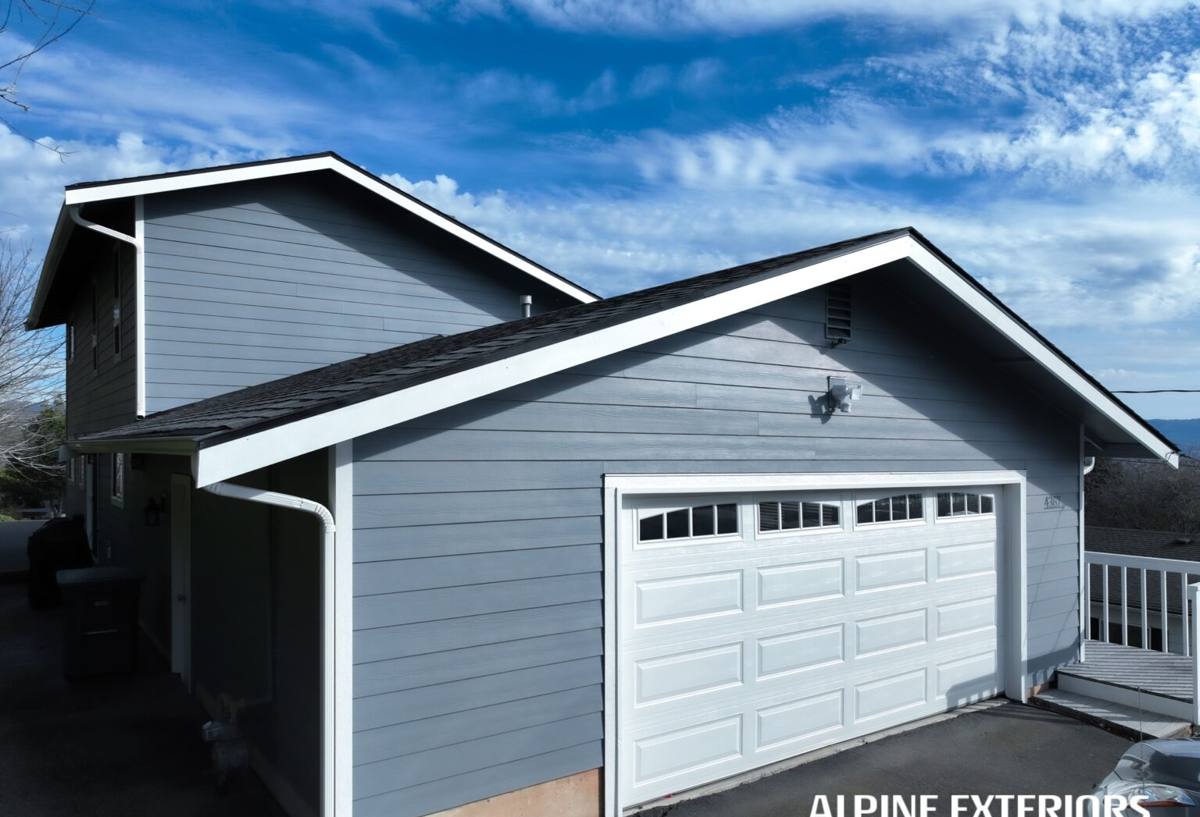
Signs a Ferndale Home Needs Replacement, Not Another Repair
Homeowners often call us after a leak, but the leak is usually the last stage of a roof that's been failing quietly for years. A few signs point toward replacement rather than another round of patching:
- Granule loss heavy enough that you can see bare, shiny patches on asphalt shingles, especially on south- and west-facing slopes.
- Moss or algae staining that keeps coming back within a season or two of cleaning, which usually means the roof is staying wet longer than it should.
- Shingles that are cupping, curling at the edges, or cracking when touched — a sign the mat has dried out and lost flexibility.
- Soft spots in the decking, visible from the attic as sagging or daylight around vents and chimneys.
- Multiple past repairs in different areas of the roof, which usually signals the whole system — not just one section — is at the end of its service life.
- A roof that's already had one layer of shingles installed over the original, since a second layer isn't a real fix and hides the condition of what's underneath.
If your roof shows two or more of these, a replacement conversation is worth having even if there's no active leak yet — catching it before water reaches the decking saves real money.
What a Correct Roof Replacement Actually Involves
A roof replacement done right in this climate is more than stripping old shingles and nailing down new ones. Every layer underneath the shingles is doing real work against Whatcom County's rain and humidity, and skipping or downgrading any of them is where roofs fail early.
Full Tear-Off and Deck Inspection
We remove the existing roofing down to the deck rather than layering over it. That's the only way to actually see the condition of the plywood or plank decking underneath — rot, soft spots, and old water staining are invisible from above. Any damaged decking gets replaced before anything new goes down; a beautiful new roof over a compromised deck is a short-term fix wearing a long-term price tag.
Underlayment Built for Coastal Moisture
Underlayment is the backup layer that protects your home if wind-driven rain gets past the shingles, which happens more often here than in calmer inland areas. We use synthetic underlayment as the standard because it holds up better to prolonged moisture exposure and stays intact if a section of the roof is exposed to weather during construction. Ice-and-water shield goes at eaves, valleys, and around penetrations — the spots where water concentrates and driving rain is most likely to find a gap.
Ventilation and Moss Prevention
A roof that breathes properly dries out faster after rain, and a roof that dries faster grows less moss. Balanced intake and exhaust ventilation keeps attic moisture from condensing on the underside of the decking and keeps roof surface temperatures more even, which reduces the damp, shaded conditions moss needs to establish. We check existing ventilation on every replacement and correct it where it's inadequate, rather than just matching what was there before.
Flashing and Detail Work
Flashing around chimneys, skylights, dormers, and roof-to-wall transitions is where most leaks actually start, not in the open field of shingles. Salt air accelerates corrosion on cheap or aging flashing, so we install new flashing as part of every replacement rather than reusing old pieces, and we take the time to get the step flashing, counter-flashing, and valley details right the first time.
Material Options for a Salt-Air, High-Moisture Climate
There's no single "correct" material for every Ferndale home — it depends on your roof's exposure, your home's style, and your budget. Here's how the common options actually compare for this specific climate:
| Material | Moss & Moisture Resistance | Wind/Rain Performance | Typical Lifespan | Relative Cost |
|---|---|---|---|---|
| Standard 3-tab asphalt shingle | Fair — needs regular cleaning | Adequate when properly installed | 15–20 years | Lower |
| Architectural (laminate) shingle | Good — thicker mat sheds water better | Strong wind ratings available | 25–30 years | Mid |
| Metal roofing | Very good — minimal organic growth | Excellent | 40–50+ years | Higher |
| Synthetic/composite shingle | Good, varies by product | Strong wind ratings available | 30–50 years | Higher |
For most Ferndale homes, an architectural asphalt shingle rated for high wind is the practical middle ground — it handles driving rain well, resists moss better than basic 3-tab, and doesn't carry the upfront cost of metal. For homes with heavy tree cover or particularly persistent moss history, the extra durability of metal or a quality composite can be worth the added investment over the life of the roof. As a broad reference point, a full replacement on a typical single-family home in this region tends to run somewhere in the low-to-mid five figures, with the final number driven by roof size, pitch, material, and how much decking repair is needed — we'll never give you a real number until we've actually measured your roof.
Our Process, Start to Finish
- On-site inspection. We walk the roof and the attic, check decking condition, ventilation, and flashing, and take measurements — not a drive-by estimate.
- Written estimate. You get a clear breakdown of materials, scope, and price before any work is scheduled, with no pressure to decide on the spot.
- Material order and scheduling. We work around Whatcom County's weather windows rather than forcing a tear-off into a forecasted downpour.
- Tear-off and deck repair. Old roofing comes off, the deck is inspected and repaired as needed, before anything new is installed.
- Underlayment, flashing, and shingle installation. Installed in the order and detail described above, not rushed to hit a daily quota.
- Cleanup and magnetic sweep. Yard and driveway are cleared of debris and nails before we consider the job done.
- Final walkthrough. We go over the finished roof with you, not just hand you an invoice.
Living With Moss and Rain After the Roof Is Replaced
Even the best-installed roof in this region benefits from a little ongoing attention. A short annual checklist keeps a new roof performing the way it's designed to:
- Have gutters cleared before the fall rains start — clogged gutters back water up under the eaves and shingle edges.
- Trim back overhanging branches to cut down on shade and debris, both of which feed moss growth.
- Have moss and algae growth treated gently before it spreads, rather than pressure-washed, which can strip granules and shorten shingle life.
- Check attic ventilation isn't blocked by insulation or storage that's crept into soffit vents over time.
- Have a quick visual check done after any major windstorm, since lifted or displaced shingles are easy to fix early and expensive to ignore.
Permits and Timeline in Whatcom County
Most roof replacements in this area require a building permit, and requirements can vary depending on the scope of the work and your specific jurisdiction within Whatcom County. We handle the permit process as part of the job so you're not the one tracking down paperwork. As for timeline, a typical single-family roof replacement takes a few days of actual work once materials are on-site, though weather delays are common here and we'll always be upfront if rain is pushing the schedule rather than rushing a tear-off ahead of a storm.
Why a Crew That Already Works Ferndale Matters
Roofing crews that mostly work drier, inland climates tend to default to generic underlayment, standard ventilation, and whatever flashing detail is fastest — because in their normal conditions, it's usually good enough. In Ferndale, "usually good enough" is how you end up with moss back within a year or a slow leak nobody notices until there's staining on a ceiling. A crew that regularly works this specific area already knows which slopes on a given roof style tend to hold moisture, where wind-driven rain actually gets in, and which details are worth the extra time. That local pattern recognition is the difference between a roof that just meets code and one that's actually built for the place it sits.
If your roof is showing its age or you're just trying to plan ahead, we're happy to take a look and give you an honest read on where things stand. Reach out for a free, no-pressure estimate using the form below — we'll walk the roof, answer your questions, and give you real numbers before you decide on anything.