 Bellingham Roofing
 Storm Damage Roof Repair in Ferndale: Why This Job Isn't Generic
A storm doesn't damage every roof the same way, and it doesn't damage a Ferndale roof the same way it would a roof forty miles inland. Ferndale sits in open, low-lying country near Bellingham Bay and the Strait of Georgia, where wind off the water has very little to slow it down before it reaches a roofline. Add in rain that arrives sideways more often than it falls straight down, salt-tinged marine air that works on fasteners and flashing metal year-round, and a moss season that runs long across most of the calendar, and you get a specific set of conditions that shape both how storm damage happens here and how it needs to be repaired.
We work storm damage calls in Ferndale on a regular basis, not as an occasional add-on to a wider Bellingham-area schedule. That matters because storm damage repair rewards speed and local knowledge in a way routine roofing work doesn't: a roof that's actively letting water in needs a crew that can get there fast, diagnose accurately, and do the repair right the first time, not a patch that fails again in the next weather system.
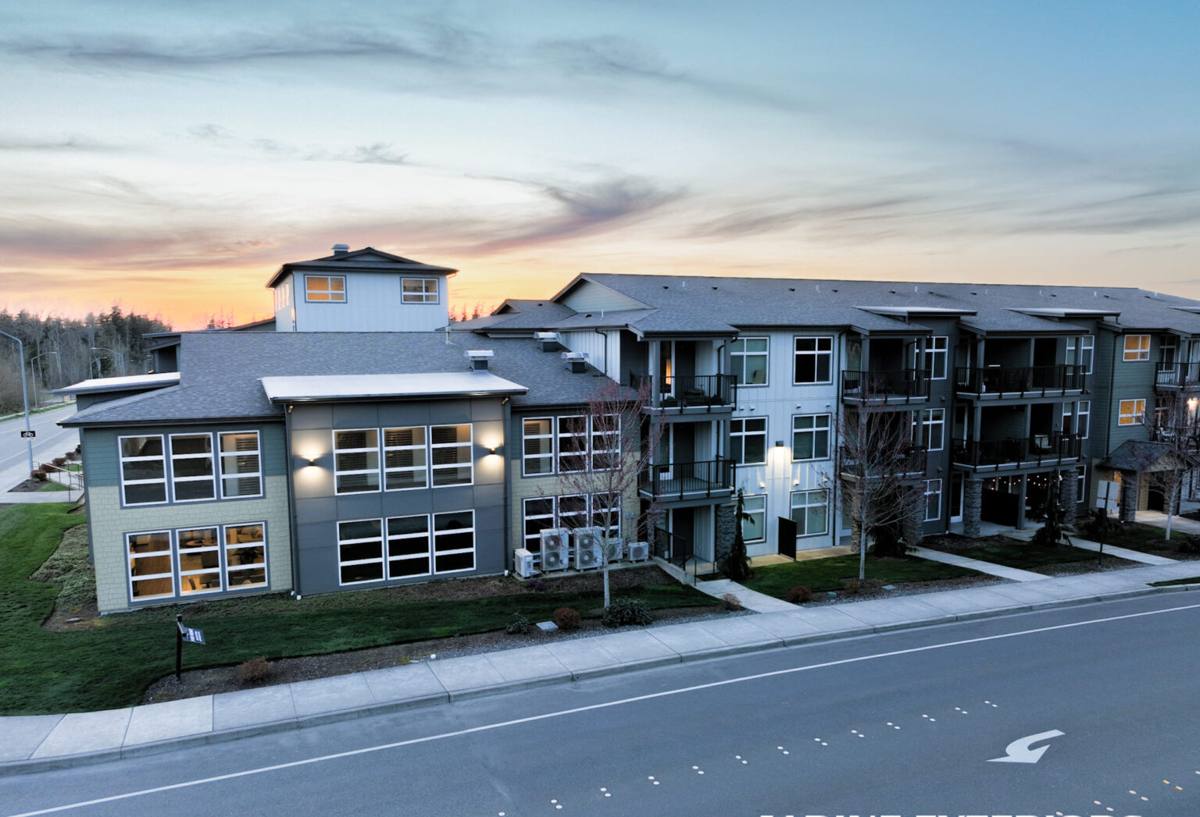
How Storms Actually Damage a Ferndale Roof
Wind Damage
Sustained wind and wind gusts lift shingle tabs, break the adhesive seal strip that normally holds them flat, and in more severe cases tear shingles off completely or peel back whole sections along a ridge or eave edge. Ferndale's open, flat terrain and proximity to the water mean less natural windbreak than roofs get in more sheltered parts of Whatcom County, so wind speeds right at roof level here can run higher than what a general regional forecast suggests.
Wind-Driven Rain Intrusion
Rain pushed sideways and upward by wind behaves differently than rain falling straight down, and it's often the more damaging half of a storm event. It gets driven up under shingle tabs, through valleys that weren't sealed with enough overlap, and around flashing at chimneys, skylights, and wall intersections, sometimes without ever leaving an obvious sign on the roof surface itself.
Impact and Debris Damage
Fallen branches, wind-blown debris, and occasional hail can crack or puncture shingles, dent flashing, and damage gutters. Even a relatively small impact can compromise a shingle's ability to shed water even when the shingle itself doesn't look obviously broken from the ground.
Why Storm Damage Often Looks Worse — or Better — Than It Is
Two things are true at once after a storm: some roofs that look fine from the driveway have real damage, and some roofs that look alarming from below turn out to need a modest repair rather than a full replacement. A missing shingle is obvious. A shingle that's been lifted and re-seated by wind but never resealed isn't, and it can leak on and off for months before anyone notices a stain on a ceiling. Flashing that's been bent or had its sealant cracked by wind movement often shows no visible sign from ground level at all.
This is why an actual roof inspection after a significant storm matters more than a visual check from the yard. We walk the roof, not just look up at it, and check the specific places storm damage tends to hide: shingle seal strips, valley overlaps, flashing sealant, and the underside of the decking where it's accessible, since staining or soft spots there are often the first real evidence of a leak that hasn't shown up inside the house yet.
What a Correct Storm Damage Repair Actually Involves
A storm repair that only addresses what's visible from the ground is a repair that's likely to need doing again. Doing it right starts with a full inspection of the affected area and a reasonable margin around it, not just the exact spot where damage is obvious, since wind and wind-driven rain rarely stop at a clean boundary.
- Matching shingle type, style, and where possible color: A mismatched patch is a cosmetic problem now and a bigger one later if the original product line gets discontinued.
- Underlayment inspection at the repair area: If underlayment was exposed to weather during the damage window, it needs to be checked and, if compromised, replaced along with the shingles.
- Flashing reset or replacement, not just re-caulked: Sealant alone is a short-term fix; flashing that's been bent or displaced needs to be properly reset or replaced.
- Correct fastening pattern: Storm repairs done fast and cheap sometimes skip proper nail placement, which leaves the repair vulnerable to the next wind event.
- A check of adjacent, undamaged-looking areas: Storms that damage one section often stress the surrounding roof too, even where nothing tore loose.
We hold a storm repair to the same standard we'd apply to any roofing work, not a rushed patch meant to get through until the next visit. That's the difference between a repair that holds and one that turns into a repeat call.
Our Storm Response Process
Storm damage calls move faster than routine roofing work, and homeowners usually want two things at once: someone to stop the water now, and a clear, honest plan for the actual repair. Here's how we handle it.
- Initial contact and triage: We ask what you're seeing — active leaking, visible damage, missing shingles — so we can prioritize genuine emergencies appropriately.
- On-site inspection: We walk the roof and document the damage with photos, which supports both the repair plan and any insurance claim you may file.
- Emergency mitigation if needed: If the roof is actively letting water in, we can tarp the affected area to limit further interior damage while the full repair is scheduled.
- Written scope and estimate: You get a clear explanation of what's damaged, what the repair involves, and an honest estimate before any repair work begins.
- The repair: Matched materials, correct underlayment and flashing work, and fastening done to the standard we'd use on any roof, not a shortcut version because it's storm work.
- Follow-up: We check that the repair holds through the next weather system rather than considering the job done the moment the crew leaves.
Repair or Replace After Storm Damage?
Not every storm-damaged roof needs to be replaced, and not every roof that looks salvageable actually is. The right call depends on a handful of factors we walk through with you honestly during the inspection.
| Factor | Leans Toward Repair | Leans Toward Replacement |
|---|---|---|
| Roof age | Roof is under roughly half its expected service life | Roof is already near or past its expected lifespan |
| Extent of damage | Damage is localized to one section or slope | Damage is spread across multiple slopes or the whole roof |
| Underlying deck condition | Decking is sound once exposed | Decking shows rot or long-term moisture damage |
| Repair history | Roof hasn't needed frequent past repairs | This is one of several repairs in recent years |
| Material availability | Matching shingle product is still available | Original product is discontinued and won't blend in |
| Insurance scope | Adjuster approves a repair-scope claim | Adjuster's assessment supports a full slope or roof replacement |
We'll give you our honest read on which side of that table your roof falls on, including telling you plainly when a repair is the right call even though a replacement would be the bigger job for us.
Working With Your Insurance Company
Most storm damage claims move more smoothly when the documentation is thorough from the start. We photograph the damage during our inspection, before any repair work begins, and provide a written scope describing what happened and what's needed to fix it. That gives you something concrete to bring to your insurance company or hand directly to an adjuster.
We're glad to meet an adjuster on-site if that's useful, and to answer questions about the scope of the damage and the repair plan. What we won't do is inflate a scope of work to chase a bigger payout, or write an estimate designed around what insurance will approve rather than what the roof actually needs. An honest scope protects you if a dispute comes up later and keeps the repair itself grounded in what will actually hold up through the next storm.
Why a Crew That Already Works Ferndale Matters
After a significant storm, it's common to see unfamiliar trucks and door-to-door crews working their way through affected neighborhoods, some from well outside the area. A few of those crews do fine work. Many aren't around long enough to honor a warranty claim, or even answer the phone, once the storm's news cycle has moved on.
A crew that already works Ferndale roofs regularly knows how this specific stretch of Whatcom County weather behaves — how far wind-driven rain tends to travel under a shingle edge here, which roof orientations catch the worst of storms coming off the water, and how salt air affects the fasteners and flashing metal used in a repair. That knowledge shapes real decisions on the roof, not just talking points, and it's backed by being an actual local business you can reach again next year if something needs a second look.
After the Storm: A Homeowner Checklist
- Stay off the roof yourself — storm-damaged roofing can be unstable and slick, and it's not worth the fall risk
- Photograph any visible damage and interior water stains from the ground or from inside, safely
- Check attic spaces or upper closets for water stains, damp insulation, or daylight showing through the deck
- If water is actively entering the house, place containers to catch it and move valuables away from the area
- Avoid signing anything or paying a large deposit to a crew that showed up unsolicited right after the storm
- Call a local roofer for an inspection even if the damage looks minor — some of the worst leaks start small
- Keep any photos and written estimates together in one place for your insurance claim
If a recent storm has left your Ferndale roof missing shingles, leaking, or just looking rougher than it did last week, we're glad to come take an honest look. Reach out using the form below for a free, no-pressure estimate.