 Bellingham Roofing
 Why Columbia's Climate Is Hard on Ordinary Siding
Homes in the Columbia neighborhood sit close enough to Bellingham Bay that salt-laden air is a daily fact of life, not an occasional nuisance. Add Whatcom County's long stretch of driving rain each fall and winter, plus a moss season that can run from October well into April, and you have a combination that finds every weak point in a home's exterior. Salt air accelerates corrosion on fasteners and metal trim. Wind-driven rain pushes water sideways into laps and seams that were only ever designed to shed water falling straight down. And moss doesn't just sit on the surface — it holds moisture against whatever it's growing on, which matters a great deal depending on what that surface is.
This is the environment we design every siding job around. It's also why we install one product system on Columbia homes: James Hardie fiber cement. Not because it's the cheapest option, but because it's the one that holds up to this specific combination of salt, rain, and moss without the maintenance headaches that come with wood-based or vinyl products in a marine climate.
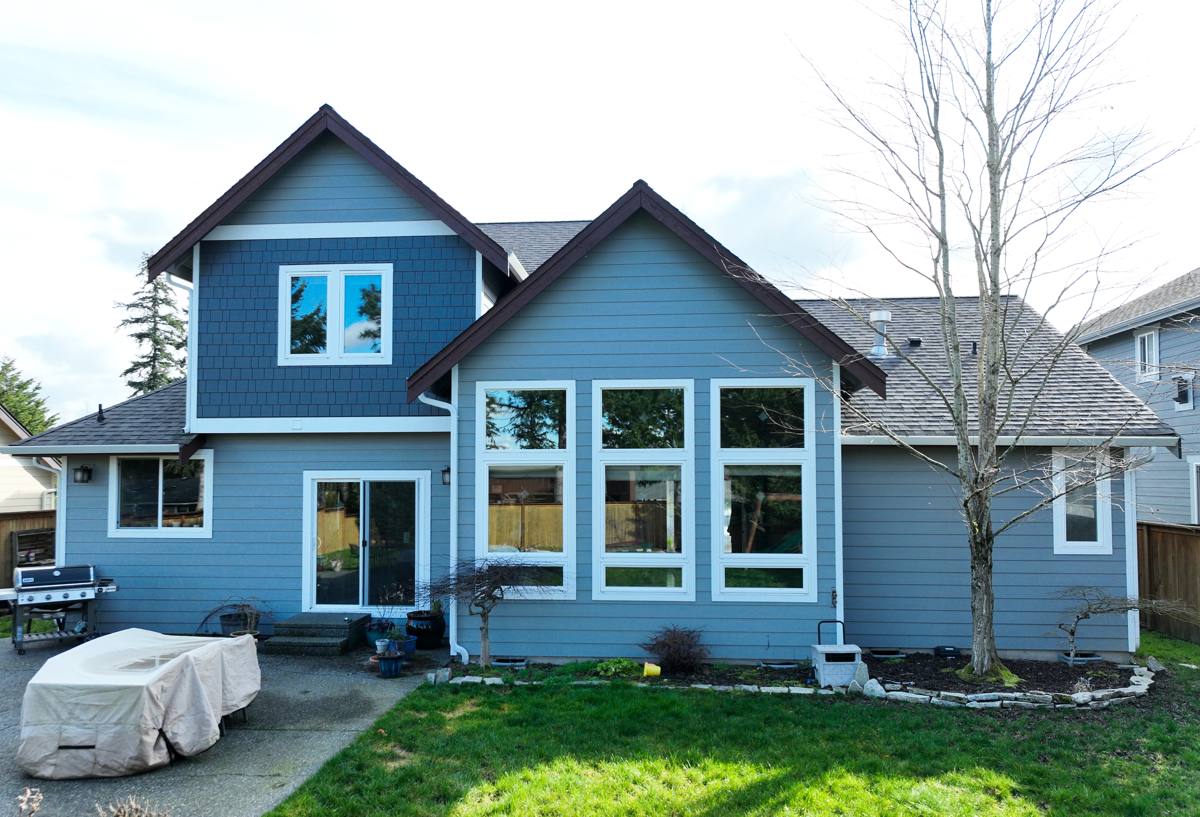
What Fiber Cement Actually Is — and Why It Matters Here
Fiber cement siding is made from cement, sand, and cellulose fibers, cured into a dense, stable board. Unlike wood-based siding products, it doesn't have an organic core that can absorb moisture and swell, rot, or feed fungal growth. Unlike vinyl, it doesn't expand and contract dramatically with temperature swings, and it won't become brittle in cold snaps or soften and warp near heat sources. For a neighborhood dealing with near-constant humidity, salt exposure, and moss, that stability is the whole point.
We install James Hardie specifically because their HZ5 product line is engineered for exactly this Pacific Northwest climate zone — freeze-thaw cycling, high moisture exposure, and coastal air. We don't install LP SmartSide, vinyl, Cemplank, Allura, or bare cedar and spruce siding. Each of those has legitimate uses somewhere, but for Columbia's exposure, we've standardized on one system because it lets us guarantee installation quality and warranty coverage without hedging between product lines with different moisture behavior and fastening requirements.
ColorPlus Factory Finish vs. Field-Applied Paint
Most Hardie siding we install in this neighborhood goes on with a ColorPlus factory-applied finish rather than field paint. The finish is baked on under controlled conditions before the boards ever reach the job site, which gives more even coverage and better fade resistance than paint applied outdoors in Bellingham's damp working conditions. It also carries its own finish warranty separate from the substrate warranty — worth understanding before you pick a color, since touch-up paint and repainting cycles are handled differently than with standard field-painted siding.
What a Correct Installation Involves
Fiber cement siding is only as good as the installation behind it. This is a product that's sensitive to how it's fastened, flashed, and gapped, and cutting corners on any of those details shows up as problems within a few wet seasons rather than decades. On a Columbia home, we treat the following as non-negotiable:
- A drainage plane behind the siding. A water-resistive barrier, properly lapped and taped, with a rainscreen gap where conditions call for it, so any moisture that gets past the siding has somewhere to go besides the sheathing.
- Correct fastener type and placement. Corrosion-resistant fasteners driven at the manufacturer's specified location and depth — critical in a salt-air environment where the wrong fastener can start failing years before the siding itself would.
- Proper flashing at every penetration. Windows, doors, hose bibs, and vents are where wind-driven rain finds its way in. Flashing has to be integrated with the drainage plane, not just caulked over.
- Manufacturer-specified clearances. Gaps at grade, roof lines, and decks that keep the bottom edge of the siding from sitting in standing water or trapped moss and debris.
- Joint and seam treatment per Hardie's install guide. Butt joints, corners, and trim intersections detailed the way the manufacturer specifies — this is also what keeps the product warranty intact.
Skipping any of these doesn't void the durability of the fiber cement board itself, but it does undermine the whole system's ability to manage water — which, in a climate like this one, is the entire job.
Signs Your Current Siding Is Losing the Fight
Homeowners in Columbia usually call us for one of a few reasons. Recognizing them early keeps a manageable repair from becoming a full tear-off:
- Persistent moss or black streaking that returns within weeks of cleaning, especially on north- and west-facing walls
- Soft or spongy spots when you press on wood-based siding or trim
- Paint that's bubbling, peeling, or failing faster than the repaint cycle you're used to
- Visible gaps, warping, or separation at seams and corners
- Rust staining below fasteners or metal trim pieces
- Rising energy bills that point to a compromised weather barrier, not just an aging furnace
Any one of these is worth a look. Several together usually means the underlying moisture management, not just the surface material, has failed.
Our Process for a Columbia Siding Job
1. On-Site Assessment
We walk the exterior, check for moisture intrusion at trim, penetrations, and grade level, and look at what's actually happening behind the current siding where we can access it — not just what the surface looks like.
2. Tear-Off and Sheathing Check
Old siding comes off, and we inspect the sheathing underneath. This is the point where hidden rot or moisture damage from a failed prior installation gets caught and addressed before new siding goes up over it.
3. Drainage Plane and Flashing
House wrap or building paper goes on correctly lapped, flashing gets integrated at every opening, and a rainscreen gap is added where the wall assembly calls for one.
4. Hardie Installation to Spec
Boards, fasteners, and trim go in per James Hardie's published installation requirements for this climate zone — the details that keep both the product warranty and our workmanship warranty valid.
5. Final Detailing and Cleanup
Caulking, touch-up, and a full site cleanup, with a walkthrough so you know exactly what was done and why.
Cost Factors for Columbia Homes
Every home is different, but the line items that actually move the price on a fiber cement job in this neighborhood are fairly consistent:
| Factor | Why It Matters Here |
|---|---|
| Tear-off complexity | Multiple layers of old siding or hidden rot from past moisture intrusion add labor |
| Sheathing repair | Salt air and long moss seasons increase the odds of hidden sheathing damage on older homes |
| Trim and detail work | Homes with more corners, dormers, and penetrations need more flashing and cut work |
| Siding profile and finish | Lap width, texture, and ColorPlus color selection affect material cost |
| Rainscreen assembly | Adding a drainage gap behind the siding is extra labor but pays off in this climate |
| Home size and stories | Access and staging costs scale with height and square footage |
Why a Crew That Already Works Columbia Matters
Fiber cement installation isn't exotic, but doing it well in a coastal, high-moisture, moss-prone neighborhood takes judgment calls that only come from having worked the area. A crew that's used to drier inland conditions may not automatically add a rainscreen gap, may under-flash a penetration that would be fine somewhere less exposed, or may not think twice about a fastener spec that's marginal near salt air. Before hiring anyone for a fiber cement job in Columbia, it's worth checking:
- Are they a factory-certified James Hardie installer, or installing without that training?
- Will they put the installation approach — rainscreen, flashing details, fastener spec — in writing?
- Can they explain how the job's warranty (material and labor) actually works and what voids it?
- Do they have experience specifically with Whatcom County's coastal, high-moisture conditions?
- Will they inspect and address sheathing condition before covering it back up?
- Is the bid based on an actual site walk, not just a square-footage estimate from a photo?
Living with Fiber Cement Siding in a Moss-Heavy Climate
Fiber cement doesn't feed moss or rot the way wood-based products can, but moss and algae can still take hold on any exterior surface in Bellingham's damp climate — it's growing on the siding, not into it. A gentle rinse once or twice a year, keeping nearby vegetation trimmed back for airflow, and checking caulked joints periodically are about the extent of the upkeep. Compared to the repainting cycles and rot inspections that wood siding demands in this same environment, it's a meaningfully lighter maintenance load — one of the main reasons we standardized on this product for homes exposed to Columbia's salt air and rain.
If your Columbia home's siding is showing its age, or you're planning ahead rather than reacting to a problem, we're happy to take a look and give you a straightforward assessment. The estimate is free, there's no pressure, and you'll walk away knowing exactly what your home's exterior needs — use the form below to get started.