 Bellingham Roofing
 Decks in Happy Valley Take a Beating From the Weather
Happy Valley sits close enough to the water and the hills around Bellingham that decks here deal with a mix of problems you don't see in drier parts of Washington. Salt-laden air off Bellingham Bay works on metal fasteners and hardware year-round. Driving rain off the water finds every gap in flashing and decking. And the long, wet moss season coats every horizontal surface with organic growth that holds moisture against wood far longer than a dry climate ever would. A deck that looks fine from the yard can be quietly failing underneath, and by the time you notice soft boards or a wobble in the railing, the damage has usually been building for a couple of seasons.
We work on decks throughout Bellingham, but Happy Valley's mix of older homes, mature tree cover, and proximity to the water gives it its own repair pattern. This page covers what we actually see, what a correct repair looks like, and how we approach the job.
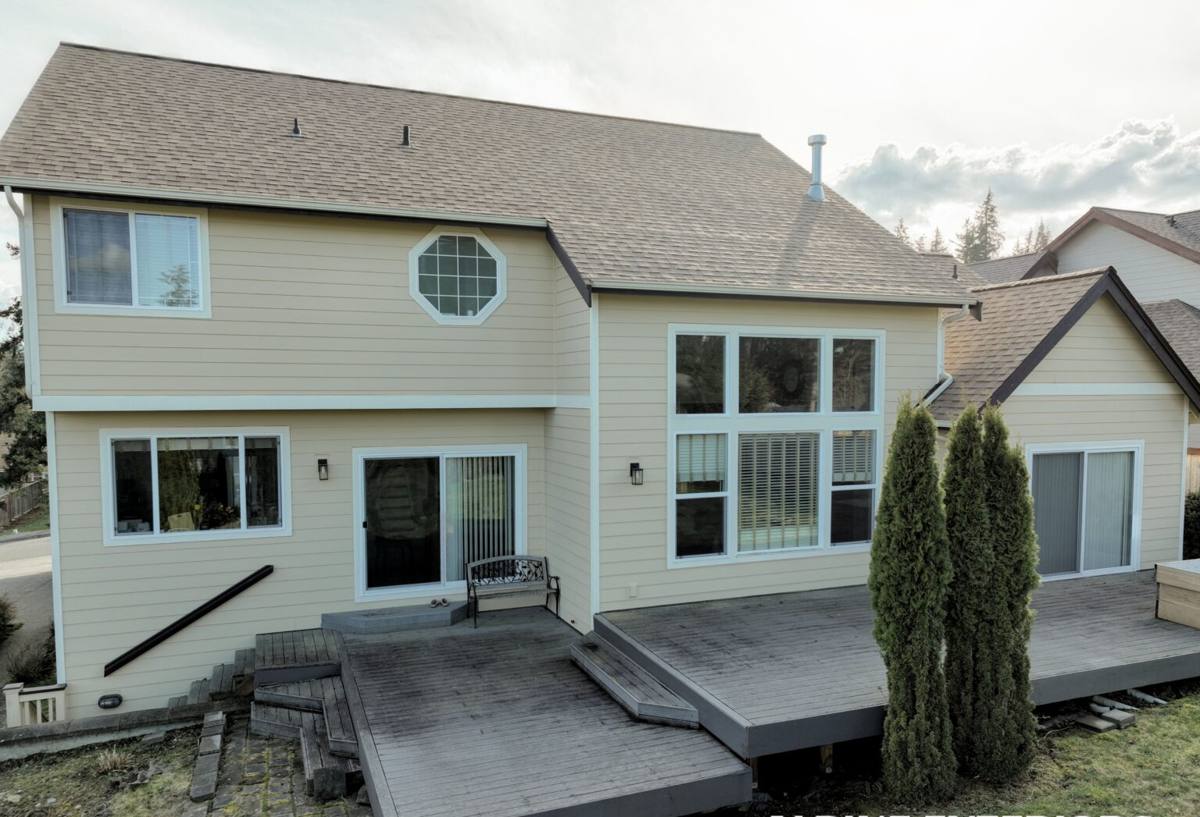
What Whatcom County's Climate Does to a Deck
Salt Air and Fastener Corrosion
Coastal salt air accelerates corrosion on anything metal that isn't rated for it — screws, nails, joist hangers, and railing hardware. Once a fastener starts rusting, it loses holding strength long before it looks obviously bad. Rust streaks bleeding out around deck screws or hanger bolts are one of the clearest early warning signs we look for, and they usually mean the fastener needs to come out and be replaced with something actually rated for exterior, coastal-adjacent use.
Driving Rain and Water Intrusion
Bellingham doesn't just get rain — it gets rain that comes in sideways off the water often enough that flashing details matter more here than in a lot of inland climates. The ledger board (where the deck attaches to the house) is the single most common failure point we find, because water gets behind poorly flashed ledger boards and rots the framing from the inside where you can't see it. Gaps between deck boards, missing or degraded flashing tape, and caulk used as a substitute for proper flashing are all things driving rain will eventually find and exploit.
The Long Moss Season
Whatcom County's moss and algae season runs long — often eight months or more of conditions damp enough for organic growth to take hold. Moss on a deck isn't just a slip hazard; it holds water against the wood surface constantly, which speeds up rot in exactly the spots where boards already tend to fail first: butt joints, areas under overhanging trees, and shaded sides of the house that never fully dry out between rains.
Signs Your Deck Needs Repair
Most deck problems in this area show up gradually. Here's what we tell homeowners to check for before calling anyone:
- Soft or spongy spots when you walk across the decking, especially near the house
- Rust streaks around screws, nails, or metal hardware
- Visible gaps, cracks, or splitting in individual boards
- A railing that flexes or moves when you lean on it
- Persistent moss or dark staining that keeps coming back after cleaning
- Any separation between the deck and the house at the ledger board
- Stairs that feel less solid than they used to, particularly at the stringers
- A musty smell coming from underneath the deck
Any one of these on its own might be minor. Several together, especially near the ledger board or stairs, usually mean it's worth having someone look at the framing, not just the surface boards.
What a Correct Deck Repair Actually Involves
A repair that only replaces the boards you can see, without checking what's underneath, tends to fail again within a season or two in this climate. We approach deck repair in three layers:
Structure First
Joists, beams, posts, and the ledger board connection get inspected before anything cosmetic happens. If the framing is compromised, replacing decking on top of it just hides the problem for a while. Ledger flashing gets special attention — this is the spot most prone to hidden rot in our climate, and it's also the spot that's hardest to inspect without pulling some boards.
Hardware and Fasteners
Any corroded joist hangers, bolts, or screws get replaced with hardware rated for exterior and coastal-adjacent exposure. Mixing old, corroding fasteners with new decking is a common shortcut that leads to repeat problems — a deck is only as strong as its weakest connection points, and those are usually the fasteners, not the boards.
Surface and Finish
Decking boards, railings, and stairs get repaired or replaced as needed, and everything gets properly sealed or finished before we consider the job done. On wood decks, this includes making sure water can actually shed off the surface instead of pooling in low spots or around fasteners.
Repair vs. Replace: How We Think About It
Not every deck problem means starting over, but some do. Here's a general breakdown of the factors that push a job one direction or the other:
| Factor | Leans Toward Repair | Leans Toward Replacement |
|---|---|---|
| Framing condition | Joists and ledger are sound, isolated soft spots | Widespread rot in joists, beams, or ledger |
| Age of structure | Under 15-20 years, built to a reasonable standard | Older deck, unclear or undocumented construction |
| Extent of damage | Limited to a few boards or one section | Damage spread across most of the deck |
| Fastener condition | Localized rust, easily swapped | Widespread corrosion throughout hardware |
| Code/attachment issues | None found | Ledger attachment or footings don't meet current standards |
We'll always tell you honestly which side of that line your deck falls on, and why — including when a repair is the right call even if a full rebuild would be more profitable for us.
Our Process for Happy Valley Deck Repairs
- Inspection. We check the full structure — decking, framing, ledger connection, stairs, and railings — not just the areas you flagged as a concern.
- Honest assessment. We tell you what's actually wrong, what's driving it (usually moisture, corrosion, or both), and what your realistic options are.
- Written scope. You get a clear description of the work and a price range before anything starts — no surprise change orders for problems we should have caught in the inspection.
- Repair work. Framing and hardware first, then decking, stairs, and railings, then finishing.
- Walkthrough. We go over the finished work with you and explain any maintenance that will help it hold up through the next moss season.
Materials: What We Use and Why
Homeowners often ask whether to repair with wood or switch sections to composite decking. Both have a place, and the right call depends on the deck and your priorities.
Wood
Pressure-treated framing lumber is standard and appropriate for structural repairs. For visible decking, cedar and other wood species can look great and are often the right match for an existing wood deck, but they require regular sealing and cleaning in a climate this wet — skip a season or two of maintenance and moss and gray weathering come back fast.
Composite
Composite decking resists moss staining and rot better than wood and needs less upkeep, which matters in a long moss season. The trade-off is a higher upfront material cost and the fact that composite boards need correct spacing and fastening — installed wrong, they can trap moisture underneath just as easily as wood. We won't mix composite decking onto framing that isn't properly prepared for it, because that's where composite repairs actually go wrong.
We'll walk you through the honest trade-offs for your specific deck rather than pushing one material across the board.
Why It Matters to Hire a Crew That Already Works This Area
A deck repair crew that regularly works Happy Valley and the surrounding Bellingham neighborhoods has already seen how salt air, driving rain, and moss season play out on decks like yours — which framing details tend to fail first, which fastener choices hold up and which don't, and what a repair actually needs to survive more than one wet season. That local pattern recognition is the difference between a repair that lasts and one that's back on the schedule in two years. It also means faster, more accurate estimates, because we're not guessing at how the regional climate affects a deck — we're seeing it every week.
Maintenance That Extends the Life of a Repair
Once a deck is repaired correctly, a little seasonal upkeep goes a long way in this climate:
- Clear moss and debris off the surface and between boards before it accumulates through the wet months
- Keep gutters and downspouts clear so runoff isn't draining directly onto or under the deck
- Check and re-seal wood decking on a regular schedule rather than waiting until it looks weathered
- Look at the ledger board area once a year for any signs of water staining or separation
- Trim back tree branches that keep sections of the deck shaded and slow to dry
None of this replaces a proper inspection, but it does buy real time between repairs.
If your deck is showing any of the signs above, or you just want an honest read on where it stands, we're happy to take a look. We offer free, no-pressure estimates for Happy Valley homeowners — use the form below to get started.