 Bellingham Roofing
 Birchwood's Siding Problem Isn't Cosmetic — It's Moisture
Homes in Birchwood take a specific kind of beating. You're close enough to the water to pick up salt-laden air, you get the long stretches of driving rain that define a Whatcom County winter, and you get months at a time where surfaces barely dry out before the next system rolls through. That combination doesn't just make siding look tired faster — it actively works on the material itself. Wood swells and checks. Vinyl goes brittle and gaps at the seams. Anything with a paper or wood-fiber core stays damp long enough to start breaking down from the inside.
We install James Hardie fiber cement siding exclusively, and Birchwood is a good example of why. This page isn't a general sales pitch for Hardie — it's specifically about what this neighborhood's climate demands from a siding system, what a correct installation actually involves here, and why a crew that already knows this area's exposure conditions makes a real difference in how the job holds up.
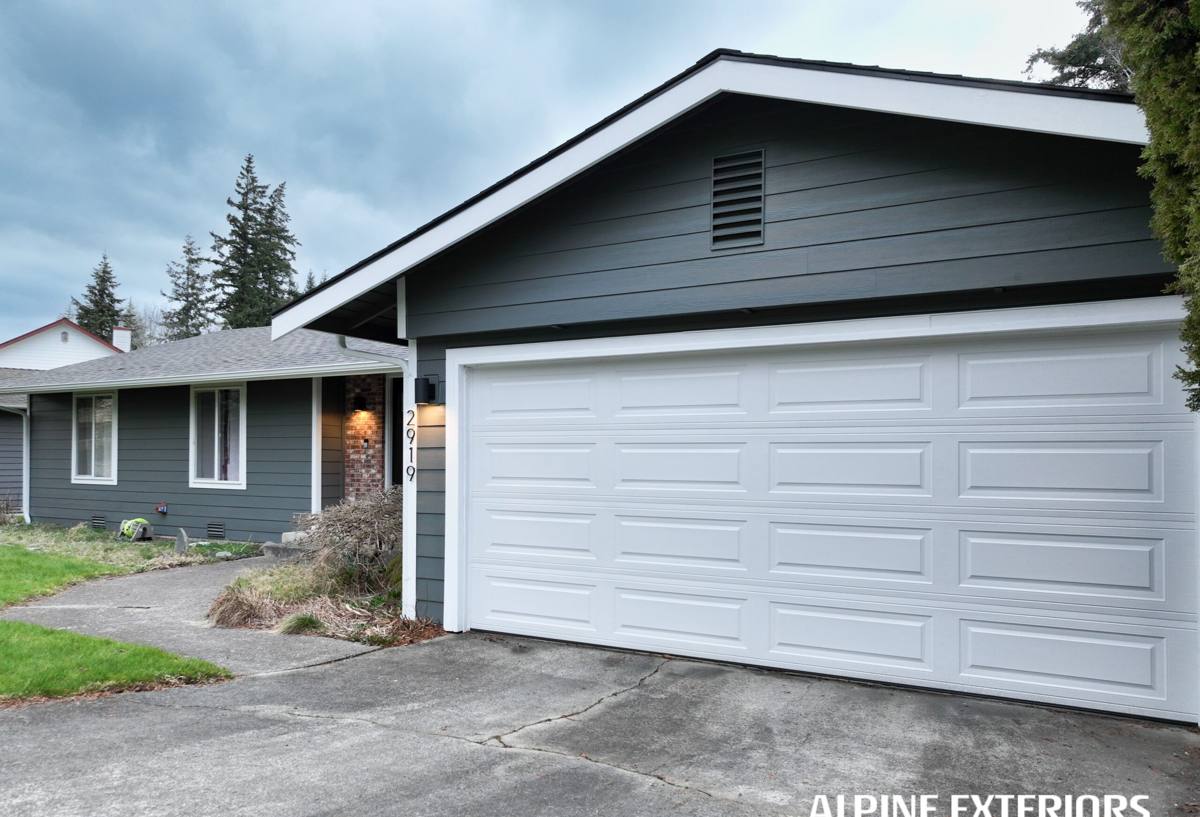
What Salt Air, Rain, and Moss Actually Do Over Time
Salt Air and Corrosion
Proximity to Bellingham Bay means airborne salt finds its way onto every exterior surface, including siding fasteners, trim, and flashing. Over years, that accelerates corrosion on anything not rated for coastal exposure — which is why fastener choice and flashing material matter as much as the siding panel itself.
Driving Rain and Wind-Driven Moisture
Bellingham's rain doesn't just fall — a lot of it comes in sideways off Puget Sound weather systems. That means siding has to shed water at horizontal laps, around window and door penetrations, and at inside corners, not just on a flat vertical face. Any gap in the water management plane becomes an entry point, and once moisture gets behind siding, it can sit there for months before anyone notices.
Moss and Sustained Dampness
Whatcom County's moss season runs long. Moss and algae need sustained moisture and shade to establish, and north-facing or tree-covered walls in Birchwood get both. Left unchecked, growth holds water against the siding surface and undermines caulking and paint film over time — a slow problem that's easy to ignore until it isn't.
Why We Standardized on James Hardie for This Climate
James Hardie fiber cement is engineered around exactly these pressures. It's made from cement, sand, and cellulose fiber — there's no wood core to swell, rot, or feed fungal growth, and no vinyl to become brittle in cold, damp conditions. Hardie's HZ5 product formulation is built for climates with freeze-thaw cycling and sustained moisture exposure, which describes Whatcom County well. The factory-applied ColorPlus finish is baked on under controlled conditions and backed by its own finish warranty, so the color layer isn't relying on a field-applied coat of paint to hold up against years of rain and salt air.
Fiber cement is also non-combustible, which matters less for moisture but is part of why we don't make exceptions to install anything else. We'd rather install one system correctly, in a climate it was engineered for, than juggle multiple product lines with different moisture tolerances and warranty structures.
How Local Climate Stress Maps to the Hardie System
| Climate Stress in Birchwood | How the Hardie System Responds |
|---|---|
| Airborne salt from bay proximity | Fiber cement doesn't corrode; we pair it with corrosion-resistant fasteners and flashing to match |
| Wind-driven, sideways rain | Correct lap spacing, flashing details, and a drainage plane behind the panel keep water moving out, not in |
| Long moss and algae season | No wood-fiber core for organisms to feed on; factory finish resists staining better than field-painted surfaces |
| Freeze-thaw swings in winter | HZ5 formulation is engineered for exactly this cycling, unlike wood or vinyl which flex or crack with temperature swings |
| Sustained damp shade under tree cover | Cement board doesn't wick and hold moisture the way wood substrates do |
What a Correct Installation Involves
The siding panel is only part of the system. Most siding failures we get called out to inspect — regardless of brand — trace back to installation shortcuts, not the product itself. In a climate like this one, the details matter more, not less. A correct Hardie installation on a Birchwood home includes:
- A weather-resistant barrier installed and lapped correctly behind the siding, with no gaps at seams or penetrations
- Proper flashing at every window, door, and roofline intersection, integrated with the drainage plane rather than just caulked over it
- Correct fastener type, spacing, and penetration depth per Hardie's published installation specifications — not generic siding nails
- Manufacturer-specified clearances between the bottom of the siding and grade, decks, patios, and roofing to avoid wicking moisture
- Factory-mitered or properly sealed field joints, since an unsealed butt joint is one of the most common points of water entry
- Caulking only where Hardie's specifications call for it — over-caulking can trap moisture just as easily as under-caulking lets it in
Skip any one of these steps and you can end up with a premium product performing like a budget one. This is why installation quality, not just brand choice, is the real determinant of how siding performs here.
Our Process for a Birchwood Siding Project
The approach doesn't change from house to house in the sense of cutting corners, but the assessment does account for where the home sits relative to wind exposure, shade, and moisture history. On a typical project we start with an exterior walk-through to check the existing water management — trim, flashing, grade slope, gutter performance — because siding replacement is the right time to fix any of those upstream issues rather than cover them up. From there we plan panel layout to minimize field joints on the most exposed elevations, confirm flashing details at every penetration, and install to Hardie's published specifications rather than a generalized "siding install" approach. We also talk through color and profile choices that suit the home, since ColorPlus finishes are meant to last for years without repainting and it's worth getting that decision right the first time.
Maintenance: What Owning Hardie Siding Actually Looks Like Here
Fiber cement is low-maintenance, not no-maintenance. In this climate, that means an occasional rinse to keep salt residue and organic growth from building up on shaded or north-facing walls, keeping gutters clear so overflow doesn't run down the siding face, and a visual check after major storms for any caulking or trim that's come loose. None of this is heavy work, but it's more relevant in Birchwood than it would be for the same home twenty miles inland, simply because of the salt and moisture load this area sees year-round.
Why a Crew That Already Works Birchwood Matters
Installation quality is climate-specific knowledge as much as it is technical skill. A crew that regularly works this neighborhood already knows which elevations tend to take the worst wind-driven rain, where moss establishes first, and how local moisture patterns tend to expose a bad flashing detail years before a homeowner would otherwise notice. That's not something you get from a national specification sheet alone — it comes from having done the work here, seen what fails, and adjusted accordingly.
It also means fewer surprises during the project itself. A crew unfamiliar with coastal Whatcom County conditions may not think twice about fastener corrosion resistance or moss-prone shaded walls; for us, those are standard planning considerations on every Birchwood job, not an afterthought.
Questions Worth Asking Before You Hire
- Does the crew install to the manufacturer's written specifications, or a generic approach they use on every siding brand?
- Will they inspect and address existing flashing, grade clearance, and drainage issues, or just install over what's there?
- What fastener and flashing materials do they use, and are those materials appropriate for coastal salt exposure?
- Can they explain how their layout plan reduces field joints on your home's most weather-exposed sides?
- Do they have experience specifically with homes in this area, not just fiber cement siding in general?
If a contractor can't answer these clearly, that's worth noting before signing anything.
Let's Look at Your Home
Every Birchwood home carries its own mix of sun exposure, shade, wind direction, and existing wear, and that's worth a real look before any recommendation gets made. If you're weighing a siding replacement or just want an honest read on what your current siding is telling you, we're happy to walk the exterior with you and put together a free, no-pressure estimate.