 Bellingham Roofing
 Windows That Have to Work Year-Round, Not Just on Sunny Days
Lynden sits in the part of Whatcom County where marine air off the Salish Sea meets the inland valley, and that combination shapes everything about how a window performs here. Homes in and around Bellingham don't get a mild, dry off-season the way homes further inland do. Instead, they get months of driving rain pushed sideways by wind, long stretches of damp gray weather that never fully dries out siding and trim, and a moss season that can stretch from fall through spring. Windows are one of the first places all of that shows up — as fogging between panes, soft trim, sticky sashes, or a faint musty smell near the frame after a wet week.
A window that was installed correctly for a drier climate, or installed in a hurry without attention to flashing and sealing, tends to fail here faster than it would somewhere with less rain and humidity. That's not a knock on any particular product — it's just what happens when moisture has more opportunities to find a way in. Custom window work in this area has to account for that reality from the first measurement to the final bead of sealant.
What "Custom" Actually Means for a Window Job
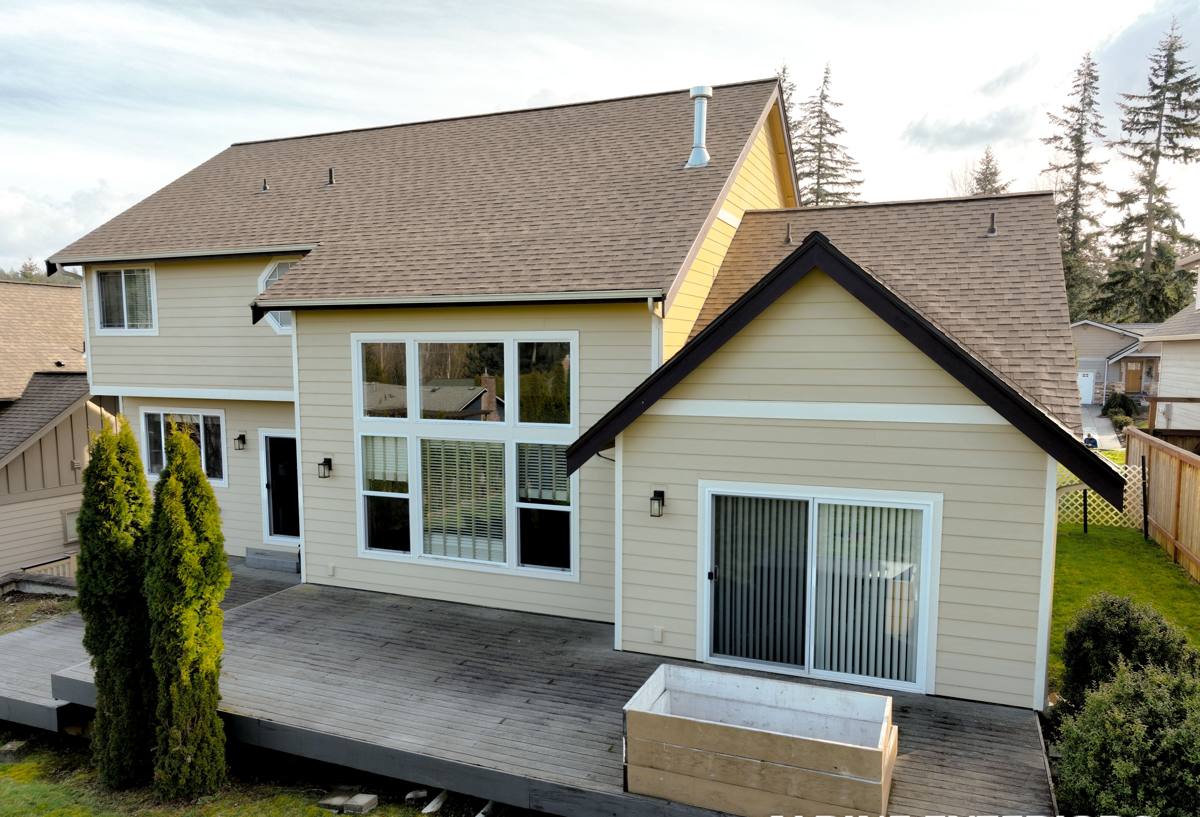
"Custom" doesn't mean expensive or unusual — it means the window is built and installed to match the specific opening, the specific wall assembly, and the specific exposure of your house, rather than forced into a stock size. Most homes around Lynden have at least a few openings that aren't quite standard: settled framing, older rough openings, additions built at a different time than the original house, or trim details that don't match modern window lines.
Custom sizing also matters when you're replacing a window with something larger, smaller, or in a different style — say, swapping a small single-hung for a wider slider to get more light into a kitchen, or converting a pair of old windows into one larger unit. That kind of change means new framing, new flashing, and new siding tie-in, not just a swap-and-seal job.
Full-Frame vs. Insert Replacement
There are two basic approaches, and the right one depends on the condition of the existing frame:
- Insert (pocket) replacement: A new window is installed inside the existing frame, which stays in place. Faster and less invasive, but only appropriate if the old frame is still solid and square.
- Full-frame replacement: The old frame is removed down to the rough opening, exposing the framing and sheathing underneath. This is the only way to fully inspect and fix any hidden water damage, and it's usually the right call on older homes or windows that have been leaking.
We won't recommend an insert replacement over a full-frame job just because it's faster or cheaper if the underlying wood shows signs of rot or long-term moisture intrusion. Covering that up with a new window doesn't solve the problem — it just hides it behind new trim for a while.
Signs Your Current Windows Are Struggling
Given how much rain this area sees, most homeowners don't need a formal inspection to know something's off — the house tells you. Here's what we typically hear about before a Lynden-area estimate:
- Fogging or a permanent haze between the panes of double-pane glass (a sign the seal has failed)
- Windows that stick, won't latch fully, or have started to sag in the frame
- Soft or spongy trim and sills, especially on the sides that catch the most wind-driven rain
- Visible moss or dark streaking building up on the sill or just below the window
- A cold draft near the frame even when the window is fully closed and latched
- A musty smell near the window after several days of rain
- Peeling paint or bubbling on interior trim, which often points to moisture getting in from outside
Any one of these can be minor. Several of them together, especially on the same wall, usually mean water has been getting past the seal for a while and it's worth having someone look before it spreads into the framing.
Frame Materials: What Actually Holds Up Here
There's no single "best" window material — each has real trade-offs, and the right choice depends on your budget, your home's style, and how much upkeep you want to take on. What matters most in a wet marine climate is how the material handles sustained moisture exposure over years, not just its price tag.
| Material | Moisture Behavior | Maintenance | Typical Fit |
|---|---|---|---|
| Vinyl | Doesn't absorb water or rot; won't need repainting | Low — occasional cleaning | Most homes; strong value for the climate |
| Fiberglass | Very stable in wet/dry cycles, resists warping | Low to moderate | Homes wanting durability and a slimmer frame profile |
| Wood | Attractive but needs consistent sealing to resist rot | High — regular inspection and refinishing | Older or historic-style homes where the look matters most |
| Wood-clad (wood interior, metal/vinyl exterior) | Exterior sheds water well; interior still needs care | Moderate | Homeowners wanting a wood look inside with less exterior upkeep |
| Aluminum | Durable but conducts cold and can condense | Low | Less common for residential in this climate due to condensation risk |
We'll walk through these options honestly, including where a given material isn't a good fit for a particular wall's sun and rain exposure, rather than steering every job toward the same product.
Where Water Actually Gets In — and How We Stop It
Most window failures in this region aren't caused by the window itself — they're caused by the installation, specifically the flashing and sealing details that keep wind-driven rain from tracking behind the trim and into the wall cavity. This is the part of the job that doesn't show once the trim goes back on, which is exactly why it has to be done right the first time.
What a correct installation includes
- A sloped sill pan that directs any water that does get past the window back outside, instead of letting it pool against the framing
- Properly lapped flashing tape at the sides and top, installed in the correct order so water always sheds downward and outward
- A continuous bead of sealant at the right points around the frame — not everywhere, since trapping moisture inside the assembly is its own problem
- A weep path left open at the bottom of the frame so any incidental moisture can drain rather than sit
- Correct shimming and squaring so the window operates smoothly and the seal isn't stressed unevenly over time
We also factor in moss and organic buildup around the opening. Moss holds moisture against wood and trim far longer than open air would, which is part of why a long moss season is such a factor for window longevity here — not just for roofs and gutters. Keeping sills and trim clear of moss and debris, and detailing the installation so water doesn't linger in the first place, extends the life of the whole assembly.
Energy Efficiency and Comfort
Beyond keeping water out, windows are a major factor in how comfortable a house feels through a Whatcom County winter and how much you're spending to heat it. Glass and gas-fill options matter here:
- Double-pane, low-E glass is the standard baseline for new installations and performs well for most homes in this climate.
- Triple-pane adds meaningful comfort on north-facing or particularly exposed walls, at a higher upfront cost — worth discussing for rooms that always seem to run cold.
- Argon or krypton gas fill between panes improves insulation value modestly; it's a reasonable upgrade but not a substitute for correct installation and sealing.
A well-sealed, correctly installed mid-grade window will usually outperform a premium window that's installed poorly. We prioritize getting the installation details right first, then match glass and frame specs to your budget and how a given room is used.
Our Process, Start to Finish
- On-site assessment: We look at each opening individually, not just the house as a whole, since exposure and condition can vary a lot from wall to wall.
- Honest scope and estimate: You'll get a clear breakdown of what each opening needs — insert versus full-frame, material options, and why — before any work starts.
- Removal and inspection: On full-frame jobs, we check the framing and sheathing once the old window is out, and flag anything unexpected before covering it back up.
- Installation: Sill pan, flashing, shimming, and sealing done in the correct sequence, followed by the new window set square and level.
- Trim and finish: Interior and exterior trim reinstalled or replaced to match your home, with attention to sealing edges against wind-driven rain.
- Final walkthrough: We test operation, check the seal, and go over care basics before we consider the job done.
Why a Local Crew Matters for This Kind of Work
Window installation done right is detail work, and the details that matter most change depending on climate. A crew that regularly works Lynden and the surrounding Bellingham area already knows how wind-driven rain behaves against a north or west-facing wall here, how long moss season runs, and how much flashing overlap actually holds up through a real Whatcom County winter — not just what a manufacturer's install guide assumes for an average climate. That local familiarity shows up in fewer callbacks, not in anything you'd notice on install day.
It also means someone is reasonably close by if a question comes up after the fact — during the first hard rain after installation, for instance, which is often the real test of any window job.
Get a Straightforward Estimate
If your windows are fogging, sticking, or letting in more draft and moisture than they should, it's worth having a local crew take a look before another wet season makes the problem worse. We're happy to walk your home, point out what we actually see — not just what sells — and put together a clear, no-pressure estimate. Use the form below to get started.