 Bellingham Roofing
 New Roof Installation Built for Lynden's Weather, Not Just Any Roof
Lynden sits inland from Bellingham Bay, but it doesn't escape the weather pattern that shapes every roof in Whatcom County: long stretches of driving rain from fall through spring, salt-tinged air carried in off the Sound on westerly winds, and shaded, damp conditions that let moss take hold and spread across a roof plane in a single season. A new roof installation here isn't just about swapping old materials for new ones. It's about building a roof system that's matched to this specific climate from the deck up — underlayment, ventilation, flashing, and surface material all working together instead of just one component doing all the work.
A lot of roof problems we get called out for in Lynden aren't failures of the shingle or metal panel itself. They're failures of the system underneath it — gaps in ice-and-water protection at the eaves, ventilation that was never balanced correctly, or flashing details that were rushed. A correct new roof installation gets all of that right the first time, because on this coastline, the details you can't see from the ground are usually the ones that determine whether a roof lasts 15 years or 30.
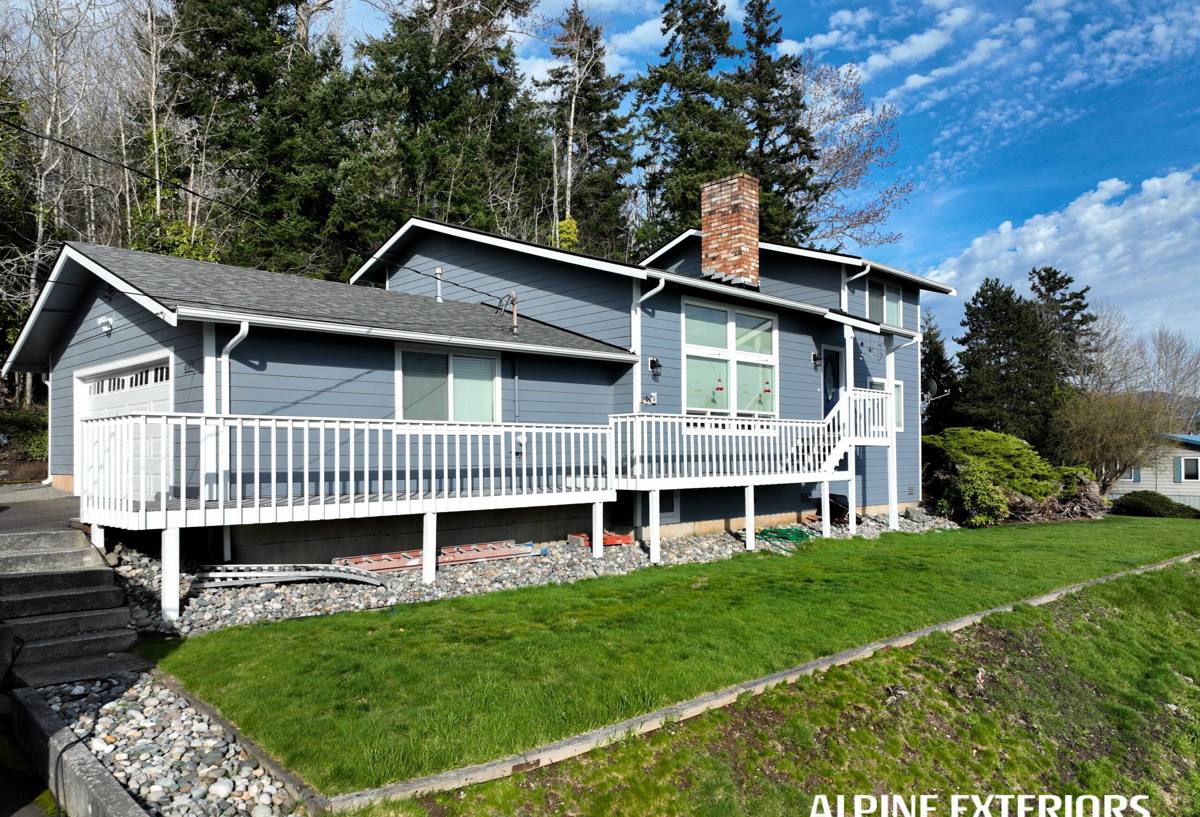
Signs a Lynden Home Is Actually Due for a New Roof
Not every aging roof needs full replacement, and not every homeowner needs to be sold on a new roof they don't yet require. But there are clear signals that repair has stopped making financial sense and replacement is the smarter move:
- Granule loss heavy enough that you're finding shingle grit in gutters and downspouts every time it rains
- Shingles that are curling, cupping, or cracking across multiple slopes, not just one isolated area
- Moss and algae staining that keeps coming back within months of cleaning, no matter how it's treated
- Soft spots, sagging, or visible deflection when walking the roof or viewing the ridge line from the ground
- Daylight visible through the roof deck from inside the attic, or water staining on attic sheathing and insulation
- A roof that's 20+ years old and has already needed multiple repair visits in the last few years
If a roof is showing two or more of these signs, a new roof installation is almost always more cost-effective over time than continuing to patch it — repeated repairs on an aging roof have a way of adding up to more than half the cost of replacement without ever solving the underlying problem.
What a Correct New Roof Installation Actually Involves
Tear-Off and Deck Inspection
Every legitimate new roof installation starts with a full tear-off down to the deck, not an overlay on top of old material. This is the only way to actually inspect the sheathing underneath for rot, delamination, or soft spots — problems that are common on older Whatcom County homes where a roof has been quietly holding moisture for years. Any damaged decking gets replaced before anything new goes down; installing new roofing over a compromised deck just guarantees an early failure.
Underlayment and Water Protection
Given how much sustained rain Lynden gets in a normal winter, underlayment isn't a formality — it's the roof's real waterproofing layer, with the visible surface material acting as the first line of defense. Self-adhered ice-and-water membrane belongs at eaves, valleys, and around every penetration, with synthetic underlayment covering the rest of the field. This is where a lot of cut-rate installs quietly save money, and it's exactly the wrong place to do it.
Flashing at Every Transition
Chimneys, skylights, sidewalls, and valleys are where the overwhelming majority of roof leaks actually originate — not in the open field of shingles. New step flashing, counter-flashing, and valley metal should go in at every one of these transitions during a new roof installation, not be reused from the old roof to save time.
Ventilation That's Actually Balanced
A roof needs balanced intake at the eaves and exhaust at the ridge to move moist air out of the attic before it condenses on the underside of the deck. In a climate as damp as ours, unbalanced or blocked ventilation is one of the fastest ways to rot a roof deck from the inside, and it's a detail that's easy to get wrong if it isn't calculated for the specific attic and roof geometry.
Choosing the Right Roofing Material for Lynden's Climate
There's no single "best" roofing material for every home — the right choice depends on budget, roof pitch, home style, and how much moss and moisture resistance a homeowner wants to prioritize. Here's how the main options compare for a home in this area:
| Material | Typical Lifespan | Moss & Moisture Resistance | Upfront Cost | Best For |
|---|---|---|---|---|
| Architectural asphalt shingle | 25–30 years | Good with proper underlayment and treated caps; needs periodic moss cleaning | Lowest | Most Lynden homes on standard budgets |
| Standing seam metal | 40–50+ years | Excellent — moss and algae have very little to grip onto | Highest | Homeowners planning to stay long-term or minimize maintenance |
| Cedar shake | 20–30 years with upkeep | Requires regular maintenance to resist moss and rot in wet climates | High | Homeowners committed to the look and the upkeep it requires |
We generally steer homeowners away from cedar shake unless they're prepared for the ongoing maintenance it demands here — not because the material is inherently bad, but because Whatcom County's damp, shaded conditions are exactly the environment where wood roofing needs the most attention to hold up. That's a maintenance-burden and moisture-behavior trade-off worth knowing about upfront, not after the first wet winter.
Our New Roof Installation Process
- On-site assessment — we walk the roof, inspect the attic, and check for deck damage, ventilation issues, and problem areas before quoting anything
- Written proposal — material options, scope of work, and pricing laid out clearly, with no vague allowances
- Scheduling — we plan around Whatcom County's weather windows to avoid tearing off a roof into an incoming rain system
- Tear-off and deck repair — full removal of old roofing, deck inspection, and replacement of any damaged sheathing
- Underlayment, flashing, and ventilation installation — the system that does the real waterproofing work
- New roofing material installation — installed to manufacturer specifications to keep warranty coverage intact
- Cleanup and final walkthrough — magnetic nail sweep, debris removal, and a walkthrough so you know exactly what was done
We keep property protection — tarps over landscaping, driveway protection, and daily cleanup — part of the standard process, not an upsell.
Moss Prevention and Long-Term Roof Care in a Wet Climate
A new roof installation is the best opportunity to build in moss and moisture resistance from day one, rather than fighting it after the fact. A properly installed new roof in this climate should include:
- Copper or zinc control strips near the ridge, which release trace metal ions that inhibit moss growth as water runs down the roof
- Balanced ridge and soffit ventilation to reduce the trapped moisture that moss and algae thrive on
- Clean valley and gutter lines so water sheds fully instead of pooling against debris
- Overhanging tree limbs trimmed back where possible to reduce shade and falling debris on the roof plane
- A realistic annual or biannual inspection and gentle-clean schedule, since even a well-built roof benefits from periodic upkeep in this climate
None of this eliminates moss entirely — nothing does, in a climate this wet — but it substantially slows it down and keeps a roof performing the way it's supposed to for its full expected lifespan.
Permits, Timelines, and What to Expect During the Project
A residential re-roof in Whatcom County typically requires a building permit, and we handle that process as part of the job rather than leaving it to the homeowner. Most single-family new roof installations take one to three days on-site depending on roof size, pitch, and how much deck repair is needed, though weather can push that timeline given how often Whatcom County sees rain moving through. We're upfront about scheduling around forecasts rather than rushing a tear-off into a wet system, because a roof that gets exposed to a storm mid-installation is a problem nobody wants.
Why Hiring a Crew That Already Works in Lynden Matters
Roofing crews that work across Whatcom County day in and day out understand things a traveling or out-of-area contractor simply hasn't had to learn: how much ventilation a Lynden attic actually needs given local humidity, which flashing details hold up against our specific rain patterns, and how aggressively moss actually comes back on north-facing and shaded slopes in this area. That local experience shows up in the decisions made on the roof, not just in the sales pitch beforehand.
It also matters for accountability. A local crew is still around next year, and the year after that, if a warranty question comes up or a detail needs a second look. That's not something you get with a contractor who's moved on to the next region by the time problems would typically surface.
Get a Free, No-Pressure Estimate
If your Lynden home's roof is showing its age, or you just want an honest read on whether repair or replacement makes more sense, we're happy to take a look and walk you through the options in plain terms. Fill out the form below for a free estimate — no pressure, no hard sell, just a straight assessment of what your roof actually needs.