 Bellingham Roofing
 Why Metal Roofing Makes Sense for Birchwood Homes
Birchwood sits close enough to the water and the marine weather patterns that move through Whatcom County that roofs here take a different kind of beating than roofs inland. It's not one big storm that causes trouble — it's the slow, steady combination of salt-tinged air, long stretches of rain, and shaded, damp conditions that keep moss and algae growing for most of the year. Asphalt shingles can handle this climate for a while, but they wear from the inside out: granule loss, moisture wicking under tabs, and moss roots working into the mat. Metal roofing, installed correctly, is built to shed water fast, resist the kind of biological growth that eats at organic shingles, and hold its finish through decades of wet weather.
That last part — "installed correctly" — matters more with metal than with almost any other roofing material. A metal roof that's detailed wrong will leak, oil-can, or corrode at the fasteners years before it should. This page is about what a correct metal roof job looks like specifically for a Birchwood home, not a generic overview of metal roofing everywhere.
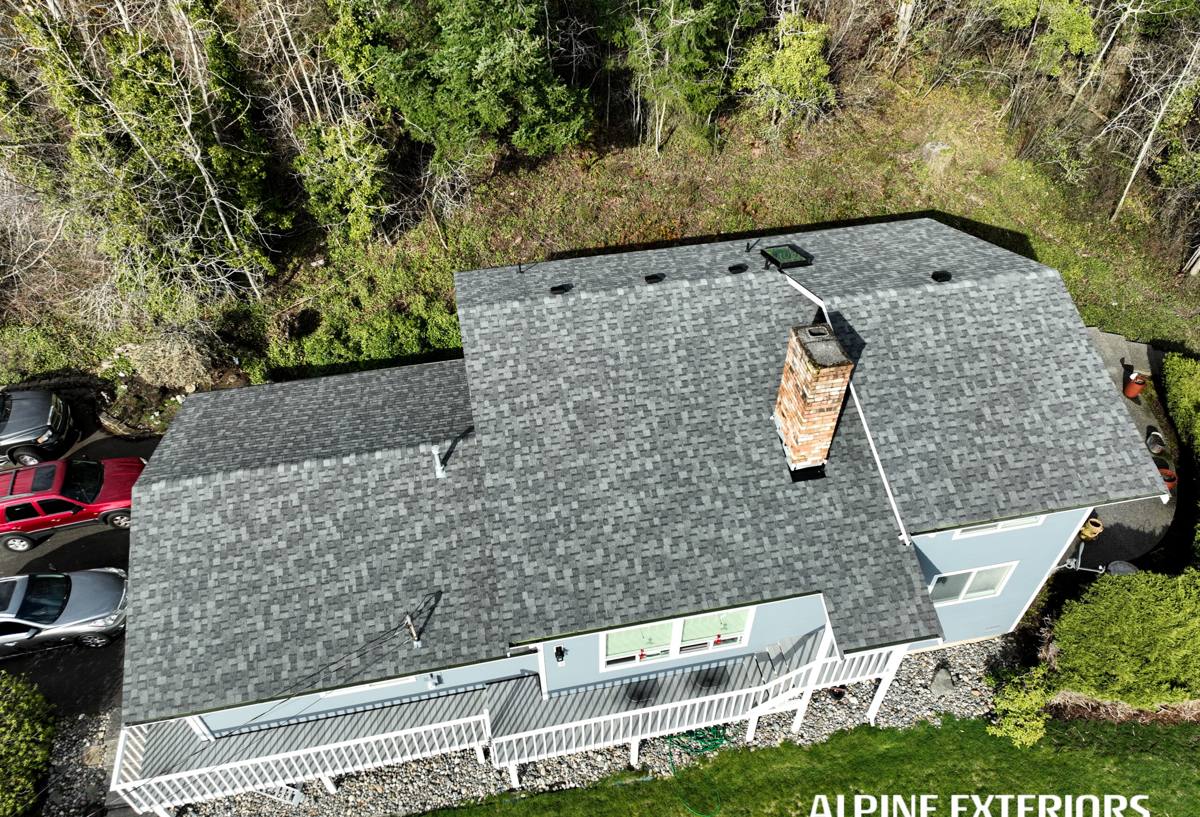
What This Climate Actually Does to a Roof
Salt air and corrosion
Proximity to Bellingham Bay means airborne salt is a real factor for exposed metal, especially fasteners, flashing edges, and cut ends of panels. Bare or poorly coated steel will show rust streaks at these points long before the field of the roof shows any wear. The fix isn't avoiding metal — it's specifying the right coating system and finishing every cut edge and fastener the way the manufacturer actually intends, not the way it's fastest to do.
Driving rain and wind-driven water
Rain in this part of Washington rarely falls straight down. Wind off the water pushes it sideways and up under laps, ridge caps, and around penetrations. A metal roof's water resistance comes almost entirely from its seams, flashing details, and underlayment — the panel itself is just the surface. Skipping proper underlayment or using short-cut flashing details is where most metal roof leaks in this region actually start.
Moss and shade
Birchwood has enough tree cover and cool, damp shade in places that moss pressure is a year-round consideration, not a seasonal one. Moss doesn't attack steel or aluminum the way it damages shingle mat, but it can still hold moisture against fasteners and in valleys, and a moss-choked valley or gutter backs water up under flashing regardless of what the roof surface is made of.
What a Correctly Installed Metal Roof Actually Includes
"Metal roof" covers a wide range of quality. A correct installation for a coastal Whatcom County home includes attention to several things that don't show up in a quick look from the ground:
Panel material and coating
For a salt-air-exposed home, we lean toward panels with a factory-applied coating system rated for coastal exposure, not a bare mill finish or a thin economy coating. The coating is what actually resists corrosion and fading over time — the base metal underneath matters less than most homeowners assume.
Fasteners and cut edges
Every exposed fastener should be a matched, coated fastener with a bonded washer, not a generic hardware-store screw. Every field-cut panel edge gets sealed or capped so bare steel isn't left exposed to weather. This is the single most common shortcut we see on jobs we're called in to fix.
Underlayment and ice/water protection
A high-temperature synthetic underlayment, with self-adhered membrane at eaves, valleys, and penetrations, does the real waterproofing work underneath the panels. In a climate with sustained rain rather than short, hard downpours, this layer is what keeps a home dry during the storm that eventually finds the one imperfect seam.
Ventilation
Metal roofs don't breathe the way some homeowners expect, and trapped attic moisture will condense on the underside of cold metal panels just as it would on a garage door. Ridge and soffit ventilation sized correctly for the attic volume prevents this — it's a detail that's easy to skip and hard to diagnose later.
Comparing Metal Roofing Profiles for a Home Like This
Not every metal profile suits every roof. Here's how the common options stack up for a Birchwood-type property dealing with salt air, rain, and moss:
| Profile | Best fit | Trade-offs in this climate |
|---|---|---|
| Standing seam (concealed fastener) | Most roofs, especially anything with valleys or complex planes | Highest water resistance since there are no exposed fasteners to fail; higher material and labor cost |
| Exposed-fastener panel | Simple gable roofs, outbuildings, budget-conscious projects | Lower upfront cost, but fasteners need re-torquing or replacement over the roof's life and are the first thing salt air attacks |
| Stone-coated steel shingle/shake profile | Homes wanting a traditional shingle or shake look with metal's durability | More seams and fastener penetrations than standing seam; good moss resistance but more detail work at flashing |
For most Birchwood homes we recommend standing seam when the budget allows, specifically because it minimizes the number of exposed fasteners exposed to salt air over the roof's life. Exposed-fastener panels aren't a bad product — they're a different maintenance commitment, and we'll say so plainly rather than upsell a system a homeowner doesn't need.
Our Installation Process
- On-site assessment — we look at roof planes, existing ventilation, moss and moisture patterns, and any trouble spots (valleys, chimneys, skylights) before quoting anything.
- Tear-off and deck inspection — old roofing comes off and we check the deck for soft spots or rot, common where moss has held moisture against the roof for years.
- Deck repair as needed — any compromised sheathing gets replaced before anything new goes down. This isn't an upsell tactic; installing over a wet or soft deck just moves the failure point underneath the new roof.
- Underlayment and ice/water membrane — synthetic underlayment across the field, self-adhered membrane at eaves, valleys, and penetrations.
- Panel and flashing installation — panels run and seamed (or fastened) per manufacturer spec, with custom-formed flashing at every valley, wall, and penetration rather than generic stock pieces forced to fit.
- Ventilation check and correction — ridge and soffit venting confirmed or added to match the attic.
- Final walkthrough — we go over the finished roof with the homeowner, including what routine maintenance actually looks like for the specific profile installed.
Moss, Algae, and Drainage: What Changes With Metal
Switching to metal doesn't make moss disappear from a shaded Birchwood roof — moss grows on the debris, dust, and organic buildup that collects on any surface, metal included. What changes is the consequence. Moss on shingles roots into the mat and lifts tabs, accelerating failure. Moss on a properly installed metal roof mostly just sits on the surface and in valleys, where it holds moisture and can stain the finish, but it isn't structurally destructive the same way.
That said, valleys and gutters still need to stay clear. A moss-choked valley backs water up under flashing on any roof material, and low-slope sections are more prone to buildup than steep pitches. We size and detail valleys with this climate's rain volume in mind, not a one-size-fits-all approach.
What a Metal Roof Costs — and What Actually Drives the Price
We won't quote a number without seeing the roof, but homeowners should understand what actually moves the price so a quote makes sense when it arrives:
| Factor | Why it matters |
|---|---|
| Panel profile | Standing seam runs higher in material and labor than exposed-fastener panel |
| Roof complexity | Valleys, dormers, and multiple planes mean more custom flashing and labor hours |
| Deck condition | Rot or soft sheathing found at tear-off adds repair cost not visible in an initial estimate |
| Coating/finish tier | Coastal-grade coatings cost more than economy finishes but last substantially longer in salt air |
| Ventilation upgrades | Adding or correcting ridge/soffit venting is easier to price in during a full re-roof than after |
Metal roofing generally costs more upfront than asphalt shingles, but the comparison isn't apples to apples — a well-installed metal roof is a longer-life, lower-maintenance investment, particularly in a climate that's hard on organic roofing materials.
Maintenance Checklist for Birchwood Homeowners
- Clear valleys and gutters of moss, needles, and debris at least once a year, more often under heavy tree cover
- Visually check exposed fasteners (if applicable) every couple of years for loosening or early rust staining
- Keep overhanging branches trimmed back to reduce debris buildup and shade-driven moss growth
- Watch for streaking at cut edges or flashing seams — an early sign of coating wear worth addressing before it spreads
- After major storms, a quick look at flashing around chimneys, skylights, and vents catches problems before they become leaks
Why a Crew That Already Works Birchwood Matters
Metal roofing done wrong doesn't usually fail on day one — it fails three, five, or ten years in, when the cheap fastener rusts through or the stock flashing piece never quite sealed the valley. A crew that works Birchwood regularly has already seen how this specific stretch of Bellingham weather treats a roof over time, and details the job accordingly instead of following a generic install checklist written for a drier climate. That local pattern recognition — which valleys collect debris, which roof orientations take the worst wind-driven rain, how much moss pressure a shaded lot actually sees — is the difference between a metal roof that looks right at handoff and one that still performs correctly a decade later.
If you're weighing metal roofing for a home in Birchwood, we're glad to take a look and give you a straight, no-pressure estimate — what your roof actually needs, what it'll cost, and why.