 Bellingham Roofing
 Why Blaine's Roofs Take More Punishment Than Most
Blaine sits right on the water at the northern edge of Whatcom County, close enough to the Salish Sea that salt air is a daily fact of life, not an occasional coastal breeze. Combine that with the steady, driving rain that comes off the water most of the year and the long, shaded moss season that follows, and you get a roofing environment that's noticeably harder on materials than what a roof fifty miles inland has to deal with. Homes here don't just need a roof that looks good going on — they need one built to shrug off years of wet, salty, low-sun conditions without quietly failing underneath.
We work roofs across Whatcom County, and Blaine's exposure is some of the toughest in our service area. That's the lens we bring to every metal roofing job here — not a generic install, but one specified for what this stretch of coastline actually does to a roof over time.
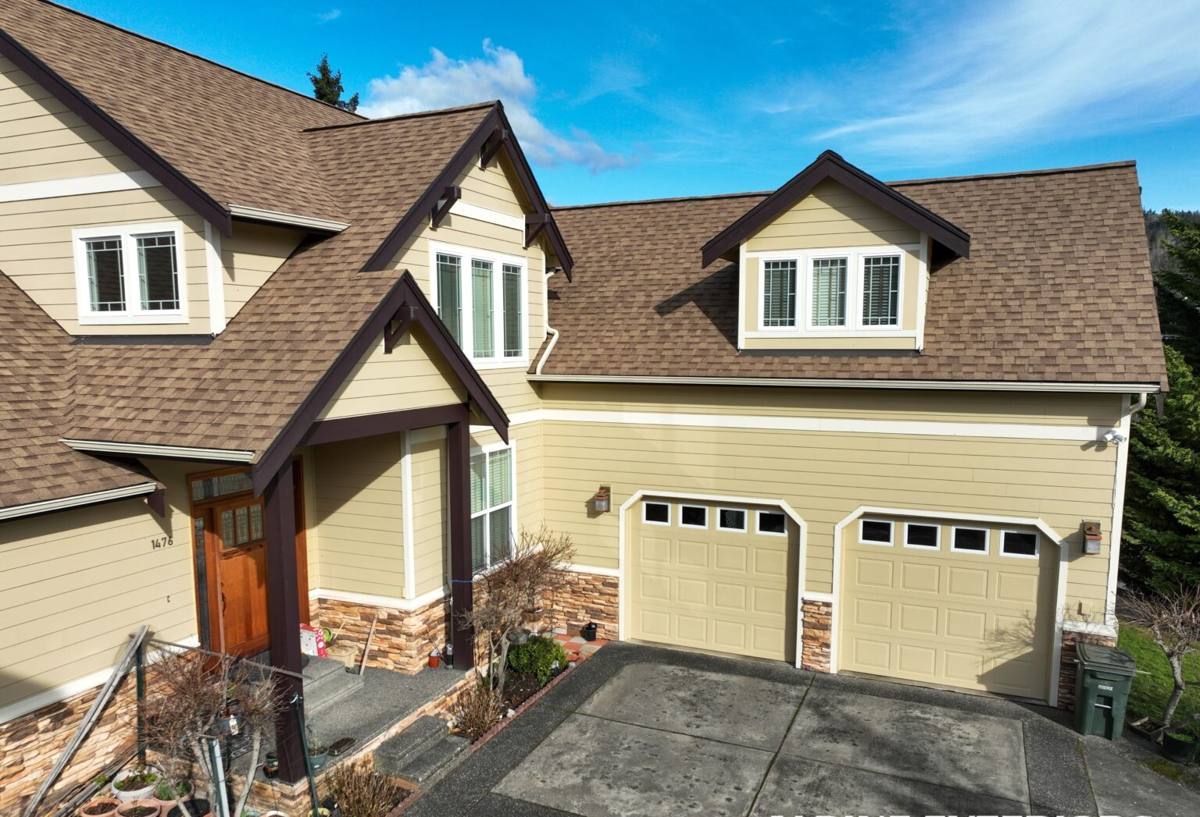
What Salt Air, Rain, and Moss Actually Do to a Roof
Each of these three factors attacks a roof differently, and they compound each other.
Salt Air
Airborne salt accelerates corrosion on any exposed metal — fasteners, flashing, valleys, vents. On a roof with unprotected or poorly coated metal components, that corrosion shows up first as rust streaking and eventually as failed fastener heads or thinning flashing that no longer sheds water where it needs to.
Driving Rain
Wind-driven rain doesn't just fall straight down — it gets pushed sideways and upward under laps, around penetrations, and into any gap that wouldn't matter in a calmer climate. Roofs here need tighter seams, better underlayment, and flashing details that assume water is going to be tested from more than one direction.
Moss
Shade, moisture, and mild temperatures make Whatcom County a good environment for moss growth for a large part of the year. On roofing materials with any texture or overlap for moss to grip, it holds moisture against the surface, works its way under edges, and can shorten the life of the roof underneath it even before you can see obvious damage.
Why Metal Roofing Holds Up Better in This Climate
Metal roofing isn't a fix for every roof or every budget, but for Blaine's conditions specifically, it has real advantages over other common roofing materials:
- A smooth, continuous surface with far fewer places for moss to establish itself compared to textured or granular materials
- Fast water shedding, which matters when rain is coming in sideways off the water
- Corrosion-resistant substrates (like Galvalume-coated steel or aluminum) and factory paint finishes designed to hold up in coastal, salt-exposed environments — when the right product is specified for the job
- A long service life that, done correctly, outlasts multiple cycles of asphalt shingle roofing
That last point comes with a real caveat: metal roofing only delivers on that lifespan when the panel, coating, and fastener system are matched to the exposure. Not every metal roofing product on the market is built for a salt-air environment, and picking the wrong one because it's cheaper up front is how homeowners end up with premature corrosion instead of the 40-plus-year roof they thought they were buying.
Metal Panel Options for Blaine Homes
There isn't one "best" metal roof — the right system depends on your roof's pitch, your budget, and how much you're weighing appearance against long-term maintenance. Here's how the common options compare for a coastal Whatcom County home:
| Panel Type | How It's Attached | Best For | Trade-Offs |
|---|---|---|---|
| Standing Seam | Concealed clips, no exposed fasteners on the field of the panel | Homeowners who want the longest service life and lowest long-term maintenance | Higher upfront cost; installation quality matters even more since seams do all the sealing work |
| Exposed-Fastener Panel | Screws driven through the panel face into the deck or purlins | Budget-conscious projects, outbuildings, or simpler roof shapes | Exposed fasteners and their washers are the weak point in a salt-air climate and need periodic checking |
| Stone-Coated Steel Shingle/Shake | Interlocking panels styled to resemble shingles or shakes | Homeowners who want a metal roof's durability with a more traditional look | More surface texture than standing seam, so slightly more moss-resistance benefit is lost |
What a Correct Metal Roof Installation Involves
Metal roofing has a reputation for lasting decades, but that reputation only holds up when the installation underneath the panels is done right. A lot of the roof's real performance is in details you'll never see once it's finished.
Deck Prep and Underlayment
The wood deck underneath needs to be sound, dry, and properly prepared before anything goes down. In a climate this wet, we don't cut corners on underlayment — a high-quality synthetic or self-adhering membrane is what actually protects the deck if wind-driven rain ever gets past the panel laps, which it eventually will somewhere on any roof over enough years.
Fastening and Flashing
Every fastener, clip, and flashing piece needs to be rated for the panel material to avoid galvanic corrosion — mixing incompatible metals is one of the most common causes of early rust on a metal roof near salt water. Valleys, penetrations, and roof-to-wall transitions are where most leaks originate, so those details get the most attention, not the least.
Ventilation
Proper attic or roof-deck ventilation keeps condensation from forming on the underside of the metal, which matters in a climate where indoor and outdoor temperature and humidity differences are common for much of the year.
Our Process for a Blaine Metal Roofing Project
- Inspection and assessment — we look at your existing roof, deck condition, ventilation, and any problem areas before recommending anything.
- Material selection — we walk through panel types, coatings, and colors suited to your home and your budget, being upfront about trade-offs rather than upselling.
- Prep work — tear-off and deck repair where needed, or a straightforward evaluation of whether an overlay is appropriate for your specific roof.
- Installation — panels, flashing, and fastening done to manufacturer specifications and matched to Blaine's exposure, not a generic inland install.
- Cleanup and walkthrough — job site cleared of debris and fasteners, and a final walkthrough so you know what was done and what to watch for.
Maintenance in Whatcom County's Wet, Salty Air
A well-installed metal roof is low-maintenance, not no-maintenance. A short list of seasonal checks goes a long way toward protecting the investment:
- Keep gutters and valleys clear of needles, leaves, and debris that trap moisture against the panel
- Check for any developing moss or organic buildup, especially on shaded slopes or under overhanging trees
- Look at exposed fasteners (if your roof has them) for early signs of rust or a loosening washer seal
- Have the roof looked at after any major windstorm to check flashing and fastener integrity
- Rinse off heavy salt buildup or debris periodically, particularly on roofs with more direct water exposure
What Affects the Cost of a Metal Roof in Blaine
Metal roofing costs more upfront than asphalt shingles, and the final number depends on several factors more than any single "price per square foot" figure:
| Cost Factor | Why It Matters |
|---|---|
| Panel type | Standing seam typically costs more than exposed-fastener panels due to labor and concealed-fastener hardware |
| Roof pitch and complexity | Steep pitches, multiple valleys, and dormers all add labor time and material cuts |
| Tear-off vs. overlay | Removing an old roof and repairing deck issues adds cost but is often the right call for long-term performance |
| Coating and finish | Higher-grade corrosion-resistant coatings cost more but matter more in Blaine's salt-air exposure |
| Accessories | Snow guards, custom flashing, and specialty vents add to the total depending on your roof's design |
We give straightforward, itemized estimates so you can see where the money is going rather than a single lump-sum number.
Why Hiring a Crew That Already Works Blaine Matters
A roofing crew that mostly works drier, inland areas may not think twice about fastener choice, flashing detail, or coating grade — because in their usual conditions, those shortcuts don't fail as fast. On a Blaine roof exposed to salt air and near-constant coastal moisture, the same shortcuts show up as problems years sooner. Working regularly in Whatcom County's coastal communities means knowing which details actually matter here, understanding local permitting, and having a realistic sense of how weather windows affect scheduling a roof install in this part of the state.
If you're weighing a metal roof for your Blaine home, we're happy to walk your roof, talk through honest options for your budget, and give you a straightforward, no-pressure estimate — just fill out the form below to get started.