 Bellingham Roofing
 Ferndale sits close enough to the water and low enough in the valley that its roofs take a different kind of beating than homes further inland. Salt-tinged air off the Sound, long stretches of driving rain, and a moss season that can run nearly eight months out of the year all add up over time. A new roof installation here isn't just about picking a shingle color — it's about building an assembly that can shed water fast, breathe properly, and resist the slow damage that Whatcom County's marine climate causes when a roof isn't detailed correctly.
Roofing in Ferndale: Built for Salt Air, Rain, and Moss
Three things define what a roof in Ferndale has to stand up to. First, salt air — even a few miles from Bellingham Bay, airborne salt accelerates corrosion on exposed metal: nail heads, flashing, and fasteners age faster here than they would on a roof in a dry inland climate. Second, driving rain — wind-driven storms push water sideways and uphill under shingle edges, which means flashing and underlayment details matter more than the shingle brand itself. Third, moss — shaded, north-facing, and low-slope sections of roof in this part of Whatcom County stay damp for most of the year, and moss doesn't just look bad, it lifts shingle edges and holds moisture against the deck.
None of these are exotic problems. They're just steady, cumulative ones. A roof that's installed without accounting for them will usually still look fine for a few years — the failures show up later, as soft decking, stained ceilings, or granule loss that shows up right when you're trying to sell the house.
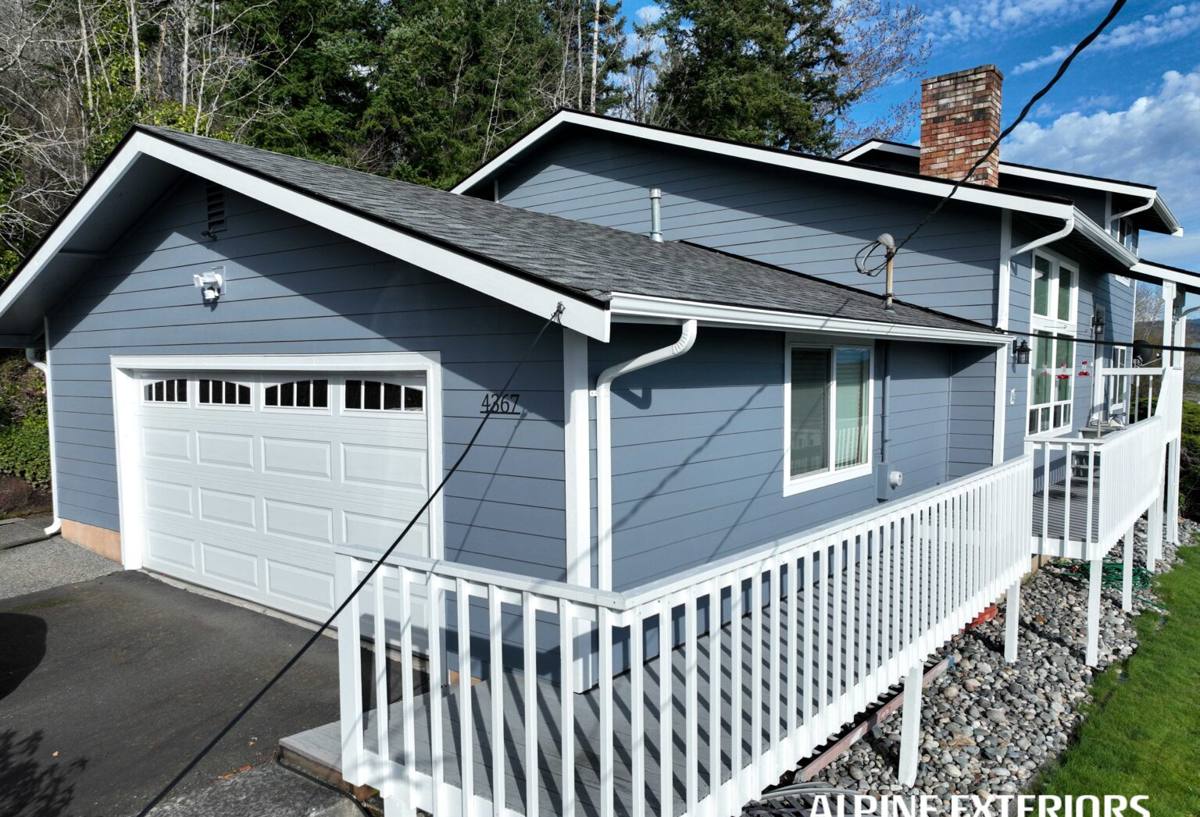
Signs Your Ferndale Home Needs a New Roof, Not a Patch
Not every roof problem calls for a full replacement, but there's a point where repeated patching stops making financial sense. Before we recommend a full tear-off, we look for a combination of these signs, not just one:
- Shingles that are curling, cupping, or losing granules faster on south- and west-facing slopes
- Moss or dark algae streaking that keeps coming back within months of cleaning
- Soft or spongy spots when walking the roof, especially near valleys and chimneys
- Daylight, staining, or a musty smell in the attic
- Two or more separate leak locations in the same season
- A roof that's 20-25+ years old on asphalt shingles, or showing widespread wear rather than one isolated issue
- Fasteners, flashing, or vent boots visibly rusted or deteriorated from years of salt-air exposure
If a roof is only showing one of these in one spot, a repair is usually the right call and the honest one. Full replacement makes sense once the underlying materials — decking, underlayment, flashing — are wearing out across the whole roof, not just at the surface.
What a Correct New Roof Installation Actually Involves
A new roof is only as good as what's underneath the shingles. This is where most of the long-term performance in a climate like ours actually gets decided.
Tear-Off and Deck Inspection
We remove the old roofing down to the deck rather than layering over it. That's the only way to actually see the plywood or plank sheathing underneath — which is important here, because moisture trapped under old moss-covered shingles can soften decking without any obvious sign from inside the attic. Any soft or delaminated sheathing gets replaced before anything new goes down; installing new roofing over a compromised deck just hides the problem for a few more years.
Underlayment and Moisture Protection
Given how much rain Whatcom County sees in a typical winter, the underlayment layer matters as much as the shingle itself. We use synthetic underlayment across the field of the roof and self-adhering ice-and-water membrane at the vulnerable spots — eaves, valleys, and around penetrations — where wind-driven rain is most likely to work its way backward under the shingle edge.
Ventilation
A roof that can't breathe traps moisture in the attic, which shortens the life of the decking and feeds moss and mildew from the underside. We check intake at the soffits and exhaust at the ridge as part of every installation, and correct it where the existing setup is undersized or blocked — a detail that's easy to skip but has an outsized effect on how long a roof actually lasts in a damp climate.
Flashing and Edge Details
Most roof leaks don't come from the field of the shingles — they come from flashing: chimneys, skylights, sidewalls, and valleys. We install new flashing with every re-roof rather than reusing old pieces, and pay particular attention to corrosion-resistant fasteners and coatings given the salt-air exposure that's part of living this close to the coast.
Choosing Materials for Ferndale's Coastal, Damp Conditions
There's no single "best" roofing material — the right choice depends on your home's exposure, budget, and how much long-term maintenance you're willing to take on. Here's how the common options actually compare for a Ferndale property:
| Material | Typical Lifespan | Moss & Moisture Resistance | Salt-Air / Wind Performance | Relative Cost |
|---|---|---|---|---|
| Architectural asphalt shingles | 25-30 years | Good, with proper ventilation and periodic cleaning | Good; use corrosion-resistant fasteners | $$ |
| Standing seam metal | 40-50+ years | Excellent — sheds moss more easily than textured surfaces | Very good with coated/stainless fasteners | $$$$ |
| Synthetic/composite shingle | 30-40 years | Good; doesn't absorb moisture like organic materials | Good | $$$ |
| Cedar shake | 20-30 years with upkeep | Poor without regular treatment — retains moisture, feeds moss | Moderate; needs consistent maintenance near the coast | $$$ |
We typically steer Ferndale homeowners away from cedar shake unless they're committed to an ongoing maintenance schedule — the moss and moisture issues that come with a long damp season make it a high-upkeep choice here, not because the material itself is bad, but because our climate is genuinely hard on it. Architectural asphalt remains the most common, cost-effective choice for most homes; metal is worth the added cost for homeowners who want to minimize maintenance and moss buildup over the long run.
Our New Roof Installation Process
- On-site estimate. We inspect the existing roof, attic ventilation, and any problem areas, and give you a written estimate with material options — no pressure, no inflated urgency.
- Material selection. We walk through the tradeoffs above based on your home's exposure and budget, and help you land on a product that fits both.
- Scheduling and permitting. We handle the permit application with the appropriate local jurisdiction before work begins.
- Tear-off and deck repair. Old roofing comes off, the deck gets inspected, and any damaged sheathing is replaced.
- Underlayment, flashing, and ventilation. The moisture barrier, ice-and-water membrane, new flashing, and ventilation corrections go in before a single shingle is installed.
- Roofing installation. Materials go down to manufacturer specification, which keeps warranty coverage intact.
- Cleanup and final walkthrough. We magnet-sweep for nails, clear debris, and walk the finished roof with you.
Why a Crew That Already Works in Ferndale Matters
Roofing crews that mostly work outside this region tend to underbuild for our conditions — they'll spec ventilation, underlayment, or fastener choices that are fine for a drier climate but fall short here. A crew that regularly works Bellingham and the surrounding Whatcom County area already knows which slopes stay shaded and damp long enough to grow moss year-round, how much wind-driven rain a given exposure typically takes, and which local permitting steps apply to a given jurisdiction. That familiarity shows up less in the sales pitch and more in the details you don't see once the roof is finished — the flashing laps, the fastener choice, the ventilation balance — which are exactly the details that determine whether a roof holds up for its full expected lifespan or starts failing early.
Protecting Your New Roof After Installation
A correctly installed roof still benefits from basic upkeep, especially in a climate that stays damp for most of the year:
- Keep gutters clear so water isn't backing up under the eaves
- Trim back overhanging branches to reduce shade and debris buildup, which slows moss growth
- Have moss treated or gently removed before it spreads, rather than after it's established
- Schedule a roof check after major windstorms, which are common in this area during the fall and winter months
None of this is intensive work, but skipping it is the most common reason a well-installed roof underperforms its expected lifespan.
Permits, Timeline, and What to Expect
Most residential re-roofs in the Ferndale area require a building permit, which we handle as part of the process rather than leaving it to the homeowner. A typical single-family home re-roof, once scheduled, usually takes a few days from tear-off to final cleanup, weather permitting — and weather is the real variable in this part of Washington, since we won't install roofing materials in active rain. We build a reasonable weather buffer into every schedule so you're not left with an exposed deck if conditions turn.
If your roof is showing its age or you're just not sure whether it's a repair or replacement situation, we're happy to take a look and give you a straight answer. There's no pressure and no charge for a written estimate — use the form below to get one scheduled.