 Bellingham Roofing
 Why Sehome's Climate Is Hard on a Roof
Sehome sits close enough to Bellingham Bay that salt-laden air is a constant, low-grade stress on every exposed metal component on a roof — nails, flashing, vent caps, gutter hangers. Add in wind-driven rain that comes off the water sideways instead of straight down, and you've got a roofing system that has to shed water from angles a typical inland roof rarely deals with. On top of that, the long stretch of overcast, damp months that defines a Whatcom County winter gives moss and moisture a wide window to work on shingles, valleys, and shaded north-facing slopes. None of this means a roof in Sehome is doomed to fail early — it means the installation has to be done with those specific stresses in mind, not with a generic approach that would work fine somewhere drier.
A roof that's installed correctly for this environment holds up well. One that's installed with shortcuts — the wrong underlayment, skipped flashing details, poor attic ventilation — tends to show problems years before it should, usually in the form of soft decking, stained ceilings, or shingles that are granule-bare and curling long before their rated lifespan is up.
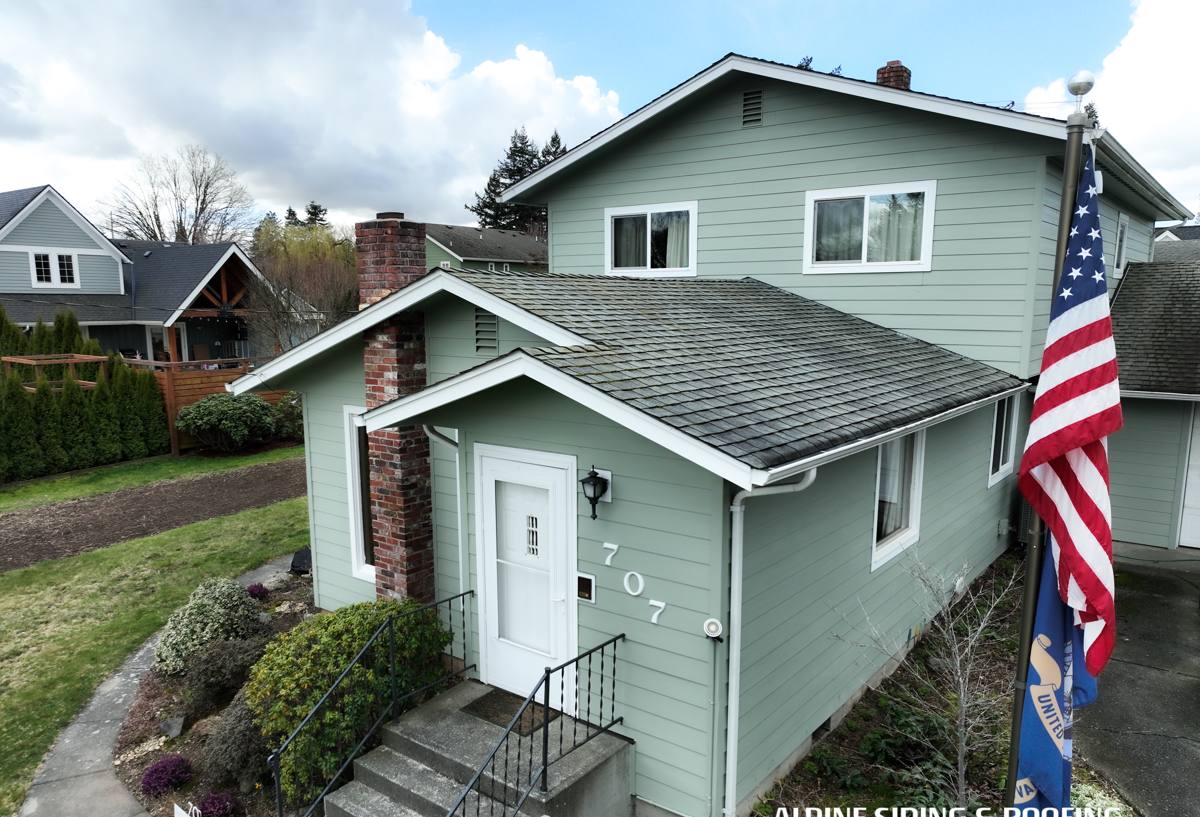
Signs a Sehome Roof Needs Full Replacement, Not Another Repair
Homeowners often ask whether a problem area can just be patched. Sometimes it can. But there's a point where patching becomes a way of paying for the same roof twice — once in repairs, once in the eventual replacement. A few honest signs that you're past the patching stage:
- Granules collecting in gutters or at downspout outlets in noticeable amounts, not just a light dusting
- Shingles that are cupping, curling at the edges, or cracking when you press on them
- Moss or algae growth that comes back within a season or two of cleaning, especially on shaded slopes
- Daylight visible through the roof deck from inside the attic, or damp insulation
- Soft or spongy spots underfoot on the roof surface — a sign the decking underneath is compromised
- Flashing around chimneys, vents, or valleys that's visibly rusted, lifted, or separated from the surface
- A roof that's already had two or three rounds of repairs in the last several years without solving the underlying issue
If more than one or two of these apply, a proper inspection is worth doing before winter, not after a leak forces the issue.
What a Correct New Roof Installation Actually Involves
Tear-Off and Deck Inspection
Every layer of old roofing comes off down to the deck. This isn't just cleanliness — it's the only way to actually see the condition of the plywood or OSB underneath, which is where hidden problems from years of moisture intrusion usually show up first. Any soft, delaminated, or water-stained decking gets replaced before anything new goes down. Installing new shingles over compromised decking is one of the most common ways a roof fails early, and it's not something that shows up again until much later, when it's expensive to fix.
Underlayment and Ice-and-Water Protection
Given the amount of driving rain Sehome sees, underlayment choice matters more here than it would in a drier climate. Self-adhered ice-and-water membrane at eaves, valleys, and around penetrations gives a second line of defense in exactly the spots where wind-driven rain is most likely to find a way under the shingles. Synthetic underlayment across the rest of the deck holds up better than old-style felt in a damp climate — it doesn't absorb moisture the same way, and it stays intact longer if a shingle gets damaged before the crew can finish covering it.
Flashing Details Near the Water
Flashing is where most roof leaks actually start, not in the field of the shingles themselves. Chimney flashing, step flashing along walls, valley metal, and vent boots all need to be installed — and in many cases replaced, not reused — as part of a proper new roof. In a salt-air environment, the metal used for these details should be chosen with corrosion resistance in mind, and every seam sealed correctly rather than caulked over as an afterthought.
Attic Ventilation
A roof that traps warm, moist air in the attic will rot from underneath regardless of how good the shingles on top are. Balanced intake and exhaust ventilation — soffit vents feeding air in, ridge or roof vents letting it out — keeps the deck dry and also helps prevent the freeze-thaw cycling that contributes to ice damming in colder snaps. This is one of the most overlooked parts of a re-roof, and it's often the difference between a roof that reaches its full rated lifespan and one that doesn't.
Choosing the Right Material for a Sehome Roof
There's no single "best" roofing material — there's a best fit for a given roof, budget, and exposure. Here's how the common options compare for a marine climate like this one.
| Material | Moss & Moisture Resistance | Maintenance | Typical Cost Tier |
|---|---|---|---|
| Standard 3-tab asphalt shingle | Fair — needs regular moss treatment | Moderate | Budget |
| Architectural (dimensional) asphalt shingle | Good — heavier mat sheds moisture better | Low to moderate | Mid-range |
| Metal (standing seam or panel) | Very good — moss struggles to grip metal | Low | Premium |
| Synthetic composite shingle | Good — engineered for wet climates | Low to moderate | Mid to premium |
For most Sehome homes, a quality architectural shingle strikes the right balance between upfront cost and how well it handles the moss-and-moisture combination this area sees for a good chunk of the year. Metal roofing costs more up front but sheds moss and debris better than any shingle option, which matters most on heavily shaded lots. We'll walk through the honest trade-offs for your specific roof rather than steering you toward whatever's easiest to install.
Cost Factors That Actually Move the Number
Every roof is priced individually, but the same handful of factors drive most of the variation between a straightforward job and a more involved one.
| Factor | Why It Matters | Relative Impact |
|---|---|---|
| Roof size and number of stories | More square footage and steeper access both add labor time | High |
| Roof pitch and complexity | Steep or cut-up roofs with many valleys and hips take longer and use more material | High |
| Number of existing layers to tear off | Multiple old layers mean more removal and disposal work | Medium |
| Decking condition | Rot or soft spots found during tear-off require replacement before shingles go on | Medium to high |
| Material selection | Asphalt, synthetic, and metal all sit at different price points | High |
| Ventilation and flashing upgrades | Bringing older ventilation or flashing up to current standards adds scope | Low to medium |
We give a written estimate that breaks these out so you can see exactly what's driving the cost, rather than a single lump number with no explanation behind it.
Our Installation Process, Start to Finish
- Inspection and estimate — we walk the roof, check the attic where accessible, and note deck condition, ventilation, and flashing issues before quoting anything.
- Material selection — we go over the honest trade-offs between options for your roof's exposure and budget, no pressure toward the most expensive choice.
- Scheduling around the weather — we plan the job for a stretch of manageable weather where possible, since a re-roof goes faster and cleaner in a dry window.
- Tear-off and deck inspection — old roofing comes off, the deck gets inspected in daylight, and any needed repairs are addressed before covering anything.
- Underlayment, flashing, and ventilation installation — the moisture-management layer that does the real work over the life of the roof.
- Shingle or panel installation — installed to manufacturer spec, with attention to nailing pattern and exposure since both affect wind resistance in this area.
- Cleanup and magnetic sweep — job site and surrounding yard are cleared of debris and stray fasteners.
- Final walk-through — we go over the finished roof with you before calling the job done.
Why Hiring a Crew That Already Works in Sehome Matters
A roofing crew that regularly works this part of Whatcom County already knows which slopes on a given lot hold moss longest, which flashing details tend to get shortcut on cheaper jobs, and how the local permitting process works for a full re-roof. That familiarity shortens the learning curve on your job — there's no guesswork about how the local climate behaves, because it's the same climate every job in the area deals with. It also means a crew that's still around and reachable if a question comes up after the job is done, rather than a company that worked one job in the neighborhood and moved on.
We also carry the licensing, bonding, and insurance that any roofing contractor working in Washington State should have, and we're glad to show it before you hire anyone — not just us. That's a basic vetting step every homeowner should do regardless of who they choose.
Keeping a New Roof Performing After Installation
A correctly installed roof still benefits from basic upkeep, especially given how long moss season runs here. Keeping gutters clear so water doesn't back up under the shingle edge, having moss treated before it gets a foothold rather than after it's established, and doing a quick visual check after major windstorms all go a long way toward getting the full rated life out of the roof. None of this is complicated or expensive — it's just easy to forget until something goes wrong.
If you're weighing whether your Sehome roof needs a repair or a full replacement, or you just want a straight answer on what a new roof would involve for your home, we're happy to take a look and walk you through it. The estimate is free, there's no pressure attached to it, and the form below is the easiest way to get started.