 Bellingham Roofing
 Siding Replacement in Puget: What This Climate Actually Demands
Puget sits inside the stretch of Whatcom County where homes take a slow, steady beating from the water. It's not the dramatic kind of weather damage that shows up overnight. It's the quiet kind: salt-tinged air drifting in off the Sound, rain that gets pushed sideways into seams and trim by wind instead of falling straight down, and a moss and mildew season that runs longer here than it does almost anywhere else in the country. Siding that was never engineered for that combination tends to look fine for a few years and then fail all at once, usually right around the time a homeowner was hoping to get another decade out of it.
Replacing siding in Puget isn't just a cosmetic upgrade. Done right, it's the difference between a wall assembly that sheds water for thirty-plus years and one that quietly lets moisture behind the cladding for a decade before anyone notices the damage. Because we work throughout Bellingham and the surrounding Whatcom County waterfront, we see the same failure patterns repeat on Puget homes: siding that looked serviceable from the curb but was already rotting the sheathing underneath.
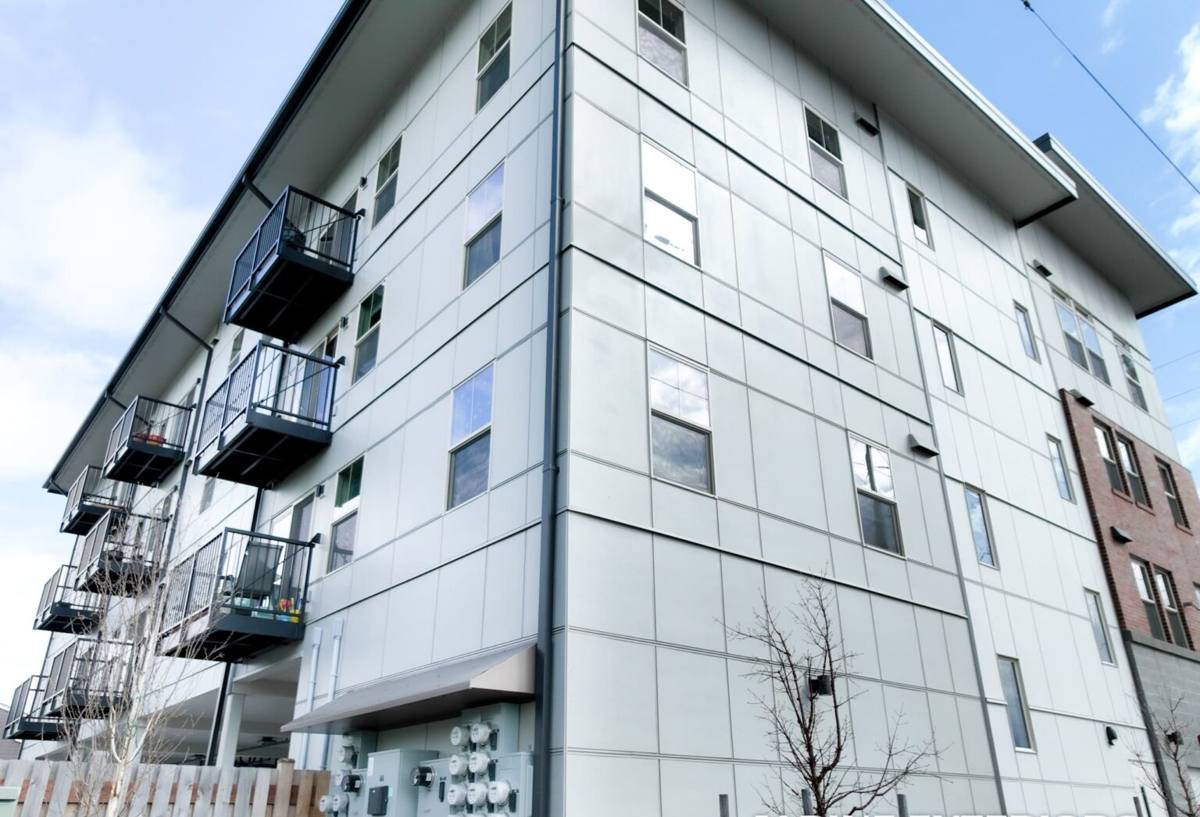
Signs a Puget Home Needs Replacement, Not Just a Patch
Not every siding problem calls for a full tear-off, but in a climate this wet, certain signs mean the material itself has reached the end of its usable life rather than just needing a repair.
- Siding that feels soft, spongy, or gives slightly when pressed, especially near the base of the wall
- Moss or dark staining that comes back within weeks of being cleaned off
- Boards that have visibly cupped, bowed, or separated at the seams
- Paint that's peeling, bubbling, or chalking across large sections rather than isolated spots
- Gaps at corners, trim joints, or window edges wide enough to see daylight or feel a draft
- A noticeable jump in heating costs that points to a wall assembly no longer sealing properly
- Siding original to a home built more than two to three decades ago, particularly if it's never been replaced
When we walk a Puget property, we're checking for these signs on every elevation, not just the side facing the street, because the north- and west-facing walls that stay shaded and wind-exposed the longest are almost always the first to fail.
Why We Only Install James Hardie Fiber Cement Siding
We don't offer a menu of siding brands and let price decide the outcome. Every replacement job we do uses James Hardie fiber cement siding, and nothing else, because of what we've consistently found tearing old siding off houses in exactly this kind of marine climate.
- Non-combustible core: Fiber cement doesn't feed a fire the way wood-based products can, which matters for household safety and can factor into insurance considerations.
- Factory-applied ColorPlus finish: The color coat is baked on under controlled conditions rather than brushed on at the job site, so it holds up far better against fading, chalking, and moisture over decades.
- Climate-engineered HZ5 formulation: Hardie's HZ product line is built specifically for regions with heavy sustained moisture and freeze-thaw cycling, a closer match to coastal Whatcom County than a generic national spec.
- Dimensional stability: Fiber cement doesn't swell, cup, or warp the way engineered wood can after repeated wet-season moisture cycles.
- A strong, transferable warranty: Hardie backs its products with one of the more substantial warranty structures in the industry, provided the installation follows spec.
What the Alternatives Trade Off in This Climate
LP SmartSide is an engineered wood product with a resin-treated strand core, and it can hold up reasonably in drier regions. In a climate this consistently wet, engineered wood is more sensitive to moisture intrusion at cut edges and fastener penetrations than fiber cement. Vinyl siding is affordable and low-maintenance in general terms, but it can warp under direct sun, crack in a cold snap, and trap moisture behind the panel if the house wrap and flashing underneath weren't installed with real care, a detail you can't verify just by looking at the finished wall. Cedar and primed spruce are genuinely attractive materials, but they need ongoing painting or sealing to stay watertight, and in a climate that stays damp this much of the year, that maintenance schedule tends to slip. Cemplank and Allura are also fiber cement, and reasonable products in their own right, but we've standardized on one system so we can stand behind every install completely rather than explaining away trade-offs on a case-by-case basis.
What a Correct Siding Replacement Actually Involves
Choosing the right material is only half the job. A James Hardie installation that performs the way it's engineered to depends on details that are invisible once the siding is up: correct fastening patterns, proper clearance from grade and rooflines, joints that are lapped and sealed the right way, and house wrap and flashing that function as one integrated water-management system instead of separate steps done in isolation.
Tear-Off vs. Overlay
Installing new siding directly over old siding is sometimes technically possible, but it's rarely the right call on a Puget home. Overlaying traps whatever moisture or rot is already present behind two layers instead of one, and it hides the exact kind of hidden damage that this climate produces. A full tear-off costs more up front, but it's the only way to actually inspect the sheathing and framing underneath and confirm you're not sealing a problem inside the wall.
Water Management: The Part You Don't See
Most siding failures we find don't start with the siding itself. They start with a flashing detail that was skipped, a house wrap seam that wasn't lapped correctly, or a fastener driven at the wrong depth. Water finds those gaps eventually, especially with wind-driven rain coming off the Sound, and once it's behind the wall it can do real damage long before it shows up on the surface. Getting this layer right is the single biggest factor in whether a siding replacement lasts three decades or needs attention again in eight years.
Our Siding Replacement Process for Puget Homes
- On-site walkthrough: We inspect every elevation, not just the visible sides, and check trim, flashing, and any soft spots before quoting anything.
- Written scope: You get a scope that specifies flashing and house wrap details, not just a square footage number and a material name.
- Tear-off and substrate check: Old siding comes off, and we inspect the sheathing and framing underneath before anything new goes up.
- Repair hidden damage: Any rot or moisture damage found during tear-off gets addressed before new siding goes on, not covered over.
- Install to spec: House wrap, flashing, fastening, and Hardie siding go on as one integrated system, following manufacturer installation requirements.
- Final walkthrough: We go over the finished job with you before calling it done.
Siding Replacement Cost Factors in Puget
| Factor | What It Affects | Why It Matters Here |
|---|---|---|
| Tear-off vs. overlay | Labor scope and substrate access | Tear-off is the only way to catch moisture damage common under older siding this close to the water |
| Substrate condition | Repair costs before new siding goes on | Years of trapped moisture behind failing siding can rot sheathing before it's ever visible from outside |
| Home size and wall complexity | Total material and labor | More trim detail and roofline intersections mean more places for wind-driven rain to work its way in |
| Siding profile and color | Material cost and finish longevity | ColorPlus factory finishes outlast field-applied paint against salt air and UV exposure |
| Site access | Labor time and equipment needs | Some Puget lots have limited access or grade changes that add staging time |
Real numbers depend on the specific house, which is why we walk the property in person before quoting instead of pricing off square footage alone.
Before You Hire: A Checklist for Puget Homeowners
- Confirm an active Washington state contractor license and current liability insurance
- Ask exactly which siding brand and product line they install, and why
- Ask whether the job is a tear-off or an overlay, and get their reasoning in writing
- Ask how they handle hidden substrate damage discovered once old siding comes off
- Get a written scope that names flashing and house wrap details, not just "new siding installed"
- Ask how long they've worked specifically in the Bellingham and Whatcom County waterfront area
Why a Crew That Already Works Puget Matters
A contractor who works this stretch of the Puget Sound coastline regularly knows how salt air, wind-driven rain, and moss actually behave on real houses over a full year, not just how a product performs on a spec sheet. That translates into practical decisions on install day: which wall orientations stay damp the longest, where extra flashing attention pays off, and which shortcuts simply don't hold up here even if they'd be fine forty miles inland. It's the difference between a siding job that looks right at completion and one that's still performing the way it should a decade later.
If your Puget home needs siding replacement, or you'd just like an honest opinion on whether what you're seeing is a repair or a full replacement situation, we're glad to take a look. Reach out using the form below to schedule a free, no-pressure estimate.