 Bellingham Roofing
 Storm Damage Roof Repair for Puget, Bellingham
The Puget neighborhood sits far enough south in Bellingham that it still catches everything Whatcom County weather throws at a roof over the course of a year — wind off the water, long stretches of driving rain, and the salt-tinged marine air that comes with living this close to the Salish Sea. Storm damage here rarely looks like the dramatic wind-torn roofs you see in national news footage. More often it's a handful of lifted shingle tabs, a strained flashing seam, or a slow leak that started during one bad windstorm and didn't show up inside the house for weeks. Getting it assessed and repaired correctly the first time matters more here than in drier climates, because a small unaddressed gap gives moisture months of opportunity to work before the next dry stretch even shows up.
This page covers what storm damage repair actually involves for a Puget-area roof, what separates a temporary patch from a real fix, and why a crew that already works this part of Bellingham tends to catch things a one-time visiting company misses.
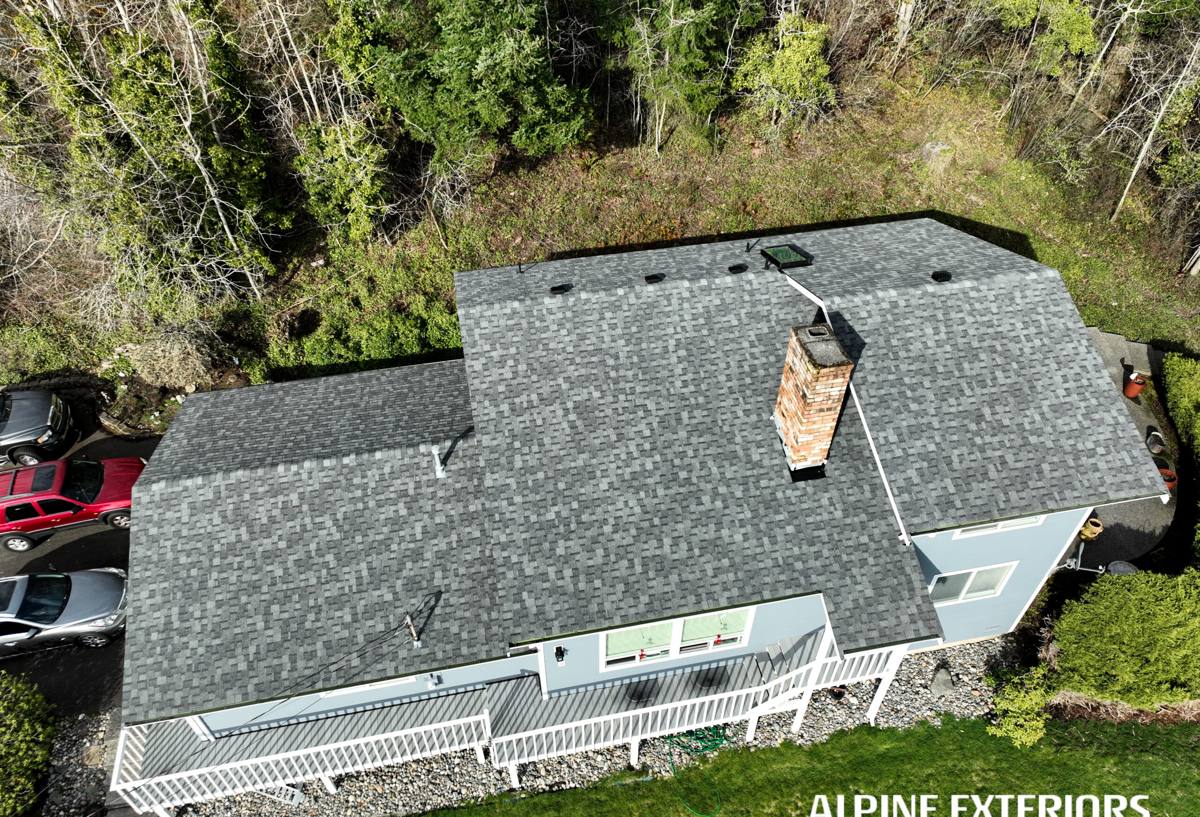
What Local Storms Actually Do to a Puget Roof
Wind events in this part of Whatcom County rarely peel a roof off in one dramatic gust. The more common pattern is repeated stress — wind pushing rain sideways and up under shingle edges, gusts working a fastener loose a little more with each storm, and moisture finding its way into small gaps that widen over a season. Understanding that pattern is part of diagnosing storm damage correctly instead of just patching the obvious spot.
Wind-Driven Rain
Rain that falls straight down is easy for a roof to shed. Rain that's being pushed sideways by wind behaves differently — it can work backward under shingle tabs, around chimney flashing, and along valley edges that were never designed to handle water moving uphill. This is one of the most common causes of a "mystery leak" that shows up well away from where the actual damage happened.
Salt Air and Corrosion
Proximity to the water means metal components — nails, flashing, gutter fasteners, drip edge — face a faster corrosion timeline than the same materials would inland. A storm that loosens a fastener that's already partially corroded fails faster than the same event would on a roof with fresher, better-protected metal.
The Long Moss Season
Bellingham's mild, damp climate keeps moss and moisture-loving growth active for most of the year, especially on shaded, north-facing slopes. Moss holds water against the roof surface long after a storm has passed, and a storm that lifts or cracks a shingle in a moss-heavy area lets that trapped moisture reach the underlayment far sooner than it would on a clean, dry slope.
Signs Worth a Second Look After a Storm
Most storm damage isn't visible from the ground, and homeowners often don't notice anything until a leak shows up inside. After any significant wind or rain event, it's worth doing a quick visual check — from the ground, not on a ladder — for these signs:
- Shingles that look curled, cracked, or noticeably lighter in color than the surrounding roof (granule loss)
- Granules collecting in gutters or at the base of downspouts
- Visible gaps or lifted edges along ridge lines, valleys, or roof-to-wall intersections
- Flashing around chimneys, vents, or skylights that looks bent, separated, or rusted
- New or growing stains on interior ceilings, especially near exterior walls or after a windy storm
- Debris — branches, larger limbs — that made contact with the roof surface
- Sagging or soft-looking spots on the roof plane itself, which can indicate deck damage underneath
None of these guarantee major damage on their own, but any one of them is worth a professional inspection rather than a wait-and-see approach, especially heading into another wet stretch.
Emergency Response vs. Permanent Repair
Not every storm-damaged roof needs the same response on the same day. Knowing the difference between stabilizing a roof and actually fixing it helps set the right expectations after a storm.
| Situation | What Happens First | Timeline |
|---|---|---|
| Active leak during or right after a storm | Temporary tarping or emergency sealing to stop water intrusion | Same day or next available slot |
| Visible shingle or flashing damage, no active leak | Full inspection scheduled to assess scope before any work begins | Within a few days |
| Suspected but unconfirmed damage (missing granules, minor cosmetic signs) | Inspection during a dry window to check the deck and underlayment, not just the surface | Scheduled at the homeowner's convenience |
| Confirmed damage requiring repair | Written estimate covering materials, scope, and timeline before work starts | Weather-dependent, usually within one to two weeks |
A tarp is a stopgap, not a repair. If a crew tarps a roof and disappears, that's a sign the follow-through — the part that actually matters — isn't there.
What a Correct Storm Repair Involves
A repair that only addresses the visible surface damage often misses what the storm did underneath. A thorough job works through the same sequence every time:
- Full inspection, not a spot check. Walking the whole roof, not just the area the homeowner pointed out, since wind damage often shows up in more than one location.
- Deck inspection where access allows. Checking for soft or delaminated sheathing under damaged shingles, since a repair over a compromised deck won't hold.
- Underlayment assessment. If water has been getting past the shingle layer, the underlayment underneath needs to be checked and, where necessary, replaced — not just covered back up.
- Flashing repair or replacement. Most leaks trace back to flashing, not the field of the roof, so valleys, chimneys, and penetrations get specific attention.
- Matching materials as closely as possible. Shingle color and profile shift over time, so an honest assessment of how well a patch will blend is part of the estimate, not a surprise afterward.
- Ventilation check. Storm repairs are a good opportunity to confirm attic ventilation is working, since poor ventilation accelerates the moisture and moss problems already common in this climate.
Working With Your Insurance Company
Many storm repairs in this area involve an insurance claim, and the process goes smoother when the documentation is solid from the start. A thorough contractor should provide clear photos of the damage, a written scope of repair, and a straightforward explanation of what was storm-caused versus what was pre-existing wear — insurers distinguish between the two, and an honest assessment protects the homeowner from a denied or reduced claim later.
It's reasonable to get your own independent inspection rather than relying solely on the insurance adjuster's assessment, especially since adjusters are evaluating many roofs and may not always catch damage that's less visible from a ground-level or drive-by look. A contractor who's willing to meet an adjuster on-site and walk through the findings together is generally a good sign.
Cost Factors in Storm Damage Roof Repair
Storm repair costs vary widely because storm damage itself varies widely — a few lifted shingles is a different job than a section of deck that needs to be replaced. These are the factors that most affect the price:
| Cost Factor | What It Affects | Why It Matters in Puget |
|---|---|---|
| Extent of shingle damage | Whether the fix is a patch or a full slope replacement | Wind-driven rain damage often spreads further than the visibly obvious spot |
| Deck condition underneath | Whether sheathing needs to be replaced before re-covering | Long-term moisture from moss and rain intrusion can weaken decking before it's visible |
| Flashing scope | Labor and material for valleys, chimneys, vents | Salt air corrodes flashing metal faster, making replacement more common than a simple reseal |
| Underlayment replacement | Water barrier quality going forward | Upgrading to synthetic or self-adhered underlayment pays off given how often wind pushes rain sideways here |
| Material matching | Whether a patch is visually acceptable or a fuller replacement is needed | Older Puget-area roofs may have discontinued or weathered shingle colors that are hard to match exactly |
| Access and roof pitch | Labor time and equipment needs | Steeper or harder-to-access roofs common in the area add time regardless of damage size |
Why a Crew That Already Works Puget Matters
Storm damage repair rewards local familiarity in ways a lot of roofing work doesn't. A crew that's already worked roofs throughout this part of Bellingham has a working sense of which roof ages and shingle types are common in the area, how local wind patterns tend to hit different roof orientations, and what a Whatcom County building department actually expects for permitting on repair versus replacement scope. That translates into fewer surprises during the job and a more accurate estimate up front.
There's also a practical timing advantage. Storm damage doesn't wait for a convenient week, and a company that's local can typically get eyes on a damaged roof faster than one dispatching a crew from further away — which matters most in the days right after a storm, when an unaddressed gap is doing the most damage.
Getting an Estimate
If a recent storm has you wondering whether your roof took damage, or you've noticed a stain, a draft, or shingles that don't look right anymore, it's worth having someone take a direct look rather than guessing from the ground. We offer free, no-pressure estimates for Puget-area homes — an honest look at what's actually going on, what it would take to fix it right, and a written estimate you can use to make the call at your own pace.