 Bellingham Roofing
 Roofing in Barkley: A Neighborhood Built on a Hillside, Facing the Weather Head-On
Barkley sits on higher ground on Bellingham's east side, which gives homes here nice views of the bay and the mountains — but it also means roofs take wind and rain from more directions than a house tucked into a sheltered valley would. Combine that exposure with Whatcom County's marine climate — salt air drifting in off Bellingham Bay, driving rain that comes in sideways during fall and winter storms, and a moss season that can run eight or nine months out of the year — and you get roofs that wear unevenly. One slope stays relatively clean while the north-facing slope grows moss within a season or two. That's the pattern we see over and over on Barkley roofs, and it's why a repair here needs to account for more than just the spot that's actively leaking.
This page is about roof repair specifically for Barkley — not a general roofing overview. If your roof is basically sound but has a leak, damaged flashing, moss-related wear, or storm damage, this is what a correct repair looks like and how we approach it.
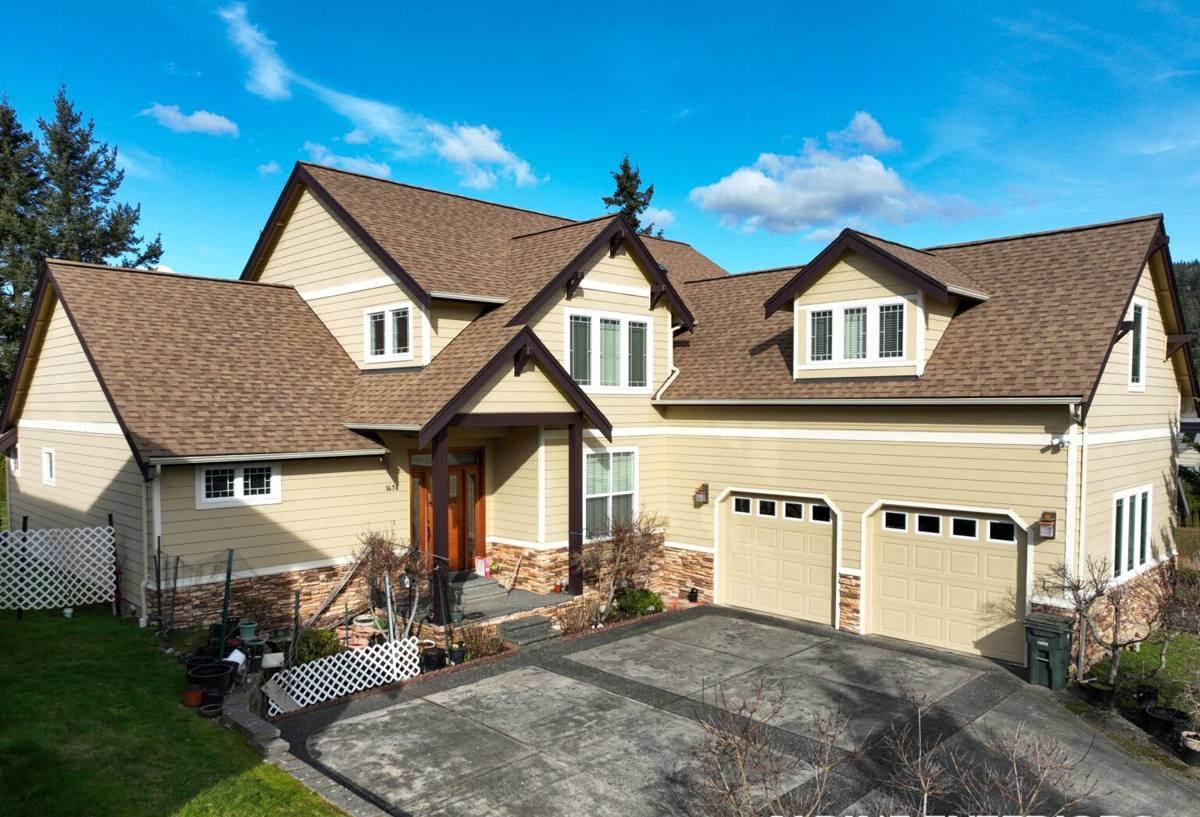
Why Salt Air, Driving Rain, and Moss Change How a Roof Ages
Salt Air
Proximity to Bellingham Bay means airborne salt settles on roofing surfaces and metal components. Over years, that accelerates corrosion on exposed fasteners, flashing, and any galvanized metal that isn't rated for coastal exposure. A repair that reuses corroded fasteners or standard-grade flashing in a salt-air zone is a repair that fails again sooner than it should.
Driving Rain
Rain that falls straight down is easy for a roof to shed. Rain that's pushed sideways by wind off the water finds every gap — under shingle tabs, around vent boots, behind step flashing that's slightly short, into nail holes that were never properly sealed. Most of the leaks we trace back on Barkley homes aren't from a big obvious hole; they're from small entry points that only let water in when the wind is blowing rain at an angle. That's part of why a leak might show up only during certain storms and seem to disappear the rest of the year.
Moss
Whatcom County's damp, mild climate is close to ideal for moss growth, and Barkley's tree cover and shaded northern slopes make it worse in spots. Moss isn't just cosmetic. It holds moisture against the roofing material, works its way under shingle edges as it grows, and lifts tabs enough for wind-driven rain to get underneath. A repair on a moss-heavy roof that doesn't address the moss itself is a repair that's likely to need redoing.
The Repair Issues We Actually See on Barkley Roofs
- Lifted or cracked shingle tabs from wind combined with moss growth prying edges up
- Leaking flashing around chimneys, skylights, and roof-to-wall transitions where sealant has aged out
- Corroded or failing vent boots — the rubber collars around plumbing vents are usually the first thing to fail on an otherwise healthy roof
- Clogged or sagging gutters that back water up under the roof edge during heavy rain
- Moss-damaged shingle granules, which shortens the life of the remaining roofing even where there's no active leak yet
- Nail pops and exposed fasteners that corrode faster in salt-influenced air and open small water paths
Most of these show up gradually. A homeowner might notice a stain on a ceiling, a damp smell in an attic space, or moss visibly thickening on the north slope — none of which look urgent until they are.
What an Honest Roof Repair Actually Involves
A proper repair isn't just sealing the spot where water is currently showing up inside the house. Water travels along roof sheathing and rafters before it drips somewhere visible, so the interior stain and the actual entry point are often several feet apart. Skipping the diagnosis step and just caulking the ceiling-adjacent area is how the same leak comes back after the next storm.
What we check before touching anything
- Where the water is actually entering, not just where it's showing up inside
- Condition of the surrounding roofing material — is it still structurally sound, or is the repair area a symptom of broader wear
- Flashing condition at any nearby penetrations, valleys, or wall transitions
- Underlying decking for soft spots or rot where water has been sitting
- Moss or debris buildup that's contributing to the problem, even if it's not the direct cause
Only after that assessment do we know whether the fix is a targeted repair, a larger section replacement, or — if the roof is old enough and the damage widespread enough — a conversation about full replacement instead of continuing to patch.
How Our Repair Process Works
- Inspection and diagnosis. We get on the roof, trace the actual leak path, and check the surrounding area — not just the spot you called about.
- Clear explanation and estimate. You get a plain-English explanation of what's actually wrong, what we recommend, and an honest cost range before any work starts.
- Removal of damaged material. Compromised shingles, rotted decking, and failed flashing get removed rather than covered over.
- Correct material replacement. New underlayment, flashing, and shingles matched as closely as possible to the existing roof, installed to manufacturer specifications rather than the fastest path.
- Sealing and detail work. Flashing laps, fastener sealing, and vent boot replacement done to hold up against driving rain specifically, not just fair-weather conditions.
- Cleanup and final check. Debris and old material hauled off, and the repair area checked again once complete.
Repair or Replace? Cost Factors to Weigh
Not every roof problem needs a full replacement, but not every leak should just get patched either. These are the factors that actually drive that decision:
| Factor | Leans Toward Repair | Leans Toward Replacement |
|---|---|---|
| Roof age | Under roughly 15 years, or recently replaced | Nearing or past the material's typical service life |
| Extent of damage | Isolated to one area — a flashing point, a vent, a small section | Spread across multiple slopes or recurring in different spots |
| Moss/algae condition | Light growth, manageable with cleaning and treatment | Heavy, long-term growth that's degraded granules broadly |
| Decking condition | Solid, no rot found during inspection | Soft spots or rot found in multiple areas |
| Leak history | First occurrence or clearly isolated cause | Repeated leaks in different locations over time |
Broad cost ranges: minor flashing or vent boot repairs are typically a modest single-visit expense; larger repairs involving decking replacement or multiple flashing points cost more depending on scope; full replacement is the largest investment but resets the clock on all of the above. We'll always give you a specific number for your roof rather than asking you to guess from a range — but we won't recommend replacement when a repair will genuinely hold up, and we won't recommend a repair when we can see it's going to be a temporary fix.
Materials That Hold Up in This Climate
Most Barkley homes are roofed in asphalt composition shingles, with some cedar shake and metal roofing on older or higher-end properties. For repairs, we match the existing material where possible so the roof stays uniform, and we upgrade the details that matter most in this climate even on a like-for-like repair:
- Corrosion-resistant fasteners and flashing suited to salt-influenced coastal air
- Properly lapped step flashing at wall transitions, sealed for wind-driven rain rather than just vertical rainfall
- Vent boots rated for our freeze-thaw and UV conditions, since these are typically the first component to fail
- Underlayment that performs correctly under the extended damp season Whatcom County sees each year
We're honest about trade-offs when a material choice comes up. Cedar shake, for example, looks great and is a traditional Pacific Northwest material, but it demands more maintenance in a moss-prone, damp climate than asphalt or metal — that's not a knock on the product, it's just what the moisture and shade conditions here require of it. We'll tell you that upfront rather than after you've paid for it.
Moss and Debris: Prevention Between Repairs
A repair fixes today's problem. Keeping moss and debris under control is what keeps the next problem from showing up in the same spot. On Barkley roofs specifically, where tree cover and shaded slopes are common, this matters more than on an open, sun-exposed roof elsewhere in town.
- Keep gutters and valleys clear of needles and leaf debris, especially heading into fall storm season
- Have moss growth treated before it thickens and works under shingle edges, not after
- Trim back overhanging branches where practical to reduce shade and debris load on north-facing slopes
- Get an annual look at flashing and vent boots — these age faster than the shingle field around them
- Address small leaks promptly; a small entry point during one storm season becomes decking damage by the next
Why a Crew That Already Works Barkley Makes a Difference
Roof repair isn't identical from one Bellingham neighborhood to the next. A crew that regularly works Barkley knows the roof pitches and exposure patterns common to the area, has a feel for how quickly moss returns on the shaded slopes here versus more open parts of the city, and understands how the wind off the bay tends to drive rain into specific flashing details. That's not a substitute for a proper inspection of your specific roof — every house is different — but it does mean less guesswork and fewer surprises once we're up there.
It also means straightforward logistics: a technician already in or near Barkley for another job can often get to your repair faster, and we're not learning the neighborhood's quirks on your roof for the first time.
Get a Free, No-Pressure Estimate
If you've got a leak, storm damage, or a roof that's showing its age under Barkley's weather, we're glad to take a look and give you a straight answer — repair, replace, or just keep an eye on it. Use the form below to request a free estimate, and we'll walk you through exactly what we find.