 Bellingham Roofing
 Roofing in a Wooded, Lakeside Community
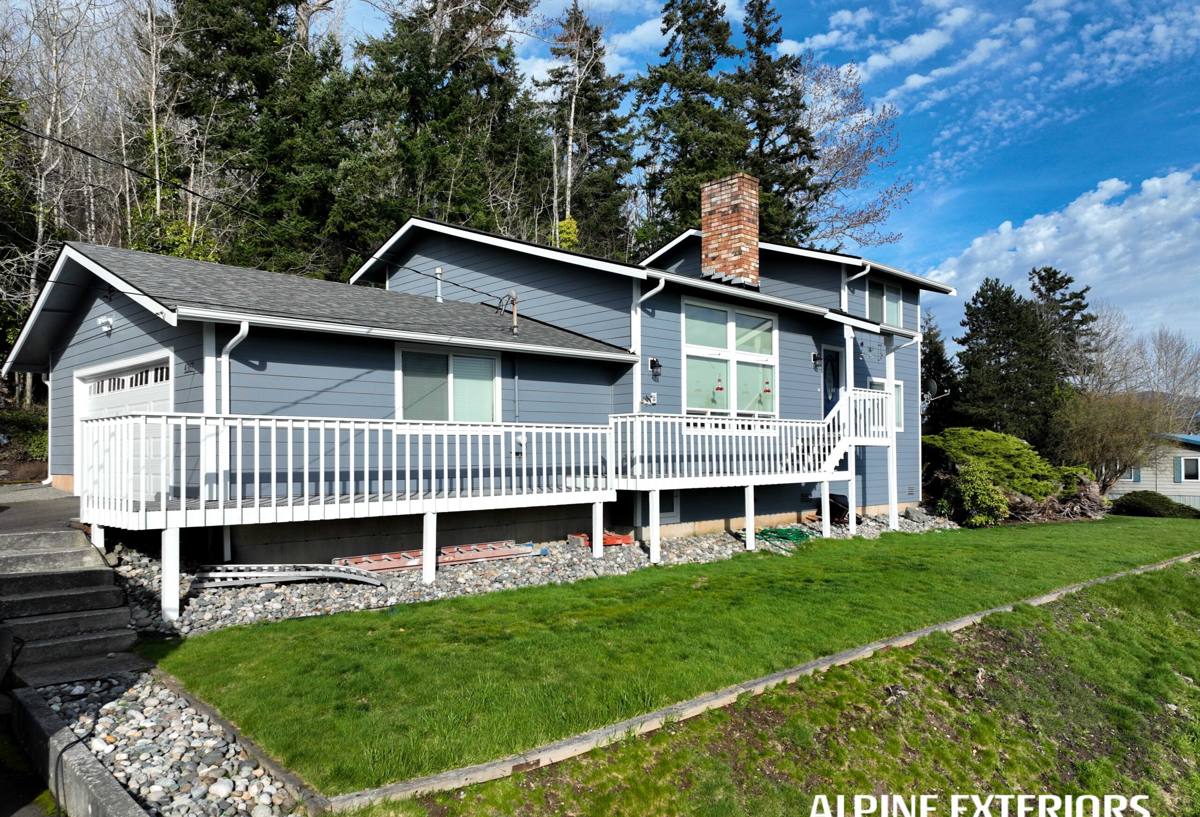
Sudden Valley sits in a different microclimate than a lot of the rest of Whatcom County. The combination of tree cover around Lake Whatcom, higher humidity off the water, and driving rain that comes sideways off the surrounding hills means roofs here age differently than roofs on an open lot in town. We've repaired enough of them to know the pattern: moss and debris accumulate faster under the canopy, moisture sits longer in shaded valleys and north-facing slopes, and wind-driven rain finds its way into gaps that would stay dry on a more exposed roof. A repair here isn't just patching a leak — it's addressing the reason that spot failed in the first place, so it doesn't fail again six months later.
Why This Climate Is Hard on Roofs
Three things do most of the damage to roofs in this part of Bellingham and greater Whatcom County, and Sudden Valley gets a concentrated dose of all three.
Salt Air and Coastal Moisture
Even set back from the water, homes in this area pick up moisture-laden air that keeps roofing materials damp longer than they would be inland. That extra dwell time speeds up the breakdown of asphalt granules, accelerates corrosion on exposed metal fasteners and flashing, and gives algae and moss more time to take hold.
Driving Rain
Rain that comes in at an angle, rather than straight down, gets pushed up under shingle tabs, around chimney flashing, and into any seam that isn't sealed tight. A roof that would shed a straight downpour without issue can still leak in a wind-driven storm if the underlying details weren't installed with that in mind.
A Long Moss Season
With tree cover holding shade and moisture on the roof deck for much of the year, moss and moisture-loving growth get a long runway here — often close to nine months out of twelve. Moss isn't just cosmetic. Once it establishes itself under shingle edges, it lifts them, holds water against the roofing material, and opens the door for rot in the decking underneath.
Signs a Repair Is Needed — Not a Full Replacement
Most roofs don't fail all at once. They fail in one spot first. Catching that spot early is usually the difference between a repair bill and a full roof replacement. Watch for:
- A stain on an interior ceiling or wall, especially after a windy storm rather than a calm rain
- Granules collecting in gutters or at downspout outlets — a sign the shingle surface is wearing thin
- Shingles that look curled, cupped, or lifted at the edges, particularly on north-facing or shaded slopes
- Moss or dark streaking concentrated in one section rather than spread evenly across the whole roof
- Visible daylight or gaps around a chimney, skylight, or vent pipe from the attic side
- Soft or spongy spots underfoot if you're ever up there for gutter cleaning
If the damage is isolated and the roof deck underneath is still sound, a targeted repair is almost always the right call. Replacement becomes the honest recommendation when the damage is widespread, the roofing material is past its expected service life, or repairing one area would just mean chasing the next failure a year later.
What a Correct Repair Actually Involves
A repair that just covers the visible hole is a temporary fix, not a real one. Water rarely enters exactly where it shows up inside the house — it travels along the underlayment or decking before it drips. Doing the job right means:
- Pulling back further than the visible damage to find where water is actually getting in, not just where it's coming out
- Checking the decking underneath for soft spots or rot, since a new shingle over a soft deck won't hold or seal properly
- Replacing damaged underlayment, not just shingles, since the underlayment is the actual waterproof layer in most systems
- Re-flashing where needed around chimneys, skylights, vents, and roof-to-wall transitions — flashing failure is behind a large share of the "mystery leaks" we get called for
- Matching materials as closely as possible so the repair doesn't stand out or create a mismatched wear pattern down the road
- Sealing and fastening to current standards, even if the surrounding roof was installed under older practices
Common Repair Types We Handle in Sudden Valley
| Repair Type | Typical Local Cause | What's Involved |
|---|---|---|
| Flashing repair | Wind-driven rain forcing water past chimney or skylight seals | Remove old flashing, inspect decking, install new flashing and sealant |
| Moss-related shingle damage | Long shaded moss season lifting and rotting shingle edges | Moss and debris removal, damaged shingle replacement, treatment to slow regrowth |
| Valley leaks | Heavy debris load and driving rain overwhelming a poorly maintained valley | Clear debris, inspect valley metal or membrane, replace as needed |
| Storm damage | Wind lifting or tearing shingles, falling branches | Localized shingle and decking replacement matched to existing roof |
| Vent and pipe boot failure | Rubber boot seals cracking from age and repeated wet/dry cycling | Boot replacement and resealing, usually a fast, low-cost fix |
Our Repair Process
We keep the process straightforward because most homeowners just want the leak found, fixed correctly, and explained in plain terms.
- Inspection. We look at the roof from both the exterior and, when accessible, the attic side, since interior staining often points to a source several feet away from where you'd expect.
- Honest diagnosis. We tell you what's actually failing and why — including if the real fix is smaller (or larger) than what was originally suspected.
- Written estimate. You get a clear scope of work and price before anything is touched, no surprise add-ons mid-job.
- Repair. We do the work with matching materials and correct flashing and sealing details, not a quick patch.
- Cleanup and walk-through. We clear debris from the work area and gutters near the repair, and show you what was done.
Moss, Debris, and Keeping a Repair From Becoming a Recurring Job
A repair holds up longer when the roof around it isn't working against it. In a wooded, lakeside community like this, that mostly comes down to keeping moss and organic debris from re-establishing. A basic seasonal checklist:
- Clear needles, leaves, and small branches off the roof surface and out of valleys at least twice a year
- Keep gutters and downspouts flowing freely so water isn't backing up under the eaves
- Trim back overhanging branches to cut down on shade and debris drop where practical
- Address moss while it's still a surface issue, before it lifts shingle edges
- Have a shaded, north-facing, or valley-heavy roof looked at a little more often than a fully exposed one
Repair vs. Replacement: Weighing the Real Cost Factors
We'd rather give you an honest comparison than push either option. Here's generally how the decision breaks down:
| Factor | Favors Repair | Favors Replacement |
|---|---|---|
| Damage extent | Isolated to one area or slope | Spread across multiple sections |
| Roof age | Well within expected service life | At or near the end of its lifespan |
| Deck condition | Solid, no rot found | Soft decking or repeated rot in multiple spots |
| Repair history | First or occasional repair | Same area has needed repair more than once |
| Cost outlook | Lower cost, addresses a specific issue | Higher upfront cost, resets the clock on the whole roof |
Exact pricing depends on the type of repair, roof pitch, access, and how much of the roof is affected — anything more specific than that requires an actual look at your roof, which is what the estimate is for.
Why It Matters That We Already Work in Sudden Valley
Terrain and access here aren't always the same as a flat in-town lot. Steeper driveways, tree-lined lots, and roof pitches tucked into hillsides all affect how a crew stages equipment and how carefully they need to work around landscaping and lake-facing views. A crew that's already worked in the neighborhood knows what to expect before the truck shows up, which means less guesswork and less risk of surprises mid-job. It also means we've seen how roofs in this specific setting age — which slopes hold moss longest, which flashing details tend to fail first under driving rain — and we bring that knowledge into every diagnosis instead of starting from scratch.
Materials and Workmanship Standards
For repairs, we match the existing roofing material whenever a reasonable match is available, since mixing incompatible products or mismatched granule colors creates both a visual patchwork and, in some cases, a performance mismatch. Our standard is to use fasteners, underlayment, and flashing that meet or exceed the original installation, even if that's a step up from what's currently on the roof. We stand behind our repair work and will walk you through what warranty coverage applies to the materials used, since that varies by manufacturer and product line.
Serving Sudden Valley and the Surrounding Bellingham Area
Sudden Valley's combination of lake-effect moisture, tree canopy, and exposure to driving rain off Whatcom County's hills puts real, predictable stress on roofing systems. A repair done with that in mind — proper tear-back, correct flashing, matched materials, and a clear diagnosis — holds up. A repair done as a quick patch usually doesn't.
If you've noticed a stain, a soft spot, missing granules, or moss creeping under shingle edges, we're happy to take a look and give you a straight answer about what it actually needs. Reach out for a free, no-pressure estimate using the form below.