 Bellingham Roofing
 Siding in Sehome Has a Specific Job to Do
Sehome sits close enough to Bellingham Bay that salt-laden air is a constant factor, and close enough to the hills and tree cover that shade, moisture, and moss are just as constant. That combination is harder on exterior siding than either factor alone. Salt air accelerates corrosion on fasteners and metal trim. Shade and tree cover keep wood surfaces damp longer after our long stretches of driving rain, which is exactly the condition moss and mildew need to take hold. A lot of Sehome's housing stock is older, meaning original siding has already been through decades of this cycle, and a lot of what we see when we tear off old cladding in this neighborhood is failure that started small and was never visible from the curb.
Good siding installation in this part of Bellingham isn't about picking a product that looks nice on day one. It's about choosing a material and installation method that can shrug off months of wet weather every year, resist moss colonization on north-facing and shaded walls, and hold paint and fasteners without corroding or swelling at the edges. That's a narrower list than most homeowners expect, and it's the reason we install exactly one product system on every job.
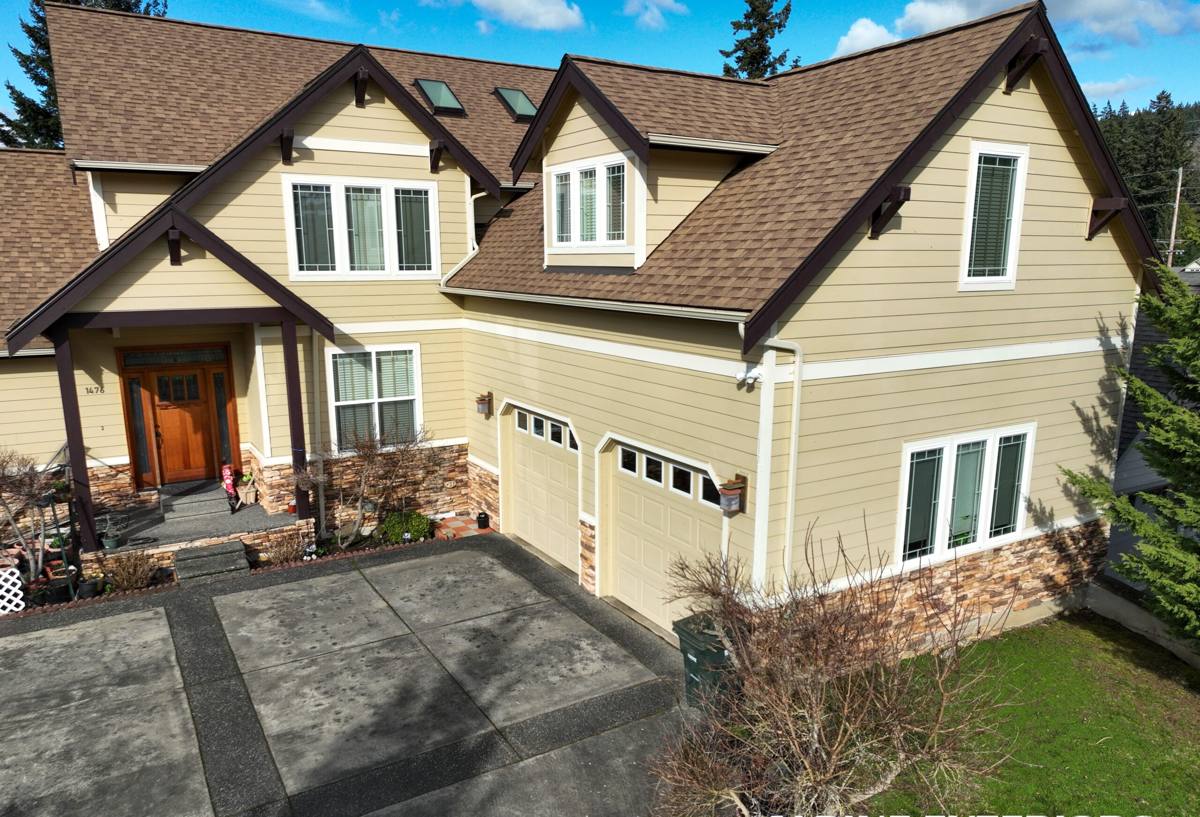
What Whatcom County Weather Actually Does to Siding
Driving Rain and Wind-Driven Moisture
Bellingham doesn't just get rain — it gets rain pushed sideways by wind off the water, which forces moisture into seams, laps, and fastener penetrations that would stay dry in a calmer climate. Siding that isn't installed with the correct lap, clearance, and flashing detail will let water behind the cladding long before the face of the material shows any wear.
Salt Air and Corrosion
Proximity to Bellingham Bay means airborne salt settles on every exterior surface, including fasteners, flashing, and trim. Uncoated or undersized fasteners corrode faster here than in inland parts of Whatcom County, and corroding fasteners are one of the most common causes of siding that loosens, streaks, or fails at the nail line years before the field of the siding shows a problem.
Moss, Mildew, and Extended Shade
Sehome's mix of mature trees and closely spaced homes means many walls stay shaded and damp for long stretches, especially through fall and winter. Moss and mildew don't just look bad — on the wrong substrate they hold moisture against the surface, which accelerates rot on wood-based products and paint failure on anything that isn't factory-finished to resist it.
What a Correct Installation Actually Involves
Siding is a system, not a single product. The board or panel is only one part of it. A correct installation in Sehome's climate includes:
Weather-Resistive Barrier and Drainage Plane
A properly lapped weather-resistive barrier behind the siding, with a drainage gap where the wall assembly calls for it, gives any water that gets past the cladding a way out instead of a place to sit. This step is invisible once the job is done, which is exactly why it's the step that gets shortcut on lower-quality installs.
Flashing at Every Penetration
Windows, doors, hose bibs, light fixtures, and vents all break the plane of the wall, and every one of those breaks needs flashing detailed to shed water downward and outward. In a climate with as much wind-driven rain as ours, flashing mistakes are one of the most common causes of hidden rot behind otherwise good-looking siding.
Fastening and Clearance
Corrosion-resistant fasteners, driven to the manufacturer's specified depth and pattern, matter more here than in drier climates. So does maintaining proper clearance between the bottom of the siding and grade, decks, and roof lines — clearances that are too tight trap moisture against the bottom courses, which is where we most often find rot on older Sehome homes.
Caulking and Joint Treatment
Butt joints, trim junctions, and penetrations need the right sealant, applied correctly — not as a substitute for proper flashing, but as a second line of defense. Over-reliance on caulk instead of correct flashing is a shortcut that fails within a few wet seasons.
Why We Only Install James Hardie Fiber Cement
We don't install vinyl, LP SmartSide, primed wood, or cedar, and it's a deliberate standard, not a lack of options. Vinyl expands and contracts with temperature swings and can crack or warp over time, and it's a poor match for a climate where wind-driven rain tests every seam. Engineered wood products and untreated wood siding are vulnerable to moisture intrusion at cut edges and fastener penetrations, which is a real liability given how long surfaces stay damp in a shaded, rain-heavy neighborhood like Sehome.
James Hardie fiber cement is non-combustible, dimensionally stable across our wet-dry cycles, and comes with a factory-applied ColorPlus finish engineered to resist fading and hold up to moisture exposure better than field-applied paint. Hardie's HZ5 product line is specifically engineered for cold, wet climates like ours, and the company backs correctly installed siding with a strong transferable warranty. For a neighborhood dealing with salt air, sideways rain, and a long moss season, that combination of moisture resistance, dimensional stability, and finish durability is what actually holds up — which is why it's the only system we put on Sehome homes.
Our Installation Process
Every Sehome siding job follows the same sequence, because skipping steps is how moisture problems get built into a wall for the next twenty years.
- On-site assessment of the existing wall assembly, sheathing condition, and any moisture damage behind the current siding.
- Removal of old siding and inspection of sheathing, framing, and existing flashing at windows and penetrations.
- Repair of any rot or damaged sheathing found during tear-off before any new material goes up.
- Installation of a new weather-resistive barrier, properly lapped and sealed.
- Flashing installed or verified at every window, door, and wall penetration.
- James Hardie siding installed to manufacturer specifications for fastening, clearance, and joint treatment.
- Final trim, caulking, and paint touch-up using ColorPlus-matched or compatible materials.
- Walkthrough with the homeowner to confirm the finished work matches the plan.
Comparing Siding Options for a Sehome Home
| Factor | Vinyl | Wood / Engineered Wood | James Hardie Fiber Cement |
|---|---|---|---|
| Moisture resistance | Moderate; seams can allow water intrusion | Vulnerable at cut edges and fastener points | Engineered for wet climates (HZ5 line) |
| Salt air / corrosion exposure | Fasteners and trim can corrode over time | Fasteners and finish both at risk | Stable with corrosion-resistant fastening |
| Fire resistance | Combustible | Combustible | Non-combustible |
| Finish durability | Can fade or chalk over time | Requires ongoing repainting/staining | Factory ColorPlus finish, long fade resistance |
| Typical warranty structure | Varies by manufacturer | Varies; often shorter on finish | Strong transferable manufacturer warranty |
Signs a Sehome Home Needs Siding Attention
Because so much siding damage in this climate starts hidden behind the surface, it helps to know what to watch for before a small problem becomes a wall repair:
- Soft or spongy spots when you press on the siding, especially near the bottom courses or below windows
- Persistent moss or dark streaking on shaded walls that returns quickly after cleaning
- Peeling or bubbling paint, particularly on north- or west-facing walls
- Visible gaps, warping, or buckling at seams and butt joints
- Rust staining running down from fasteners or trim
- Rising energy bills that suggest a compromised weather barrier behind the cladding
- Interior wall or ceiling staining near exterior walls, which often points to siding-related moisture intrusion
Why Local Installation Experience Matters in Sehome
Siding installation isn't a one-size-fits-all job, and a crew that regularly works in Sehome and the surrounding Bellingham neighborhoods knows the specific conditions to plan around — which walls in a given lot orientation stay shaded longest, how much clearance to build in given our rainfall totals, and where salt air exposure tends to hit hardest depending on how open a property is to the bay. That local pattern recognition doesn't replace following manufacturer specs, but it does mean fewer surprises during tear-off and a finished installation that's tuned to how this specific neighborhood actually weathers, not a generic climate assumption.
It also means accountability. A contractor working a small service area in Whatcom County has every reason to install correctly the first time and stand behind the work, since reputation in a neighborhood like Sehome travels fast in both directions.
Maintaining Hardie Siding in Sehome's Climate
One advantage of a correctly installed fiber cement system is how little ongoing maintenance it demands compared to wood or vinyl. Even so, a few habits matter in this climate:
Seasonal Rinse-Downs
An occasional gentle rinse, especially on shaded or moss-prone walls, keeps organic growth from establishing before it can take hold.
Gutter and Drainage Checks
Keeping gutters clear and grading away from the foundation reduces the amount of water siding has to shed in the first place, which matters more here given our rainfall volume.
Caulk and Trim Inspection
A yearly look at caulked joints and trim, particularly around windows and penetrations, catches small gaps before a wet winter turns them into moisture problems.
If you're weighing a siding project in Sehome, we're happy to walk the property, look at what your current siding is telling us, and put together a straightforward, no-pressure estimate — just fill out the form below to get started.