 Bellingham Roofing
 Why Silver Beach's Climate Is Hard on Siding
Homes in Silver Beach sit inside one of the wetter, mossier corners of Whatcom County, and the siding on those homes takes the brunt of it. Moist, salt-tinged air moves in off the Salish Sea and Bellingham Bay for most of the year, wind-driven rain hits exposed walls at an angle instead of falling straight down, and mature tree cover across many Silver Beach lots keeps north- and west-facing siding shaded and damp long after a storm has passed. That combination — persistent moisture, salt-laden air, and shade — is exactly the environment moss, mildew, and slow material breakdown thrive in.
None of that is unique to any one street or lot in Silver Beach. It's a neighborhood-wide condition, and it's the same reason siding that performs fine in a drier inland climate can start failing here years ahead of schedule. Any siding installation in this part of Bellingham has to be planned around how the material handles sustained moisture exposure, not just how it looks on install day.
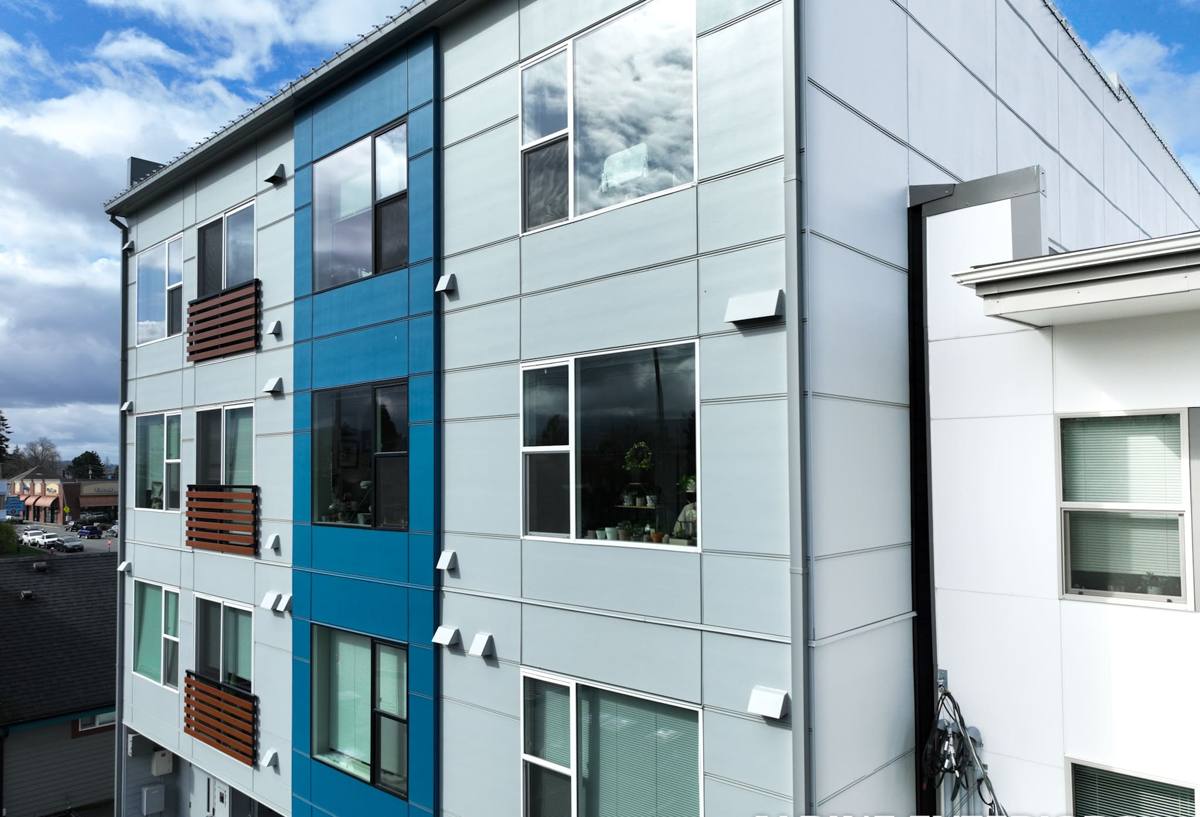
What Happens When Siding Isn't Built for This
We get called out to a lot of homes where the siding looks tired well before its expected lifespan is up. The patterns repeat:
- Wood siding and trim soften, cup, and rot wherever caulk lines fail or water gets trapped behind the board.
- Vinyl siding warps and gaps at the seams, and once it's cracked or brittle from age it can't be spot-repaired invisibly — the whole run usually needs replacing.
- Engineered wood products like LP SmartSide are more moisture-resistant than raw wood, but the cut edges and panel seams are still vulnerable if flashing and caulking aren't kept up on a strict schedule — and in a climate this wet, that maintenance window is tighter than most homeowners expect.
- Moss and algae staining shows up first on shaded, north-facing walls, then spreads, holding moisture against the siding surface and accelerating whatever's already going wrong underneath.
None of these products are inherently bad — they're just mismatched to a climate that stays wet for months at a stretch. That mismatch is the entire reason we made a standing decision about what we'll put on a home in this area.
Why We Install Only James Hardie Fiber Cement
We install James Hardie fiber cement siding exclusively. We don't install vinyl, LP SmartSide, primed spruce, cedar, or other fiber cement brands, and that's a deliberate standard, not a sales preference. Fiber cement is made from cement, sand, and cellulose fibers — it doesn't rot, it doesn't feed moss and mildew the way wood does, and it's non-combustible, which matters in a region that also deals with wildfire smoke and occasional dry-season fire risk.
James Hardie backs that with a factory-applied ColorPlus finish that's baked on rather than field-painted, which holds color and resists the moisture-driven staining that dulls site-painted siding faster in wet climates. Hardie also engineers its siding by climate zone — the HZ5 product line used in the Pacific Northwest is formulated for regions with sustained moisture and freeze-thaw cycles, rather than a one-size-fits-all board. The warranty is transferable to a future homeowner, which matters if you ever sell, and it's backed by a manufacturer with decades of track record rather than a smaller regional supplier.
We're not going to tell you every other product is unusable — plenty of homes around the country wear vinyl or engineered wood just fine. But for what Silver Beach's climate does to a wall over ten, twenty, thirty years, we settled on the product we're willing to install and warranty our labor against, and that's Hardie.
What a Correct Installation Involves in a Wet Climate
Fiber cement siding is only as good as the assembly behind it. In a climate this wet, the details under the boards matter as much as the boards themselves.
Water-Resistive Barrier and Flashing
Every square foot of sheathing gets a code-compliant water-resistive barrier before a single board goes up, lapped correctly from the bottom of the wall up so water always sheds outward and down. Flashing at windows, doors, decks, and roof-to-wall intersections is installed to direct water away from the sheathing, not just tucked in as an afterthought — these transition points are where the majority of hidden water damage starts.
Rainscreen Gap
Where conditions call for it, we build in a drainage gap between the siding and the water-resistive barrier using furring strips or a purpose-made rainscreen product. That gap lets any moisture that does get behind the siding drain and dry out instead of sitting against the wall assembly — a meaningful difference on shaded, north-facing walls that stay damp longest.
Fastening and Clearances
James Hardie publishes specific fastening patterns, nail placement, and minimum clearances from grade, roof lines, and decks. Skipping these is the single most common cause of premature siding failure we see on call-backs to other people's installs — not the material, the installation. We follow manufacturer spec, not shortcuts.
Trim, Caulking, and Paint Lines
Butt joints, trim boards, and penetrations get sealed with a high-quality sealant rated for exterior use, and cut edges of fiber cement are field-primed before caulking so raw material isn't left exposed to weather.
Our Silver Beach Installation Process
1. On-Site Assessment
We walk the exterior, check the condition of the existing siding and sheathing, note problem areas — especially shaded or moss-prone walls — and take measurements for an accurate estimate.
2. Tear-Off and Sheathing Check
Old siding comes off completely. This is also when hidden rot, soft sheathing, or past water intrusion gets found and dealt with before new siding ever goes up — covering a problem instead of fixing it just hides it for a few more years.
3. Weather Barrier and Flashing Install
WRB, flashing, and rainscreen components go on next, sealing the home against the exact moisture patterns this climate produces.
4. James Hardie Siding Installation
Boards are installed to manufacturer specification for fastening, clearances, and joint placement.
5. Trim, Caulking, and Cleanup
Trim work is finished, seams are sealed, and the site is cleaned of debris and old material.
6. Final Walkthrough
We go over the finished work with you before calling the job done.
Comparing Siding Options for Silver Beach Conditions
| Material | Moisture/Moss Resistance | Maintenance | Typical Lifespan |
|---|---|---|---|
| James Hardie Fiber Cement | High — non-combustible, doesn't rot, factory finish resists staining | Low — occasional wash, no repainting for years | Multiple decades with correct install |
| Vinyl | Moderate — won't rot but seams and panels can warp with moisture and temperature swings | Low, but damaged sections are hard to match | 15–25 years, shorter in harsh exposure |
| LP SmartSide / Engineered Wood | Moderate — treated against rot but edges are moisture-sensitive | Moderate — strict caulk and paint maintenance schedule | 15–30 years if maintenance is kept current |
| Cedar / Primed Wood | Low in sustained wet climates without diligent upkeep | High — regular painting, caulking, and moss treatment | Highly maintenance-dependent |
This isn't a claim that the other materials are defective — it's a picture of how much ongoing attention each one needs to hold up in a climate like Silver Beach's. Fiber cement is the one that asks the least of a homeowner over time.
What Siding Installation Costs Depend On
We don't publish flat pricing because every home is different, but the real cost drivers on a Silver Beach siding job are consistent:
- Home size and wall complexity — square footage, number of stories, and how many corners, gables, and dormers the crew has to work around.
- Condition of the existing sheathing — hidden rot found during tear-off adds repair scope before new siding can go on.
- Trim and detail level — window and door trim, corner boards, and architectural details all add labor time.
- Access — tight lots, slopes, and mature landscaping can slow staging and scaffolding.
- Siding profile chosen — James Hardie offers lap, shingle, and panel styles at different price points.
An accurate number only comes from seeing the house in person — anyone quoting a firm price sight-unseen is guessing.
Signs Your Siding Is Already Failing
Worth checking before it turns into a larger repair:
- Soft or spongy spots when you press on the siding, especially near the bottom of walls or under windows
- Persistent green or black staining that comes back shortly after cleaning
- Paint that's peeling, bubbling, or won't hold on wood or engineered siding
- Visible gaps, warping, or buckling in vinyl panels
- Cracked or missing caulking around trim, windows, and joints
- A musty smell or visible staining on interior walls that share an exterior wall
Why Hire a Crew That Already Works Silver Beach
Siding installation isn't just a materials choice — it's a set of judgment calls about flashing details, drainage, and fastening that change based on how exposed or shaded a particular wall is. A crew that already works homes in this part of Bellingham has seen how the local moisture pattern plays out on real walls: which elevations moss up first, where wind-driven rain tends to find gaps, and how the marine climate here differs from a drier build spec written for somewhere else. That local pattern recognition is what keeps a siding job from becoming a callback five years later.
It also means faster response if something needs a look after the job's done, familiarity with Whatcom County permitting requirements, and a crew that's building its reputation on the same homes and streets it's already worked — not a company that's just passing through the area for a season.
If your Silver Beach home needs new siding — or you just want an honest read on whether your current siding still has years left in it — we're glad to walk the exterior with you and give you a straight answer. Request a free, no-pressure estimate using the form below.