 Bellingham Roofing
 Siding Repair for Sehome Homes
Sehome sits close to downtown Bellingham on the hill around Western Washington University, a mix of older single-family homes, mid-century construction, and newer infill built into narrow, tree-shaded lots. That combination — mature tree canopy, dense residential streets, and homes of very different ages sitting side by side — means siding problems in Sehome rarely look the same from house to house. A 1960s home with the original wood siding has different failure points than a 1990s house clad in vinyl or an early-2000s build with LP SmartSide or a fiber cement product installed by a previous owner. What they share is exposure to the same Whatcom County weather: long stretches of driving rain off the Sound, persistent damp shade under mature trees, and a moss season that can run most of the year in the shadiest yards.
We repair siding across Bellingham, and Sehome is one of the neighborhoods we're in regularly enough to know what its housing stock tends to throw at us. This page covers what siding repair actually involves here, how to tell if a repair is enough or if you're looking at a bigger problem, and how we approach the work.
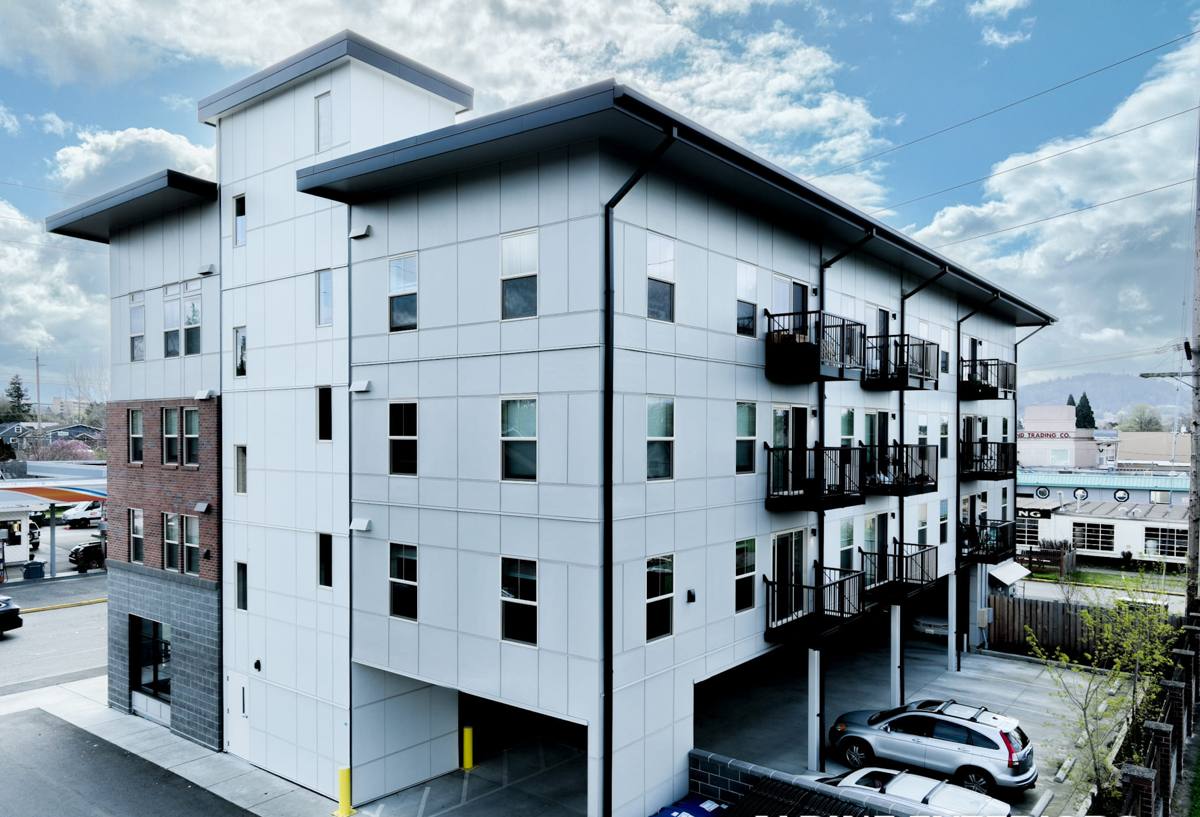
Why Sehome's Climate Is Hard on Siding
Bellingham's marine climate is the underlying issue for every siding repair call we get in this part of town. A few specific factors compound in Sehome's setting:
- Salt air: Proximity to Bellingham Bay means airborne salt is part of the environment. Salt accelerates corrosion of fasteners, flashing, and any metal trim, and it speeds up the breakdown of caulk and paint film over time.
- Driving rain: Storms here don't just fall straight down — wind-driven rain gets pushed sideways into wall assemblies, exploiting any gap at a seam, a butt joint, or a poorly flashed window.
- Shade and moss: Sehome's tree cover keeps a lot of siding damp longer after it rains than siding in a more open, sun-exposed part of the county. That extended damp period is exactly what moss, algae, and mold need to establish, and once organic growth takes hold on a siding surface, it holds moisture against the material even longer.
- Age variety: Because Sehome has homes spanning many decades, we see everything from original wood lap siding to older vinyl to synthetic sidings from the 1990s and 2000s that are now reaching the point where trim, caulking, and paint are failing even if the panels themselves look intact from the street.
None of this means Sehome is a uniquely bad place to own a house — Whatcom County as a whole deals with this same climate. But shaded, tree-lined streets close to the water tend to show siding wear a few years earlier than drier, more exposed parts of the region.
What "Siding Repair" Actually Covers
Siding repair is a broad term, and part of doing it right is correctly diagnosing what you're actually dealing with before any material comes off the wall. In Sehome we typically see repair calls fall into a few categories.
Moisture and Rot Damage
This is the most consequential category. Water that's gotten behind siding — through a failed seam, a missing kick-out flashing, or years of moss holding dampness against a wall — can rot the sheathing underneath long before the visible siding looks bad. A repair here isn't just replacing a board; it's pulling back the affected area, confirming how far the moisture traveled, replacing any compromised sheathing or framing, and re-flashing the area correctly before new siding goes back on.
Impact and Physical Damage
Cracked or broken panels from storm debris, falling branches (common under Sehome's tree canopy), or accidental impact. These are usually more straightforward — remove and replace the damaged section, matching material and reveal as closely as possible.
Failed Caulking, Trim, and Flashing
Caulk has a service life, and salt air and UV exposure shorten it. When caulking fails at butt joints, window trim, or corner boards, water gets a direct path behind the siding even if the panels themselves are fine. This is often the cheapest repair and the easiest one to miss until it's caused damage underneath.
Moss and Organic Growth
Moss on siding isn't just cosmetic. Left alone, it holds water against the surface, degrades paint and caulk faster, and on wood siding in particular can accelerate rot at the point of contact. Part of a proper repair visit is addressing what's driving the growth — shade, poor drainage, lack of maintenance — not just cleaning it off once.
How We Assess a Sehome Siding Repair
We start every repair call with an actual inspection, not a guess from the driveway. That means:
- Walking the full exterior, paying particular attention to north- and shade-facing walls where moisture and moss are worst.
- Checking known trouble spots first — butt joints, corner trim, window and door flashing, and anywhere siding meets a roofline, deck ledger, or other penetration.
- Probing any area with visible staining, soft spots, or bubbling paint to check for hidden rot rather than assuming it's surface-level.
- Determining whether the damage is isolated (a straightforward patch or panel swap) or a sign of a systemic problem — failed original installation, chronic drainage issues, or siding material that's simply reaching end of life.
- Giving you a straight answer about which of those it is, in plain terms, before recommending a scope of work.
That last point matters. Not every siding problem needs a repair — some need a repair, and some are a sign that a full re-side is the more honest recommendation because the underlying material is failing broadly, not just at one spot.
Repair vs. Replacement: How to Tell
| Situation | Repair Usually Makes Sense | Replacement Should Be Considered |
|---|---|---|
| Damage extent | Isolated to one or two areas | Recurring in multiple spots across the house |
| Material condition | Siding elsewhere is sound and well-adhered | Paint, caulk, and panels are failing broadly |
| Rot found underneath | Contained to the repair area | Extends beyond what a patch can reasonably address |
| Age of existing siding | Well within expected service life | At or past the material's realistic lifespan |
| Maintenance history | Has been maintained and this is a one-off issue | Deferred maintenance has compounded over years |
We'll tell you honestly which column your house falls into. A repair that's really a stopgap on failing siding isn't a favor to you — it just delays a bigger job while the underlying problem keeps spreading.
What Correct Repair Work Looks Like
A repair that holds up in Sehome's climate isn't just about matching the color of the new piece to the old. It needs to address the building science underneath, or it fails again in a few years. That means:
- Confirming and correcting the water-resistive barrier (house wrap or building paper) behind the repaired section, not just patching over it.
- Flashing every horizontal joint, window head, and penetration correctly so water sheds outward rather than working its way behind the cladding.
- Using fasteners and trim appropriate for a salt-air, high-moisture coastal climate rather than whatever's cheapest.
- Matching reveal, profile, and finish closely enough that the repair doesn't stand out as an obvious patch.
- Addressing the cause, not just the symptom — if moss or standing water caused the failure, that condition needs to be improved as part of the fix, not ignored.
When Repeated Repairs Point to James Hardie
We install James Hardie fiber cement siding exclusively — we don't install vinyl, LP SmartSide, cedar, primed spruce, or other fiber cement brands. When a Sehome homeowner is on their second or third repair call for the same wall, or when the material itself (not the installation) is the root cause of recurring problems, that's usually the point where we recommend looking at replacement rather than another patch.
Hardie's fiber cement is non-combustible, holds up well against the wind-driven rain and salt air common near Bellingham Bay, and comes with a factory-applied ColorPlus finish that resists the fading and chalking that repeatedly drives caulk and paint failures on other materials. It's also engineered in HZ product lines suited to different climate zones, which matters in a region where the same product performs differently depending on sun exposure and moisture load. We're not going to tell you every repair should end in a full re-side — most shouldn't — but when the pattern points that way, we'll say so plainly and explain why Hardie is what we'd put back on the house.
What to Check Before You Call
A quick walk around your own house can help you describe the problem accurately and figure out how urgent it is:
- Look for soft, spongy, or discolored areas, especially near the ground, under windows, and around roof-to-wall transitions.
- Check north-facing and shaded walls for heavy moss or algae buildup.
- Look at caulk lines at corners, trim, and butt joints — cracked, shrunk, or missing caulk is an early warning sign.
- Note any areas where paint is peeling, bubbling, or has a chalky residue that wipes off on your hand.
- Check for gaps or separation at panel seams, which can widen over time with moisture cycling.
None of this requires special tools — it's just a matter of knowing what to look for before problems move from cosmetic to structural.
Why Local Experience Matters for This Kind of Work
Siding repair is easy to do poorly and hard to do well. A crew unfamiliar with Whatcom County's climate can replace a damaged board, caulk it up, and have it look fine for a season — and then watch the same spot fail again once the next wet winter hits, because the underlying moisture path was never actually fixed. Working in Bellingham and neighborhoods like Sehome regularly means we've seen how salt air, shade, and driving rain actually behave on real houses here, not just in a manual. That's the difference between a repair that lasts and one that's a temporary fix in a nice-looking wrapper.
If you're dealing with damaged, aging, or failing siding on a Sehome home, we're happy to take a look and give you a straight assessment — repair, or something more — with no pressure either way. Request a free estimate using the form below and we'll schedule a time to come take a look.