 Bellingham Roofing
 Siding Repair in South Hill: A Hillside Neighborhood That Takes a Beating
South Hill is one of Bellingham's older, established neighborhoods, rising up from downtown toward Western Washington University with mature tree cover, a mix of early- and mid-century homes, and enough elevation to catch weather that flatter parts of the city don't see quite the same way. That combination, older siding materials, big trees, and a hillside that channels wind and water differently than a level lot, means siding on a South Hill home tends to age on its own timeline. We handle siding repair throughout Whatcom County, and South Hill is one of the areas where the damage patterns are distinct enough to be worth talking about on their own, rather than folding it into a generic Bellingham siding page.
Three things drive most of the repair calls we get in this part of the city: salt-tinged marine air drifting up from Bellingham Bay, wind-driven rain that hits walls sideways rather than falling straight down, and a moss season that can run most of the year under a mature tree canopy. None of that is unique to South Hill, it's a Whatcom County story, but the neighborhood's terrain and older housing stock tend to concentrate the damage in recognizable ways.
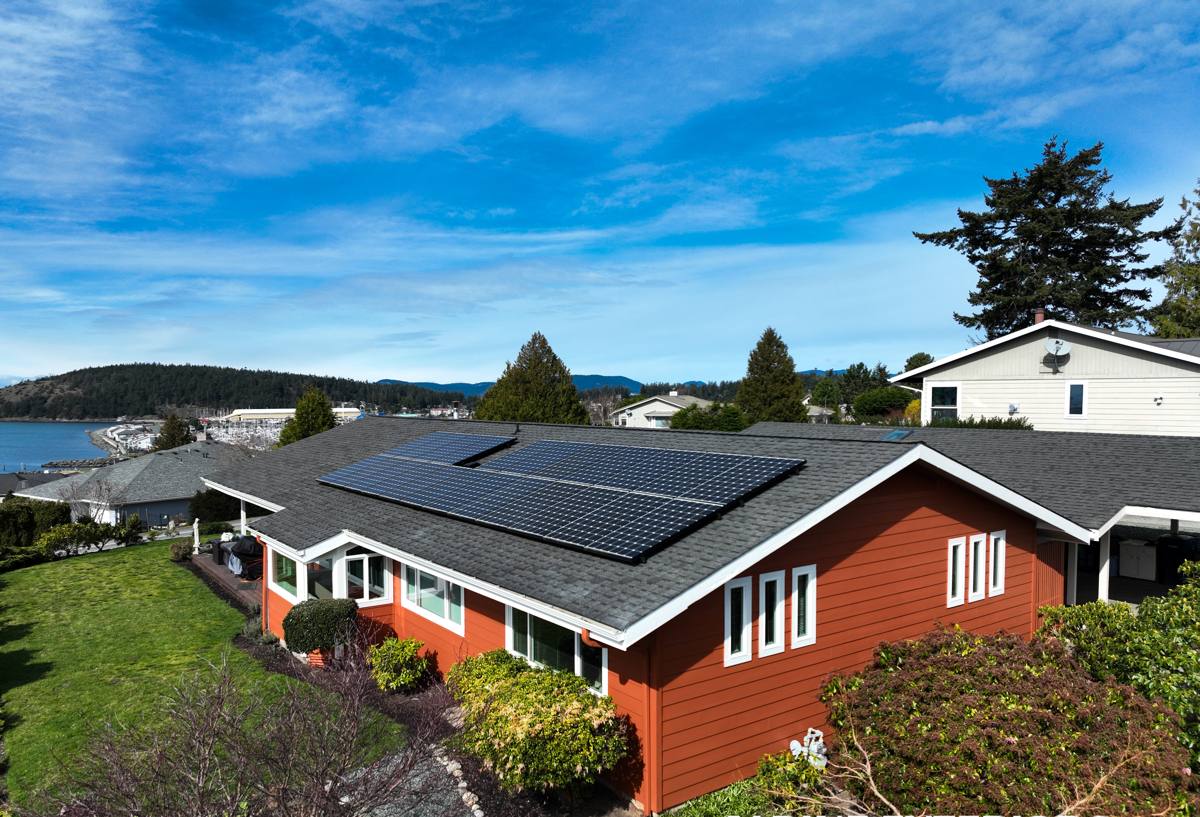
How South Hill's Terrain and Housing Stock Shape Siding Damage
Elevation and Wind Exposure
Homes higher up the hill can catch more direct wind than houses tucked into flatter, more sheltered blocks closer to downtown. That extra wind pushes rain into lap joints and trim seams harder and more often, which accelerates wear at exactly the seams and penetrations where siding repairs most commonly start.
Mature Tree Canopy and Shade
Established landscaping and tree cover are part of what makes South Hill a desirable place to live, but shade also means walls stay damp longer after a storm. Combined with Whatcom County's long wet season, that's a reliable recipe for moss and mildew getting a foothold on siding, trim, and fascia, particularly on north-facing walls that see the least direct sun.
Older Housing Stock
A lot of South Hill's homes predate current best practices for house wrap, flashing, and water management. Original siding, or a prior re-side done under different code and technique standards, can have gaps in the water-management details that only show up once moisture has already worked its way behind the wall. That's a big part of why repair work here often turns out to be about more than the visible siding.
Signs a South Hill Home Needs Siding Repair
Not every issue is obvious from the street. Some of the most common signs we get called out for include:
- Soft or spongy siding, especially low on the wall or around window and door trim
- Moss or dark staining that comes back quickly after cleaning, particularly on shaded, north-facing walls
- Cracked, split, or missing siding boards after wind events
- Peeling paint, bubbling, or visible warping on individual boards or trim pieces
- Gaps at seams, corners, or trim joints where daylight or water can get through
- Rust streaking near fasteners or flashing, an early sign of marine air corrosion
- A musty smell or unexplained interior wall staining near an exterior wall
Any one of these on its own might be minor. Several showing up in the same area of the house usually means water has been getting behind the siding for a while, and that's worth a look before it turns into a bigger repair.
What We Actually Find Once We Open Up a Wall
Trapped Moisture and Substrate Damage
The visible siding is often the least of the problem. Once we pull damaged boards, we frequently find soft or rotted sheathing, compromised house wrap, or a fastening pattern that never sealed properly in the first place. Repairing the visible siding without addressing what's underneath just buys a homeowner a year or two before the same spot fails again.
Failed Flashing and Trim Details
Window and door flashing, and the trim details around them, are some of the most common failure points we find on South Hill homes, especially ones that have had past renovation work where siding was patched back around a window without fully re-integrating the flashing. It looks fine from a distance and leaks quietly for years.
Mismatched Prior Repairs
We also see a fair number of homes with a patch repair from a previous contractor that doesn't match the surrounding siding in profile, exposure, or finish. It stops the immediate leak but creates a visible seam and, in some cases, a new water entry point where the old and new materials meet.
Repair or Full Replacement? How We Make the Call
Not every siding problem on a South Hill home needs a full tear-off, and we're not going to tell you it does just because a bigger job pays more. The honest answer depends on how contained the damage is and what we find once we look underneath.
| Situation | Usually Points To |
|---|---|
| Isolated impact damage or a single failed board | Targeted repair, matched into existing siding |
| Localized water damage around one window or corner | Repair with flashing correction in that area |
| Soft sheathing found across multiple sections during repair | Signals a wider moisture problem worth a fuller inspection |
| Siding at or past its expected service life | Repair is likely a short-term fix; replacement is the better long-term value |
| Multiple past patch repairs already visible | Often more cost-effective to re-side the affected elevation than keep patching |
If your home currently has a siding material we don't install as a full system, vinyl, engineered wood, cedar, or primed spruce, we can usually still perform a sound structural and moisture repair to stop active damage. We'll tell you plainly, though, when a patch is a short-term fix and when a future re-side in James Hardie fiber cement would serve the house better in the long run. We won't dress up a repair as a permanent fix when it isn't.
How We Repair James Hardie Siding on South Hill Homes
For homes already sided in James Hardie, or homes where we're replacing a damaged section with Hardie as part of a repair, the process is specific. Fiber cement repairs correctly when the new board is matched in profile and exposure, primed cut edges are sealed per manufacturer spec, and the fastening pattern ties properly into the existing wall rather than just being nailed over the gap. Getting a ColorPlus-finished board to blend into existing siding also depends on matching the color line accurately rather than guessing from a swatch.
We spec Hardie's HZ5 line for this climate specifically because it's engineered for regions with sustained moisture and freeze-thaw cycling, which describes coastal Whatcom County well. When we're repairing into an older Hardie installation that used a different formulation, we account for that instead of assuming every board on the wall performs identically.
Our Siding Repair Process
- Inspection: We walk the affected area and look beyond the obvious damage for signs of moisture tracking, failed flashing, or substrate issues nearby.
- Diagnosis: We identify the actual water entry point, not just the spot where damage is visible, since those aren't always the same location.
- Honest scope: We tell you whether you're looking at a contained repair, a repair plus flashing correction, or a situation where replacement makes more sense, and explain why.
- Repair: We remove damaged material, address any substrate or house wrap issues we find, and install matched siding with correct fastening and sealed joints.
- Cleanup and check: We clear away debris and walk the repair with you before we consider the job finished.
Siding Repair Cost Factors in South Hill
| Factor | What It Affects | Why It Matters Here |
|---|---|---|
| Extent of hidden substrate damage | Labor and material once the wall is opened | Older South Hill homes often have water-management details that fall short of current standards |
| Access and elevation | Equipment, staging, and labor time | Hillside lots and taller wall sections can require ladders, lifts, or extra setup |
| Material match | Board sourcing and finish selection | Blending a repair into existing siding, especially older or discontinued colors, takes more care |
| Flashing and trim scope | Whether the repair includes water-management corrections | A repair that skips flashing fixes often fails again within a season or two |
| Number of affected areas | Total labor and travel between sections | Scattered repair spots across a home take longer than one contained area |
We give real numbers after walking the property, not before, since the visible damage is rarely the whole story until we've had a look underneath.
What to Check Before Hiring Anyone for a Siding Repair
- Confirm an active Washington state contractor license and current insurance
- Ask whether they'll open up the damaged area to check for hidden moisture before quoting a fix
- Ask how they plan to match the repair to your existing siding's profile and finish
- Get a written scope that specifies flashing and water-management work, not just "patch siding"
- Ask them to be candid about whether a repair or a larger fix is the better long-term call
Why a Crew That Already Works South Hill Matters
A contractor who works this part of Bellingham regularly knows which walls on a hillside lot take the worst of the wind, which older housing styles tend to have specific flashing shortcuts baked in from an earlier era of construction, and where moss and shade problems show up first under mature tree cover. That's the kind of pattern recognition that comes from repeated, local repair work, not from a one-time visit. It also means we can usually tell within the first few minutes of a walk-through whether you're looking at a straightforward patch or something that needs a closer look, instead of guessing from a photo or a phone call.
If your South Hill home has siding damage, a leak you can't quite place, or you just want an honest read on whether a repair or a bigger fix is the right call, we're glad to take a look. Reach out using the form below to schedule a free, no-pressure estimate.