 Bellingham Roofing
 Siding Repair Built for York's Coastal Conditions
Homes in the York area sit close enough to Bellingham Bay and the broader Whatcom County coastline that siding takes a different kind of beating than it would further inland. Salt-laden air, wind-driven rain off the water, and a moss season that can run half the year all work on exterior cladding in ways that generic siding advice doesn't account for. A repair that holds up in a dry, sheltered neighborhood can fail fast on a York home exposed to that combination.
This page is about siding repair specifically — patching, board replacement, trim and flashing correction, and the diagnostic work that has to happen before any of that starts. If your siding needs more than repair, we'll tell you that plainly rather than patch something that's structurally done.
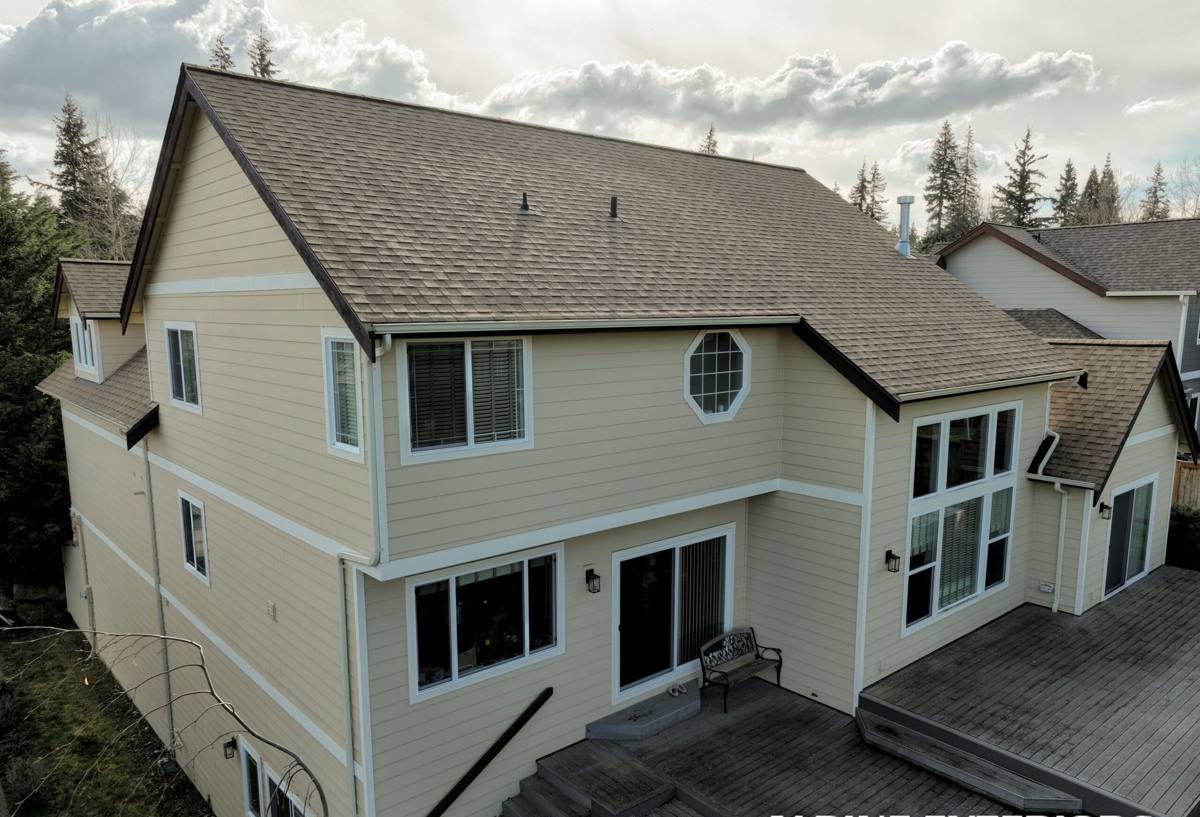
What Actually Damages Siding in This Part of Whatcom County
Salt Air and Fastener Corrosion
Proximity to saltwater accelerates corrosion on anything metal — nail heads, staples, flashing, and hardware. Once a fastener starts rusting, it weakens its grip on the siding board and often stains the surface around it. On older homes with galvanized-only fasteners, this shows up as small rust streaks running down from nail points, usually years before the siding material itself is actually failing.
Wind-Driven Rain and Water Intrusion
Bellingham gets a lot of rain, but it's the wind-driven variety off the bay that causes real siding damage — rain forced sideways and upward finds every gap in a lap joint, every under-caulked trim seam, every place where flashing was skipped to save time. Water intrusion rarely announces itself at the point of entry; it usually shows up lower on the wall, or inside, well after the actual failure point.
Moss, Algae, and Trapped Moisture
The long wet season here means moss and algae growth on north-facing and shaded walls is close to unavoidable without intervention. On its own, surface growth is cosmetic. The problem is what it holds against the siding: constant moisture, held in place by moss root structures and organic buildup, softening the material underneath over months and years rather than one storm.
Signs a York Home Needs Siding Repair
Most homeowners notice siding problems well after they've started. These are the signs worth acting on before they become bigger repairs:
- Soft or spongy spots when you press on the siding, especially near the bottom courses
- Visible gaps or separation at lap joints, corners, or window and door trim
- Rust staining running from nail heads or fastener points
- Persistent moss or algae growth that returns quickly after cleaning
- Bubbling, peeling, or cracking paint that keeps coming back in the same spot
- Warping, bowing, or visibly wavy sections of siding
- Interior signs — musty smell, discoloration, or soft drywall on an exterior wall
- Increased pest activity around siding seams or bottom edges
Repair vs. Replace: How We Actually Decide
Not every damaged section needs full replacement, and not every home is a good candidate for spot repair. The honest answer depends on how contained the damage is and what's happening behind the siding.
| Factor | Favors Repair | Favors Replacement |
|---|---|---|
| Extent of damage | Isolated to one wall or a few boards | Spread across multiple elevations |
| Underlying sheathing | Dry, solid, no rot found | Soft or rotted sheathing discovered |
| Siding material | Still structurally sound elsewhere | Widespread warping, delamination, or age-related failure |
| Cause of damage | One-time event (impact, isolated flashing failure) | Systemic moisture problem across the wall assembly |
| Age of existing siding | Newer material, good remaining service life | Original siding is decades old and near end of life |
When damage is contained and the wall assembly underneath is dry, targeted repair is the honest recommendation — there's no reason to replace sound siding. When we find rot in the sheathing, water damage spreading behind multiple boards, or siding material that's simply past its usable life, we say so and lay out what full replacement would look like, including moving to James Hardie fiber cement rather than replacing like-for-like with a product prone to the same failure.
What a Correct Siding Repair Involves
Diagnosing the Water Path, Not Just the Symptom
The visible damage on a wall is rarely the entry point. Water travels down and along framing before it shows up as a stain, a soft spot, or peeling paint. A repair that only addresses the cosmetic damage without tracing where the water actually got in will fail again, often faster than the first time, because the root cause was never fixed.
Correcting Flashing and Trim Details Before Reboarding
Most repeat siding failures trace back to flashing — around windows, doors, roof-to-wall intersections, and horizontal trim boards. If the flashing detail was wrong the first time, replacing the siding board on top of it without correcting the flashing just resets the clock on the same failure. We fix the water management layer first, every time, even when it adds a step the homeowner won't see once the job is closed up.
Matching Materials the Right Way
Spot repairs on existing siding need to match not just in appearance but in behavior — how the material expands, contracts, and takes paint. On homes with older or discontinued siding products, an exact match sometimes isn't possible, and we'll tell you that up front rather than promise a seamless patch we can't deliver. In some cases the more honest move is repairing the affected section with a compatible replacement and discussing a longer-term plan for the rest of the wall.
Our Process for a York Siding Repair Call
- Inspection first. We look at the visible damage, then check surrounding areas, trim, flashing, and — where accessible — what's happening behind the siding.
- Honest scope. You get a clear explanation of what's actually wrong, what caused it, and whether repair or replacement is the right call, in plain language.
- Water management corrected first. Any flashing, trim, or drainage issue behind the damaged area gets fixed before new siding goes up.
- Repair executed to spec. Matching or compatible materials, correct fastening, proper caulk and paint lines — not a quick patch meant to look fine from the curb.
- Walkthrough. We show you what was done and why, including anything worth watching going forward.
Why We Repair — and Replace — with James Hardie Fiber Cement
When a repair calls for new material, or when a homeowner decides full replacement makes more sense than patching an aging wall, we install James Hardie fiber cement exclusively. We don't install vinyl, LP SmartSide, primed spruce, cedar, Cemplank, or Allura, and we're upfront about why: those products each carry trade-offs — moisture sensitivity, ongoing maintenance, installation tolerances, or shorter effective service life in a wet marine climate — that we've decided aren't worth building a repair or replacement around.
James Hardie fiber cement is non-combustible, holds up to sustained moisture exposure far better than wood-based products, and its ColorPlus factory finish resists the fading and peeling that repeated wet-dry cycles cause on field-painted siding. Hardie's HZ5 product line is engineered specifically for climates with high moisture exposure — relevant for a coastal Whatcom County wall that deals with salt air and driving rain for months at a time. It also carries a strong transferable warranty, which matters more in a climate that stresses siding harder than most.
This doesn't mean every repair turns into a Hardie conversation — plenty of repairs are simple, contained fixes to sound existing siding. But when the scope grows into partial or full replacement, Hardie is what we put on the wall, and we'll explain exactly why for your specific situation rather than just stating a policy.
Why Hiring a Crew That Already Works York Matters
Siding failure patterns in this part of Bellingham aren't generic — they're shaped by the specific combination of salt exposure, wind direction, rain volume, and moss growth that comes with being close to the water. A crew that regularly works this area recognizes those patterns quickly: where moisture tends to collect on a given wall orientation, which flashing details tend to have been skipped on homes of a certain age, and what a moss-related soft spot actually looks like versus one caused by a fastener failure.
That familiarity shortens the diagnostic phase and reduces the odds of a repair that addresses the wrong problem. It also means realistic expectations about material choices and maintenance — advice grounded in what actually holds up on York walls, not generic siding guidance written for a different climate.
Keeping Repaired Siding Sound Between Visits
A correct repair still benefits from basic upkeep in this climate. A few habits go a long way:
- Clean moss and algae off north- and shade-facing walls at least once a year
- Keep gutters and downspouts clear so water isn't overflowing onto siding below
- Trim back vegetation and landscaping that keeps a wall section shaded and damp
- Recaulk trim joints and penetrations when caulk shows cracking or gaps
- Walk the exterior after major windstorms and check for loosened or displaced boards
If you're seeing signs of siding damage on a York-area home, or you just want an honest read on whether it's a repair or something bigger, we're happy to take a look. Estimates are free and there's no pressure either way — use the form below to get started.