 Bellingham Roofing
 Why Ferndale's Climate Is Rough on Siding
Ferndale sits close enough to Bellingham Bay and the open water of the Strait to catch salt-laden air on a regular basis, and that salt air does more damage to exterior building materials than most homeowners realize. Salt is hygroscopic — it pulls moisture out of the air and holds it against whatever surface it lands on, which means painted wood, vinyl seams, and fastener heads all stay damp longer than they would a few miles inland. Add Whatcom County's long, wet fall-through-spring stretch of driving rain, often pushed sideways by wind off the water, and you have siding that rarely gets a full chance to dry out between storms.
Then there's moss. Ferndale's tree cover, persistent shade on north- and west-facing walls, and months of damp conditions create a long moss season that can run from early fall well into late spring. Moss doesn't just look bad — it holds water against the siding surface, works into seams and laps, and on materials that aren't dimensionally stable, it accelerates rot, delamination, and paint failure. Homes here need a siding system engineered for exactly these conditions, not a product that merely tolerates them.
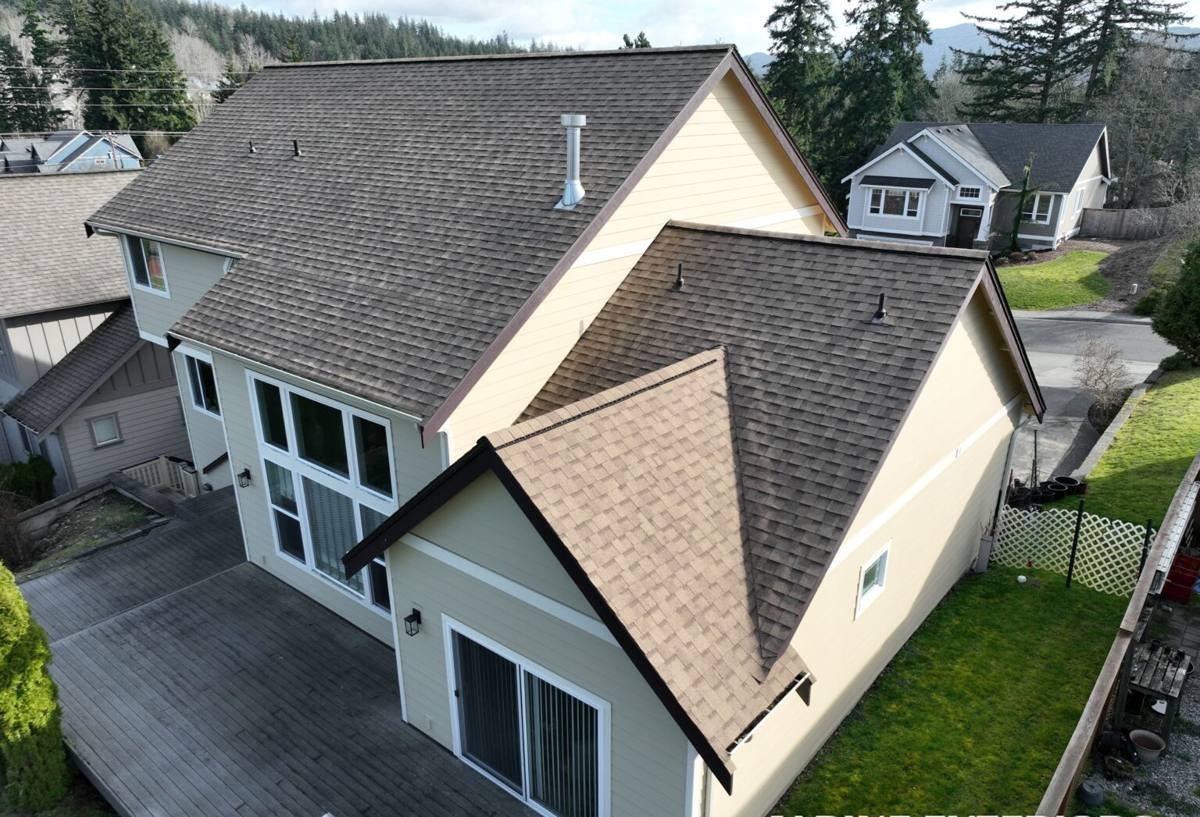
Signs a Ferndale Home Needs Siding Replacement, Not Just a Repair
Not every siding problem calls for a full tear-off. But there's a point where patching becomes a waste of money because the underlying material has already lost its integrity. Here's what tells us a Ferndale home is past the point of spot repair:
- Soft or spongy spots when you press on the siding, especially near the bottom courses and around window and door trim
- Paint that won't hold no matter how often it's redone — usually a sign moisture is moving through the material from behind
- Visible cupping, buckling, or gaps at the laps, which lets wind-driven rain track behind the siding
- Persistent moss or algae staining that comes back within a season of cleaning
- Warping or delamination on wood-based or engineered wood products, particularly at butt joints and cut ends
- Rising energy bills that point to compromised weather barrier performance behind the cladding
If you're only seeing one or two of these issues in a small area, a repair may genuinely be the right call. We'll tell you that honestly during an inspection — replacement is a bigger investment and we don't recommend it unless the siding's condition actually warrants it.
What a Correct Siding Replacement Actually Involves
Siding replacement is not just stripping old material and nailing up new panels. Done correctly, it's a system, and skipping steps is exactly how a new-looking siding job fails within a few years — especially in a climate like Ferndale's where every layer behind the visible siding matters.
Tear-Off and Substrate Inspection
Once the old siding comes off, we inspect the sheathing underneath for rot, soft spots, or prior water damage. This is often where hidden problems from years of trapped moisture show up, and it has to be addressed before anything new goes on — covering damaged sheathing with new siding just hides the problem for the next owner to find.
Weather-Resistive Barrier
A properly lapped, correctly taped weather-resistive barrier is what actually keeps bulk water out of the wall assembly. In a driving-rain climate, the barrier's seams, penetrations, and flashing details matter as much as the siding itself.
Rainscreen or Drainage Plane
Where appropriate, a drainage gap behind the siding gives any water that does get past the cladding a path to drain and dry, rather than sitting against the back of the siding and the sheathing. This is especially valuable in a moss-heavy, high-humidity area like Ferndale.
Flashing at Every Penetration
Windows, doors, hose bibs, light fixtures, and vents are the most common places for water intrusion because they interrupt the siding plane. Correct flashing at each of these — not just caulk — is non-negotiable.
Fastening and Lap Spacing to Manufacturer Spec
Fiber cement siding has specific nailing patterns, gap tolerances, and fastener requirements that vary by climate zone and exposure. Installing it like standard lap siding, without following those specs, is one of the most common causes of premature failure and voided warranties.
Why We Install Only James Hardie Fiber Cement Siding
We made a deliberate decision to install James Hardie fiber cement exclusively, and we don't install vinyl, LP SmartSide, Cemplank, Allura, primed spruce, or cedar. That's not a marketing position — it's a professional standard based on what actually holds up in a place like Ferndale.
Vinyl is affordable and low-maintenance in mild climates, but it expands and contracts significantly with temperature swings, its seams and J-channels give wind-driven rain a path behind the cladding, and it can crack or warp under impact and prolonged UV exposure. In a coastal wind environment, those seams are a real liability over time.
Wood-based engineered siding products and traditional cedar or primed spruce can look excellent when new, but they're organic materials at their core, and organic materials are exactly what moss, algae, and sustained moisture exploit. Even with good paint maintenance, cut ends, fastener holes, and butt joints are vulnerable entry points for water, and once moisture gets into the substrate of an engineered wood product, swelling and delamination can follow — often before it's visually obvious from the outside.
Fiber cement products from other manufacturers exist, and some are reasonable products. But we standardized on James Hardie specifically because of its engineered HZ product lines, which are formulated for different climate zones, its factory-applied ColorPlus finish, which resists fading and chipping far better than field-applied paint, and its long, transferable warranty backed by a manufacturer with decades of track record in wet climates. Hardie fiber cement is non-combustible, dimensionally stable, and doesn't feed moss and algae the way organic siding materials do. When it's installed to spec, it's the product we trust to actually perform in Ferndale's salt air and rain — not just look good on installation day.
James Hardie vs. Common Alternatives
| Material | Moisture Behavior in Wet Climate | Maintenance Burden | Typical Lifespan Concern |
|---|---|---|---|
| James Hardie fiber cement | Dimensionally stable, doesn't absorb and swell like wood | Low — factory finish holds color, occasional wash | Rot and moss resistant when installed to spec |
| Vinyl siding | Seams and channels allow water tracking; expands/contracts with heat | Low, but prone to cracking under impact or age | UV brittleness, warping over decades |
| Cedar / primed spruce | Organic material, absorbs moisture at cuts and joints | High — repainting, sealing, moss treatment | Rot at exposed edges, fastener points |
| LP SmartSide / engineered wood | Resin-treated wood strand, vulnerable if finish is compromised | Moderate — finish maintenance is important | Swelling and delamination if moisture reaches the core |
How Our Process Works
Every siding replacement starts with an in-person inspection, not a phone estimate. We walk the exterior, check for the substrate issues described above, and give you an honest read on whether replacement is warranted and what it will involve.
- On-site inspection and consultation, including a look at trim, flashing, and any moss or moisture staining patterns specific to your home's exposure
- Written proposal outlining scope, James Hardie product line and profile selection, and a realistic timeline
- Tear-off and substrate inspection, with any rot or sheathing damage documented and addressed before new material goes up
- Weather barrier, flashing, and drainage details installed to manufacturer and code requirements
- James Hardie installation following manufacturer fastening and clearance specifications for this climate zone
- Final walkthrough so you understand what was done and what maintenance, if any, to expect going forward
We don't rush jobs to beat the weather, but we also plan around Whatcom County's wet season where we can, because a weather barrier and flashing installed in a downpour is harder to get right than one installed under reasonable conditions.
Cost Factors for Ferndale Siding Replacement
Every home is different, and we don't publish blanket per-square-foot pricing because it's genuinely misleading before an inspection. But these are the factors that most often move the price up or down:
| Factor | Why It Matters |
|---|---|
| Sheathing/substrate condition | Rot discovered during tear-off adds repair scope before new siding can go on |
| Home size and wall complexity | More corners, gables, and trim details mean more labor and cutting |
| Siding profile and accessories | Lap width, trim boards, and accent details affect material cost |
| Story height and access | Multi-story walls and difficult access increase labor time and equipment needs |
| Existing drainage plane | Adding a rainscreen where none exists is worthwhile here but adds cost |
Why a Crew That Already Works Ferndale Matters
Siding installation instructions look similar on paper everywhere, but the details that actually determine whether a job lasts — how tight to run the drainage gap, how aggressively to flash a west-facing wall that takes the worst of the driving rain, where moss is likely to establish and how that should influence trim and clearance choices — come from having installed in this specific climate, not just having installed fiber cement somewhere. A crew that already works in Ferndale and greater Whatcom County has seen how salt air and shade patterns affect houses here over multiple seasons, not just on installation day.
That local experience also shows up in smaller ways: knowing which product lines handle this exposure best, having a realistic sense of how weather affects scheduling here, and being available if a warranty question or a flashing detail needs a second look after the job is done.
Maintaining Your New Siding
James Hardie fiber cement is genuinely low-maintenance compared to the alternatives, but "low-maintenance" doesn't mean "no maintenance," especially in a moss-prone area. A few habits go a long way toward getting the full life out of the material:
- Rinse the siding gently once or twice a year to keep salt residue and organic buildup from accumulating, especially on shaded walls
- Keep gutters clear so overflow doesn't run down the siding face repeatedly
- Trim back vegetation and tree limbs that hold shade and moisture against exterior walls
- Address any moss growth early with a gentle approach rather than pressure-washing, which can force water behind laps
- Check caulking at trim and penetrations periodically and have it renewed if it cracks or pulls away
If your Ferndale home's siding is showing its age or you're planning ahead for a replacement, we're happy to come take a look and give you a straightforward, no-pressure assessment. Use the form below to request a free estimate.