 Bellingham Roofing
 Silver Beach Sits Right at the Edge of What Siding Can Handle
Homes in Silver Beach take a steady beating from the elements most of the year. Salt-laden air moves in off the water, wind-driven rain finds every gap and seam it can, and the shoulder seasons bring long stretches of damp, low-light weather where moss and algae get a head start on anything that holds moisture. Bellingham and the rest of Whatcom County share this climate, but neighborhoods close to the water feel it first and worst. Siding here isn't just cosmetic — it's the difference between a wall assembly that sheds water for decades and one that's quietly rotting behind the paint.
That combination — salt air, driving rain, and a moss season that can run from fall through spring — is exactly why we don't treat siding as a one-size-fits-all product. What holds up on a dry-side home in Eastern Washington is not automatically the right call for a house two blocks from the water in Silver Beach.
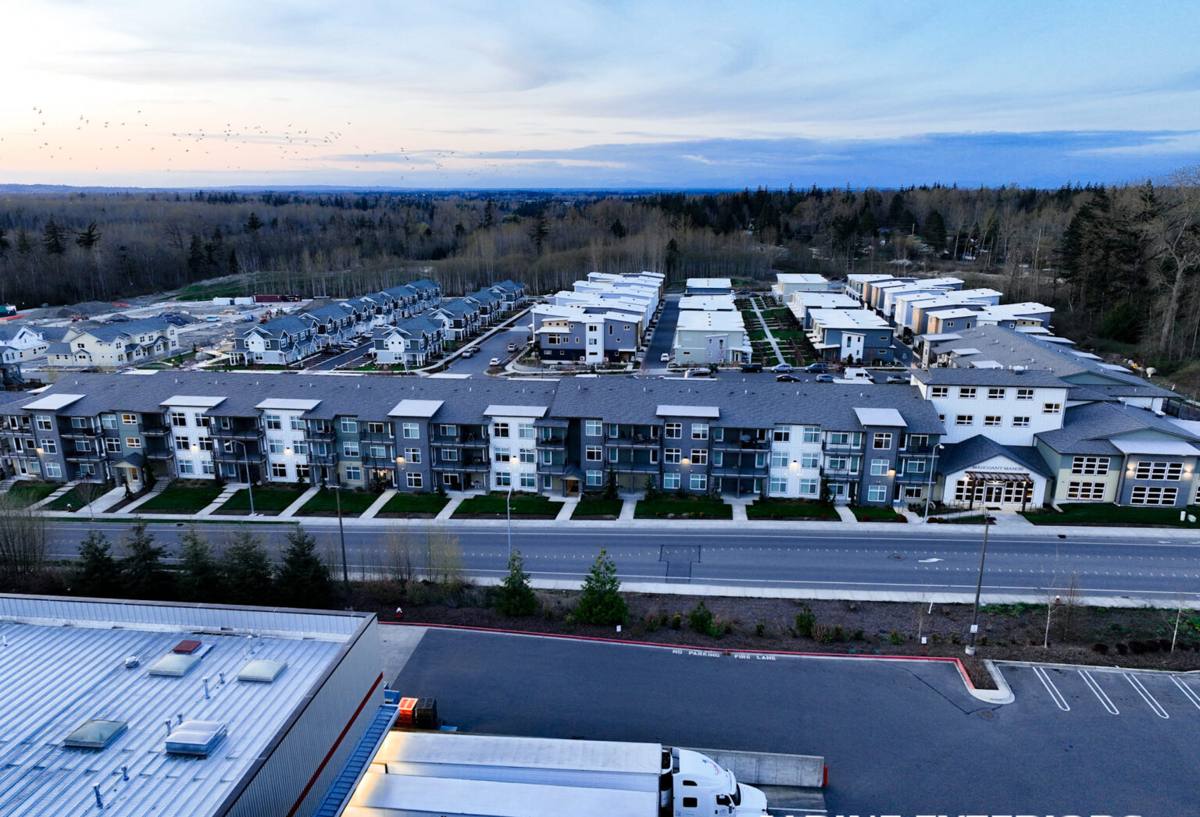
Why We Only Install James Hardie Fiber Cement
We install one siding product across every job we take on: James Hardie fiber cement. That's a deliberate choice, not a default. Fiber cement is made from cement, sand, and cellulose fiber, which means it doesn't absorb and swell with moisture the way wood-based products can, and it won't feed mold or moss growth the way organic siding materials do. It's also non-combustible, which matters in a region where wildfire smoke and dry summer stretches are becoming a more regular part of the calendar.
Engineered for This Specific Climate
James Hardie manufactures its siding in climate-specific formulations, called HZ (HardieZone) products, matched to the moisture and temperature patterns of different parts of the country. Whatcom County falls in a zone where the wetter, milder HZ5 formulation is the standard specification — it's engineered around exactly the freeze-thaw cycles and prolonged dampness that define a Bellingham winter, rather than a generic national blend.
ColorPlus Factory Finish
Most of what we install carries Hardie's ColorPlus finish — a baked-on, multi-coat finish applied at the factory under controlled conditions, rather than field-painted after installation. It resists fading and holds up to the kind of driving rain Silver Beach sees far better than a job-site paint job, and it comes with its own finish warranty separate from the substrate warranty.
Signs Your Current Siding Is Losing the Fight
Salt air and constant moisture don't destroy siding overnight — they wear it down gradually, and a lot of homeowners don't notice until repairs are already overdue. Walk your exterior and look for these warning signs:
- Soft or spongy spots when you press on the siding, especially near the bottom courses
- Paint that's peeling, bubbling, or chalking faster than it used to
- Persistent green or black staining that comes back within weeks of cleaning
- Visible gaps, warping, or cupping in individual boards
- Caulk lines that have cracked or pulled away from trim and corners
- A musty smell near exterior walls, which can point to moisture getting behind the siding
Why Wood-Based and Vinyl Products Struggle Here
Products like primed spruce, cedar, and LP SmartSide are wood-based, and wood-based siding depends on an intact paint or finish layer to keep moisture out. In a climate with this much sustained dampness, any nick, seam, or weathered spot becomes an entry point, and once moisture gets into the substrate, these products can swell, delaminate, or rot from the inside out — often before it's visible from the ground. Vinyl avoids that specific failure mode but has its own trade-offs: it expands and contracts more with temperature swings, can crack or warp in wind-driven weather, and doesn't offer the same fire performance. These aren't failures of the products — they're honest trade-offs, and they're the reason we standardized on fiber cement instead of trying to stock five different materials.
What a Correct Installation Actually Involves
James Hardie siding performs the way it's designed to only when it's installed to the manufacturer's specification. A lot of the siding problems we get called out to look at aren't product failures — they're installation shortcuts that show up years later as water damage.
Rain Screen and Drainage Plane
A correctly built wall assembly includes a drainage gap behind the siding so that any moisture that does get past the surface has somewhere to go instead of sitting against the sheathing. This matters more in a climate with as much sustained rain as Bellingham gets than it does in drier regions.
Flashing and Sealant Details
Windows, doors, roof lines, and every penetration through the siding need proper flashing and correctly sequenced house wrap so water is directed out and down, never trapped behind the cladding. Sealant is used at specific joints, not as a substitute for proper flashing.
Fastening to Manufacturer Spec
Hardie siding has specific requirements for fastener type, placement, and spacing, along with minimum clearances from grade, decks, and roof lines. Skipping these details doesn't usually cause a problem in year one — it shows up as a warranty dispute or a moisture problem several years down the road.
Our Process for a Silver Beach Project
Site Walk and Estimate
We start by walking the exterior with you, looking at existing siding condition, trim, moisture patterns around the roofline and grade, and any problem areas you've already noticed. You get a written estimate with product and labor spelled out, not a vague ballpark.
Tear-Off and Prep
Old siding comes off, and we inspect the sheathing underneath for rot or damage before anything new goes up — this is often where hidden moisture problems from the old siding surface. House wrap, flashing, and drainage components go in before a single piece of Hardie siding is installed.
Installation
Siding is installed to Hardie's fastening and clearance specifications, with corners, trim, and penetrations detailed to keep water moving out and away from the wall.
Final Walkthrough
We walk the finished job with you, cover care and maintenance basics, and go over your warranty coverage so you know what's protected and for how long.
Color and Style Options That Fit the Neighborhood
James Hardie's lineup gives Silver Beach homeowners real flexibility without sacrificing performance. Lap siding in various reveals gives a traditional look, board-and-batten and panel products suit more modern or craftsman-style homes, and shingle-style Hardie products can replicate a cedar shake look without the maintenance burden of actual cedar. ColorPlus finishes come in a range of regionally appropriate colors that hold their tone against the UV and moisture cycle typical of Western Washington.
What Drives the Cost
Every home is different, but the cost of a siding project generally comes down to a handful of factors. We give exact numbers only after a site walk, but this is what typically moves the price:
| Factor | Why It Matters |
|---|---|
| Home size and wall area | More square footage means more material and labor |
| Tear-off complexity | Multiple layers of old siding or extensive rot repair add time |
| Trim and architectural detail | Dormers, multiple gables, and detailed trim take more precision and time |
| Siding profile chosen | Lap, shingle, and panel styles vary in material and labor cost |
| Sheathing condition | Damaged sheathing found during tear-off needs repair before siding goes on |
| Access and site conditions | Tight lots, slopes, or limited staging area can affect labor time |
Why Working With a Crew That Knows Silver Beach Matters
A crew that regularly works in Silver Beach and the surrounding Bellingham area already understands how this specific stretch of Whatcom County behaves — where wind-driven rain tends to concentrate on a wall, how much moss pressure a north-facing elevation gets compared to a south-facing one, and what level of detailing actually holds up here rather than just on paper. That local pattern recognition is hard to replace with a generic install crew that isn't used to this climate. It also means we're accountable locally — we're not disappearing after the job is done, and we're set up to come back for warranty service or a maintenance question without you having to track down a contractor from out of the area.
Caring for Your Siding After Installation
James Hardie siding with a ColorPlus finish is genuinely low-maintenance, but low-maintenance isn't the same as no-maintenance. A periodic gentle wash keeps moss and mildew from getting a foothold, especially on shaded, north-facing walls. Cut edges and any field-touched areas should be checked and re-sealed with the appropriate touch-up product to keep the factory finish's protection intact. Caulk joints around trim, windows, and corners are worth a visual check once a year, since caulk is the one component that ages faster than the siding itself and is the easiest thing to stay ahead of before it becomes a moisture problem.
If your Silver Beach home's siding is showing its age, or you're planning ahead for a replacement, we're happy to walk the exterior with you and put together a straightforward, no-pressure estimate. Use the form below to get started.