 Bellingham Roofing
 Fiber Cement Siding for South Hill Homes
South Hill sits on the rise immediately south of downtown Bellingham, climbing above Bellingham Bay with some of the best views in the city — and some of the most exposed wall surfaces. It's one of Bellingham's older residential areas, with a housing stock that ranges from early-to-mid-20th-century character homes to newer infill built into the same steep, view-oriented lots. That combination of elevation, age, and terrain means South Hill homes take on weather differently than houses on flatter ground closer to the water or tucked into more sheltered parts of the county, and it changes what a siding job actually needs to hold up.
We install James Hardie fiber cement siding exclusively, and on South Hill specifically, we've built our process around the things that actually wear this neighborhood's walls down: wind that has a clear run at upper-elevation homes, driving rain that doesn't behave the same on a steep lot as it does on level ground, and a moss season that settles into shaded, north-facing walls for most of the year.
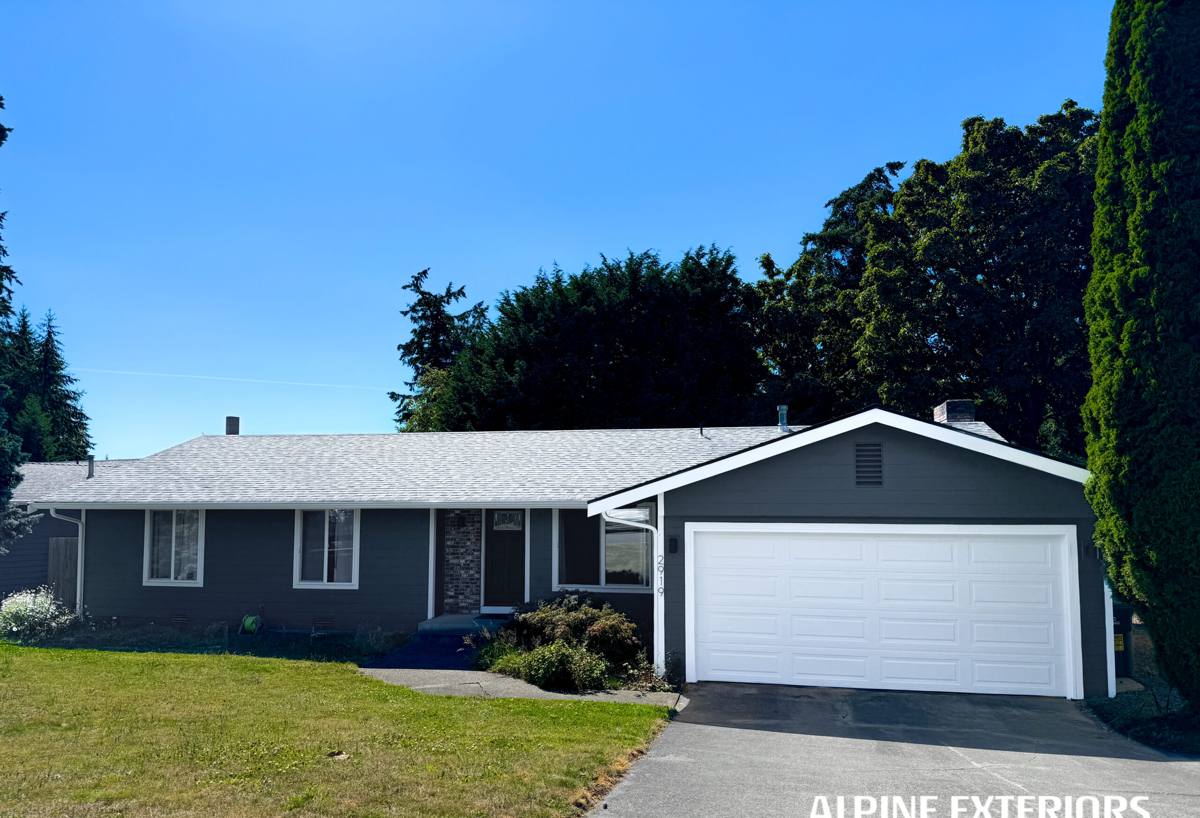
What South Hill's Terrain and Age Do to a Wall
Elevation and Wind Exposure
Homes higher up South Hill, especially those with a clear line toward the bay, catch wind that lower, more sheltered lots in Bellingham never see. That wind carries salt-tinged marine air and pushes rain sideways into wall assemblies rather than letting it fall straight down and shed off a roof edge. Siding on an exposed, upper-hill elevation needs tighter joint and flashing detailing than the same product would need on a wind-protected lot a few blocks away, because the water is arriving at the wall under pressure, not just gravity.
Older Housing Stock and Original Wall Assemblies
A lot of South Hill homes are old enough that they're on their second or third exterior finish. Some still carry original wood siding or an aging composite product that's well past the point of doing its job, and it's common to find that the wall assembly behind it — the sheathing, the building paper, the flashing at windows and trim — hasn't been touched since the house was built. Re-siding a home like that isn't just a material swap; it's a chance to find and correct decades of accumulated moisture issues before they get sealed back up behind a new wall.
Steep Lots and Mixed Sun and Shade
South Hill's terrain means a lot of homes sit on grades steep enough to affect both the work itself and how the house weathers. Multi-story facades with tall exposed foundation walls are common on hillside lots, which adds wall area and complexity compared to a single-story home on flat ground. At the same time, mature trees and the hill's own contours mean some walls on the same house get full sun most of the day while others stay shaded and slow to dry — a difference that shows up over time as uneven fading, moss growth, or paint failure concentrated on one side of the house.
Why We Only Install James Hardie Fiber Cement
We don't offer LP SmartSide, vinyl, Cemplank, Allura, primed spruce, or cedar. That's a professional standard, not a lack of options — each of those products has a legitimate place in the market, and other contractors install them well. On a hillside neighborhood with this much wind exposure and this much older housing stock already carrying moisture risk, we made the call that we'd rather commit fully to one system than offer a lower-cost product that quietly shifts long-term maintenance back onto the homeowner.
- Non-combustible core: Fiber cement doesn't feed a fire the way wood-based siding can, which matters on a hillside neighborhood with mature trees and homes built close together.
- Factory-applied ColorPlus finish: The color is baked on in a controlled factory process rather than brushed on outdoors, and it holds up far longer against fading and moisture than field-applied paint — especially on shaded South Hill walls that stay damp longer between storms.
- Climate-engineered HZ5 formulation: Hardie's HZ5 product line is built for regions with sustained moisture exposure and freeze-thaw cycling, which fits a wind-exposed, rain-heavy hillside better than a generic national product.
- Dimensional stability: Fiber cement doesn't swell, cup, or warp the way wood-based products can after repeated wetting, which matters most on the shaded, slow-drying walls found on a lot of South Hill properties.
- Strong transferable warranty: Hardie's warranty structure is one of the more substantial in the industry when the product is installed to spec, and it carries forward if the home is sold — worth noting in a neighborhood where homes change hands often.
| Material | Behavior in Wind-Driven Rain | Maintenance on Shaded Hillside Walls | Realistic Lifespan Here |
|---|---|---|---|
| James Hardie fiber cement | Dimensionally stable; resists moisture intrusion at joints | Low; factory finish resists fading and moss staining | 30+ years with correct install |
| Vinyl siding | Can flex and gap under sustained wind pressure | Low upfront, but trapped moisture behind panels is hard to catch | Variable; shorter on exposed upper-hill elevations |
| LP SmartSide / engineered wood | Wood-based core sensitive at cut edges and fastener holes | Moderate to high; edge sealing needs regular attention | Depends heavily on installation and upkeep |
| Cedar / primed wood | Absorbs moisture readily under driving rain | High; recurring refinishing, more so in shade | Shorter without consistent maintenance |
What a Correct Fiber Cement Install Looks Like on a Hillside Home
Fiber cement only performs the way it's engineered to when the installation follows Hardie's published specifications, and on an older, wind-exposed South Hill home, skipping any of these steps tends to show up faster than it would on a newer, sheltered property:
- Existing siding and sheathing inspected for hidden rot or moisture damage before anything new goes up — especially on homes with original wall assemblies
- House wrap or weather-resistive barrier installed and correctly lapped, shingle-style, so water sheds downward and outward
- Drainage gap or rainscreen behind the siding on walls with heavy wind exposure or persistent shade, so any moisture that gets past the surface can dry out
- Correct fastener type, size, and spacing for Hardie's HZ5 requirements — under-fastened siding is one of the more common failure points on wind-exposed walls
- Properly flashed and lapped transitions at windows, trim, corners, and the base of the wall, with extra attention at tall foundation walls common on hillside lots
- Cut edges primed before installation to protect the factory ColorPlus finish everywhere it isn't already sealed
Matching Character on Older South Hill Homes
A lot of South Hill's appeal comes from its older homes having real architectural character, and homeowners re-siding one of them usually want to keep that character intact, not erase it. Hardie's lap and shingle-style profiles both work well for matching an existing look — lap siding for a traditional horizontal reveal, shingle-style panels where a home's original design called for a more textured, shadow-lined look. ColorPlus finishes come in a range of colors that can either match a home's existing palette closely or update it, and because the finish is factory-applied, the color reads consistently across the whole wall instead of showing brush marks or uneven coverage the way field-painted siding sometimes does.
Trim detailing matters just as much as the siding profile on these homes. Matching corner boards, window trim width, and reveal spacing to what a house already has is often what makes a re-side look like a natural continuation of the home rather than an obvious replacement.
Our Process for a South Hill Siding Project
On-Site Assessment
We start by walking the whole exterior, not just the walls that are visibly failing. On a hillside home, we're specifically checking how each elevation is exposed to wind and sun, looking for signs of hidden moisture behind existing siding, and noting anything about the lot — grade, retaining walls, limited access — that affects how the job needs to be staged.
Written Scope Before Work Begins
We put together a clear, written scope and timeline that accounts for what we found during the assessment, including any wall repair needed before new siding goes on. On an older home, that repair scope matters as much as the siding choice itself.
Installation to Manufacturer Spec
Every fastener, gap, and flashing detail follows Hardie's published requirements for this climate zone. On a wind-exposed hillside lot, that's not a formality — it's the difference between a wall that performs for decades and one that starts showing problems within a few wet seasons.
Final Walkthrough
We walk the finished exterior with you, cover what little ongoing maintenance fiber cement actually needs, and make sure you know what a properly installed wall should look like if you ever want to check it yourself.
Cost Factors for a South Hill Siding Project
Hillside terrain and older housing stock both affect price on South Hill in ways that don't always show up in a rough square-footage estimate:
| Factor | Why It Matters |
|---|---|
| Wall height and foundation exposure | Multi-story facades with tall exposed foundations mean more wall area and more staging |
| Site access and grade | Steep lots and limited street access can add scaffolding or staging time |
| Condition of the existing wall assembly | Older homes more often need sheathing or moisture repair before new siding goes up |
| Trim and architectural detailing | Matching an older home's corner boards, window trim, and reveal takes more finish labor |
| Siding profile chosen | Lap versus shingle-style panels differ in material and labor cost |
We'll walk your specific property and give you real numbers based on what your home actually needs, rather than a generic per-square-foot figure that doesn't account for a hillside lot's added complexity.
Why Hire a Crew That Already Works South Hill
A hillside neighborhood with this much variation in age, exposure, and terrain rewards experience with the specific area, not just general siding experience. A crew that's worked South Hill through multiple wet seasons already knows which elevations need extra drainage detailing because of wind exposure, how to stage material and equipment safely on a steep lot, and how to match trim and profile choices to the kind of older homes common up here. That judgment is what keeps a siding job from becoming a source of hidden problems five or ten years down the line.
A Simple Checklist Before Hiring for Siding Work on South Hill
- Ask what siding material they install and why, and whether it comes with a written, transferable warranty
- Confirm current Washington contractor licensing and active liability insurance
- Ask how they handle older homes with original wall assemblies and unknown hidden moisture conditions
- Ask how they plan to stage and access the job on a steep or limited-access lot
- Get a clear, written scope of work, including any wall repair, before signing a contract
If you're weighing a siding project for a South Hill home, we're happy to walk the property, talk through what your specific walls and elevations need, and give you a straightforward, no-pressure estimate. There's a form below — reach out and we'll set up a time to take a look.