 Bellingham Roofing
 Roof Replacement for South Hill's Hillside Homes
South Hill sits above downtown Bellingham on a slope that catches wind off Bellingham Bay, holds shade under a heavy tree canopy, and is home to a mix of older craftsman-era houses and newer builds tucked onto steep lots. A roof up here works harder than a roof on flat ground a few miles inland. Wind-driven rain hits at an angle instead of falling straight down, moss gets a head start in shaded valleys and north-facing slopes, and salt-tinged air off the Sound slowly degrades exposed metal and fasteners. Replacing a roof in this neighborhood isn't just a matter of swapping old shingles for new ones — it's about building an assembly that can shed water sideways, resist moss colonization for years instead of months, and hold up to decades of Pacific Northwest weather without hidden rot setting in underneath.
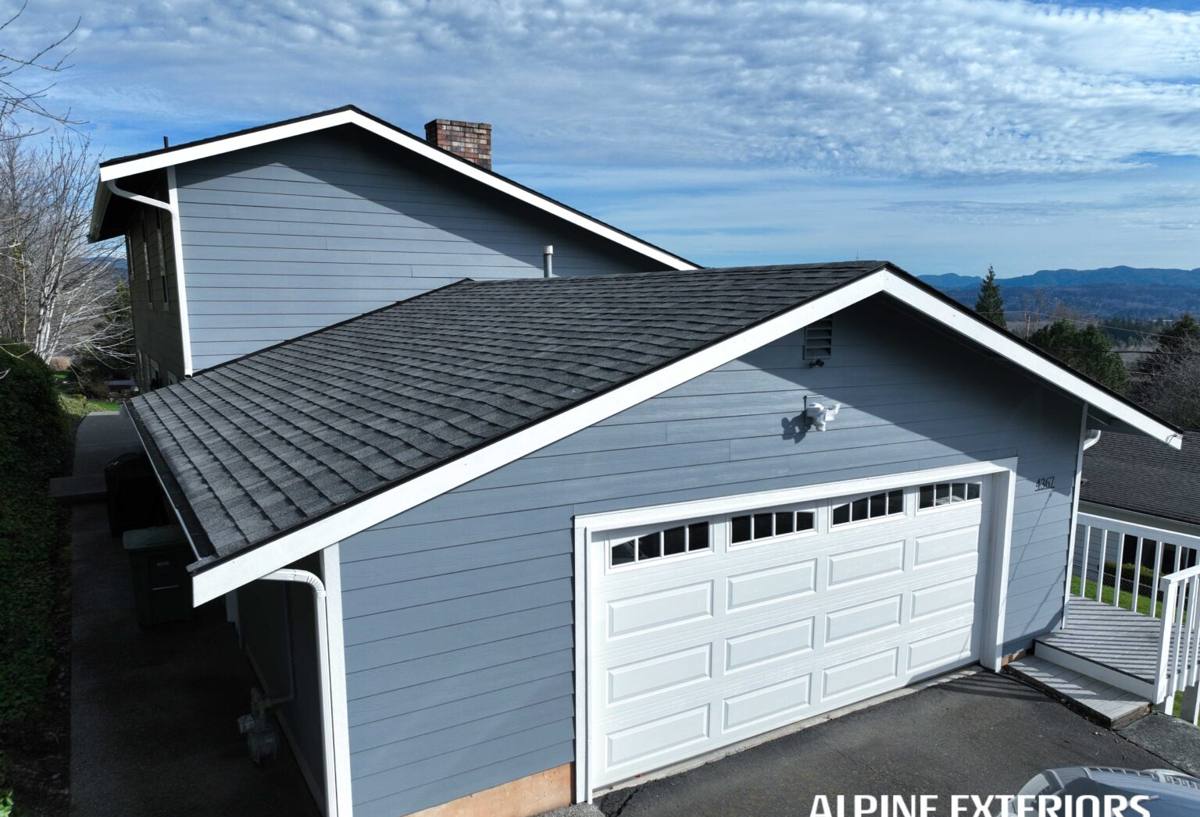
What Whatcom County's Climate Actually Does to a Roof
Bellingham doesn't get the heaviest rainfall totals in Washington, but it gets a long, steady rain season combined with wind off the water — a combination that pushes moisture sideways and up under shingle edges rather than letting it run straight off. Add a mild, damp climate that rarely dries out fully between October and May, and you get ideal conditions for moss, moss-related shingle lifting, and slow granule loss that shortens a roof's life well before its rated warranty period ends.
Salt Air
Homes closer to the water pick up airborne salt that accelerates corrosion on exposed nails, flashing, and metal roofing panels. Over time, unprotected or poorly coated metal components can pit and weaken years ahead of schedule.
Driving Rain
Wind-driven rain finds every weak seam, exposed nail head, and under-lapped shingle course. A roof detailed for calm, straight-down rainfall in a drier climate will leak here — even if it looked fine on installation day.
Moss Season
Shade from mature trees, cool temperatures, and near-constant moisture from fall through spring give moss and algae months to establish themselves. Once moss gets a foothold under shingle tabs, it lifts them, traps water, and accelerates rot in the decking below.
Why South Hill's Older Housing Stock Needs Extra Attention
Many South Hill homes were built decades ago, often with roof framing, ventilation, and decking that met the standards of their era but not today's. When we replace a roof here, we're rarely just laying new shingles over a clean deck — we're usually correcting decades of small compromises: undersized attic ventilation, old skip-sheathing under original wood shakes, valleys that were never properly flashed, or additions where two roof planes meet awkwardly. A roof replacement is the one point where all of that is visible and fixable, because the old roofing is off and the deck is exposed.
Steep, tree-shaded lots also change how a crew works. Staging materials, protecting landscaping, and managing tear-off debris on a hillside property takes more planning than a flat suburban lot. Crews unfamiliar with this kind of terrain tend to underbid the labor and either rush the tear-off or leave debris and overspray behind.
Signs a South Hill Roof Is Ready for Replacement
Roofs rarely fail all at once — they show warning signs for months or years first. On homes in this neighborhood, watch for:
- Shingles that are cupping, curling at the edges, or losing granules in visible patches
- Moss or dark algae streaking that keeps coming back within a season or two of cleaning
- Soft spots, sagging, or visible dips when viewed from the ground or a ladder
- Daylight visible through the attic roof deck, or damp insulation after a storm
- Rust staining or corrosion around metal flashing, vents, or valleys
- Granules collecting in gutters faster than in previous years
- A roof approaching or past 20–25 years old (asphalt) or showing widespread wear regardless of age
- Interior ceiling stains, especially near valleys, chimneys, or skylights
Any one of these on its own might just need a repair. Several together, especially on a roof already past mid-life, usually means replacement is the more cost-effective path than chasing leaks one at a time.
Choosing a Roofing System for a Hillside, Tree-Shaded Home
There's no single "best" roofing material — the right choice depends on your roof's pitch, sun and shade exposure, budget, and how long you plan to stay in the home. For South Hill specifically, moss resistance and wind performance carry more weight than they might on a flat, open lot inland.
| Material | Typical Lifespan | Moss/Algae Resistance | Best Fit For |
|---|---|---|---|
| Architectural asphalt shingle | 25–30 years | Good with algae-resistant granules; needs periodic cleaning | Most South Hill homes; balance of cost and durability |
| Standing seam metal | 40–50+ years | Excellent — sheds moss growth medium naturally | Steeper roofs, homes prioritizing longevity over upfront cost |
| Synthetic/composite shake | 30–40 years | Good, varies by product | Homes wanting a wood-shake look without wood's moisture sensitivity |
| Cedar shake (traditional) | 20–30 years with upkeep | Fair — needs regular treatment and cleaning in this climate | Homeowners committed to routine maintenance for the traditional look |
We're upfront about trade-offs rather than just selling the highest-margin product. Traditional cedar shake, for example, can look excellent on an older South Hill home, but it demands more regular cleaning and treatment in a climate this damp — that's a maintenance conversation we have honestly before you commit, not an afterthought.
Our Roof Replacement Process
1. On-Site Inspection and Assessment
We start by getting on the roof — not just estimating from the ground or a satellite photo. We check deck condition, ventilation, flashing points, valleys, and any signs of past moisture intrusion, since those findings shape the actual scope of work.
2. Written Scope and Material Selection
You get a clear, written proposal covering materials, underlayment, ventilation changes, flashing work, and cleanup — no vague line items. We walk through material options based on your roof's exposure and your priorities, whether that's cost, longevity, or appearance.
3. Tear-Off and Deck Inspection
Full tear-off, not an overlay, lets us see and fix what's underneath — soft decking, old under-ventilated sheathing, or hidden rot around valleys and penetrations. Any deck repairs are documented and priced before we cover them back up.
4. Underlayment and Water-Shedding Details
Given how much wind-driven rain this area sees, we pay particular attention to ice-and-water shield at eaves, valleys, and penetrations, and use synthetic underlayment across the field for a more reliable secondary water barrier than older felt products.
5. Ventilation Correction
Poor attic ventilation is one of the most common issues we find on older South Hill homes, and it directly shortens roof life by trapping moisture and heat. We correct intake and exhaust balance where needed as part of the replacement, not as a separate future project.
6. Installation and Flashing
New material goes down to manufacturer spec, with special attention to valleys, chimney and skylight flashing, and any roof-to-wall transitions — the details that determine whether a roof stays dry through a real Whatcom County winter.
7. Cleanup and Final Walkthrough
Full site cleanup, magnetic nail sweep, and a walkthrough so you understand what was done and why, along with warranty paperwork for both materials and labor.
What Affects the Cost of a South Hill Roof Replacement
Every roof is different, and we won't quote a number without seeing yours, but these are the factors that most commonly move the price up or down:
| Factor | Why It Matters |
|---|---|
| Roof pitch and access | Steep hillside roofs need more safety equipment, staging, and labor time |
| Number of layers to remove | Tearing off two or three old layers costs more than one |
| Deck repair extent | Rotted or soft sheathing found during tear-off adds material and labor |
| Material choice | Asphalt, metal, and shake carry different material and labor costs |
| Roof complexity | Valleys, dormers, skylights, and chimneys all add flashing and labor time |
| Ventilation upgrades | Correcting undersized or blocked ventilation adds a modest cost but extends roof life |
| Tree cover and site access | Limbing back branches or protecting landscaping on tight lots adds time |
As a general rule, a straightforward asphalt shingle replacement on a modest South Hill home runs less than a steep, multi-valley roof needing deck repair and ventilation correction. We break all of this down in writing so you can see exactly what you're paying for.
Moss, Moisture, and Ventilation: The Details That Actually Extend Roof Life
A new roof with the same old ventilation and drainage problems will show the same symptoms again within a few years. Three things make the biggest long-term difference for homes in this neighborhood:
- Balanced attic ventilation — intake at the eaves and exhaust at the ridge working together, sized correctly for your attic's square footage
- Clean water paths — valleys, gutters, and downspouts that can actually keep up with sideways-driven rain instead of backing up under shingle edges
- Reduced shade and debris load where practical — trimming overhanging branches near the roofline slows moss regrowth and keeps debris from packing into valleys
We treat these as part of the replacement, not optional upsells, because skipping them tends to bring homeowners back to square one within a handful of years.
Why Local Experience on South Hill Matters
A roofing crew that regularly works this neighborhood already understands its hillside access challenges, its tree cover, and how Bellingham Bay's weather patterns behave differently than roofs a few miles inland. That familiarity shows up in fewer surprises during tear-off, more accurate quotes up front, and details — like extra attention at valleys and eaves — that come standard rather than as an afterthought. It also means a crew that's still around locally if a warranty question comes up years down the road, not a traveling outfit that's moved on to the next region.
If you're weighing repair versus full replacement, or just want a straight answer about what your roof actually needs, we're happy to take a look and walk you through it plainly. Reach out for a free, no-pressure estimate using the form below.