 Bellingham Roofing
 Siding Built for South Hill's Weather, Not Just Its Curb Appeal
South Hill sits above downtown Bellingham, close enough to the water to feel the salt air off Bellingham Bay and shaded enough by mature trees to stay damp long after a storm has passed. That combination — airborne salt, driving rain off the Sound, and a moss season that can stretch from fall through spring in Whatcom County — is hard on exterior siding. Homes here don't just need siding that looks good. They need a system engineered to shed water, resist moisture intrusion, and hold up to years of freeze-thaw swings and wind-driven rain without rotting, cupping, or losing its finish.
We install James Hardie fiber cement siding exclusively. That's not a marketing angle — it's a standard we hold because of what we've seen happen to other siding materials in exactly this kind of climate. On South Hill specifically, where tree cover keeps siding shaded and slow to dry, and where the hill's exposure catches weather moving in off the water, the material choice and the installation details matter more than they do in a drier, more sheltered part of the country.
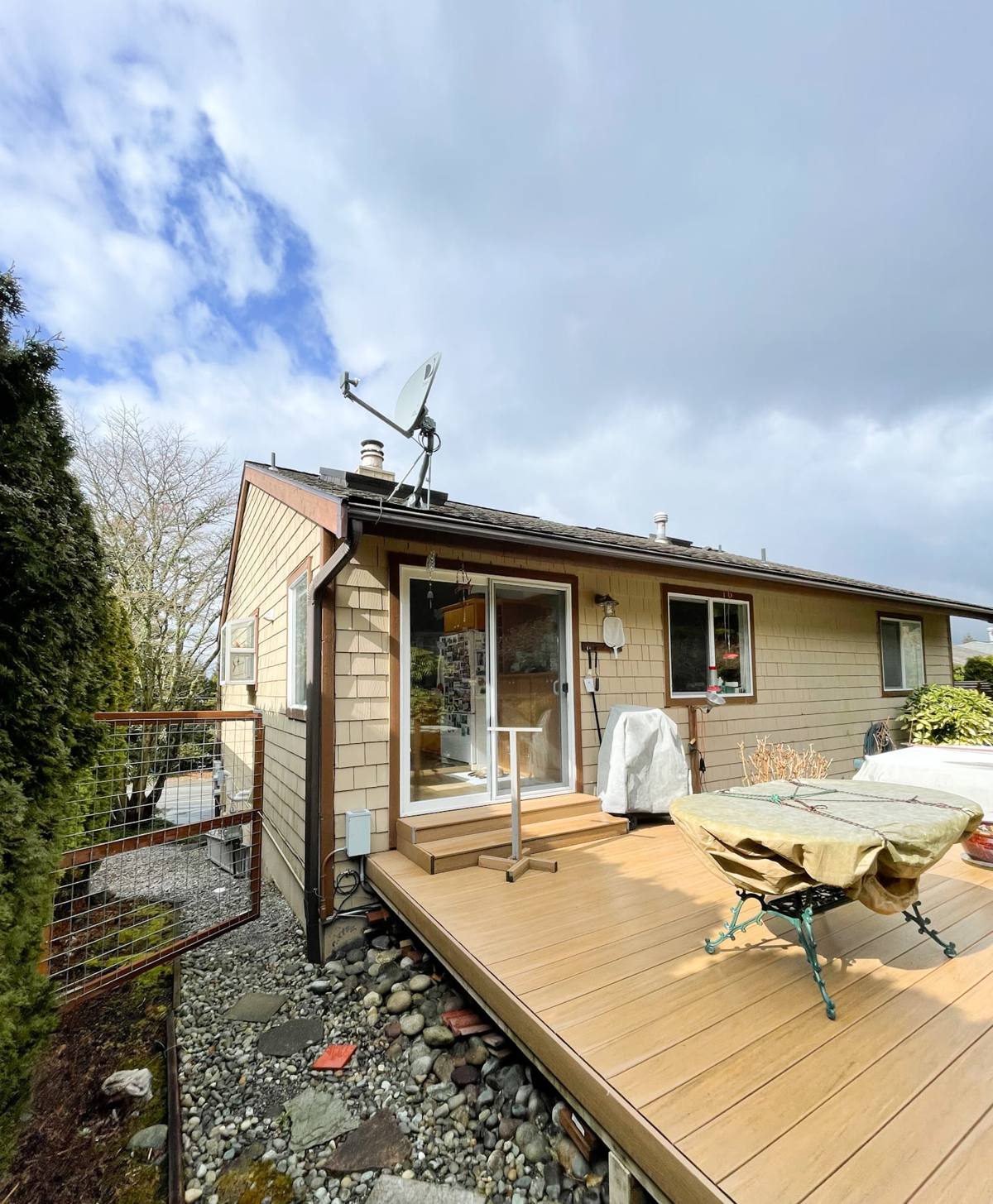
What Bellingham's Climate Actually Does to Siding
Salt Air
Proximity to Bellingham Bay means airborne salt settles on exterior surfaces over time. On metal components — fasteners, trim, flashing — that accelerates corrosion if the wrong hardware is used or if it's left exposed. On wood-based siding products, salt-laden moisture speeds up swelling, checking, and finish breakdown.
Driving Rain
Wind-driven rain doesn't just fall on siding, it pushes against it — forcing water into seams, laps, and fastener penetrations that a stationary rain would never reach. Any siding installation that treats flashing and water-resistive barrier detailing as optional will eventually let water behind the cladding, and once that happens, the damage is happening where you can't see it.
A Long Moss Season
Whatcom County's wet, mild winters and shaded neighborhoods like South Hill create ideal conditions for moss and algae to colonize siding surfaces — especially on north-facing walls and anywhere tree canopy blocks the sun. Moss holds moisture against the siding surface for extended periods, which is a problem for any substrate that isn't built to tolerate sustained dampness.
Why We Install Only James Hardie Fiber Cement Siding
We don't install vinyl siding, LP SmartSide, primed spruce or cedar, or other fiber cement brands. That's a deliberate standard, and South Hill's climate is a big reason why. James Hardie's fiber cement is non-combustible, dimensionally stable, and manufactured with an engineered core designed to resist moisture-related damage far better than wood-based or wood-composite alternatives. For a neighborhood that stays damp for long stretches of the year, that stability matters.
Hardie also builds its siding in climate-specific formulations — the HZ5 product line is engineered for the wetter, milder climate zone that includes Western Washington, with a moisture and freeze-thaw resistance profile matched to exactly the conditions South Hill homes deal with. That's different from a one-size-fits-all siding product shipped to every region regardless of local weather.
The factory-applied ColorPlus finish is another piece of the equation. It's baked on in a controlled environment rather than field-applied, which gives it better adhesion and UV resistance than most job-site paint jobs — and it comes backed by its own finish warranty, separate from the product warranty on the siding substrate itself. In a climate where sun exposure and driving rain both take a toll on painted surfaces, a factory finish that's engineered to hold up matters more than it would somewhere drier.
What a Correct Siding Installation Actually Involves
The material is only half the equation. Even the best siding product will fail early if it's installed incorrectly — and in a wet climate, installation mistakes show up faster and cause more damage than they would somewhere dry. A correct installation isn't just nailing panels to a wall; it's a full water-management system.
- A properly lapped and sealed water-resistive barrier behind the siding, so any moisture that gets past the cladding has a way to drain, not soak into the sheathing
- Correct flashing at windows, doors, and every horizontal trim transition, so water is directed out and away instead of pooling behind the siding
- Manufacturer-specified fastener type, spacing, and penetration depth — fiber cement is unforgiving of shortcuts here
- Proper clearance between the bottom of the siding and grade, decks, roofs, and other horizontal surfaces to prevent wicking
- Correctly sized gaps at butt joints and trim, caulked and finished per Hardie's specifications, to allow for expansion without trapping water
Correct Detailing vs. Common Shortcuts
| Detail | Correct Approach | Common Shortcut That Causes Problems |
|---|---|---|
| Water-resistive barrier | Fully lapped, taped seams, integrated with flashing | Barrier stapled up quickly with gaps or unsealed seams |
| Fasteners | Corrosion-resistant, manufacturer-specified spacing and depth | Standard fasteners driven too deep or too far apart |
| Trim and window flashing | Step-flashed and integrated so water sheds outward | Caulk used in place of proper flashing |
| Bottom clearance | Gap maintained above decks, patios, and grade | Siding installed tight to grade or hardscape |
| Joints and gaps | Spec'd gap width, properly caulked | Tight-butted joints that trap moisture and buckle |
Our Siding Installation Process
- On-site assessment. We look at your home's exposure — sun, shade, tree cover, wind direction — and check the current siding and sheathing condition before recommending anything.
- Product and color selection. We walk through Hardie's HZ5 lines, textures, and ColorPlus palette so you land on something that fits the home and the neighborhood.
- Tear-off and sheathing check. Old siding comes off and we inspect the sheathing underneath for any moisture damage that needs to be addressed before new siding goes up — this step catches problems that would otherwise get sealed behind the new wall.
- Water-resistive barrier and flashing installation. This is the step that determines whether your siding stays dry for the next 30-plus years, and we don't rush it.
- Hardie panel or plank installation. Installed to manufacturer spec — fastener pattern, clearances, and joint treatment all follow Hardie's published requirements, not shortcuts.
- Trim, caulking, and final detailing. Clean lines at corners, windows, and transitions, finished to hold up to Bellingham's weather.
- Walkthrough. We go over the finished work with you before we consider the job done.
Choosing Colors and Styles for a South Hill Home
South Hill has a mix of home styles and ages, and Hardie's product lines give you room to match whatever direction fits — lap siding for a more traditional look, panel systems for a cleaner modern profile, and shingle-style siding where a home calls for more texture. Because the ColorPlus finish is factory-applied and consistent across the product line, trim and field colors coordinate cleanly, which matters on a hill where homes are visible from below and from neighboring properties.
What Affects the Cost of a Siding Installation
| Factor | Why It Matters |
|---|---|
| Home size and complexity | More wall area, corners, and roof lines mean more material and labor |
| Current siding removal | Tear-off and disposal of existing material adds time and cost |
| Sheathing repairs | Moisture damage found during tear-off may need to be repaired before new siding goes on |
| Product line and profile | Panel, lap, and shingle-style Hardie products carry different material costs |
| Trim and detail work | Homes with more windows, dormers, and architectural detail take more labor to flash and finish correctly |
| Access and site conditions | Sloped lots, tree cover, and tight access on hillside properties can affect scaffolding and staging |
Why It Matters to Hire a Crew That Already Works in South Hill
Installing siding correctly requires understanding the specific conditions a home faces — and a crew that already works South Hill and the surrounding Bellingham area has seen firsthand how tree shade, hillside wind exposure, and salt air off the bay affect a building's exterior over time. That's different from following a generic installation checklist. We know which walls in this kind of neighborhood tend to hold moss longest, which exposures take the worst of the driving rain, and where extra attention to flashing and clearance pays off years down the road. We also carry that same standard through the whole job, since it's the only siding system we install — there's no upselling you into a cheaper product or juggling installation specs across five different manufacturers.
Maintaining Hardie Siding in a Wet Climate
- Rinse siding periodically to keep moss, algae, and organic debris from building up, especially on shaded, north-facing walls
- Keep gutters clear so water isn't overflowing and running down the siding face
- Trim back vegetation and tree limbs that keep siding shaded and slow to dry
- Inspect caulking at trim and joints every year or two and touch up as needed
- Have any impact damage or cracked panels addressed promptly rather than left exposed
Get a Straight Answer About Your South Hill Home
If your siding is showing moss staining, gaps, warping, or paint failure — or if you're planning ahead for a home in South Hill's damp, salt-air climate — we're happy to take a look and give you an honest read on what your home needs. Request a free, no-pressure estimate below and we'll walk the property with you and talk through what correct James Hardie installation would look like for your home.