 Bellingham Roofing
 Why Windows Take a Beating in Sudden Valley
Sudden Valley sits in a pocket of Whatcom County that's shaped by two things most other neighborhoods don't deal with together: Lake Whatcom's humidity and the heavy tree canopy that shades much of the community year-round. That combination keeps wood, vinyl, and window sealant systems damp longer after every storm than they would be on an open lot in town. Add in the driving rain that comes through this part of the Pacific Northwest for months at a stretch, and you get windows that are constantly cycling between wet and dry, warm and cold.
Across greater Bellingham and the rest of Whatcom County, that same weather pattern — damp air, long stretches of overcast and rain, and a moss season that can run from fall through spring — is hard on every exterior surface, windows included. Homes closer to open water and exposed to salt-tinged marine air from the Salish Sea see it on frames and hardware fastest. Sudden Valley's tree cover changes the equation slightly: less direct salt exposure, but more shade, more standing moisture on sills, and more organic growth (moss, algae, mildew) on north-facing glass and frames that don't get much sun to dry out.
None of this means windows here fail faster than anywhere else. It means the details that matter — flashing, drainage, sealant choice, frame material — matter more, and a window that was fine for a drier climate can underperform here in ways that show up as drafts, fogging, or wood rot years before it should.
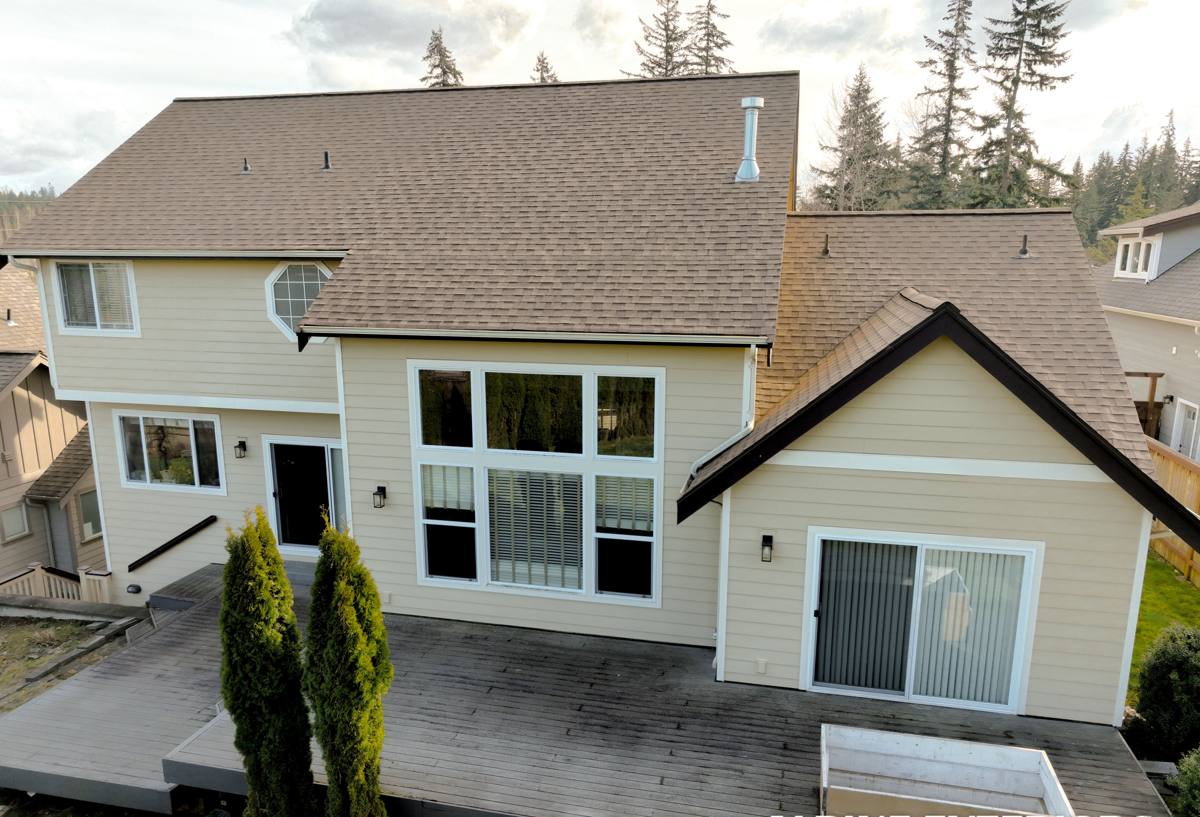
What "Energy-Efficient" Actually Means for a Home Here
"Energy-efficient" gets used loosely in this industry, so it's worth being specific about what actually affects comfort and heating bills in a Whatcom County home.
- U-factor — measures how well the window resists heat loss. Lower is better. This is the number that matters most for our winters.
- SHGC (Solar Heat Gain Coefficient) — measures how much solar heat passes through the glass. In shaded lots like much of Sudden Valley, this matters less than it would on a sun-exposed property, since you're not fighting summer heat gain as hard.
- Low-E coatings — a microscopically thin coating that reflects heat back into the room in winter and blocks some solar heat in summer, without noticeably changing how clear the glass looks.
- Gas fill (argon or krypton) — the inert gas between panes that slows heat transfer compared to plain air.
- Double vs. triple pane — triple-pane adds a third layer of glass and gas fill for better insulation and sound dampening, at a higher upfront cost and more weight on the frame and hardware.
For most homes in this area, a well-built double-pane window with a good Low-E coating and argon fill hits the right balance of performance and cost. Triple-pane makes more sense on north-facing rooms that stay cold, homes right on the lake with more wind exposure, or where street or lake noise is a factor.
Signs Your Current Windows Are Losing the Battle
Before recommending replacement, we look for the specific failure signs that show up on homes in this climate. If you're noticing any of these, it's worth having someone take a real look rather than just living with it another winter:
- Visible fog or moisture trapped between the panes (a failed seal — this cannot be fixed, only replaced)
- Moss or dark green/black growth building up on the sill, frame, or bottom corners of the glass
- Wood frames that feel soft, swollen, or don't close all the way anymore
- A noticeable draft when you hold your hand near the frame on a windy day
- Cold spots in rooms near windows even with the heat running normally
- Condensation forming on the inside of the glass regularly, especially in bathrooms and bedrooms
- Aluminum frames that feel cold to the touch and sweat on the inside during winter
- Heating bills that have crept up without any other obvious cause
What a Correct Installation Actually Involves
Given how much moisture this area deals with, the installation details matter as much as the window product itself. A window that's a great product but poorly flashed will leak and rot the framing around it regardless of its energy rating. Our process is built around that reality:
- On-site assessment — we check the existing frame, sill, and surrounding wall for hidden water damage or rot before quoting anything, since that changes the scope of the job.
- Careful removal — the old window and any damaged trim come out without tearing up more siding or interior finish than necessary.
- Sill pan and flashing — this is the step that gets skipped by rushed jobs and causes problems years later. A proper sill pan and correctly lapped flashing tape direct any water that gets past the window back outside instead of into the wall cavity.
- Setting and shimming — the new window is leveled, plumb, and shimmed so it operates smoothly and seals evenly for its whole service life, not just on install day.
- Sealing and insulating — low-expansion foam or backer rod and sealant around the frame, sized and applied so it doesn't bow the frame or leave gaps.
- Exterior trim and weatherproofing — trim and caulking finished to shed water, not trap it against the frame.
- Cleanup and walkthrough — we walk every window with you, check operation, and clean up job debris before we leave.
Frame Material Comparison for This Climate
| Material | How It Handles Our Climate | Maintenance | General Cost Range |
|---|---|---|---|
| Vinyl | Won't rot; handles damp conditions well; can be less rigid on very large openings | Low — occasional cleaning | Lower |
| Fiberglass | Very stable in temperature swings and moisture; strong option for shaded, damp lots | Low | Mid to upper-mid |
| Wood-clad | Good insulator and classic look, but the wood core is vulnerable if the exterior cladding or seal is ever compromised in a wet, shaded location | Moderate — watch for finish wear at joints | Upper |
| Aluminum | Durable but conducts cold and is prone to interior condensation in our humid winters unless thermally broken | Low to moderate | Varies |
Our general standard is vinyl or fiberglass for most Sudden Valley homes, given how much moisture and shade the area sees. Wood-clad is a fine product when it's detailed and maintained correctly, but in a shaded, damp setting it demands more attention to the finish and joints than most homeowners want to keep up with. We'll walk you through the honest trade-offs for your specific home rather than pushing one material across the board.
Matching the Job to the Homes Out Here
Sudden Valley has a mix of homes built across several decades, many on wooded or lakeside lots with less direct sun and more year-round shade than homes closer to downtown Bellingham. A lot of the older windows we see out here are original aluminum-frame single-pane units — functional in their day, but well past the point where they compete with a modern energy-efficient window on comfort or heating cost. Because many lots sit under mature tree cover, we also pay close attention to drainage around the foundation and sill line during the estimate, since standing moisture near a window opening is the single biggest factor in how long a new installation will last.
Why a Crew That Already Works This Neighborhood Matters
Window replacement done right depends on knowing how a specific area behaves — not just in general Pacific Northwest terms, but block by block. A crew that regularly works Sudden Valley already understands the access considerations of a private, gated community, has a feel for the shaded and lakeside lots that need extra flashing attention, and isn't guessing at lead times for materials suited to this climate. That familiarity shows up in fewer surprises during the job and a more accurate estimate up front, instead of change orders once the old window comes out and hidden rot or a bad prior install is discovered.
Caring for New Windows in a Damp, Shaded Climate
A correctly installed energy-efficient window is low-maintenance, but "low" isn't "none" in this climate. A few habits go a long way:
- Clean tracks and weep holes at the base of the frame a couple times a year so they can actually drain
- Rinse sills and frames if you notice moss or algae starting to build up, especially on shaded, north-facing windows
- Keep nearby gutters and downspouts clear so water isn't sheeting down past the window during heavy rain
- Trim back vegetation that's keeping a window in constant shade and moisture
- Check caulking and exterior sealant once a year for cracking or gaps, particularly after a hard winter
If your windows are drafty, fogged, or just original to the house and you want an honest read on what's worth replacing, we're happy to take a look. Fill out the form below for a free, no-pressure estimate — we'll tell you what we actually see, not just what's easiest to sell.