 Bellingham Roofing
 Siding Built for the Way Sudden Valley Actually Weathers
Sudden Valley sits in a pocket of Whatcom County that gets a different kind of wear than a house a few miles closer to town. The lot is likely tucked under fir and cedar canopy near Lake Whatcom, which means less direct sun on the siding, more standing humidity in the shade, and a longer window every year where wood and lesser siding products simply don't get a chance to dry out between rains. Add in the driving rain that blows through this part of Washington most of the year, and the marine air that carries moisture and salt inland from Bellingham Bay even to inland communities, and you have a climate that is quietly hard on exterior materials. It doesn't look dramatic. It just never lets up.
We install fiber cement siding on homes throughout Bellingham and Whatcom County, and Sudden Valley is one of the areas where the difference between a correctly chosen, correctly installed siding system and a mediocre one shows up fastest — usually as moss creeping up from the bottom courses, soft trim around window returns, or paint that's failed years before it should have.
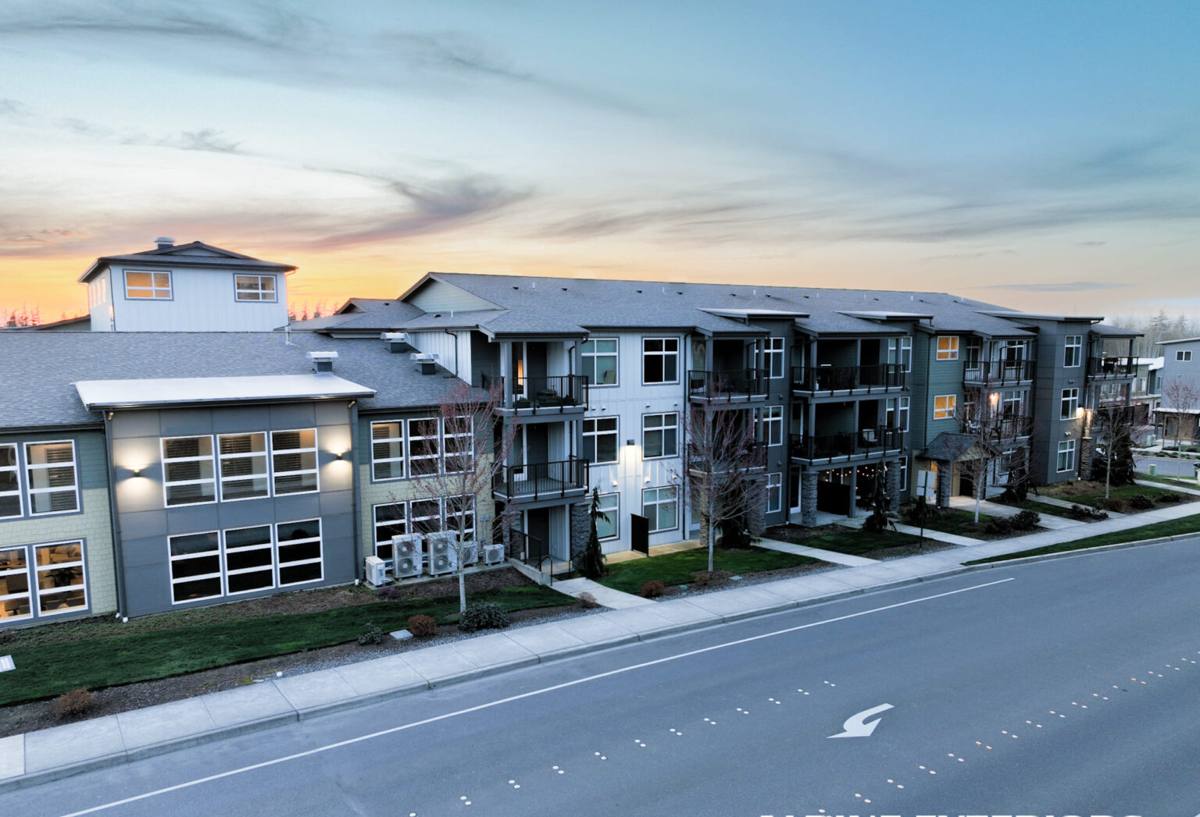
What the Sudden Valley Microclimate Does to Siding
Shade and moss
Homes set back under mature trees lose a lot of the drying benefit that direct sun gives siding elsewhere. Moisture sits on the surface longer, and moss and algae get a foothold on north-facing walls and anything close to the tree line. On wood-based products, that moisture doesn't just sit on the surface — it works into the material.
Lake-effect humidity
Proximity to Lake Whatcom keeps ambient humidity higher through the shoulder seasons than you'd see further from the water. That's good for the landscaping and bad for anything on your exterior walls that isn't built to handle sustained dampness.
Driving rain and wind-driven exposure
Storms coming off the water don't just fall straight down — wind pushes rain sideways into wall assemblies, which means flashing, caulking, and butt joints matter as much as the siding material itself. A product that's technically water-resistant can still fail here if it's installed with sloppy joints or the wrong fasteners.
A long moss season
In a lot of Western Washington, moss season is really most of the year. Anything organic in the siding — real wood, wood-fiber composites, or products with a wood-based core — gives moss and fungus something to feed on. Fiber cement doesn't.
Why We Only Install James Hardie Fiber Cement
We used to get asked why we don't offer more siding options. The honest answer is that we looked at what actually holds up in this climate and standardized on one system rather than sell homeowners something we didn't fully trust on a wet lot in Whatcom County.
James Hardie fiber cement is cement, sand, and cellulose fiber — there's no wood core to rot, swell, or feed moss. It's non-combustible, it holds a factory-applied ColorPlus finish far longer than field-applied paint on wood or composite siding, and Hardie backs it with a strong, transferable product warranty. We're not going to tell you every other siding product on the market is bad. Vinyl, LP SmartSide, and cedar all have legitimate uses. But for a climate that stays wet and shaded for long stretches of the year, we decided fiber cement is the one material we're comfortable standing behind on every job, so that's what we install.
| Material | How it handles Sudden Valley's shade and moisture | Long-term maintenance |
|---|---|---|
| James Hardie fiber cement | Cement-based, non-combustible, doesn't feed moss or rot from moisture exposure | Occasional wash; factory finish holds color for years |
| Vinyl siding | Won't rot, but expands and contracts with temperature swings and can warp; seams can trap moisture behind panels | Low, but panels crack and fade over time and are hard to color-match when replaced |
| LP SmartSide / wood-composite | Wood-strand core is vulnerable if any edge, cut, or fastener point isn't fully sealed in a wet, shaded lot | Requires diligent caulk and paint upkeep to keep moisture out of the core |
| Cedar or primed spruce | Natural wood in constant shade and humidity is exactly the environment that grows moss and invites rot | Frequent painting/staining and moss treatment |
What a Correct Fiber Cement Job Looks Like Here
Proper clearance and drainage
Siding needs a gap above grade, decks, and roof lines so water has somewhere to go instead of wicking up into the bottom edge of the boards. On wooded, sloped Sudden Valley lots, that clearance detail gets skipped more often than it should.
A drainage plane behind the siding
House wrap or building paper installed correctly, lapped the right direction, with a drainage gap where the assembly calls for it, gives any water that gets past the siding a way out instead of a place to sit against your sheathing.
Correct fasteners and nailing pattern
Fiber cement has specific fastener spacing and depth requirements. Over- or under-driven nails void warranty coverage and create small failure points that show up years later as cracking around the fastener.
Sealed joints and flashing at every penetration
Every window, door, vent, and light fixture is a place water can get behind the siding. In a climate with wind-driven rain, these details are where a mediocre installation fails first — not in the field of the wall, but at the transitions.
Factory-finished color, not field-painted
ColorPlus finish is baked on and warrantied separately from field paint. In a shaded, damp yard, that's the difference between siding that holds its color for a very long time and siding that needs repainting on a schedule.
Our Process, Start to Finish
- Walk-through and assessment. We look at your current siding, the exposure of each wall, tree cover, drainage around the foundation, and any trim, window, or moisture issues already showing.
- Honest scope and estimate. You get a clear breakdown of what's being replaced, what product line and profile we're recommending for your walls, and a written estimate — no pressure, no inflated "today only" pricing tactics.
- Prep and moisture check. Before new siding goes up, we check sheathing condition and address anything soft or compromised. Covering up a wet wall with new siding just hides the problem.
- Weather barrier and flashing. House wrap, flashing, and drainage details go in correctly the first time, since this is the layer that actually keeps water out.
- Installation to Hardie's fastening and clearance specs. This is what keeps your warranty valid and keeps the job performing for decades, not just years.
- Final walk-through. We go over the finished work with you before we consider the job done.
Choosing the Right Hardie Product for This Climate
James Hardie engineers its siding by climate zone, and Western Washington falls into a zone where moisture resistance and freeze-thaw performance matter more than the extreme heat resistance built into products meant for the South. We spec the HardieZone product engineered for our region rather than a one-size-fits-all board, and we'll talk you through profile options — lap siding, shingle-style panels, or a mix with trim and soffit — based on what suits your home and how much of it sits in shade.
Maintenance and What to Expect Long-Term
Fiber cement isn't zero-maintenance, but what it needs is minor compared to wood or wood-composite siding on a shaded lot. A periodic rinse to keep moss and pollen from building up, an eye kept on caulking at trim joints over the years, and prompt attention if a tree limb or debris ever damages a section. There's no annual painting cycle to plan around, and the ColorPlus finish is warrantied against fading and chipping separately from the substrate itself.
Why Hiring a Crew That Already Works in Sudden Valley Matters
A crew that's only worked flat, sunny lots in town will make different assumptions than one that's used to Sudden Valley's tree cover, grade changes, and lake-driven humidity. Knowing which walls need extra attention to drainage, how tree canopy affects drying time, and how driving rain off the lake actually hits a given elevation isn't something you get from a spec sheet — it comes from having done the work here before. That local knowledge shows up in small decisions during the job: where to add extra flashing, which walls warrant a closer look at the sheathing before covering it, and how to sequence the work around this area's weather windows.
What to look for when vetting a siding contractor in this area
- Manufacturer training or certification specifically for fiber cement installation, not just general siding experience
- A written estimate that names the exact product line, profile, and fastening approach — not a vague "siding replacement" line item
- Willingness to inspect and discuss sheathing condition before covering it up
- References or completed work in Whatcom County, ideally in wooded or lake-adjacent settings similar to yours
- A clear explanation of what's covered by the manufacturer's warranty versus the installer's workmanship warranty
- No pressure to sign same-day, and no reluctance to answer detailed questions about the process
A Straightforward Next Step
If your siding is showing moss, soft spots, failing paint, or you're just planning ahead for a home that sits in one of Sudden Valley's shadier, damper lots, we're happy to take a look and walk you through what we'd actually recommend — no pressure, no sales script. Reach out for a free estimate using the form below.