 Bellingham Roofing
 Siding Built for Sudden Valley's Weather, Not Just Any Pacific Northwest Weather
Sudden Valley sits along Lake Whatcom, wrapped in tree cover and close enough to the water and the surrounding hills that homes here take on a specific mix of exposures: shaded, damp siding on the north and east faces that rarely gets a chance to dry out, and wind-driven rain off the lake that finds every gap in a wall system during the wetter months. Add Whatcom County's long, low-sun winters and the moss and algae growth that comes with them, and you have a climate that is genuinely harder on exterior siding than a lot of homeowners realize until they're dealing with soft trim boards or a paint job that failed years ahead of schedule.
We install James Hardie fiber cement siding exclusively, and Sudden Valley is a neighborhood where that decision pays off in a very concrete way. This page covers what local homes actually need from their siding, what a correct Hardie installation involves, and why a crew that already works this area matters more than it might seem.
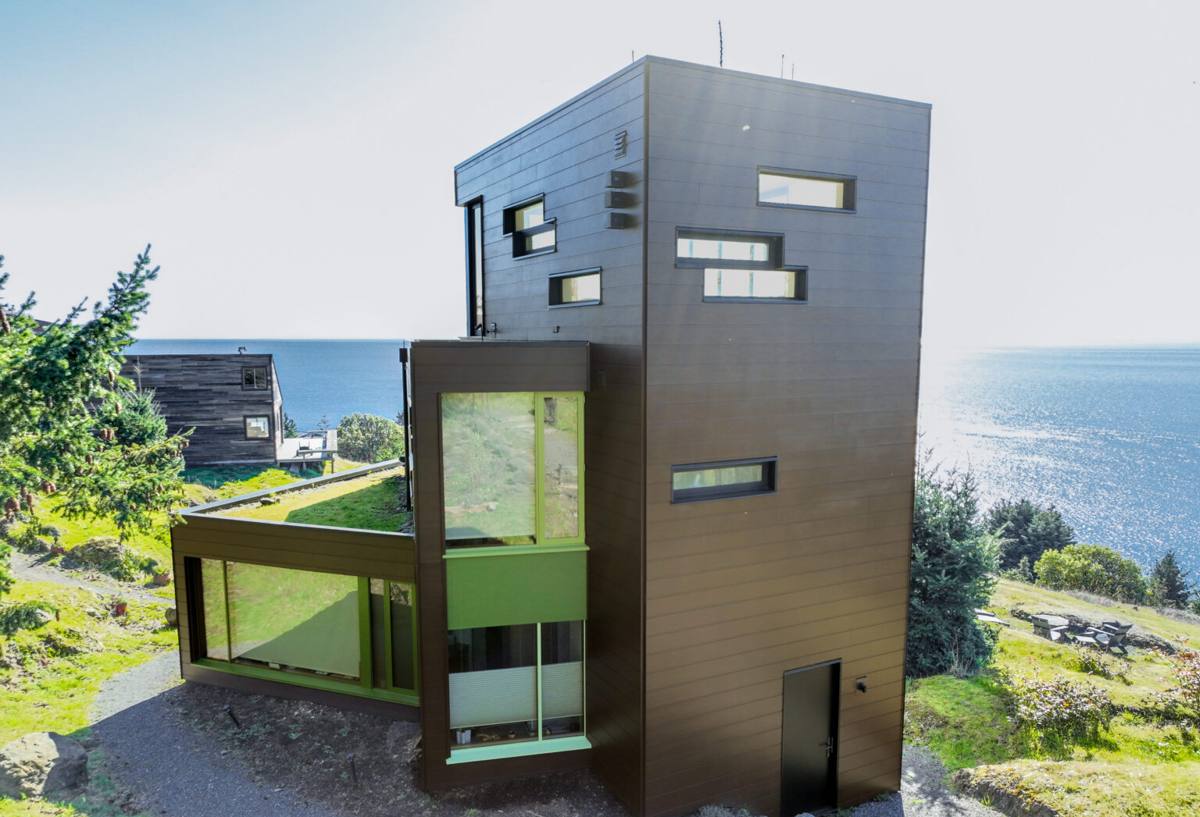
What Sudden Valley's Climate Actually Does to Siding
Moisture That Doesn't Leave
A lot of Sudden Valley lots have significant tree canopy and homes positioned close to the lake or set into wooded slopes. That combination means less direct sun on large portions of many houses, which means siding stays damp longer after every rain. Wood-based products swell, hold moisture, and eventually rot in those conditions. Even well-maintained wood or engineered wood siding tends to show it first on the shaded sides of a house.
Moss and Algae Season
Bellingham's moss season isn't a minor cosmetic issue — it's a sign of sustained surface moisture, and it runs long here, often from fall through spring. Siding with any porosity or a finish that doesn't shed water cleanly gives moss and algae something to grip onto, and once it's established it holds even more moisture against the wall.
Wind-Driven Rain Off the Lake
Storms moving across Lake Whatcom and through the valley can push rain sideways into a house rather than straight down. That matters at every seam, joint, and penetration in the siding system — the places where a mediocre installation fails first, regardless of what material is on the wall.
Why We Standardized on James Hardie for Homes Like These
James Hardie fiber cement is a cement-and-cellulose composite, not a wood product. It doesn't absorb water the way wood or wood-based siding does, and it isn't a food source for the organic growth that thrives in shaded, damp conditions. For a neighborhood with Sudden Valley's tree cover and lake-effect moisture, that difference in behavior over ten or twenty years is the whole reason we build with it.
Hardie's ColorPlus factory finish is baked on under controlled conditions, which gives it better adhesion and UV resistance than field-applied paint — a real advantage in a climate where a north-facing wall may only get a fraction of the direct sun a south-facing wall gets, and where paint failure on wood siding is often a moisture problem as much as a UV problem. Hardie also engineers specific product lines (HZ5) for climates with more rain and moisture exposure, which is the right specification for this part of Whatcom County.
We don't install LP SmartSide, vinyl, Cemplank, Allura, primed spruce, or cedar. Each of those has real strengths, but none of them matched what we wanted to stand behind for the moisture load and shade patterns common around here. That's a standard we hold across every job, not a knock on any single product.
What a Correct Installation Involves
Fiber cement siding performs the way it's supposed to only when the installation matches the manufacturer's specifications. This is where a lot of the real-world failures homeowners eventually deal with actually originate — not in the siding material itself, but in shortcuts taken underneath it or at its edges.
- Weather-resistive barrier and flashing: A correctly lapped house wrap and properly flashed windows, doors, and penetrations come before a single piece of siding goes up. This is the layer that actually keeps wind-driven rain out of the wall assembly.
- Proper clearances: Hardie specifies minimum clearances from roof lines, decks, and grade. Skipping these is one of the most common ways moisture gets trapped against the bottom edge of siding.
- Fastening pattern: Correct nail or screw placement, spacing, and depth matter for both wind resistance and long-term panel integrity — over- or under-driven fasteners are a common source of premature callbacks.
- Joint treatment: Butt joints, seams, and caulking need to follow Hardie's published details, not a generic approach carried over from another siding product.
- Painting seams and cut edges: Any field-cut edge needs to be sealed per Hardie's guidelines to preserve both the warranty and the moisture resistance of the panel.
Get any of these wrong and you can end up with a house wearing a premium material but not getting a premium result — moisture intrusion, trim rot, or warranty issues that trace back to installation, not the product itself.
Our Process on a Sudden Valley Job
- On-site assessment: We walk the exterior, check current siding and trim condition, note shaded and moisture-prone areas specific to the lot, and look at existing flashing and drainage details.
- Scope and product selection: We recommend the Hardie plank profile, exposure, and HZ specification suited to the home's exposure, along with a ColorPlus color plan.
- Written estimate: A clear scope covering removal, any sheathing repair, house wrap, flashing, siding installation, and trim work — no vague allowances.
- Installation: Crew-led work following Hardie's fastening, clearance, and joint specifications throughout, not just on the visible elevations.
- Final walkthrough: We review the completed work with the homeowner and confirm everything matches the agreed scope before calling the job done.
Why a Crew That Already Works Sudden Valley Matters
Siding installation isn't one-size-fits-all, and a crew that regularly works Sudden Valley and the surrounding Lake Whatcom area already understands the pattern of shaded, damp exposures and the access considerations that come with sloped, wooded lots. That familiarity shows up in small but real ways — knowing where moisture problems tend to originate on homes with this kind of tree cover, and not treating every wall the same way a flat, open lot might get treated.
It also means we're not learning the neighborhood on your job. Local knowledge doesn't replace following manufacturer specifications — it supplements it, and both matter for a siding job that's still doing its job in fifteen or twenty years.
Comparing Siding Approaches for This Climate
| Factor | James Hardie Fiber Cement | Wood-Based or Engineered Wood Siding | Vinyl Siding |
|---|---|---|---|
| Moisture absorption | Very low — cement-based, doesn't swell or rot | Moderate to high, especially at cut edges and joints | Non-absorbent, but seams can allow water behind panels |
| Performance in shaded, damp areas | Resists moss/algae growth better; doesn't feed organic growth | More prone to sustained dampness and rot in shade | Can trap moisture behind panels if installed loosely |
| Finish durability | Factory-baked ColorPlus finish, better long-term adhesion | Field-applied paint, more prone to peeling in low-sun areas | Color is through-body but can fade and become brittle over time |
| Fire resistance | Non-combustible | Combustible | Can melt or deform under heat |
| Installation sensitivity | Moderate — must follow manufacturer specs closely | Moderate | Lower, but temperature-sensitive during install |
Signs Your Sudden Valley Home's Siding Needs Attention
- Persistent moss, algae, or green staining that returns shortly after cleaning
- Soft or spongy spots when you press on siding or trim, especially on shaded walls
- Peeling, bubbling, or chalky paint that reappears within a couple of years of repainting
- Visible gaps or separation at seams, corners, or around windows and doors
- Warping, cupping, or visible swelling in individual boards
- Interior signs like musty odors or staining on walls that back up to exterior siding
None of these are emergencies by themselves, but they're worth having looked at before a wet Whatcom County winter makes them worse.
What to Expect Cost-Wise
Every Sudden Valley home is different — lot access, existing siding condition, amount of trim work, and square footage all move the number. In general terms, a full Hardie siding replacement is a mid-to-upper range exterior investment compared to vinyl or engineered wood, reflecting both the material cost and the labor required to install it correctly. We won't quote a number without seeing the home, but we'll always give you a clear, itemized estimate before any work starts.
If you're weighing a siding replacement or repair in Sudden Valley, we're glad to take a look and give you an honest read on what your home actually needs — no pressure, no inflated scope. Request a free estimate using the form below.