 Bellingham Roofing
 Why Sudden Valley Homes Need a Different Approach to Metal Roofing
Sudden Valley sits in a different microclimate than a lot of Bellingham. Tucked against Lake Whatcom and surrounded by heavy tree cover, homes here deal with shade, standing moisture, and organic debris in a way that flatter, more open neighborhoods don't. Add in Whatcom County's long wet season and the corrosive pull of salt-laden air moving in off the Salish Sea, and you get a roofing environment that punishes shortcuts. A roof that would hold up fine in a dry, open subdivision can fail early here if it isn't detailed for shade, moisture, and moss.
Metal roofing is a strong fit for this kind of environment when it's specified and installed correctly. It sheds water fast, resists moss better than almost any other roofing material, and doesn't absorb the moisture that keeps organic growth alive on shaded surfaces. But "metal roofing" is not one product — panel type, coating, fastening method, and underlayment all matter, and getting any one of them wrong undercuts the rest.
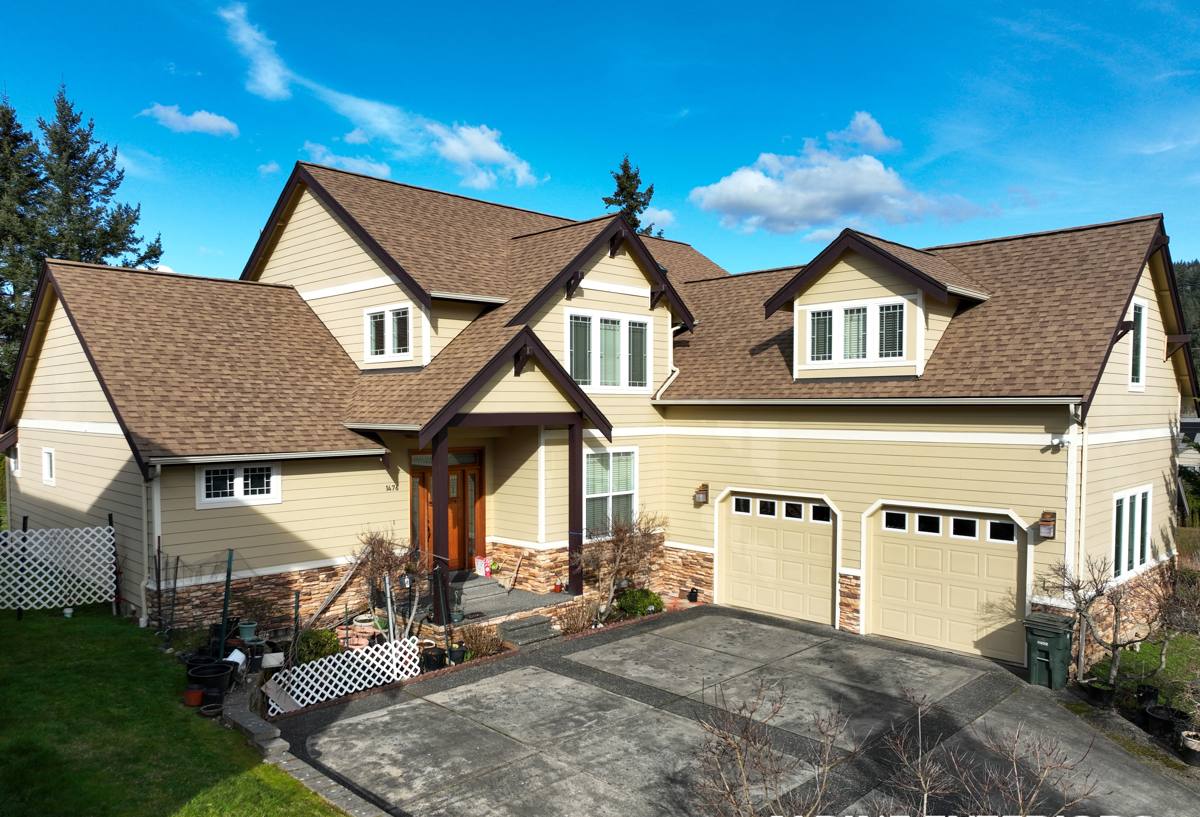
What Sudden Valley's Climate Actually Does to a Roof
Tree Cover and Shade
Sudden Valley's wooded lots keep roofs shaded for much of the day, especially on north-facing slopes and sections tucked under mature trees. Shade slows drying time after every rain, which is exactly the condition moss, algae, and moisture-loving lichen need to establish. It also means more organic debris — needles, leaves, seed pods — collecting in valleys and along eave lines.
Driving Rain and Standing Moisture
Western Washington's rain doesn't just fall straight down; wind off the lake and through the tree line pushes it sideways into laps, flashing, and fastener penetrations. Roofs here need underlayment and flashing details built for wind-driven rain, not just a fair-weather install.
Salt Air and Corrosion
Bellingham and the surrounding Whatcom County lowlands sit close enough to the Salish Sea that airborne salt is a real factor in coating and fastener selection, even away from the immediate waterfront. Over years, unprotected steel components — screws, flashing, exposed cut edges — can corrode faster than inland homeowners expect. This is a material-selection issue, not a scare story: it just means the coatings and fasteners have to be rated for it.
A Long Moss Season
Between the shade and the rain, moss season here effectively runs most of the year, not just the classic "wet season" months. On shingles and shakes, that means recurring cleaning, moisture retention under growth, and gradual surface breakdown. Metal doesn't give moss the same foothold, but only if seams, fasteners, and low-slope transitions are detailed to keep water and debris moving.
Why Metal Roofing Makes Sense Here
- Smooth, non-porous panel surfaces give moss and algae far less to grip compared to shingles or shakes.
- Steep water-shedding profiles move driving rain off the roof before it can work into laps or fastener holes.
- Properly coated steel or aluminum resists the corrosive effects of salt-laden coastal air far better than untreated fasteners or bare cut edges.
- Long service life reduces how often a shaded, hard-to-access roof needs re-roofing scaffolding and disruption.
- Lower long-term maintenance than moss-prone roofing, especially valuable on the steep, tree-shaded pitches common in Sudden Valley.
None of that is automatic, though. Metal roofing only delivers on these advantages when the panel system, coating, and installation details match the site conditions.
What a Correct Metal Roofing Job Involves
Panel Selection
Standing seam steel or aluminum panels are generally the right call for a shaded, high-moisture, tree-adjacent property like this. Standing seam's raised, mechanically locked seams keep water on top of the panel instead of relying on exposed fasteners that can loosen or corrode over time. Exposed-fastener panel systems can still be appropriate on secondary structures or budget-driven projects, but we walk homeowners through the maintenance trade-off honestly before recommending one on a primary roof in this setting.
Coating and Corrosion Protection
Given the salt-air exposure common across Whatcom County's lowlands, we specify coatings and fastener hardware rated for coastal-adjacent environments — not just standard mill-finish steel. Cut edges get properly sealed rather than left exposed, since a raw cut edge is where corrosion typically starts first on any metal roof.
Underlayment and Flashing
Because wind-driven rain is a real factor here, we use synthetic or self-adhered underlayment rated for high-moisture climates, with extra attention to valleys, chimney and vent flashing, and any transition where two roof planes meet. These are the spots where a technically sound panel system still fails if the flashing details are generic instead of site-specific.
Ventilation
Shaded, damp roofs need balanced intake and exhaust ventilation to keep moisture from condensing in the attic space. Poor ventilation under a metal roof can trap humidity that promotes rot in the decking below, even though the metal itself is holding up fine. We check and correct ventilation as part of the scope, not as an afterthought.
Debris Management Details
On tree-heavy lots, we pay extra attention to valley design, gutter integration, and eave detailing so falling debris doesn't dam up water flow. A well-designed metal roof sheds both water and debris; a poorly detailed one just relocates the moss problem to the gutters.
Our Process for Sudden Valley Projects
- On-site assessment — we look at slope, shade patterns, existing moss or moisture damage, decking condition, and ventilation before recommending anything.
- Material and system selection — panel profile, coating, and fastener hardware chosen for this specific roof's exposure, not a one-size-fits-all package.
- Tear-off and deck inspection — we don't cover up rotten or spongy decking; it gets repaired before a single panel goes down.
- Underlayment and flashing install — full-coverage underlayment and custom-fit flashing at every valley, penetration, and transition.
- Panel installation — proper seam engagement, fastener spacing, and expansion allowance so the panels perform through temperature swings and years of wind-driven rain.
- Ventilation check and correction — intake and exhaust balanced for the specific attic and roof geometry.
- Final walkthrough — we go over the completed roof and the maintenance basics with the homeowner directly.
Comparing Roofing Materials for This Environment
| Material | Moss Resistance | Driving-Rain Performance | Coastal Corrosion Resistance | Typical Maintenance |
|---|---|---|---|---|
| Standing seam metal | High | Very high | High (with correct coating) | Low |
| Exposed-fastener metal | High | Good | Moderate (fastener-dependent) | Moderate — fastener checks over time |
| Asphalt shingles | Low in shade | Good when new | Moderate | Higher — moss treatment, granule loss |
| Wood shakes | Low | Moderate | Low to moderate | High — rot and moss are ongoing concerns |
This isn't a knock on shingles or shakes as products — both have a place depending on budget, style, and how much maintenance a homeowner wants to take on. It's simply that in a shaded, high-moisture, coastal-adjacent setting like Sudden Valley, metal's physical properties line up better with what the site conditions demand.
Cost Factors to Expect
Metal roofing costs more upfront than asphalt shingles, and the exact number depends on panel profile, coating, roof complexity, and access. Rather than quote a number that won't hold up house to house, here's what actually moves the price:
| Factor | Why It Matters |
|---|---|
| Panel profile (standing seam vs. exposed fastener) | Standing seam costs more but reduces long-term maintenance and fastener corrosion risk |
| Coating and gauge | Coastal-rated coatings and heavier gauge steel add cost but extend service life in salt-air conditions |
| Roof complexity and pitch | Steep, cut-up rooflines with multiple valleys take more labor and flashing work |
| Tree cover and access | Wooded lots often need extra care for equipment staging and debris protection during tear-off |
| Decking condition | Rot or moisture damage found during tear-off adds repair cost before panels go on |
A Homeowner's Maintenance Checklist
Even a well-installed metal roof benefits from basic seasonal attention, especially under tree cover:
- Clear needles, leaves, and debris from valleys and gutter lines a couple of times a year.
- Check that gutters and downspouts are flowing freely before the heavy rain months.
- Look for any signs of moss establishing at shaded low-slope transitions and address it early.
- Have flashing around chimneys, vents, and skylights checked periodically for sealant wear.
- Confirm attic ventilation isn't blocked by insulation or debris.
Why Hiring a Crew That Already Works Sudden Valley Matters
A roofing crew that regularly works this neighborhood already knows how the tree cover, lake-adjacent moisture, and access constraints on these lots affect a project — where debris tends to collect, which slopes stay shaded longest, and how to stage equipment on wooded properties without unnecessary damage to landscaping. That local familiarity shows up in fewer surprises during tear-off and a roof detailed for the conditions it will actually face, not a generic install pulled from a flatter, sunnier job site.
If you're weighing a metal roof for a Sudden Valley home, we're happy to walk the property, look at your specific shade and moisture exposure, and give you an honest read on what the job actually needs — no pressure, no inflated scope. Request a free estimate using the form below and we'll set up a time to take a look.