 Bellingham Roofing
 Windows in Sudden Valley Wear Differently Than Windows Downtown
Sudden Valley sits in a different microclimate than a lot of Bellingham. Mature tree cover, proximity to the lake, and less direct sun exposure on many lots mean homes here hold onto moisture longer after a storm rolls through. Add in Whatcom County's long stretch of driving rain each fall and winter, plus the salt-tinged air that moves through the broader Bellingham area off the Sound, and you've got a recipe for window components that age faster than the manufacturer's brochure suggests. Wood sashes swell and stick. Aluminum and lower-grade vinyl hardware corrodes. Moss and algae take hold in shaded corners of frames and sills and just sit there, holding water against the finish for weeks at a time.
None of this means your windows are doomed — it means the replacement work has to account for how this specific neighborhood behaves, not just what a generic install manual says. That's the difference between a window that looks fine at the walkthrough and one that's still sealing tight in year twelve.
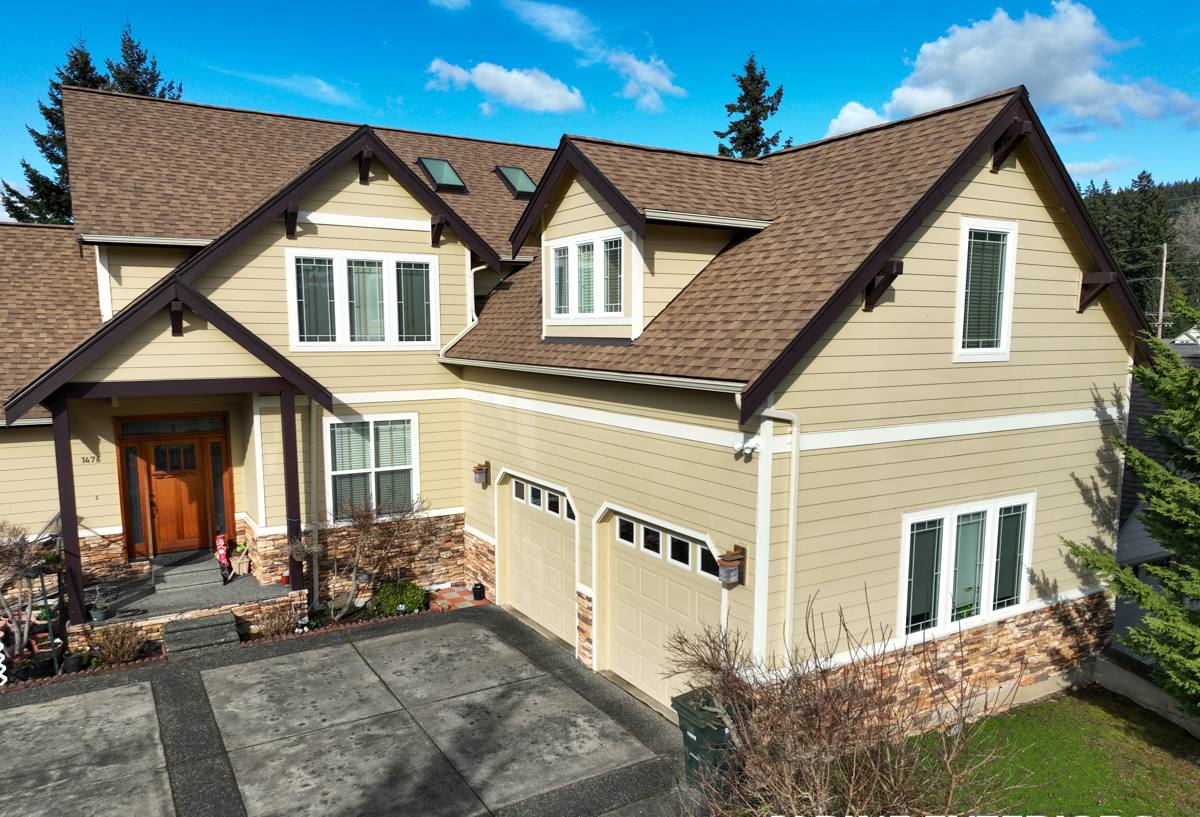
Signs a Sudden Valley Home Needs Window Replacement, Not Just Repair
Repair makes sense for isolated issues — a cracked pane, a failed balance, a torn screen. Replacement becomes the right call once the problems point to the window unit itself, not a single part. Here's what we look for during an assessment:
- Fogging or a visible haze between panes — the seal on the insulated glass unit has failed and moisture is trapped inside
- Frames that feel soft, spongy, or show dark staining at the corners, especially on the shaded or lake-facing side of the house
- Persistent moss or black streaking on the sill or lower frame that comes back within weeks of cleaning
- Drafts you can feel with a hand near the frame on a windy day, even with the window latched shut
- Difficulty opening, closing, or locking — swelling from repeated wet-dry cycles is a common cause here
- Visible gaps between the window frame and the surrounding siding or trim
- Noticeably higher heating bills in a room with older single-pane or early double-pane windows
If you're seeing two or more of these on the same window, repair is usually a short-term patch. Full replacement, done correctly, is the more honest fix.
What a Correct Window Replacement Actually Involves
The window unit itself only matters as much as the installation around it. Most window failures we see in this area — including on units that were only a few years old — trace back to installation shortcuts, not a bad product. A job done right includes:
Proper Removal and Opening Inspection
Once the old window is out, the rough opening gets inspected for hidden rot or water damage before anything new goes in. In a humid, shaded neighborhood like Sudden Valley, this step catches problems that a quick look from outside would miss entirely.
Flashing and Drainage, Not Just Caulk
Caulk is a backup, not a strategy. Correct installation uses proper flashing tape and a drainage path so any water that does get behind the siding has somewhere to go besides your wall framing. This matters more here than in drier parts of the county, simply because there's more water to manage over the course of a wet season.
Sill Pan Protection
A sloped sill pan under the window directs incidental moisture back outside instead of letting it pool at the bottom corners — usually the first place we find rot on old installations.
Shimming, Squaring, and Fastening to Spec
An out-of-square window strains its own seals and hardware from day one. It's a slower step to get right, and it's the one most likely to get rushed on a lower-bid job.
Interior and Exterior Sealing
Both sides get sealed — insulation and air sealing on the interior, weather-resistant sealant on the exterior — so the window performs as a complete system, not just a piece of glass in a hole.
Choosing the Right Window Type for This Neighborhood
There's no single "best" window — there's the right window for your home's exposure, budget, and how much upkeep you want to take on. Here's how the common frame materials compare for a Sudden Valley setting:
| Frame Material | Moisture Handling | Maintenance | Typical Fit for Sudden Valley |
|---|---|---|---|
| Vinyl | Good — won't rot, minimal upkeep | Low | Solid all-around choice for shaded, damp lots |
| Fiberglass | Excellent — very stable in wet/dry cycles | Low | Strong long-term value where humidity swings are frequent |
| Wood (unclad) | Requires diligent upkeep to prevent swelling and rot | High | Only recommended with a real maintenance commitment |
| Wood-clad (aluminum or fiberglass exterior) | Good — exterior shell protects the wood core | Moderate | Good option when interior wood look is a priority |
| Aluminum | Poor thermal performance, prone to condensation | Moderate | Generally not our recommendation for this climate |
We steer most Sudden Valley homeowners toward vinyl or fiberglass for the simple reason that both shed water without needing seasonal attention. Unclad wood can still be the right call for a specific look or a historic home, but we'll always be straightforward that it comes with a real maintenance burden in a neighborhood this shaded and damp — that's a trade-off you should decide on going in, not discover two winters later.
Glass Package Matters Too
Beyond the frame, ask about the glass package. Double-pane with a low-E coating and argon fill is the standard baseline for this climate — it cuts heat loss and reduces condensation on the interior glass during cold, damp mornings. Triple-pane is worth discussing for rooms facing prevailing wind or lake-effect chill, though it comes with added cost and weight.
How Our Process Works
- On-site assessment — we look at every window being considered, note frame condition, exposure, and any signs of hidden moisture damage
- Honest recommendation — repair versus replace, and which frame/glass combination fits the home and budget, explained plainly
- Written estimate — clear scope, materials, and timeline, no vague allowances
- Careful removal and opening prep — including addressing any rot or damage found before the new unit goes in
- Installation to spec — flashing, sill pans, shimming, and sealing done in the order that actually keeps water out
- Final walkthrough — every window operated, checked, and cleaned up before we consider the job done
What Window Replacement Typically Costs
Pricing depends on window size, frame material, glass package, and how much carpentry or siding repair the opening needs — but here's a general sense of what drives the number up or down:
| Cost Factor | Why It Matters |
|---|---|
| Number of windows replaced at once | Bundling work reduces per-window labor cost |
| Frame material | Vinyl is typically the most budget-friendly; fiberglass and wood-clad cost more upfront |
| Window size and style | Larger units and specialty shapes (bay, picture, custom) cost more than standard double-hung or sliders |
| Hidden rot or framing damage | Discovered during removal — adds labor and material but prevents a bigger problem later |
| Glass package upgrades | Low-E coatings, argon fill, or triple-pane add cost but improve comfort and efficiency |
| Trim and siding tie-in | Matching existing trim or siding around the new unit affects finish work required |
We won't quote a number without seeing the windows in person — anyone who does is guessing, and that guess usually changes once they see the actual condition of your openings. What we can promise is a written estimate with no surprise line items after the fact.
Why It Matters to Hire a Crew That Already Works Sudden Valley
A crew that regularly works this neighborhood already knows what to expect before they pull the first window: which exposures tend to hold moss, how shaded lots affect drying time after a job, and what kind of rot patterns show up on homes of a certain age around here. That's not something you get from a crew that mostly works flatter, sunnier parts of Bellingham and treats Sudden Valley as an occasional stop.
It also matters for logistics — knowing the roads, working around tree cover for staging and access, and understanding that a rain delay here can run longer than it would a few miles closer to the water. None of that shows up on an estimate sheet, but it shows up in whether the job gets done cleanly and on the timeline you were told.
Keeping New Windows Performing in This Climate
A correctly installed window still benefits from a little seasonal attention in a neighborhood like this:
- Rinse sills and lower frame tracks a couple of times a year to keep moss and organic debris from taking hold
- Check exterior sealant lines annually for cracking or separation, especially after a hard freeze
- Keep gutters and downspouts clear so runoff isn't sheeting directly down onto window heads
- Trim back vegetation that keeps a window frame shaded and damp for extended periods
- Operate each window a few times through the year, even ones you rarely open, to keep hardware and weatherstripping working properly
None of this is heavy maintenance — it's the kind of upkeep that takes a proper install from "lasts a while" to "lasts as long as it's supposed to."
Ready to Talk About Your Windows?
If your Sudden Valley home has windows showing any of the signs above, or you'd just like an honest read on their condition, we're happy to take a look. Estimates are free, there's no pressure to commit on the spot, and you'll get a straight answer about repair versus replacement before any work begins. Use the form below to get started.