 Bellingham Roofing
 Siding Built for Sunnyland's Weather, Not Just Its Curb Appeal
Sunnyland is one of Bellingham's older, tree-lined residential neighborhoods, with homes ranging from mid-century originals to newer infill construction sitting close together under a lot of mature canopy. That combination — shade, tree litter, and proximity to Bellingham Bay's marine air — creates a specific set of demands on exterior siding that a generic "replace old siding with new siding" job won't solve. A siding replacement in Sunnyland needs to account for how this particular pocket of Bellingham actually behaves through the year, not just how siding performs in a showroom or a sales brochure.
This page covers what siding replacement actually involves for a Sunnyland home: why the local climate wears siding down faster than homeowners expect, what a correctly done replacement looks like, and why we've standardized on one product system — James Hardie fiber cement — instead of offering the full menu of vinyl, LP SmartSide, or other alternatives.
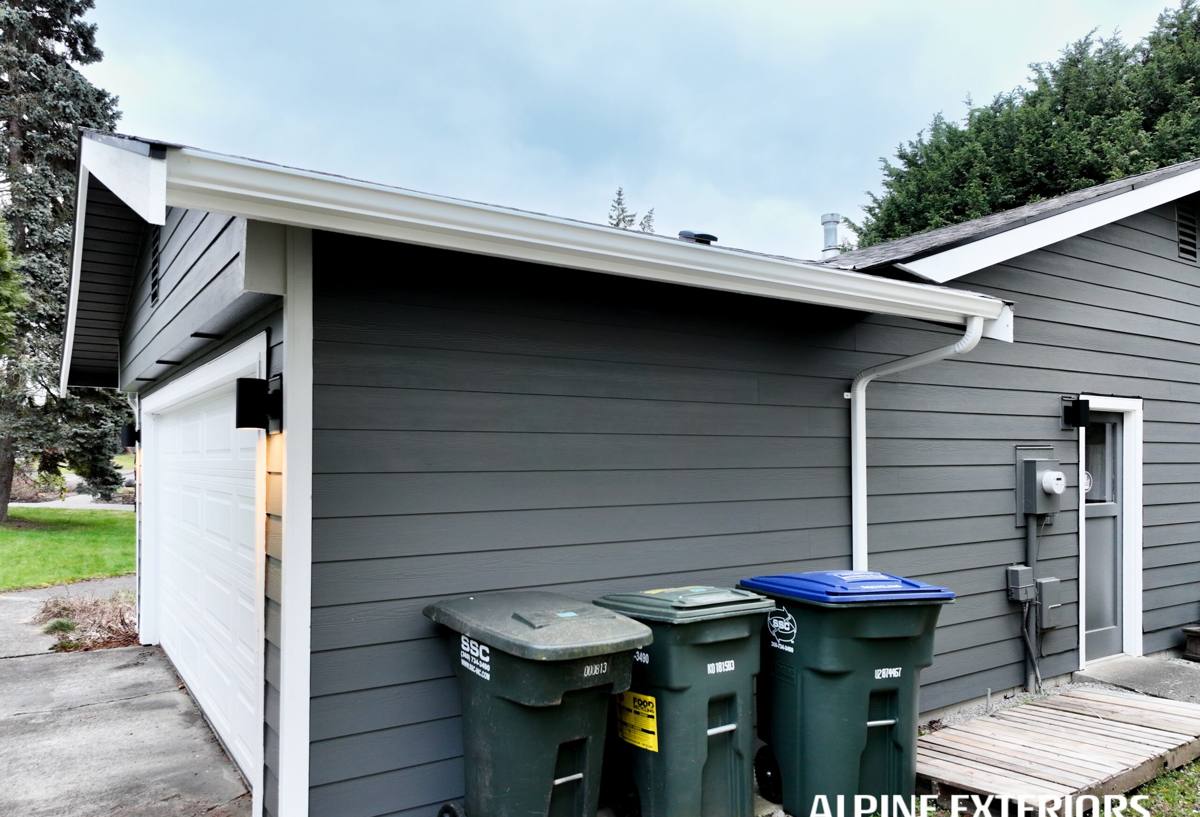
What Bellingham's Climate Does to Siding Over Time
Salt Air and Coastal Moisture
Bellingham sits directly on saltwater, and even neighborhoods set back from the shoreline like Sunnyland get a steady dose of marine air carried in on the region's prevailing winds. Salt-laden moisture accelerates corrosion on fasteners, trim flashing, and any metal components tied into the siding assembly. It also keeps humidity levels elevated longer after a storm than you'd see further inland, which matters for how quickly siding materials dry out between wet spells.
Driving Rain and Wind-Driven Wet
Whatcom County doesn't just get rain — it gets a lot of sideways rain, pushed by wind off the Sound and the Strait. Driving rain finds every gap in flashing, every under-caulked joint, and every spot where siding wasn't held to proper clearance off the ground or trim. Over years, that's how water gets behind siding rather than running off it, and that's almost always where rot and hidden damage start — not on the visible face of the material.
The Long Moss Season
Between the shade from mature trees common in Sunnyland and the region's extended damp season, moss and algae growth on north-facing and shaded siding is close to unavoidable without some attention. Moss holds moisture against the surface far longer than open air would, which is hard on paint film, caulk joints, and any wood-based product. It's less a cosmetic issue than an early-warning sign of a siding surface that's staying wet longer than it should.
Signs a Sunnyland Home Needs Siding Replacement, Not Just Repair
Not every siding problem calls for a full tear-off. But there's a point where patching stops making sense — either because the underlying material has failed in multiple places, or because repeated repairs are costing more over a few years than one correct replacement would. Watch for:
- Soft, spongy, or crumbling siding when pressed near the bottom edges or around windows and doors
- Paint that won't hold anymore even after prep and a fresh coat — a sign the substrate underneath is failing
- Persistent moss or dark staining that returns within a season of cleaning, especially on shaded walls
- Visible gaps, warping, or buckling panels, particularly on walls that catch the most wind-driven rain
- Rising utility bills alongside drafts near exterior walls, suggesting the siding and underlying barrier are no longer sealing the house
- Multiple repair calls in recent years for the same wall or the same recurring rot spot
If you're seeing two or more of these at once, that's usually the point where a full replacement is the more cost-effective decision over the next decade, rather than continuing to chase individual repairs.
Why We Install Only James Hardie Fiber Cement Siding
We don't offer vinyl, LP SmartSide, primed spruce, cedar, or other fiber cement brands as options for Sunnyland homes. That's a deliberate standard, not a limitation in what we're capable of installing. A few reasons this matters specifically here:
It doesn't feed the moss and moisture cycle the same way
Fiber cement is a dense, non-combustible material made from cement, sand, and cellulose fibers. It doesn't absorb and hold moisture the way wood-based products can, which matters directly in a climate where siding stays damp for extended stretches during moss season. That doesn't mean it's maintenance-free — it still needs periodic washing and caulk checks — but the material itself isn't the moisture sink that wood products are.
A factory finish built for this exposure
James Hardie's ColorPlus finish is baked on at the factory under controlled conditions, rather than field-applied primer and paint. That finish is engineered to resist fading and hold up to UV and moisture cycling better than a job-site paint job, and it carries its own finish warranty separate from the product warranty.
Climate-engineered product lines
James Hardie manufactures different formulations for different climate zones — including an HZ5 line designed for regions with freeze-thaw cycling and sustained wet weather, which fits Whatcom County's profile better than a one-size-fits-all siding product. That's part of why we don't treat "fiber cement" as a single generic category — the specific engineered product matters.
Non-combustible material
Fiber cement doesn't support flame spread the way wood-based sidings can. That's not the primary reason homeowners in a place like Sunnyland choose it, but it's a real, permanent difference in what's on the wall.
What a Correct Siding Replacement Involves
The siding itself is only part of the job. Most siding failures we see aren't failures of the material — they're failures of what happened underneath it. A correct replacement means the whole wall assembly gets attention, not just the visible surface.
Tear-off and sheathing inspection
Old siding comes off first, and the sheathing underneath gets inspected before anything new goes up. This is where hidden rot from years of trapped moisture actually gets found and fixed, rather than sealed behind new siding.
Weather-resistive barrier and flashing
A correctly lapped weather-resistive barrier, with properly integrated window and door flashing, is what actually keeps driving rain out of the wall assembly. This layer does more work than the siding face in keeping a house dry through a Bellingham winter.
Fastening, clearances, and joint treatment
James Hardie publishes specific fastening patterns, minimum clearances off grade and roof lines, and joint-treatment requirements. Skipping these doesn't show up as a problem on day one — it shows up two, five, or ten years later as premature caulk failure, moisture intrusion, or voided manufacturer warranty coverage.
| Installation Step | Done Correctly | Common Shortcut |
|---|---|---|
| Sheathing inspection | Full tear-off, damaged sheathing replaced before re-siding | New siding installed directly over existing damage |
| Weather barrier | Properly lapped house wrap with sealed penetrations | Reused or improperly overlapped barrier |
| Flashing at openings | Integrated head, jamb, and sill flashing at every window/door | Caulk used in place of proper flashing |
| Clearance off grade/roof | Manufacturer-specified gap maintained | Siding installed tight to grade, deck, or roofline |
| Fastening | Correct nail type, spacing, and penetration per Hardie specs | Whatever fasteners are on hand, inconsistent spacing |
Our Process for Sunnyland Projects
The steps don't change from house to house, but knowing the neighborhood — tree cover, typical lot setbacks, common access constraints on older Sunnyland lots — makes the on-site work go smoother and reduces surprises mid-project.
- On-site assessment of existing siding, trim, and any visible moisture or rot damage
- Written estimate covering material, labor, and any sheathing repair allowance
- Tear-off of old siding and inspection of sheathing and framing underneath
- Repair of any damaged sheathing found before moving forward
- Installation of weather-resistive barrier and flashing at all penetrations
- Installation of James Hardie siding to manufacturer fastening and clearance specifications
- Trim, caulking, and paint touch-up where field cuts require it
- Final walkthrough with the homeowner before closing out the job
What Affects the Cost of Siding Replacement in Sunnyland
Costs vary by house, and we won't quote a number without seeing the property, but the main variables that move the price up or down are consistent from project to project:
| Factor | Why It Matters |
|---|---|
| House size and wall complexity | More corners, gables, and dormers mean more cutting, flashing, and labor time |
| Condition of sheathing underneath | Hidden rot found during tear-off adds repair scope not visible in an estimate walk |
| Siding profile and accessories | Lap width, panel style, and trim details affect material cost and install time |
| Access and site conditions | Mature trees, tight setbacks, and limited staging space common on older Sunnyland lots can affect labor time |
| Existing paint or coatings | Lead-safe practices may apply on older homes, which affects tear-off procedure |
Caring for New Siding Through Bellingham's Seasons
Fiber cement siding is low-maintenance, not no-maintenance. A simple annual routine keeps it performing the way it's designed to in this climate:
- Rinse siding once or twice a year to clear moss spores, pollen, and organic buildup before they take hold
- Inspect caulk joints around windows, doors, and trim annually and re-caulk any that have cracked or pulled away
- Trim back tree branches and shrubs that keep siding shaded and damp longer than the rest of the house
- Check that gutters and downspouts are directing water away from siding, not sheeting down the wall face
Why a Local Bellingham Crew Matters for This Neighborhood
A crew that already works in Sunnyland and the surrounding Bellingham neighborhoods has seen how these specific houses age — where moisture tends to collect on this style of home, which walls take the worst of the wind-driven rain, and what the moss really tells you about a wall's condition. That's different from a crew working from a generic regional playbook. It also means we're a known, findable business in the community if you ever have a warranty question or a follow-up need down the road, not a name that only shows up for the sale.
If your Sunnyland home's siding is showing its age — or you just want an honest read on whether repair or replacement makes more sense — we're glad to take a look. Reach out below for a free, no-pressure estimate.